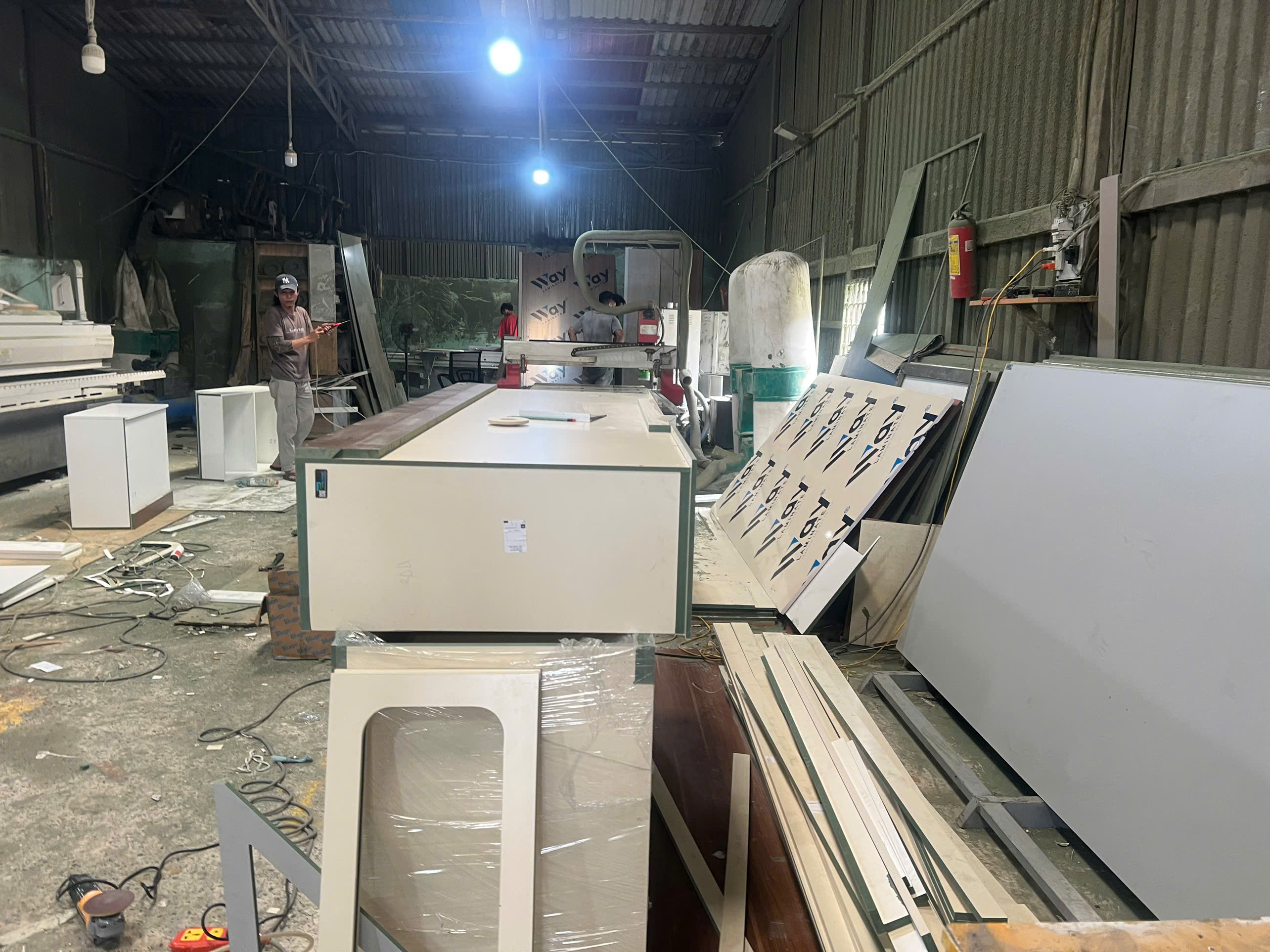

A single bad stamping supplier once cost one of our clients three months of rework and over $40,000 in scrap — all because the onboarding skipped a proper tooling review and material certification check before the first production run.
A standard supplier onboarding process for stamping parts should follow five phases: need identification, risk assessment, technical qualification covering tooling and die specifications, administrative and legal integration, and post-activation performance monitoring — prioritizing engineering validation before contracts to prevent costly quality failures.
This article walks through each phase in detail. I will share how our team structures onboarding for stamping suppliers 1 across Vietnam and other Asian countries, what documentation we require, and where most buyers get tripped up. Whether you are a purchasing manager sourcing brackets, clips, or complex multi-bend components, these steps will help you build a repeatable, risk-averse workflow.
How do I define the key steps in a stamping supplier onboarding process?
When our Vietnam office onboarded its first stamping supplier for a U.S. automotive client, we quickly learned that the generic vendor checklist from our ERP system missed every critical risk — tooling capability, press tonnage, and material traceability were nowhere on the form.
Define key steps by splitting the onboarding into five distinct phases: candidate pooling and strategic sourcing, preliminary risk assessment, technical qualification specific to stamping, administrative and legal setup, and activation with ongoing performance monitoring — each with clear ownership and deliverables.

Why Generic Onboarding Fails Stamping Parts
Most procurement teams use a one-size-fits-all onboarding checklist. It works fine for office supplies or standard fasteners. But stamping parts — like the precision-bent mounting brackets and spring clamps we source — carry unique risks. Custom tooling must be designed, built, and validated. Material grades must match the drawing exactly. Press capacity must align with your annual volume. A generic checklist skips all of this.
The Five-Phase Framework
Here is a high-level view of the five phases and who owns each one:
| Phase | Name | Owner | Key Output |
|---|---|---|---|
| 1 | Need Identification & Candidate Pooling | Procurement | Shortlist of 3–5 qualified candidates |
| 2 | Preliminary Risk Assessment | Procurement + Compliance | Risk profile and due diligence report |
| 3 | Technical Qualification | Engineering + Quality | DFM feedback, tooling plan, sample approval |
| 4 | Administrative & Legal Integration | Finance + Legal | Contracts, tax forms, ERP vendor record |
| 5 | Activation & Performance Monitoring | Procurement + Quality | Scorecard, regular review cycle |
Phase 1: Start With a Real Need
Before reaching out to a single new supplier, ask: can an existing approved supplier meet this requirement? approved supplier list 2 Our team runs a quick capability check on our current base first. If no existing supplier fits, we identify three to five candidates through trade databases, referrals, or platforms like Alibaba. We then issue a Request for Information that includes not just pricing questions, but technical requirements — press tonnage range, secondary operations like heat treating or plating, and metal fabrication capabilities.
Phase 2: Screen Before You Invest Engineering Time
Once candidates respond, we run a preliminary risk screen. This includes a credit assessment, a check against sanctions lists 3, and a basic background review. We also look at geopolitical exposure and logistics limitations. For example, a supplier in a region with frequent power outages or port congestion adds lead-time risk. This vendor risk assessment saves our engineering team from wasting weeks evaluating a supplier who cannot even clear financial due diligence.
Phase 3: The Technical Gate
This is where stamping onboarding diverges from generic processes. I will cover this in depth in the sections below, but the core idea is simple: before you sign a contract, the supplier must prove they can make your part. That means reviewing their tooling and die specifications, collecting DFM risk feedback, and running a documented sample approval plan. Skipping this phase is the single most common — and most expensive — mistake buyers make.
Phases 4 and 5: Close the Loop
Administrative integration (contracts, NDAs, payment terms, ERP setup 4) and activation (first PO, scorecard setup, review schedule) round out the process. These steps matter, but they should never come before the technical gate. In our workflow, a supplier cannot receive a purchase order until Phase 3 is fully signed off by our quality team.
What qualification criteria should I use to audit and approve new stamping suppliers?
A buyer we work with in the Midwest once told me he had approved a stamping supplier based solely on price and ISO 9001 certification — only to discover during the first production run that the supplier's largest press was 200 tons short of what the part geometry required.
Qualification criteria for stamping suppliers should cover five areas: quality system certifications like ISO 9001 or IATF 16949 compliance, technical press and toolroom capability, material certification requirements, financial stability, and regulatory or environmental compliance — verified through a structured supplier qualification audit.

Building the Audit Scorecard
We use a weighted scorecard when evaluating stamping candidates. Not every criterion carries equal weight. For a precision bracket with tight tolerances, toolroom capability and inspection equipment matter more than warehouse size. Here is the scorecard structure our team uses:
| Criteria Category | Weight | What to Verify |
|---|---|---|
| Quality System Certification | 20% | ISO 9001, IATF 16949, or equivalent; audit history |
| Press & Toolroom Capability | 25% | Press tonnage range, number of presses, toolroom staff, die maintenance records |
| Material Control | 20% | Mill test report process, material certification requirements, incoming inspection procedure |
| Financial Stability | 15% | Credit check, years in business, revenue trend, key customer concentration 5 |
| Compliance & ESG | 10% | RoHS/REACH adherence, sanctions screening, scrap recovery rates |
| Capacity & Lead Time | 10% | Available press hours, manufacturing lead times by stage, shift patterns |
Certifications: Necessary but Not Sufficient
ISO 9001 proves a supplier has a quality management system. IATF 16949 compliance goes further and is typically required for automotive stamping. But certifications alone do not tell you if the supplier can make your specific part. I have seen IATF-certified shops struggle with simple Z-shaped spring clamps because their toolroom lacked experience progressive dies 6 IATF 16949 certification 7 with progressive dies for thin-gauge stainless steel. Always pair certification checks with a hands-on technical review.
The Physical Site Audit
Nothing replaces walking the shop floor. During our site audits, we focus on three things:
- Press condition and age. Are the machines well-maintained? Do they have tonnage monitors? We look for IoT-enabled monitoring on critical presses when possible — it gives buyers real-time visibility into tool wear and uptime.
- Toolroom capability. Can they build and repair dies in-house, or do they outsource? In-house toolroom capability dramatically reduces downtime when a die needs adjustment.
- Quality control stations. Are there dedicated inspection areas with CMMs, optical comparators, or profile projectors? Or is inspection done by the press operator with a caliper?
Financial and Risk Screening
A supplier with great machines but poor cash flow is a risk. We run credit assessments and review financial statements. We also check customer concentration — if one client accounts for 70% of their revenue, your orders may get deprioritized during peak season. This financial component is a core part of any serious supplier competitiveness evaluation.
Compatibility With Digital Workflows
For strategic sourcing relationships, we also evaluate whether the supplier can work with metal forming simulation software for collaborative digital validation of die designs. This step is not always mandatory, but for complex multi-bend brackets with tight tolerances, it prevents expensive physical tooling iterations.
How can I ensure quality control and PPAP compliance during supplier onboarding?
The lesson that shaped our entire quality control plan 8 approach came early: a supplier delivered 5,000 stamped clips that looked perfect visually but failed the hole-position tolerance by 0.15 mm — enough to make every single piece unusable in the customer's assembly.
Ensure quality control and PPAP compliance by requiring a full PPAP documentation submission — including control plans, process flow diagrams, MSA studies, and dimensional reports — before approving first-article production, and by defining the quality control plan with measurable acceptance criteria tied to your drawing specifications.

What PPAP Really Means for Stamping
PPAP — Production Part Approval Process 9 — is not just paperwork. It is proof that the supplier's process can repeatably produce parts that meet your specifications. For stamping, this is especially critical because the process involves high-speed forming where small variations in material thickness, die wear, or press speed can push dimensions out of tolerance.
Our team requires the following PPAP elements before we approve any new stamping supplier for production:
| PPAP Element | Why It Matters for Stamping |
|---|---|
| Design Records (Drawing) | Confirms supplier is working from the correct revision |
| Process Flow Diagram | Maps every step from coil receiving to final inspection and packing |
| Control Plan | Defines what is measured, how often, and what happens when a measurement fails |
| Dimensional Results | Full layout inspection of sample parts against all drawing dimensions |
| Material Test Reports | Mill test certificates confirming material grade, thickness, and mechanical properties |
| MSA (Measurement System Analysis) | Proves the supplier's gauges and measurement methods are reliable |
| Process Capability Studies (Cpk) | Shows the process can hold critical dimensions with statistical confidence |
| Sample Parts | Physical samples for buyer-side verification and approval |
The Evidence Checklist: Stamping-Specific Documents
Beyond standard PPAP documentation, we collect a stamping-specific evidence package during onboarding. This includes:
- Drawing review feedback: The supplier must return a marked-up drawing noting any features that pose DFM risk — tight bend radii, deep draws, or features too close to a bend line.
- Tooling assumptions: How many cavities? Progressive or transfer die? Expected tool life in stroke counts? This feeds directly into a Digital Tooling Passport concept we are adopting to track die maintenance history from day one.
- Inspection capability statement: What equipment do they have, and can it measure the critical features on your part?
- Sample approval record and plan: A documented timeline for when samples will be produced, how many, and the approval criteria.
- Material control evidence: Proof that they segregate material lots, link coil IDs to production batches, and retain mill test reports.
Setting Up In-Process Quality Controls
PPAP happens once. But quality must be sustained. During onboarding, we establish the ongoing quality control plan with the supplier. This includes defining which dimensions are checked every hour, every shift, or every lot. For our stamped bracket projects, we typically require SPC (Statistical Process Control) on at least two critical dimensions — usually hole position and bend angle.
We also define the communication path for nonconforming material. Who gets notified? What is the containment procedure? How fast must the supplier respond? These protocols are agreed upon during onboarding, not after the first quality escape.
First-Article Inspection: The Final Gate
Before any volume shipment, we perform a full first-article inspection on our side. We compare the supplier's dimensional report against our own measurements. dimensional inspection report 10 If they match within tolerance, we approve. If they do not, we investigate whether the discrepancy is a measurement system issue or a true process problem. This step has caught issues that the supplier's own reports missed — not because of dishonesty, but because of gauge variation.
What documentation and communication protocols should I set up to avoid onboarding delays?
One pattern I see repeatedly: a buyer sends a drawing package by email, the supplier asks questions by WeChat, the quality team tracks approvals in a spreadsheet, and the contract sits in someone's inbox waiting for a signature. Three months later, nothing has moved.
Set up a centralized document repository with structured intake forms, assign clear ownership for each onboarding phase, use standardized communication templates, and enforce validation rules on all submitted data — replacing email-based workflows with a shared portal to eliminate delays caused by lost documents and unclear accountability.

The Documentation Package: Buyer Side
The buyer is responsible for providing a complete, unambiguous package to the supplier at the start of onboarding. Incomplete information is one of the top causes of delays. Here is what we send to every new stamping supplier candidate:
| Document | Purpose |
|---|---|
| Drawing package (latest revision, PDF + native CAD) | Defines the part geometry, tolerances, and material |
| Annual volume estimate | Helps supplier plan tooling and capacity |
| Target launch date | Sets the timeline for the entire onboarding |
| Quality standard requirements (e.g., PPAP level) | Tells the supplier what quality deliverables are expected |
| Part risk notes | Flags known difficult features or past supplier problems |
| Packaging and shipping destination | Defines logistics requirements from the start |
| Compliance requirements (RoHS, REACH, etc.) | Ensures regulatory alignment before tooling begins |
| Approval deadline | Creates urgency and a shared timeline |
The Documentation Package: Supplier Side
In return, we require the supplier to submit structured responses — not free-form emails. Our intake form captures:
- Quote with clearly stated assumptions (material grade, annual volume, tooling amortization)
- DFM risk assessment with marked-up drawing
- Proposed sample plan with timeline
- Document checklist confirming which PPAP elements they can deliver and by when
- Manufacturing lead times broken down by stage: tooling build, sample production, PPAP submission, and volume ramp-up
Communication Protocols That Actually Work
We learned the hard way that undefined communication channels cause delays. Now we establish three rules during onboarding kickoff:
- Single point of contact on each side. One person from our team, one from the supplier. All formal communication flows through them.
- Weekly status updates during onboarding. A simple five-line email template: what was completed, what is in progress, what is blocked, next milestone, and estimated completion date.
- Change management protocol. Any change to the drawing, volume, or timeline must be documented in writing and acknowledged by both sides before taking effect. Verbal agreements do not count.
Eliminating Email-Based Submissions
For strategic stamping suppliers, we have moved away from email-based document exchange entirely. Unstructured attachments lead to version confusion, lost files, and data entry errors. Instead, we use a shared portal where the supplier uploads documents into predefined fields. The system enforces validation rules — for example, a material test report field will not accept a file unless the supplier also enters the material grade and coil lot number.
This shift to structured data entry has cut our average onboarding time significantly. It also creates an audit trail that is invaluable when a quality issue arises months later and we need to trace back to the original material certification or tooling approval.
Avoiding the Most Common Delay: Lack of Ownership
The biggest onboarding delay is not a missing document. It is unclear ownership. When procurement assumes engineering will review the DFM feedback, and engineering assumes quality will do it, nothing happens. We solve this by assigning explicit owners and deadlines for every deliverable in the onboarding workflow. Our project management approach — honed through years of coordinating between U.S. clients, our Singapore office, and production partners in Vietnam — ensures nothing falls through the cracks.
Conclusion
A standard supplier onboarding process for stamping parts protects you from the costly failures that generic checklists miss — bad tooling, wrong material, and unclear communication that derails production timelines and budgets.
Frequently Asked Questions
How do I define the key steps in a stamping supplier onboarding process?
When our Vietnam office onboarded its first stamping supplier for a U.S. automotive client, we quickly learned that the generic vendor checklist from our ERP system missed every critical risk — tooling capability, press tonnage, and material traceability were nowhere on the form.
What qualification criteria should I use to audit and approve new stamping suppliers?
A buyer we work with in the Midwest once told me he had approved a stamping supplier based solely on price and ISO 9001 certification — only to discover during the first production run that the supplier's largest press was 200 tons short of what the part geometry required.
How can I ensure quality control and PPAP compliance during supplier onboarding?
The lesson that shaped our entire quality control plan 8 approach came early: a supplier delivered 5,000 stamped clips that looked perfect visually but failed the hole-position tolerance by 0.15 mm — enough to make every single piece unusable in the customer's assembly.
Footnotes
1. Provides a technical overview of the metal stamping process and its role in industrial manufacturing. ↩︎
2. Authoritative Wikipedia entry explaining the evaluation and listing process for qualified suppliers. ↩︎
3. Official resource for identifying restricted entities to ensure regulatory compliance during the supplier screening process. ↩︎
4. Defines enterprise resource planning systems and their role in managing supplier data and administrative workflows. ↩︎
5. High-authority financial resource defining customer concentration and its associated business risks. ↩︎
6. Explains the high-volume metal stamping process used to produce complex parts through sequential forming stations. ↩︎
7. Comprehensive Wikipedia overview of the global quality management standard for automotive suppliers. ↩︎
8. Technical guidance on implementing quality control plans to monitor and control manufacturing process variation. ↩︎
9. Reliable Wikipedia documentation of the industry-standard PPAP quality assurance framework. ↩︎
10. Authoritative Wikipedia page for the process that mandates dimensional inspection reports in manufacturing. ↩︎