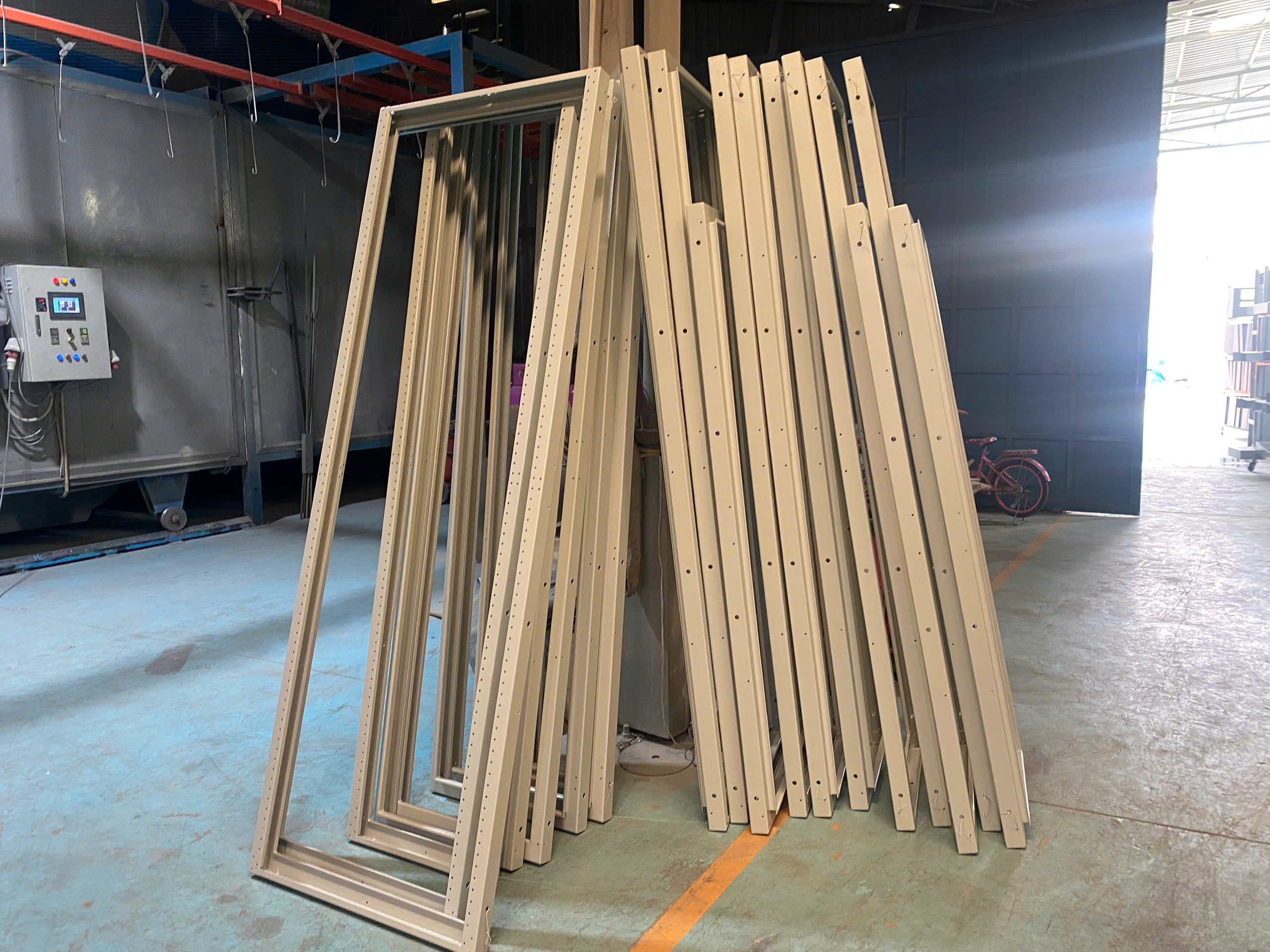

A supplier exit strategy saved one of my stamping projects last year Vietnam’s Commercial Law 1. The Vietnamese factory held our dies, our drawings, and our schedule hostage—until our Vietnam team stepped in.
A supplier exit strategy for Vietnamese stamping parts requires securing tooling ownership, retaining complete technical data packages, pre-qualifying a backup supplier, and negotiating termination clauses upfront. With these in place, buyers can transfer production in weeks instead of months without losing quality or continuity.
Termination is not just a legal event. It is a manufacturing transition problem. Stamping parts make it harder because dies, press settings, and inspection records often sit inside the supplier’s factory. Let me walk you through how to build your exit plan properly, starting with the warning signs.
What Warning Signs Tell Me It's Time to Exit a Stamping Supplier in Vietnam?
During a routine audit near Haiphong, our Vietnam office found a supplier running worn dies far past their maintenance schedule. That single finding predicted six months of quality escapes.
Key warning signs include repeated unresolved corrective actions, chronic late deliveries, dimensional drift on critical features, refusal to share inspection records, capacity shortfalls during ramp-up, sudden price inflation, lapsed certifications, and resistance to audits. Two or more sustained signals justify activating your exit plan.

In my experience managing stamping programs for U.S. purchasing managers, supplier failure rarely happens overnight. It decays in stages. The buyers who get hurt worst are the ones who ignore early signals because switching feels expensive. So I recommend a structured trigger review instead of gut feeling.
The Trigger Review Framework
We score our stamping suppliers quarterly across five categories. When a supplier crosses the threshold in two categories for two consecutive quarters, we begin exit preparation—not necessarily termination, but preparation.
| Trigger Category | Early Signal | Critical Signal (Act Now) |
|---|---|---|
| Quality | One or two SCARs, closed on time | Repeated SCARs, escapes reaching your customer |
| Delivery | Occasional slips under one week | Chronic delays, missed launch dates |
| Capacity | Overtime needed to meet volume | Refusing new orders or forecasted volumes |
| Commercial | Requests for modest price adjustments | Sudden inflation, payment term ultimatums |
| Transparency | Slow responses to data requests | Blocking audits, withholding FAI or cert records |
Why Stamping Amplifies These Signals
Stamped brackets and clips look simple. They are not. A stepped zigzag bracket with punched slots depends on die condition 2, press setup, and material lot consistency. When a supplier stops maintaining tooling, tolerances drift slowly. A ±0.1 mm blanked feature becomes ±0.2 mm before anyone flags it. By the time parts fail at assembly, the die may need a full rebuild.
Also watch behavior around your assets. If a supplier delays returning drawings, dodges questions about die condition, or "forgets" to send material certificates, they may already suspect you plan to leave. That is exactly when you need your exit plan ready.
How Do I Transition Tooling and Production to a New Supplier Without Delays?
One client came to us after his previous agent lost three months arguing over die ownership. Our team relocated the tooling, requalified the parts, and restored supply in under seven weeks.
Transition tooling by confirming ownership in writing, inspecting and removing dies on schedule, transferring the complete technical package, running first articles at the new supplier against retained inspection history, and ramping volumes gradually. A bridge inventory order covers demand during the overlap period.

The single biggest lesson our project managers have learned in Vietnam: a smooth transition is won or lost before the notice letter is sent. Here is the sequence we follow on stamping programs.
The Seven-Step Transition Playbook
- Place a bridge order. If quality still holds, order 60–90 days of extra stock before signaling any intent to leave. This is your safety buffer.
- Send formal notice per the contract. Follow the notice period exactly. Sloppy notice gives the supplier grounds to delay.
- Confirm and document tooling ownership. Present purchase records and contract clauses. Schedule a joint tooling inspection.
- Remove and ship the tooling. Plan for customs paperwork 3 if dies cross borders. Photograph die condition before packing.
- Transfer the technical package. Drawings, CAD, material specs, finish standards, FAI reports, and dimensional history go to the new source.
- Run first articles at the new supplier. Validate against your retained inspection data, not just the drawing. Undocumented process knowledge hides in that history.
- Ramp gradually. Start at partial volume. Increase only after sampling confirms stable capability on critical dimensions.
Realistic Timeline Expectations
| Scenario | Typical Switchover Time |
|---|---|
| Backup supplier pre-qualified, tooling owned and transferable | 3–6 weeks |
| No backup, tooling transferable | 8–12 weeks |
| No backup, hard tooling must be rebuilt | 12–20 weeks |
Tooling lead time alone often runs 4–8 weeks if new dies are needed. That is why we push every client to settle ownership and qualification before trouble starts. For a simple stamped mounting clip, requalification is fast. For a multi-bend bracket with slotted holes and a plated finish, expect the finishing chain to add time too—especially if coating was subcontracted.
What Contract Terms Should I Negotiate Upfront to Protect My Exit Options?
Reviewing supply agreements for U.S. clients, I keep seeing the same gap: detailed pricing pages, but not one sentence about who owns the dies. That silence costs months later.
Negotiate tooling ownership and removal rights, data ownership and return obligations, termination for cause and convenience, defined notice periods, transition assistance duties, capped early termination fees, subcontractor disclosure, and surviving confidentiality clauses. Verify enforceability under Vietnamese Commercial Law with local counsel before signing.

The best contract is not one that describes termination rights elegantly. It is one that makes the transition physically possible. Our team in Vietnam has sat through enough tooling disputes to know the difference. Here is the checklist we use when reviewing stamping supply agreements.
The Exit-Ready Clause Checklist
| Clause | What It Must Say | Why It Matters at Exit |
|---|---|---|
| Tooling ownership | Buyer owns all dies, fixtures, and gauges paid for by buyer | Prevents the supplier holding tooling as leverage |
| Tooling access | Buyer may inspect and remove tooling on reasonable notice | Turns ownership into physical possession |
| Data ownership | Drawings, CAD, FAI reports, and process data belong to buyer and must be returned | Enables requalification elsewhere |
| Termination triggers | Defined for-cause events plus a for-convenience option | Gives you a clean legal path either way |
| Notice period | Typically 30–90 days with transition support obligations | Keeps the outgoing supplier producing during handover |
| Termination fees | Capped, transparent, tied to actual costs | Avoids surprise exit penalties |
| Subcontractor disclosure | Named finishing and plating partners | Protects the downstream coating chain |
| Surviving obligations | Confidentiality, IP, and non-use survive termination | Stops your designs walking to competitors |
The Local Law Reality
A contract governed by U.S. law is not automatically enforceable against a Vietnamese factory's physical assets. If a dispute over your dies happens in Vietnam, local courts and Vietnam's Commercial Law 4 shape the outcome. So we advise clients to have Vietnamese counsel review termination and tooling clauses, and to keep tooling purchase invoices, payment records, and photographs on file. Paper wins ownership arguments. Verbal understandings do not.
Frame these clauses as standard continuity provisions during negotiation, not as distrust. Serious suppliers accept them. The ones who resist tooling ownership language are telling you something useful.
How Can I Minimize Risk to My Supply Chain During the Supplier Transition Process?
There is a trade-off I weigh on every project: single-sourcing simplifies management and improves pricing, but it concentrates risk. For critical stamped brackets, we almost always tilt toward resilience.
Minimize transition risk by pre-qualifying a backup supplier on real parts, holding your full technical package in your own systems, building bridge inventory, running a 30–90 day dual-sourcing overlap, and validating first articles against critical dimensions before full cutover to the new source.

Risk during transition comes from three directions: the outgoing supplier degrading, the incoming supplier stumbling, and the buyer lacking control of data and assets. You can neutralize all three with preparation.
Retain the Technical Package Yourself
Never let the supplier be the only holder of your part definition. Keep in your own systems: current-revision drawings, CAD files, material specifications 5, finish standards, packaging requirements, approved first-article reports 6, dimensional inspection history, and material certificates. That inspection history matters more than most buyers realize. It lets a new factory reproduce the part without re-deriving undocumented tolerances. When we onboard a transferred stamping part, historical dimensional data cuts our first-article cycle significantly because we know which features actually matter in assembly.
Qualify the Backup Before You Need It
Shortlist three to five candidates for critical parts. Verify press tonnage, in-house toolroom capability, and the specific processes your parts need—blanking, piercing, progressive die 7, forming. Confirm material and coating availability. Then run production-intent samples and approve first articles. A backup qualified only "on paper" is not a backup. Vietnam’s regional structure helps here: qualifying one source in the northern Hanoi–Haiphong cluster and one near Ho Chi Minh City also reduces localized disruption risk.
Manage the Overlap Deliberately
Run both suppliers in parallel for 30–90 days. Watch the outgoing supplier for quality drift—motivation drops fast after notice. Inspect outgoing shipments more tightly, not less. Ramp the new source in stages, validating each critical-to-quality dimension with agreed sampling before increasing volume. Only cut over fully once the new supplier demonstrates stable capability across consecutive lots.
Conclusion
A supplier exit strategy is your insurance policy for Vietnamese stamping sourcing. Own the tooling, hold the data, qualify a backup, and negotiate exit terms on day one—before you need them.
Frequently Asked Questions
What Warning Signs Tell Me It's Time to Exit a Stamping Supplier in Vietnam?
During a routine audit near Haiphong, our Vietnam office found a supplier running worn dies far past their maintenance schedule. That single finding predicted six months of quality escapes.
How Do I Transition Tooling and Production to a New Supplier Without Delays?
One client came to us after his previous agent lost three months arguing over die ownership. Our team relocated the tooling, requalified the parts, and restored supply in under seven weeks.
What Contract Terms Should I Negotiate Upfront to Protect My Exit Options?
Reviewing supply agreements for U.S. clients, I keep seeing the same gap: detailed pricing pages, but not one sentence about who owns the dies. That silence costs months later.
Footnotes
1. Clarifies the legal framework governing supplier contract disputes and tooling ownership in Vietnam. ↩︎
2. Explains manufacturing dies whose wear directly affects stamped part tolerances. ↩︎
3. WTO trade facilitation resource clarifies cross-border customs requirements for tooling shipments. ↩︎
4. Explains Vietnam’s trade and legal framework governing contract enforcement and supplier disputes. ↩︎
5. ISO governs material and quality specification standards referenced in technical data packages. ↩︎
6. Background on first article inspection standards used to validate stamping part quality. ↩︎
7. Provides technical background on stamping processes referenced when qualifying backup suppliers. ↩︎