Choosing the wrong category of structural sheet metal fabrication has cost some of our clients months of rework submerged arc welding 1. The confusion between lightweight and heavy-duty specifications creates costly mistakes, delayed timelines, and failed components. Our engineering team helps buyers get this right the first time.
Structural sheet metal fabrication is classified as lightweight or heavy-duty primarily by material thickness, load-bearing capacity, and application. Lightweight fabrication uses sheet metal gauge materials up to 3–6 mm thick for enclosures and housings, while heavy-duty fabrication uses plate steel above 6 mm for structural beams, bridges, and industrial equipment.
This guide breaks down the key differences so you can make the right call for your next project Hot rolled steel 2. We will walk through thickness classifications, manufacturing processes, quality standards, and real-world decision frameworks.
How can I determine if my project requires lightweight or heavy-duty sheet metal fabrication?
A purchasing manager we work with in the Midwest once ordered 2 mm cold rolled steel brackets for a load-bearing frame. The parts failed stress testing within weeks, and the entire order had to be scrapped and restarted with proper heavy-gauge plate.
Determine your requirement by evaluating four factors: the component's load-bearing capacity, its operating environment, the expected service life, and the structural role it plays. If the part supports significant weight or endures high stress, you need heavy-duty fabrication. If it serves as a housing, cover, or non-structural element, lightweight fabrication is the right fit.

Start With the Component's Structural Role
The single most important question is: does this part carry load? A mounting bracket inside a consumer electronics enclosure is very different from a mounting bracket that holds a 500 kg motor on an industrial platform. The structural role defines everything downstream — material choice, sheet metal gauge, welding techniques, and inspection standards.
In our co-development projects, we ask clients to fill out a simple design considerations checklist before we quote. It forces clarity early and prevents the kind of mid-project surprises that cause delays.
A Practical Decision Framework
Here is a step-by-step approach we recommend:
- Define the function. Is the part decorative, protective, or structural?
- Estimate loads. What forces will act on it — static weight, dynamic impact, vibration, thermal expansion?
- Identify the environment. Indoor, outdoor, corrosive, high-temperature?
- Set the lifespan. Is this a temporary fixture or a 20-year infrastructure component?
- Check regulatory requirements. Some industries mandate minimum thicknesses and material grades.
| Decision Factor | Points to Lightweight | Points to Heavy-Duty |
|---|---|---|
| Load-bearing role | No significant load | Carries structural weight |
| Operating environment | Indoor, controlled | Outdoor, harsh, corrosive |
| Service life | 1–5 years | 10–30+ years |
| Regulatory standard | General commercial | AISC, AWS D1.1 3, or equivalent |
| Material thickness needed | 0.5 mm – 3 mm | 4 mm – 25 mm+ |
| Typical products | Enclosures, panels, HVAC ducts | Beams, columns, tanks, frames |
When the Line Gets Blurry
The definition of "lightweight" is evolving. Advanced materials like high-strength low-alloy steels 4 and aerospace-grade aluminum sheet metal now deliver heavy-duty material properties at reduced thickness. We have sourced HSLA steel parts for a client that replaced traditional 8 mm carbon steel with 5 mm HSLA — cutting weight by 35% without sacrificing strength.
This is where working with an experienced supply chain partner matters. We run finite element analysis 5 reviews with our supplier engineers in Vietnam and coordinate PPAP documentation 6 so the performance data backs up the design decision.
What material gauges and thicknesses should I use to classify my structural components?
One trade-off we weigh regularly is whether to spec a thicker gauge of mild steel or a thinner gauge of stainless steel for the same application. The answer depends on the material properties, corrosion environment, and the client's total cost of ownership expectations.
Classify structural components using standard gauge systems: light gauge sheet metal ranges from 0.5 mm to 3 mm (roughly 28 to 11 gauge), medium gauge spans 3 mm to 6 mm, and heavy-duty plate steel starts at 6 mm and above. The gauge number decreases as thickness increases, with lower numbers indicating thicker, stronger material suitable for structural loads.
Understanding the Gauge System
The sheet metal gauge system can be confusing. It is an inverse scale — a higher gauge number means thinner material. And gauge values differ between steel, aluminum, and stainless steel. A 10-gauge steel sheet is 3.416 mm thick, but 10-gauge aluminum is 2.588 mm. This mismatch trips up buyers who switch materials mid-project without updating their thickness specs.
Here is a reference table we share with our U.S. clients:
| Gauge Number | Carbon/Cold Rolled Steel (mm) | Aluminum Sheet Metal (mm) | Stainless Steel (mm) | Classification |
|---|---|---|---|---|
| 24 | 0.607 | 0.511 | 0.607 | Lightweight |
| 20 | 0.912 | 0.813 | 0.912 | Lightweight |
| 16 | 1.519 | 1.291 | 1.588 | Lightweight |
| 12 | 2.657 | 2.057 | 2.769 | Lightweight–Medium |
| 10 | 3.416 | 2.588 | 3.571 | Medium |
| 7 | 4.554 | — | 4.762 | Medium–Heavy |
| 3 | 6.073 | — | 6.350 | Heavy-Duty |
| 1 | 7.348 | — | — | Heavy-Duty |
Anything beyond 1-gauge is typically specified in millimeters or inches rather than gauge numbers. Heavy structural plate can run 10 mm, 20 mm, even 50 mm or more for bridge components and mining equipment.
Choosing the Right Material for Each Category
Material choice interacts with thickness. You cannot evaluate gauge in isolation.
- Cold rolled steel delivers tight tolerances and smooth surface finish. It works well for lightweight precision components like brackets and enclosures.
- Hot rolled steel is more cost-effective for heavy-duty plate. Its surface is rougher, but structural components are usually painted or coated anyway.
- Aluminum sheet metal offers an excellent strength-to-weight ratio. Technology advances over the past 20 years have brought aluminum fabrication costs closer to steel, making it viable for aerospace, automotive, and marine applications.
- Stainless steel fabrication provides corrosion resistance for harsh environments — food processing, chemical plants, coastal infrastructure.
For a deeper comparison of how these materials perform in real projects, see how stainless steel, aluminum alloy, and carbon steel compare in sheet metal fabrication.
Thickness Is Not the Only Factor
I want to be clear: thickness alone does not make a component "heavy-duty." A 6 mm aluminum panel is lighter and less rigid than a 4 mm carbon steel plate. The material's yield strength, tensile strength, and modulus of elasticity all matter. Design considerations like ribbing, gusseting, and bend geometry can make a thinner part perform like a thicker one.
Our engineering team in China reviews client drawings specifically for these optimization opportunities. We have helped clients reduce material costs by 15–20% through design-for-manufacturing feedback — without compromising load-bearing capacity.
How do the manufacturing processes and equipment differ for my heavy-duty fabrication needs?
During a recent supplier audit at a fabrication facility in Vietnam, I watched two production lines running side by side — one cutting 1.2 mm stainless panels on a fiber laser, the other flame-cutting 16 mm structural plate for offshore platform supports. The contrast in scale, speed, and handling was striking.
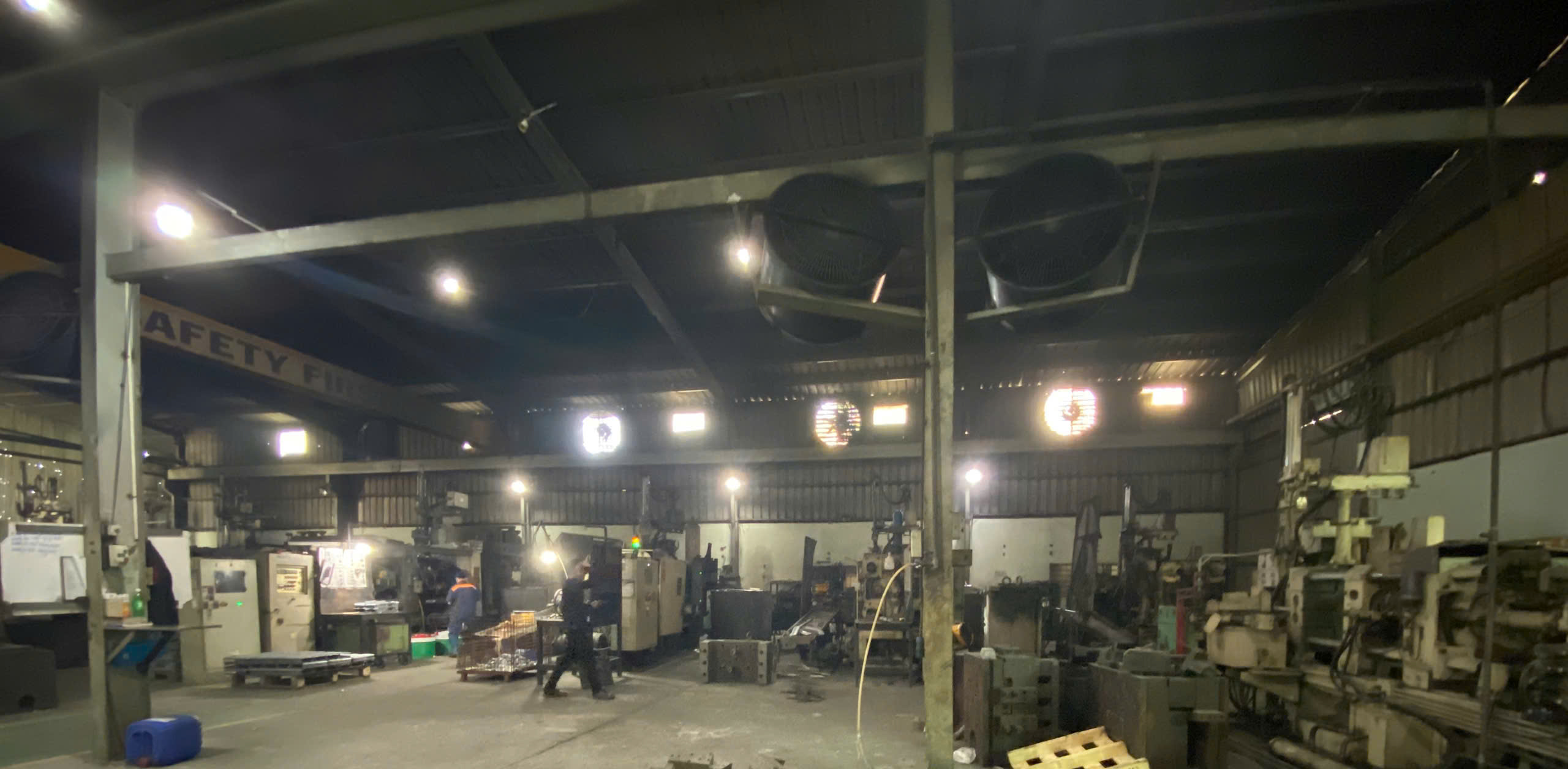
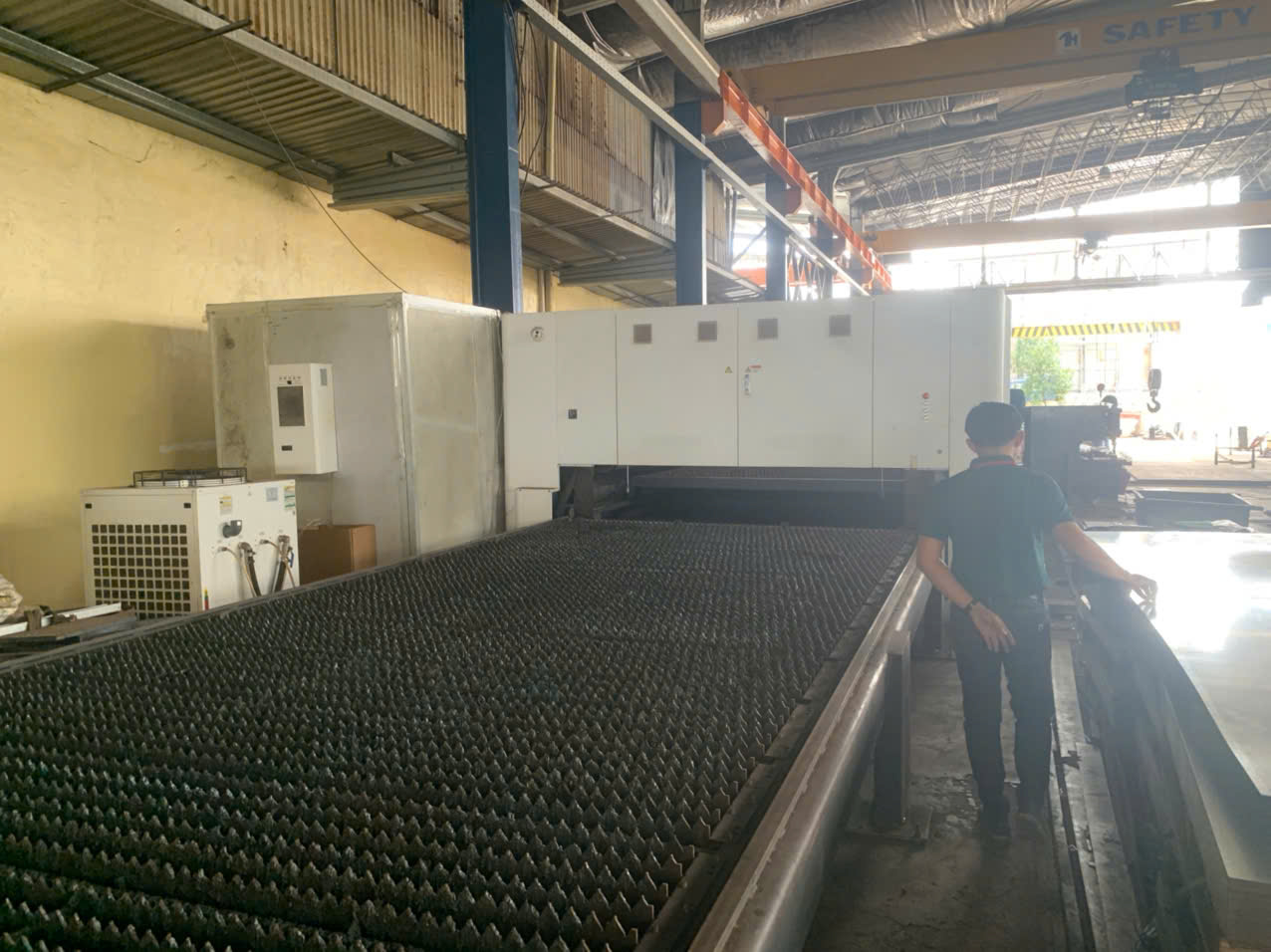
Heavy-duty fabrication processes require larger, more powerful equipment — plasma and flame cutters for thick plate, heavy-tonnage press brakes for bending, submerged arc welding for deep penetration joints, and overhead cranes for material handling. Lightweight fabrication uses high-speed laser cutters, smaller press brakes, TIG welding for fine seams, and metal forming techniques like stamping and roll forming for mass production.
Cutting Methods
The cutting process is where fabrication processes diverge most visibly.
For lightweight sheet metal, fiber laser cutting dominates. It handles materials up to about 6 mm with exceptional speed and accuracy — tolerances of ±0.1 mm are routine. Turret punch presses also remain common for high-volume production of lighter gauge parts with standard hole patterns.
Heavy-duty plate requires different tools:
- Plasma cutting handles 6 mm to 50 mm+ with good speed and acceptable edge quality.
- Oxy-fuel (flame) cutting is used for very thick plate — 50 mm to 300 mm — where plasma cannot reach.
- Waterjet cutting works on any thickness without heat-affected zones, but it is slower and more expensive.
Understanding how thin and thick plate processing differ in sheet metal fabrication can help you specify the right cutting and forming approach for your project.
Forming and Bending
Lightweight metal forming techniques include air bending on small press brakes (50–100 ton capacity), roll forming for long runs of uniform profiles, and stamping for high-volume parts like automotive panels and electronic housings.
Heavy-duty forming demands press brakes rated at 500 tons or more. Some structural steel bending requires hydraulic plate rolling machines with three or four rolls to create large cylindrical or conical shapes for tanks and pressure vessels.
Welding Techniques
| Welding Method | Best For | Typical Material Thickness | Key Advantage |
|---|---|---|---|
| TIG (GTAW) | Lightweight, precision work | 0.5 mm – 6 mm | Clean, precise seams; low spatter |
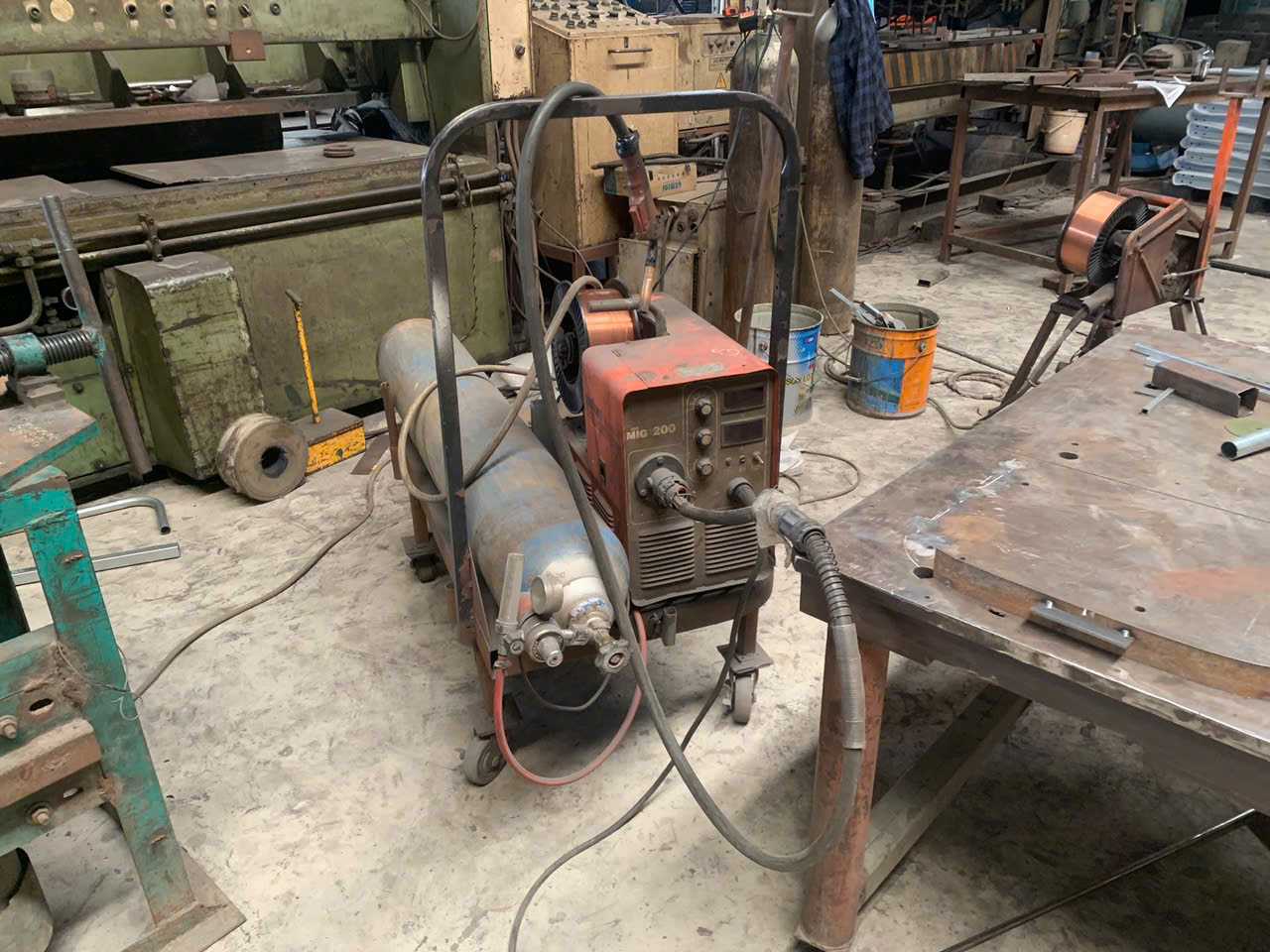
| MIG (GMAW) | General purpose, medium gauge | 1 mm – 12 mm | Fast deposition; versatile |
| Submerged Arc (SAW) | Heavy-duty structural joints | 6 mm – 100 mm+ | Deep penetration; high deposition rate |
| Flux-Cored Arc (FCAW) | Heavy-duty field welding | 4 mm – 50 mm+ | Works in windy outdoor conditions |
| Spot Welding | Lightweight overlapping sheets | 0.5 mm – 3 mm | Fast; ideal for mass production |
On our projects, we specify the welding technique in the manufacturing process plan and verify it during in-process inspection. Getting the weld right is critical — especially for heavy-duty structural components where a failed weld can mean a catastrophic failure. For more detail on selecting the right approach, explore the common welding processes in sheet metal fabrication.
Material Handling and Facility Requirements
Heavy-duty fabrication facilities need overhead cranes (5–50 ton capacity), forklifts rated for heavy plate, and large floor space. Worker safety protocols are more extensive — fall protection, rigging certification, heat stress management.
Lightweight fabrication occurs in tighter, cleaner workshop environments. Robotic automation is more common here. High-speed robotic arms handle sheet loading, bending, and part sorting. For heavy-duty work, collaborative robots (cobots) are increasingly used for welding and material positioning, improving both safety and consistency.
Modern fabrication also leverages digital twin technology and simulation software. We work with suppliers who use Solidworks Simulation and AutoDesk Inventor to predict part performance before cutting a single sheet. This reduces physical prototyping, minimizes waste, and catches design issues early — which is exactly the kind of "right first time" approach our U.S. clients demand.
What quality standards should I demand from my supplier for my heavy-duty structural components?
A lesson we learned early in our quality management journey: a supplier's ISO 9001 certificate on the wall means very little if their shop floor tells a different story. We now conduct on-site audits before onboarding any fabrication supplier, and we insist on documented process control at every step.
For heavy-duty structural components, demand compliance with AWS D1.1 for structural welding, ISO 3834 for fusion welding quality, and ASTM or EN material certifications. Require your supplier to provide mill test reports, weld procedure specifications, welder qualification records, dimensional inspection reports, and PPAP documentation to verify process capability before production begins.
Why Heavy-Duty Standards Are Non-Negotiable
Lightweight components that fail in service are usually inconvenient. Heavy-duty structural components that fail can be dangerous. A cracked weld on an HVAC duct cover is a warranty claim. A cracked weld on a structural beam is a safety hazard.
This is why the quality bar for heavy-duty structural fabrication is fundamentally different. The standards exist to protect lives, and your supplier must treat them that way.
Key Standards and Certifications to Look For
Here is what we verify during our supplier qualification process:
- AWS D1.1 / D1.6 — Structural welding codes for carbon steel and stainless steel fabrication, respectively. These define acceptable weld profiles, inspection methods, and welder qualification requirements.
- ISO 3834 — Quality requirements for fusion welding of metallic materials. Three levels exist (comprehensive, standard, elementary) based on product criticality.
- ASTM A36, A572, A588 — Material specifications for structural carbon steel plate. Your supplier must provide mill test reports 7 (MTRs) showing chemical composition and mechanical properties.
- EN 1090 — European standard for structural steel and aluminum components. Required if your parts ship to EU markets.
- PPAP (Production Part Approval Process) — Common in automotive and industrial supply chains. We coordinate full PPAP packages including control plans, process flow diagrams, measurement system analysis, and initial sample inspection reports.
Our Quality Control Process
We do not rely on final inspection alone. Our process control approach includes:
- Incoming material verification — Check MTRs against drawing specifications. Confirm material grade, thickness, and surface condition.
- In-process inspection — Monitor critical dimensions during cutting, forming, and welding. Our inspectors use calibrated instruments and follow inspection checklists tied to the control plan.
- Weld inspection — Visual inspection per AWS standards, plus non-destructive testing 8 (ultrasonic, magnetic particle, or dye penetrant) when specified.
- Final dimensional inspection — Full layout inspection on first articles. Statistical sampling on production runs.
- Surface treatment verification — Coating thickness, adhesion testing, salt spray results where applicable.
Sustainability and Lifecycle Considerations
The choice between lightweight and heavy-duty fabrication is increasingly influenced by sustainability goals. Heavy-duty steel is highly recyclable — over 90% of structural steel gets recycled at end of life. Aluminum is also infinitely recyclable, though the energy cost of primary production is high.
We help clients evaluate the full lifecycle: material sourcing, energy consumption during fabrication, transportation weight (lighter parts cost less to ship), durability in service, and end-of-life recyclability. Sometimes a heavier, more durable part is the greener choice because it lasts three times longer.
Conclusion
Distinguishing between lightweight and heavy-duty structural sheet metal fabrication comes down to load requirements, material thickness, fabrication processes, and quality standards. Get these four factors right, and you avoid costly rework. Our team at DEWIN is ready to help you source the right solution.
Frequently Asked Questions
How can I determine if my project requires lightweight or heavy-duty sheet metal fabrication?
A purchasing manager we work with in the Midwest once ordered 2 mm cold rolled steel brackets for a load-bearing frame. The parts failed stress testing within weeks, and the entire order had to be scrapped and restarted with proper heavy-gauge plate.
What material gauges and thicknesses should I use to classify my structural components?
One trade-off we weigh regularly is whether to spec a thicker gauge of mild steel or a thinner gauge of stainless steel for the same application. The answer depends on the material properties, corrosion environment, and the client's total cost of ownership expectations.
How do the manufacturing processes and equipment differ for my heavy-duty fabrication needs?
During a recent supplier audit at a fabrication facility in Vietnam, I watched two production lines running side by side — one cutting 1.2 mm stainless panels on a fiber laser, the other flame-cutting 16 mm structural plate for offshore platform supports. The contrast in scale, speed, and handling was striking.
Footnotes
1. Explains a common arc welding process for heavy-duty structural joints. ↩︎
2. Describes a type of steel processed at high temperatures for structural applications. ↩︎
3. Official source for the structural welding code for steel. ↩︎
4. Describes a type of alloy steel with better mechanical properties than carbon steel. ↩︎
5. Explains a numerical method for solving engineering and mathematical problems. ↩︎
6. Replaced with a Wikipedia page providing a comprehensive overview of the Production Part Approval Process (PPAP). ↩︎
7. Replaced with a Wikipedia page defining and explaining mill test reports. ↩︎
8. Replaced with a Wikipedia page offering a detailed explanation of non-destructive testing (NDT). ↩︎
9. Official international standard for quality requirements for fusion welding. ↩︎