
Last year, a client’s order for “1018 sheet” arrived as bar stock—wrong form, wrong tolerances, weeks of delay US AISI/SAE standards 1. That sourcing failure cost real money and taught our team a lesson we now build into every project.
To ensure sheet metal fabrication grades match US AISI/SAE standards when sourcing, you must specify full ASTM or AMS references alongside the AISI/SAE grade number, require mill test reports with chemical composition and mechanical properties data, and verify material traceability from mill to finished part.
This guide breaks down the grading system, the documentation you need, traceability best practices, and how to handle local material equivalents ASTM/AMS specification 2. Each section gives you actionable steps so your next sourcing project gets it right the first time.
How can I verify that the raw material grades used by my Asian supplier truly meet my AISI/SAE specifications?
A buyer we work with in Ohio once told me he ordered SAE 4140 sheet and received material with no specification reference at all—just "4140" stamped on the packing list EN 10204 3.1 3. That single missing detail triggered a full re-inspection and a two-week delay.
To verify raw material grades, request a mill test certificate that lists the exact AISI/SAE grade, the governing ASTM specification, UNS number, full chemical composition, and mechanical properties. Then cross-check the cert against your engineering drawing requirements before production starts.
Understanding the AISI/SAE Four-Digit System
The AISI/SAE designation system uses a four-digit code for carbon and alloy steels Certificate of Conformance 4. The first digit tells you the alloy family. The second digit indicates secondary alloying elements. The last two digits show the carbon content in hundredths of a percent.
For example, SAE 1018 means: plain carbon steel (1xxx), no significant secondary alloy modification (0), and 0.18% carbon (18). SAE 4140 means: chromium-molybdenum alloy steel (41xx) with 0.40% carbon.
Stainless steels follow a three-digit system. SAE 304 contains roughly 18% chromium and 8% nickel. SAE 316 adds about 2% molybdenum for better corrosion resistance.
One important clarification: AISI no longer manages this standard. SAE now maintains it under SAE J1086. But certifications still quote both "AISI" and "SAE" together. The grade numbers remain identical.
| AISI/SAE Grade | Alloy Family | Carbon Content | Common Sheet Metal Use |
|---|---|---|---|
| 1008 | Plain carbon | 0.08% | Cold-rolled sheet (A1008) |
| 1010 | Plain carbon | 0.10% | General forming, brackets |
| 1018 | Plain carbon | 0.18% | Structural components |
| 304 | Austenitic stainless | N/A (low carbon) | Food-grade enclosures |
| 316 | Austenitic stainless | N/A (low carbon) | Marine, chemical equipment |
| 4140 | Cr-Mo alloy | 0.40% | High-strength structural parts |
The Critical Role of the Mill Test Certificate
A mill test certificate (also called a material test report or MTR) is the single most important document for verification. It should include:
- Heat number for traceability
- Chemical composition breakdown 5 (each element by percentage)
- Mechanical properties (tensile strength, yield strength, elongation)
- The governing specification (e.g., "SAE 1018 per ASTM A1018")
- UNS number (e.g., UNS G10180)
When our team in Vietnam audits a supplier, we compare the MTR data against the ASTM specification limits line by line. We check that the carbon content falls within the allowed range. We confirm tensile and yield values meet the minimum threshold. If any value sits at the extreme edge of the tolerance band, we flag it for discussion with the client's engineering team.
How the UNS System Helps
The Unified Numbering System 6 assigns a letter-plus-five-digit code to each alloy. For carbon steels, UNS codes often mirror the SAE grade. UNS G10180 corresponds to SAE 1018. UNS S30400 corresponds to SAE 304. Requesting the UNS number alongside the AISI/SAE grade eliminates ambiguity, especially when dealing with international suppliers who may use JIS, DIN, or EN equivalents.
Practical Verification Steps
When we onboard a new sheet metal supplier, our quality engineers follow this sequence:
- Request sample MTRs from the supplier's last three production runs.
- Cross-reference chemical composition against the SAE J1086 limits.
- Confirm the ASTM specification listed on the MTR matches the client's drawing callout.
- Verify mechanical properties 7 against the ASTM performance requirements.
- If stainless steel grades are involved, check for intergranular corrosion test results where applicable.
This systematic approach catches issues early. It also builds a baseline so we know what "normal" looks like for that supplier's material sourcing.
What documentation should I require to ensure my sheet metal parts comply with US material standards?
One lesson we learned early in our supply chain operations: a purchase order that just says "304 stainless sheet, 16 gauge" is not enough. That kind of vague callout leaves the door open for material that technically matches the grade but fails to meet the performance spec.
You should require a mill test certificate per ASTM E1338 or EN 10204 3.1, a material test report referencing the full ASTM/AMS specification, a certificate of conformance from the fabricator, and dimensional inspection records confirming gauge and thickness tolerances per your drawing.
Distinguishing Between Grade and Specification
This is where many sourcing projects go wrong. An AISI/SAE grade defines chemical composition. An ASTM specification defines how the material must perform, how it is tested, and what form it takes (sheet, bar, plate, strip). You need both.
For example, if your drawing calls for 304 stainless steel sheet, the correct callout is "AISI 304 per ASTM A240." ASTM A240 governs chromium and chromium-nickel stainless steel plate, sheet, and strip for pressure vessels and general applications. It specifies not just composition but also tensile strength, yield strength, elongation, hardness, and surface finish requirements.
Here is a mapping of common sheet metal grades to their proper ASTM specifications:
| AISI/SAE Grade | ASTM Sheet Specification | UNS Number | Typical Application |
|---|---|---|---|
| 1008 | ASTM A1008 (cold-rolled) | UNS G10080 | Brackets, enclosures, formed parts |
| 1010 | ASTM A1011 (hot-rolled) | UNS G10100 | Structural panels, general fabrication |
| 1018 | ASTM A1018 (hot-rolled) | UNS G10180 | Structural components, mounting plates |
| 304 | ASTM A240 | UNS S30400 | Food equipment, architectural panels |
| 316 | ASTM A240 | UNS S31600 | Marine hardware, chemical processing |
| 4130 | AMS 6350 (sheet/strip) | UNS G41300 | Aerospace structural components |
Your Documentation Checklist
Here is the set of documents we require from every sheet metal supplier before production begins:
- Mill Test Certificate (MTC/MTR): Must reference the heat number, chemical composition, mechanical properties, and the specific ASTM or AMS specification.
- Certificate of Conformance (CoC): The fabricator's written statement that the finished parts conform to the drawing and specification requirements.
- Incoming Material Inspection Record: The fabricator's own inspection log showing they verified the raw material before cutting or forming.
- Dimensional Inspection Report: First-article and final inspection data confirming thickness (gauge), flatness, and critical dimensions meet drawing tolerances.
- Material Traceability Log: A record linking each part to its raw material heat number.
For a deeper look at how to formally request these certifications from your supplier, see our guide on how to request ASTM-compliant material certificates when sourcing sheet metal fabrication.
Gauge vs. Thickness: A Common Documentation Gap
In sheet metal sourcing, gauge numbers and decimal thickness are not always clearly documented. A smaller gauge number means thicker material. This is counterintuitive and causes errors.
| Gauge Number | Thickness (inches) | Thickness (mm) |
|---|---|---|
| 10 | 0.1345 | 3.416 |
| 14 | 0.0747 | 1.897 |
| 16 | 0.0598 | 1.519 |
| 18 | 0.0478 | 1.214 |
| 20 | 0.0359 | 0.912 |
| 22 | 0.0299 | 0.759 |
Our standard practice is to specify thickness in decimal inches or millimeters on every drawing—never gauge alone. This eliminates confusion, especially when working with suppliers who use different gauge standards for stainless steel versus carbon steel. Stainless steel gauge charts differ from carbon steel gauge charts, so a "16 gauge" callout without context can result in the wrong thickness.
We also verify dimensional accuracy of incoming sheet stock with calibrated micrometers and record the results. This incoming material inspection step catches thickness deviations before they become expensive rework issues downstream.
How do I manage material traceability to prevent low-grade substitutions in my custom fabrication project?
Two years ago, our China office caught a case where a sub-tier supplier swapped 316 stainless for 304 on a batch of marine-grade brackets. The parts looked identical. The MTR matched. But the MTR belonged to a different heat lot. Without our traceability protocol, those parts would have shipped and eventually failed in a salt-water environment.
To prevent low-grade substitutions, implement end-to-end material traceability by requiring heat-number marking on raw material and finished parts, cross-referencing each MTR to specific production lots, conducting random third-party chemical spot tests, and auditing your supplier's material handling procedures during regular facility visits.
Why Substitution Happens
Material substitution is not always malicious. Sometimes a supplier runs out of the specified grade and substitutes a "close enough" alternative to meet delivery deadlines. Sometimes a mill ships the wrong heat under the right paperwork. Sometimes the fabricator co-mingles material from different heats on the shop floor without proper labeling.
The result is the same: your finished parts may not meet the required chemical composition or mechanical properties. In critical applications—structural brackets, pressure-containing enclosures, marine hardware—this can be dangerous.
Building a Traceability System
Our approach to material traceability follows a chain-of-custody model:
Step 1: Heat Number Marking. Every incoming sheet or coil must have the heat number physically marked on it (stamped, stenciled, or tagged). This marking must remain visible through cutting and forming. For small parts, we require the heat number on the batch traveler document that accompanies parts through each production step.
Step 2: MTR-to-Part Linking. Each MTR must be matched to the specific parts produced from that heat. Our quality control processes require the fabricator to record which heat number was used for each work order. This is part of the PPAP (Production Part Approval Process) documentation we manage for our US clients.
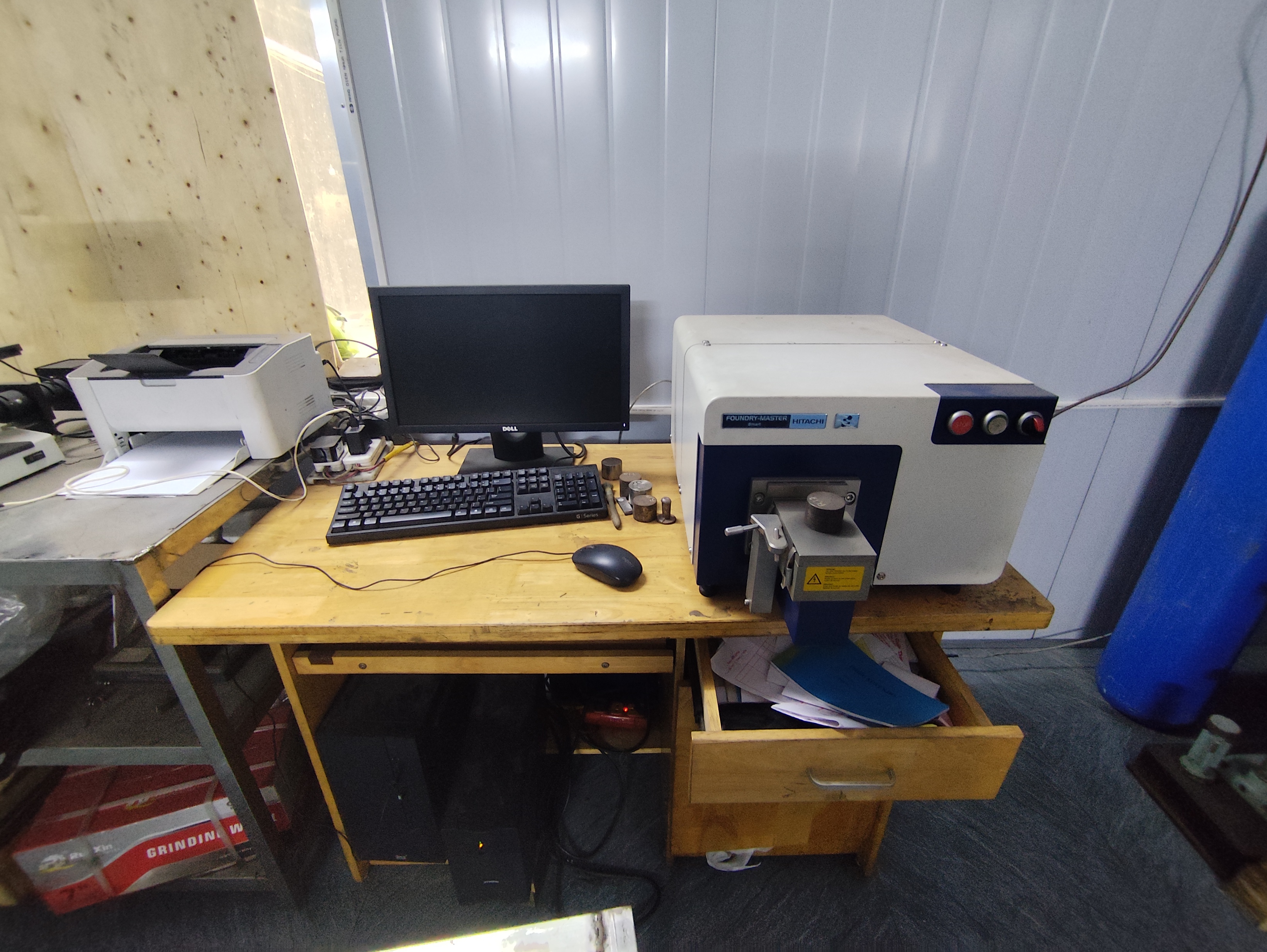
Step 3: Random Spot Testing. On higher-risk projects, we arrange third-party testing. A portable XRF (X-ray fluorescence) analyzer can verify the alloy composition in seconds, right on the shop floor. This is especially important for stainless steel grades where the difference between 304 and 316 is the presence of molybdenum—invisible to the eye but detectable by XRF.
Step 4: Supplier Audits. During our supplier qualification process, we evaluate how the factory stores, labels, and separates different material grades. We look for physical segregation, clear labeling systems, and documented procedures for material issuance. A supplier with poor shop-floor material management is a substitution risk, regardless of how good their paperwork looks.
Digital Traceability Trends
The industry is moving toward digital MTRs and, in some cases, blockchain-tracked material certifications. These technologies create an immutable record of material origin, properties, and processing steps. While full blockchain adoption is still emerging, digital MTR platforms are already reducing paperwork errors and speeding up verification cycles. We are evaluating these tools for integration into our supply chain workflow, particularly for projects where corrosion resistance and long-term reliability are non-negotiable.
Can I rely on local material equivalents in Vietnam or China without compromising my engineering requirements?
When we opened our Vietnam office, one of the first questions our engineering clients asked was whether locally sourced material could match US specifications. The honest answer is: sometimes yes, but never without verification.
Local material equivalents in Vietnam or China can meet your engineering requirements, but only if you verify each equivalent against the original AISI/SAE grade through cross-reference tables, confirm compliance with the governing ASTM specification, and validate the material with an independent mill test certificate and spot testing.

The Equivalency Problem
Many Asian steel mills produce material to JIS (Japan), GB (China), or TCVN (Vietnam) standards. These standards often have grades that closely approximate AISI/SAE compositions. But "close" is not "identical."
For example, Chinese GB standard Q235 is sometimes offered as equivalent to ASTM A36 or AISI 1018. But Q235 allows a wider carbon range (up to 0.22% for thicknesses ≤16 mm) and different manganese and silicon limits. If your design depends on a specific yield strength or weldability behavior tied to AISI 1018's tighter composition band, Q235 may not be a safe substitute.
Similarly, Japanese JIS SUS304 is widely considered equivalent to AISI 304 stainless steel. The chemical composition ranges are very close. But minor differences in allowable sulfur and phosphorus content can affect weldability in thin-gauge sheet metal applications. For more on navigating these ASTM vs JIS material grade standards, we have a dedicated comparison guide.
Cross-Reference Table: Common Equivalents
| AISI/SAE Grade | ASTM Spec | Chinese GB Equivalent | Japanese JIS Equivalent | Key Difference to Watch |
|---|---|---|---|---|
| 1008 | A1008 | Q195 / DC01 | SPCC | Carbon range may be wider in GB |
| 1018 | A1018 | 20# steel | S20C | Mn and Si limits differ |
| 304 | A240 | 0Cr18Ni9 / 06Cr19Ni10 | SUS304 | Sulfur/phosphorus limits vary slightly |
| 316 | A240 | 0Cr17Ni12Mo2 | SUS316 | Mo content tolerance may differ |
| 4140 | A29 | 42CrMo | SCM440 | Heat treatment response varies |
When Equivalents Work—and When They Don't
For general-purpose brackets, enclosures, and non-critical structural parts, verified local equivalents can work well. The cost savings are real. Aluminum alloys like 5052 and 6061 are produced to tight standards in both China and Vietnam, and local supply chains for these grades are mature.
But for applications requiring specific corrosion resistance (e.g., marine or chemical environments), precise mechanical properties (e.g., aerospace brackets per AMS), or regulatory compliance (e.g., pressure vessels per ASME), you should insist on material produced and certified directly to the ASTM or AMS specification. In these cases, "equivalent" is not good enough.
Our Approach to Equivalent Validation
When a client's drawing calls for an AISI/SAE grade and the supplier proposes a local equivalent, our process is straightforward:
- We pull the cross-reference and compare composition ranges element by element.
- We check whether the local grade's mechanical property minimums meet or exceed the ASTM specification requirements.
- We request an MTR for the specific heat lot and verify the actual composition—not just the nominal grade.
- If any element falls outside the ASTM tolerance, we reject the material and source from a mill that certifies directly to the ASTM spec.
- For first-article production, we often send a sample to a third-party lab in the US for independent verification.
This process adds time upfront but prevents expensive failures downstream. It also gives our clients confidence that "sourced in Vietnam" or "sourced in China" does not mean "compromised on quality."
Conclusion
Matching sheet metal fabrication grades 10 to US AISI/SAE standards requires more than quoting a grade number. Specify full ASTM references, demand verified MTRs, enforce material traceability, and validate every local equivalent before production.
Frequently Asked Questions
How can I verify that the raw material grades used by my Asian supplier truly meet my AISI/SAE specifications?
A buyer we work with in Ohio once told me he ordered SAE 4140 sheet and received material with no specification reference at all—just "4140" stamped on the packing list EN 10204 3.1 3 . That single missing detail triggered a full re-inspection and a two-week delay.
What documentation should I require to ensure my sheet metal parts comply with US material standards?
One lesson we learned early in our supply chain operations: a purchase order that just says "304 stainless sheet, 16 gauge" is not enough. That kind of vague callout leaves the door open for material that technically matches the grade but fails to meet the performance spec.
How do I manage material traceability to prevent low-grade substitutions in my custom fabrication project?
Two years ago, our China office caught a case where a sub-tier supplier swapped 316 stainless for 304 on a batch of marine-grade brackets. The parts looked identical. The MTR matched. But the MTR belonged to a different heat lot. Without our traceability protocol, those parts would have shipped and eventually failed in a salt-water environment.
Footnotes
1. Details the SAE/AISI steel grading system and its use in classifying steel. ↩︎
2. Compares and explains ASTM and AMS standards for materials. ↩︎
3. Differentiates EN 10204 3.1 and 3.2 inspection certificates for metallic products. ↩︎
4. Defines Certificate of Conformance as a declaration that products meet specified requirements. ↩︎
5. Details the elements commonly found in steel and their impact on properties. ↩︎
6. Explains the UNS system for metals and alloys, its format and purpose. ↩︎
7. Introduces and explains key mechanical properties of metals. ↩︎
8. Defines a mill test report as a document certifying material chemical and physical properties. ↩︎
9. Explains material traceability in manufacturing, tracking material history through the supply chain. ↩︎
10. Explains how sheet metal grades identify alloy families and composition. ↩︎