When our team managed a recent pressure vessel component project bound for a US energy client, we learned how one missed weld specification nearly derailed the entire shipment ASME Boiler and Pressure Vessel Code Section VIII 1. Sheet metal fabrication for energy projects carries zero margin for error — and the consequences of non-compliance go far beyond rejected parts. They can mean catastrophic failure, regulatory shutdowns, and irreparable damage to your reputation.
Sheet metal fabrication meets ASME pressure vessel standards when every stage — material selection, engineering design, welding procedures qualification, non-destructive examination, hydrostatic pressure testing, and final documentation — strictly follows the ASME Boiler and Pressure Vessel Code Section VIII, culminating in Authorized Inspector approval and ASME U Stamp certification.
This guide walks through the critical checkpoints, practical quality systems, and sourcing strategies that purchasing managers need to get ASME-compliant parts right the first time — especially when working with offshore fabricators in Southeast Asia.
How do I find a reliable offshore fabricator that fully complies with my ASME Section VIII specifications?
A lesson we learned early in our Vietnam operations: holding an ISO certificate 2 does not automatically mean a fabricator understands ASME. We once audited a potential supplier who claimed full compliance but had never produced a Procedure Qualification Record 3 for any of their welding processes.
Find a reliable offshore fabricator by verifying their ASME U Stamp certification, auditing their quality control manual, confirming welder qualifications under ASME Section IX, reviewing past Manufacturer's Data Reports, and ensuring they work with a recognized Authorized Inspection Agency.

Why ASME Section VIII Divisions Matter
Before you evaluate any fabricator, you need to understand what you are asking them to build. ASME Section VIII 4 is divided into three divisions. Division 1 covers mandatory requirements for the design, fabrication, inspection, and testing of pressure vessels. It is the standard most commonly referenced for general pressure vessel fabrication in the US and Canada. Division 2 provides alternative rules with higher design stresses but stricter analysis. Division 3 covers high-pressure vessels. Most energy sector applications fall under Division 1.
When we help US clients source custom pressure vessel components from Southeast Asia, the first question we ask is: which division applies? Getting this wrong leads to design errors, fabrication mistakes, and costly rework.
Key Criteria for Evaluating an Offshore Fabricator
Here is a practical checklist we use during our supplier audits:
| Evaluation Criteria | What to Look For | Red Flag |
|---|---|---|
| ASME U Stamp Certification 5 | Valid certificate, scope covers your vessel type | Expired certificate or no certificate at all |
| Quality Control Manual | Documented QC system covering all manufacturing phases | No written QC manual or outdated procedures |
| Welder Qualifications | Current ASME Section IX certifications for all welders | Welders certified only to local standards |
| Authorized Inspection Agency 6 | Active relationship with a recognized AIA | No third-party inspection arrangement |
| Material Traceability | Full material traceability from mill to finished part | No Material Test Reports 7 on file |
| Past Project Experience | Manufacturer's Data Reports from similar energy projects | No verifiable track record in pressure vessel work |
The Role of the Authorized Inspector
The Authorized Inspector is not optional. This person reviews design drawings, monitors fabrication, witnesses pressure testing, and ultimately applies the ASME U Stamp. Without AI involvement from the start, no amount of good fabrication will result in a compliant vessel. In our experience exporting to the US, we always confirm that the AI is engaged before the first piece of steel is cut.
Division Confusion Is Real
One challenge we see repeatedly: buyers specify "ASME Section VIII" without clarifying which division. This ambiguity causes problems downstream. Division 1 and Division 2 have different allowable stress values, different design-by-analysis requirements, and different documentation needs. Confirm the division in your purchase order. Confirm it again in the design review. Then confirm it a third time before fabrication starts.
What quality control processes should I look for to ensure my custom energy parts meet "right first time" standards?
During a recent project involving precision-engineered mounting brackets for a US energy client, our Vietnam team caught a material hardness deviation during incoming inspection — before any fabrication began. That single check saved weeks of rework and tens of thousands of dollars.
Look for a documented quality control system that covers incoming material verification with Material Test Reports, in-process dimensional checks, welding procedure compliance per ASME Section IX, non-destructive examination at critical stages, hydrostatic pressure testing, and final inspection against approved drawings before shipment.
Material Selection and Verification
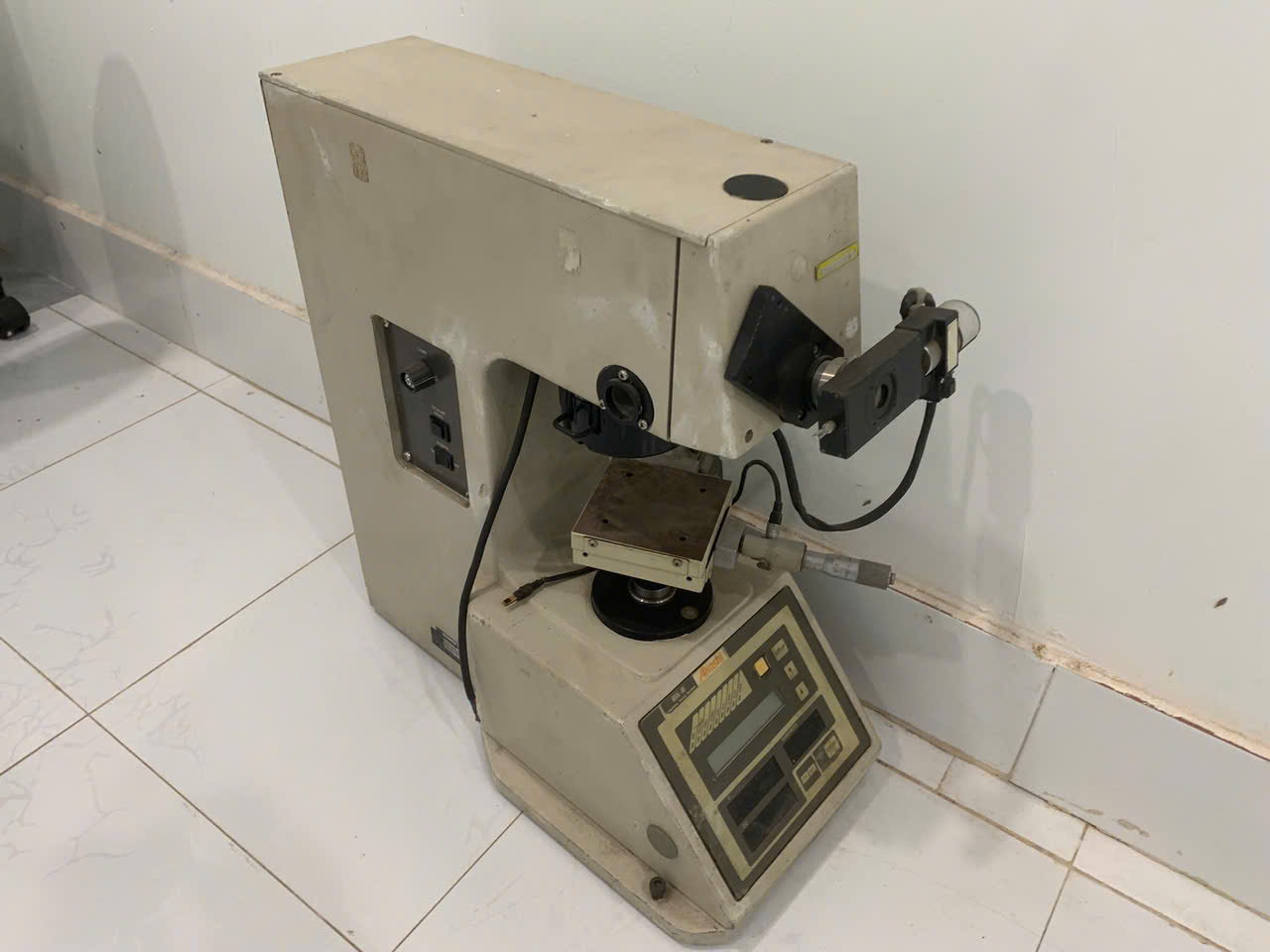
ASME requires all materials to meet specific ASTM/ASME material specifications. This includes mechanical properties like tensile strength, yield strength, and elongation, as well as corrosion resistance for the intended service environment. Acceptable materials include carbon steels, low alloy steels, high alloy steels, cast iron, and certain non-ferrous metals. ASME Section II provides detailed guidelines on materials for pressure vessels, boilers, and piping.
In practice, here is how we handle material verification:
- Request Material Test Reports from the mill before accepting any material.
- Cross-check the MTR against the ASME-specified grade and heat number.
- Perform independent verification testing when the project risk warrants it.
- Maintain full material traceability from raw stock through finished components.
The Multi-Stage QC Workflow
A "right first time" outcome does not happen by accident. It requires structured checkpoints throughout the fabrication process.
| QC Stage | Activities | ASME Relevance |
|---|---|---|
| Incoming Material Inspection | Verify MTRs, check dimensions, confirm material grade | ASME Section II compliance |
| Design Review | Confirm wall thickness calculations, MAWP, loadings | ASME Section VIII design requirements |
| In-Process Fabrication Check | Monitor forming operations, verify dimensional tolerances | Structural integrity per code |
| Welding Inspection | Verify WPS compliance, check welder certs, inspect weld quality | ASME Section IX requirements |
| Non-Destructive Examination 8 | UT, RT, MT, PT as required by design joint efficiency | ASME Section VIII NDE requirements |
| Post-Weld Heat Treatment | Verify temperature, hold time, cooling rate per code | Stress relief and material property restoration |
| Hydrostatic Pressure Testing 9 | Pressurize to 1.3–1.5 times MAWP, hold, inspect | Final structural integrity verification |
| Final Dimensional Inspection | Full layout inspection against approved drawings | Customer specification compliance |
| Documentation Review | Compile Manufacturer's Data Report package | ASME certification readiness |
Why Post-Weld Heat Treatment Matters
Post-weld heat treatment is often overlooked by less experienced fabricators. ASME Section VIII specifies when PWHT is required based on material type, thickness, and service conditions. Skipping PWHT when the code requires it can leave residual stresses in the vessel that lead to cracking, especially in energy sector applications involving cyclic loading or hydrogen service. Our project managers flag PWHT requirements during the design review phase — not after welding is complete.
Non-Destructive Examination Methods
NDE is your last line of defense before pressure testing. Each method serves a different purpose:
- Radiographic Testing (RT): Provides an internal image of welds to detect porosity, inclusions, and incomplete fusion.
- Ultrasonic Testing (UT): Detects internal flaws and measures wall thickness.
- Magnetic Particle Testing (MT): Identifies surface and near-surface defects in ferromagnetic materials.
- Dye Penetrant Testing (PT): Reveals surface-breaking defects on non-porous materials.
The choice of NDE method depends on the joint category, weld joint efficiency, and the design requirements specified in the engineering drawings. We coordinate with our Authorized Inspection Agency to determine the appropriate NDE plan before fabrication begins. For a deeper dive into inspection criteria, see our guide on weld quality inspection standards for sheet metal fabrication.
How can I bridge the communication gap with my supplier to ensure every technical drawing requirement is met?
One of our US clients once sent a 47-page drawing package to a fabricator who confirmed receipt with a simple "OK, we understand." Three weeks later, three out of eight critical tolerances had been missed. The fabricator had never actually reviewed the GD&T callouts. That experience reshaped how we manage technical communication on every project.
Bridge the communication gap by conducting a formal drawing review meeting before fabrication, creating a bilingual checklist of critical dimensions and tolerances, establishing a single technical point of contact, requiring First Article Inspection reports, and using PPAP documentation to confirm every specification is understood and met.

The Root Cause of Miscommunication
Most drawing-related failures are not caused by language barriers alone. They stem from differences in manufacturing standards, tolerance interpretation, and assumptions about what is "standard practice." A US engineer assumes the fabricator knows that a certain surface finish callout means Ra 1.6 µm. The fabricator assumes the customer will accept whatever finish comes off the machine. Neither side confirms.
In our workflow, we eliminate these assumptions by requiring a structured design review before any metal is cut.
A Practical Communication Framework
Here is the framework we use on every custom sheet metal project:
| Step | Action | Responsible Party |
|---|---|---|
| 1. Drawing Transmittal | Send complete drawing package with revision history | Buyer |
| 2. Technical Review Meeting | Walk through every critical dimension, material spec, and tolerance | Both parties (via video call) |
| 3. Bilingual Specification Sheet | Translate key requirements into the fabricator's working language | DEWIN project team |
| 4. Manufacturing Feasibility Report | Fabricator confirms ability to meet each specification | Fabricator |
| 5. First Article Inspection | Full dimensional report on first production piece | Fabricator, verified by DEWIN |
| 6. PPAP Submission | Complete Production Part Approval Process documentation 10 | DEWIN to buyer |
| 7. Ongoing Process Control | In-process checks against approved control plan | Fabricator, monitored by DEWIN |
Why PPAP Matters for Energy Components
Production Part Approval Process documentation is not just an automotive industry tool. For energy sector applications — especially pressure vessel components — PPAP provides a structured way to confirm that every drawing requirement has been understood, validated, and locked into the manufacturing process. It covers dimensional results, material certifications, process flow diagrams, control plans, and capability studies.
When we manage a project, the PPAP package becomes the single source of truth. If there is ever a dispute about a specification, we go back to the approved PPAP. This eliminates finger-pointing and keeps the project on track.
Handling Design Changes Mid-Project
Design changes are inevitable in energy projects. The critical thing is how they are managed. Every change must go through a formal Engineering Change Notice process. The ECN must be reviewed by the fabricator, confirmed by our project team, and approved by the Authorized Inspector if the change affects any ASME code requirement. We have seen projects derail because a "minor" material substitution was made without realizing it affected the required post-weld heat treatment cycle. Formal change management prevents these cascading failures.
The Value of a Local Technical Team
Having our own team in Vietnam — engineers who speak the local language and understand both US and local manufacturing practices — is what makes this communication framework work. They are on the factory floor during critical operations. They review inspection data in real time. They catch problems before parts ship. This is not something you can replicate with emails alone.
Can I secure flexible payment terms while sourcing high-quality, ASME-compliant sheet metal from Southeast Asia?
A trade-off many purchasing managers wrestle with: how do you protect cash flow while still demanding the highest quality standards? One of our long-term clients told us directly that 100% prepayment to a new offshore supplier was simply not an option — his CFO would not approve the risk exposure on a six-figure order.
Yes, you can secure flexible payment terms — including 60 to 90 day open account terms — from qualified Southeast Asian suppliers when you work through an established supply chain partner with a track record of ASME-compliant deliveries, transparent quality documentation, and strong financial standing.
Why Payment Terms Matter for Energy Projects
Energy projects often involve long lead times, phased construction schedules, and complex procurement cycles. Tying up capital in prepayments to multiple suppliers creates cash flow pressure that can slow down the entire project. At the same time, fabricators in Southeast Asia — especially smaller shops — often lack the financial cushion to extend credit to new international buyers.
This creates a gap. The buyer needs terms. The fabricator needs security. Somebody has to bridge that gap.
How We Structure Payment for ASME Projects
Our approach is straightforward. We absorb the financial risk so our clients do not have to negotiate payment terms directly with the factory. Here is how a typical arrangement works:
- New clients: We start with a milestone-based payment structure — a percentage at order confirmation, a percentage at material procurement, and the balance before shipment. This builds trust on both sides.
- Established clients: We offer 60 to 90 day open account terms. The client receives the goods, inspects them, and pays on terms. This is possible because we have a strong financial position and long-standing relationships with our fabrication partners.
- Large projects: For high-value orders, we work with trade finance instruments to structure payments that align with the project's construction milestones.
Cost vs. Compliance: A False Trade-Off
Some buyers assume that demanding ASME compliance from a Southeast Asian fabricator means paying Western prices. This is not true. Labor costs, facility costs, and overhead in countries like Vietnam are significantly lower than in the US. The key is ensuring that the cost savings go into competitive pricing — not into cutting corners on quality.
We have seen fabricators quote aggressively low prices by omitting NDE costs, skipping post-weld heat treatment, or using non-certified welders. Those savings evaporate when the Authorized Inspector rejects the vessel or when the parts fail hydrostatic pressure testing.
The real question is not "can I get ASME-compliant parts cheaper offshore?" It is "can I get them cheaper without sacrificing any compliance requirement?" With the right supply chain partner managing material traceability, welding procedures qualification, and final inspection, the answer is yes.
Comparing Sourcing Models
| Sourcing Model | Quality Control | Payment Flexibility | ASME Compliance Risk |
|---|---|---|---|
| Direct to Factory (no intermediary) | Buyer must manage all QC | Limited — factory often requires prepayment | High — buyer must verify all code requirements |
| Through Trading Company | Variable — depends on trader's technical capability | Moderate — some traders offer terms | Medium — trader may lack ASME expertise |
| Through Supply Chain Partner (like DEWIN) | Comprehensive — local team manages QC end-to-end | High — open account terms available | Low — partner ensures full code compliance |
Conclusion
Getting sheet metal fabrication right for ASME pressure vessel standards requires rigorous material verification, qualified welding, thorough NDE, proper testing, and complete documentation — with no shortcuts at any stage.
Frequently Asked Questions
How do I find a reliable offshore fabricator that fully complies with my ASME Section VIII specifications?
A lesson we learned early in our Vietnam operations: holding an ISO certificate 2 does not automatically mean a fabricator understands ASME. We once audited a potential supplier who claimed full compliance but had never produced a Procedure Qualification Record 3 for any of their welding processes.
What quality control processes should I look for to ensure my custom energy parts meet "right first time" standards?
During a recent project involving precision-engineered mounting brackets for a US energy client, our Vietnam team caught a material hardness deviation during incoming inspection — before any fabrication began. That single check saved weeks of rework and tens of thousands of dollars.
How can I bridge the communication gap with my supplier to ensure every technical drawing requirement is met?
One of our US clients once sent a 47-page drawing package to a fabricator who confirmed receipt with a simple "OK, we understand." Three weeks later, three out of eight critical tolerances had been missed. The fabricator had never actually reviewed the GD&T callouts. That experience reshaped how we manage technical communication on every project.
Footnotes
1. Official ASME page detailing Section VIII of the Boiler and Pressure Vessel Code. ↩︎
2. Explains what ISO certification is and its purpose for organizations. ↩︎
3. Defines PQR based on ASME Section IX and its role in welding procedure qualification. ↩︎
4. Provides an overview of ASME Section VIII and its three divisions for pressure vessel construction. ↩︎
5. ASME’s official page on U Stamp certification, outlining its significance and requirements. ↩︎
6. Replaced HTTP 404 link with an authoritative page from the National Board of Boiler and Pressure Vessel Inspectors, defining and listing Authorized Inspection Agencies (AIA) in the context of ASME. ↩︎
7. Explains what Material Test Reports (MTRs) are and their importance for material compliance. ↩︎
8. ASME’s division focused on NDE methods like ultrasonics and radiography for material characterization. ↩︎
9. Details the hydrostatic test procedure and requirements per ASME Section VIII, UG-99. ↩︎
10. Explains PPAP as a standardized process to ensure consistent production meeting specifications. ↩︎