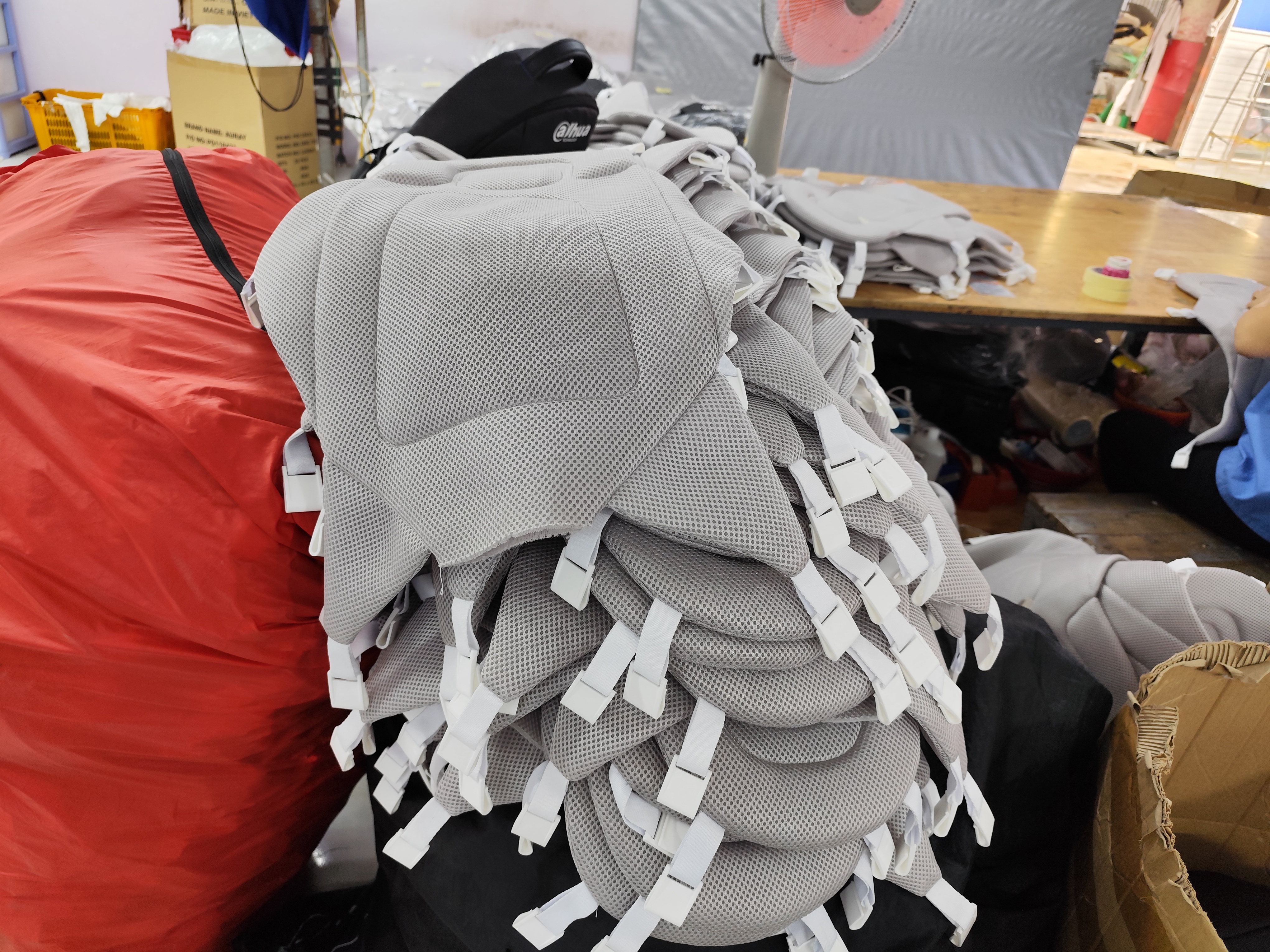

Last quarter, a batch of precision stamped brackets we sourced for a U.S. client failed plating adhesion tests—root cause traced back to invisible stamping oil residue no one caught during final inspection.
Stamping oil and cleaning residues meet cleanliness standards when you define quantifiable acceptance criteria upfront, select lubricants aligned with downstream process needs, validate cleaning with methods like gravimetric analysis or water-break testing, and implement operational controls that prevent recontamination before shipment.
This article walks through the exact steps our team follows—from RFQ specifications through shipment verification—to make sure every stamped metal part arrives clean enough for its intended use.
What Cleanliness Standards Should I Require for Stamped Metal Parts?
One lesson we learned early in our supply chain work: if you don't write cleanliness into the drawing or purchase order, you won't get it. The supplier's definition of "clean" and yours are rarely the same.
You should require cleanliness standards based on your downstream process—such as ISO 16232 for particle limits or gravimetric analysis thresholds for oil residue—and specify them explicitly in your RFQ with quantified acceptance criteria for every critical surface.

Why Downstream Processes Dictate Your Cleanliness Spec
The cleanliness level you need is not universal. It depends entirely on what happens to the part after stamping. A bracket that gets powder-coated has different residue tolerance than one that gets soldered onto a circuit board. A medical device housing demands near-zero non-volatile residue. An automotive mounting clip headed for e-coat needs a surface free of hydrophobic films.
Here is how different downstream processes map to cleanliness requirements:
| Downstream Process | Typical Cleanliness Requirement | Key Concern |
|---|---|---|
| Electroplating / E-coat | Oil-free, particle-free surface | Adhesion failure, blistering |
| Soldering / Electronics assembly | ≤ 1 mg/dm² non-volatile residue | Solder bridging, poor wetting |
| Adhesive bonding | Surface energy ≥ 38 mN/m | Bond delamination |
| Powder coating | Dry to touch, no fingerprints | Fish-eyes, cratering |
| Medical device assembly | Per ISO 19227 or customer spec | Biocompatibility, cytotoxicity |
| General mechanical assembly | Normal stamping oil acceptable | Corrosion during storage |
How to Write It Into Your RFQ
When our engineering team reviews a customer's drawing, we look for explicit callouts. If we don't see them, we ask. Here is what a well-defined cleanliness spec should include:
-
Critical surface identification. Mark which faces must be oil-free. Not every surface matters equally. On our stamped brackets, the mounting flanges that receive plating are critical. The internal bend radii may not be.
-
Quantified limits. "Clean" is not a specification. Use numbers. For particle cleanliness, reference ISO 16232 1 or VDA 19 and state the maximum particle size and count. For oil residue, define the maximum allowable mass per unit area using gravimetric analysis 2.
-
Test method. State which test method the supplier must use. A surface tension measurement 3 with Dyne pens is simple but limited. Millipore testing gives you particle size distribution data. Pick the method that matches your risk level.
-
Packaging requirements. Cleanliness is meaningless if the part gets recontaminated in transit. Specify sealed poly bags, VCI paper, desiccant packs, or cleanroom-compatible trays depending on the sensitivity.
We often see purchasing managers skip this step and assume the supplier "knows." They don't. Or rather, they know their own default—which may be far below what your process needs. Writing it into the RFQ forces alignment before the first tool cut.
How Can I Verify My Supplier's Cleaning Process Removes Stamping Oil Residue?
A buyer we work with in the Midwest once told me: "I trusted the supplier's word that the parts were cleaned. Then my plater rejected three shipments in a row." That experience is more common than most purchasing managers realize.
Verify your supplier's cleaning process by auditing their equipment and chemistry, requiring documented process parameters, and demanding periodic validation using water-break tests, contact-angle measurements, or gravimetric residue analysis—not just a one-time qualification.

Start With the Lubricant, Not the Cleaning
A principle our process engineers follow: the cleaning problem begins with the lubricant choice. If the supplier chose a heavy-duty chlorinated drawing compound because it protects tooling, the downstream cleaning burden is enormous. If they chose a vanishing oil or a non-VOC soluble lubricant, the cleaning step may be minimal—or even unnecessary.
Here is a comparison of common stamping lubricant types and their cleaning implications:
| Lubricant Type | Residue Level | Cleaning Difficulty | Best For |
|---|---|---|---|
| Straight mineral oil | High | Hard — requires solvent or strong aqueous cleaning agents | Heavy draws, thick material |
| Chlorinated drawing compound | Very high | Very hard — specialized chemistry needed | Deep draw, stainless steel |
| Vanishing oil (non-VOC) | Very low | Easy — often evaporates without cleaning | Light-to-medium stamping, high-speed lines |
| Water-soluble synthetic | Low-to-medium | Moderate — standard aqueous wash | General stamping |
| Dry film (pre-applied) | Near zero | None needed | High-volume, critical cleanliness |
When we audit a supplier's stamping process, we ask what lubricant they use and why. If they chose it purely for tooling life without considering downstream cleanliness, that is a red flag.
Audit the Cleaning Process Itself
If cleaning is required, here is what to look for during a supplier audit:
- Equipment type. Ultrasonic degreasing is effective for complex geometries like our stamped brackets with multiple bends and punched holes. Spray wash systems work for flat or simple parts. Immersion tanks are common but less effective on tight crevices.
- Chemistry. The cleaning agent must match the lubricant's chemistry. Non-polar oils need solvents or surfactant-based aqueous cleaning agents. Water-soluble lubricants rinse off with plain water in many cases.
- Rinse quality. Multi-stage rinsing with deionized water prevents water spots and ionic residue. Ask about rinse water conductivity targets.
- Drying method. Hot air, vacuum, or centrifugal drying each have trade-offs. Incomplete drying leaves water marks that look like contamination.
Validate Periodically, Not Just Once
This is where many supply chains fail. The supplier qualifies the cleaning process during PPAP 4. Then bath chemistry drifts. Surfactant depletes. Oil loading in the wash tank increases. Six months later, parts are no longer clean—but nobody checks.
Our QC team in Vietnam requires suppliers to run water-break tests (per ASTM F22 5) at defined intervals during production. If water sheets uniformly across the part, the surface is hydrophilic and clean. If it beads up, there is a hydrophobic film present. This takes seconds and catches drift before it becomes a shipment rejection.
For higher-criticality parts, we specify contact-angle measurement or periodic gravimetric analysis of coupons pulled from the production line.
What Testing Methods Confirm My Parts Meet Cleanliness Specifications Before Shipment?
During a recent project involving stamped mounting clips destined for an electronics assembly line, our inspection team caught a subtle problem: parts passed visual inspection but failed the customer's incoming solderability test. The culprit was a thin layer of non-volatile residue invisible to the eye.
Testing methods that confirm parts meet cleanliness specifications include gravimetric analysis for oil residue weight, Millipore testing for particle size distribution, water-break tests for surface energy, contact-angle goniometry, and application-specific functional tests like solderability or paint adhesion checks.

Choosing the Right Test for Your Risk Level
Not every part needs the same level of technical cleanliness inspection. A structural bracket going into a welded assembly has different risk than a connector housing entering a cleanroom. The key is matching the test to the consequence of failure.
| Test Method | What It Measures | Sensitivity | Cost / Complexity | Typical Application |
|---|---|---|---|---|
| Visual inspection | Gross contamination, stains | Low | Very low | General hardware |
| Wipe test (white cloth) | Surface oil / particle transfer | Low-moderate | Low | Quick shop-floor check |
| Water-break test (ASTM F22) | Hydrophobic films | Moderate | Low | Pre-plating, pre-painting |
| Dyne pen / Dyne solution | Surface tension (mN/m) | Moderate | Low | Adhesive bonding readiness |
| Gravimetric analysis | Mass of non-volatile residue (mg/dm²) | High | Moderate | Electronics, medical |
| Millipore testing (ISO 16232) | Particle count and particle size distribution | Very high | High | Automotive per VDA 19 6, precision |
| Contact-angle goniometry | Wetting angle in degrees | High | Moderate-high | R&D, process development |
| FTIR / XPS surface analysis | Chemical composition of residue | Very high | Very high | Root cause investigation |
How We Structure Pre-Shipment Verification
Our final inspection protocol for cleanliness-critical stamped parts follows a layered approach:
-
100% visual inspection under directed lighting. We check for oil sheen, water marks, fingerprints, and particulate contamination on every critical surface identified in the drawing.
-
Sample-based quantitative testing. Based on the lot size and AQL agreed in the control plan, we pull samples for the specified quantitative test—usually a wipe test or gravimetric analysis. For automotive programs referencing VDA 19, we perform Millipore testing and report particle counts against the defined cleanliness code.
-
Functional proxy test. Where the customer's downstream process is plating or painting, we sometimes include a simple water-break test on random samples as a go/no-go gate. If water breaks on any sample, the lot is held.
-
Documentation. Every test result gets recorded in the inspection report that ships with the parts. We include photos, test values, and pass/fail status against the customer's specification. Retained samples are stored for traceability.
Atmospheric Plasma and Advanced Methods
For parts with extreme cleanliness demands—such as components entering medical device or semiconductor packaging—some suppliers now use atmospheric pressure plasma 7 as a final surface activation step. This removes molecular-level carbon contaminants that even ultrasonic degreasing cannot reach. It also raises surface energy dramatically, which improves downstream bonding and coating adhesion.
We have seen growing interest from U.S. buyers in specifying plasma treatment as a value-add step. The equipment cost is significant, but for the right application, it eliminates the risk of field failures that cost far more.
Real-time monitoring is also becoming practical. IoT-based bath monitoring systems 8 track surfactant concentration and oil loading continuously, alerting operators before the cleaning bath loses effectiveness. This is a step beyond periodic validation—it catches drift in real time. While not yet standard at most Asian stamping suppliers, it is a capability we evaluate during supplier audits for high-criticality programs.
How Do I Prevent Residual Oil Contamination From Causing Rejects in My Supply Chain?
The most frustrating rejects are the ones that happen far downstream—at your customer's assembly line, not at incoming inspection. I recall a case where stamped brackets passed our outgoing inspection in Vietnam, survived ocean freight, cleared incoming inspection at the U.S. warehouse, and then caused adhesion failures during the end customer's e-coat process. The cost of that failure was orders of magnitude higher than the cost of prevention.
Prevent residual oil contamination rejects by selecting lubricants that match your cleaning constraints, implementing strict operational controls for storage and handling, validating cleaning processes periodically, and specifying contamination-proof packaging that maintains cleanliness from factory floor to end-user assembly line.

The "Downstream-First" Lubricant Philosophy
The traditional approach picks the best stamping lubricant for tooling protection and figures out cleaning later. The modern approach—and the one our team advocates—flips this. Start from the downstream cleanliness requirement. Find a lubricant that satisfies it. Then verify it provides adequate tooling protection.
This matters because cleaning is never perfect. Every cleaning step introduces risk: incomplete removal, recontamination from dirty rinse water, residue from the cleaning agent itself. If you can reduce or eliminate the need for cleaning by choosing the right lubricant, you eliminate those risks entirely.
For high-speed stamping of thin-gauge brackets like the ones shown above, vanishing oils often work well. They evaporate within minutes, leaving minimal non-volatile residue. Newer non-VOC formulations 9 avoid the health and environmental concerns of older vanishing oils. For the most critical applications, dry film pre-applied lubricants on the coil stock eliminate post-stamping residue altogether—though they increase material cost and reduce the ability to adjust lubrication mid-run.
Operational Controls That Actually Work
Human error and poor storage are responsible for more contamination rejects than bad chemistry. Here are the operational controls we require at our contracted suppliers:
-
Single lubricant manager. One person owns the lubricant program. They control purchasing, storage, application rates, and waste disposal. This prevents the mix-ups that happen when multiple operators grab whatever oil is closest.
-
Strict labeling. Every container, every application point, every sampling port gets a label. Some facilities use QR codes linked to the lubricant's technical data sheet and compatibility information.
-
Climate-controlled storage. Lubricants stored outdoors or in unheated warehouses degrade. Water ingress, temperature cycling, and UV exposure all change the lubricant's chemistry—and its cleaning behavior.
-
Clean application equipment. Rollers, drip lines, and spray nozzles must be cleaned before switching lubricants. Cross-contamination between incompatible products creates residues that no standard cleaning process can remove.
Packaging as the Final Defense
Even perfectly cleaned parts can arrive contaminated. Ocean freight containers cycle through extreme temperature swings. Condensation forms. Cardboard absorbs and releases moisture. Bare metal corrodes.
We specify packaging based on the part's sensitivity:
- Sealed polyethylene bags with desiccant for general industrial parts.
- VCI (Vapor Corrosion Inhibitor) bags or paper for corrosion-sensitive alloys.
- Cleanroom-compatible trays with sealed outer bags for electronics or medical parts.
- Interleaving tissue between layers to prevent metal-to-metal contact and transfer marks.
The packaging specification is part of the control plan. It gets audited. If a supplier changes packaging material without approval, we treat it the same as a process change—it requires revalidation.
Using CFD and Process Engineering to Eliminate Dead Zones
One emerging practice we have started evaluating is the use of Computational Fluid Dynamics 10 to model fluid flow inside cleaning tanks. The goal is to optimize part orientation and nozzle placement so that cleaning solution reaches every surface—including the internal cavities and tight bends common in our stamped brackets. Without this analysis, parts often sit in "dead zones" where flow velocity is near zero and residues accumulate. While CFD modeling is not yet standard practice at most stamping suppliers, it represents the direction that technical cleanliness inspection is heading for high-reliability applications.
Conclusion
Stamping oil and cleaning residues meet cleanliness standards only when you control every link—specification, lubricant selection, cleaning validation, testing, and packaging. Define requirements upstream, verify them throughout production, and protect cleanliness through delivery.
Frequently Asked Questions
What Cleanliness Standards Should I Require for Stamped Metal Parts?
One lesson we learned early in our supply chain work: if you don't write cleanliness into the drawing or purchase order, you won't get it. The supplier's definition of "clean" and yours are rarely the same.
How Can I Verify My Supplier's Cleaning Process Removes Stamping Oil Residue?
A buyer we work with in the Midwest once told me: "I trusted the supplier's word that the parts were cleaned. Then my plater rejected three shipments in a row." That experience is more common than most purchasing managers realize.
What Testing Methods Confirm My Parts Meet Cleanliness Specifications Before Shipment?
During a recent project involving stamped mounting clips destined for an electronics assembly line, our inspection team caught a subtle problem: parts passed visual inspection but failed the customer's incoming solderability test. The culprit was a thin layer of non-volatile residue invisible to the eye.
Footnotes
1. References the international standard for technical cleanliness testing named in the article. ↩︎
2. Background on the gravimetric analysis technique used for measuring residue mass. ↩︎
3. Explains the surface tension concept behind Dyne pen testing mentioned in the article. ↩︎
4. AIAG is the authoritative body governing PPAP, the quality process mentioned in the article. ↩︎
5. Links to ASTM, publisher of the water-break test standard cited for cleanliness verification. ↩︎
6. Official German Association of the Automotive Industry, source of the VDA 19 cleanliness standard. ↩︎
7. Direct Wikipedia entry for atmospheric-pressure plasma, matching the anchor text perfectly. ↩︎
8. IEEE is the leading authority on IoT technology referenced for real-time bath monitoring. ↩︎
9. EPA resource on VOCs, relevant to the non-VOC lubricant formulations discussed. ↩︎
10. Authoritative Wikipedia article providing a stable and comprehensive overview of CFD principles. ↩︎