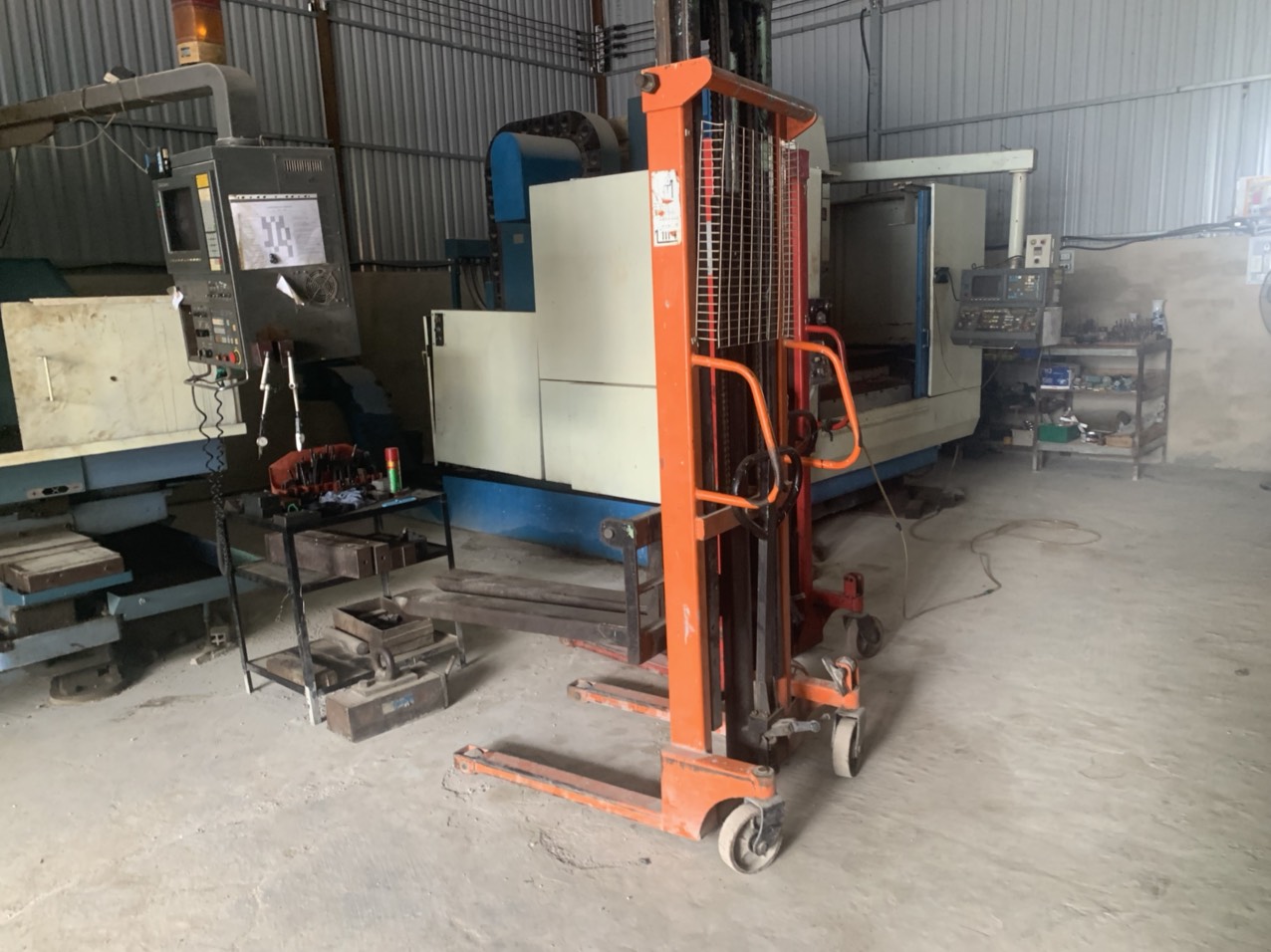

Late stamping parts shipments once stalled an entire assembly line for one of our U.S. clients—costing weeks and thousands in expedited freight.
To ensure stamping parts suppliers meet on-time delivery standards, buyers must vet structural capabilities like in-house tooling and inline inspection, share stable forecasts early, enforce contractual accountability with penalty clauses, and monitor production progress through real-time digital tracking and regular milestone reviews.
Delivery failures in metal stamping rarely start on the shop floor IATF 16949 certification 1. They start during supplier selection and order planning. The sections below break down exactly what to evaluate, what to demand in contracts, and how to keep eyes on production from kickoff to shipment.
What Should I Look for in a Supplier's On-Time Delivery Track Record?
A few years ago, our team in Vietnam helped a client recover from a supplier switch gone wrong—the new vendor quoted faster lead times but had zero historical data to back them up liquidated damages 2.
Look for documented on-time delivery rates measured over at least six months, first-pass yield percentages, scrap rates, customer complaint logs, and evidence of quality management systems like IATF 16949 certification that indicate process stability rather than just speed.

Why Quoted Lead Time Alone Is a Red Herring
Many purchasing managers compare quoted lead times side by side and pick the shortest one. This is a mistake. A supplier can quote any number. What matters is whether they have the internal infrastructure to hit that number consistently. When we audit suppliers across Asia, we look at structural capabilities first: Does the supplier design and build dies in-house? Do they run inline inspection with Statistical Process Control 3 (SPC) during production? Do they handle finishing operations—plating, passivation, deburring—internally or through a tightly controlled partner?
Each of these factors directly affects production lead times. If a supplier outsources die-making, a single delay at the tool shop cascades into weeks of slippage. If inspection only happens after the run, defective parts trigger rework loops that blow past the delivery window. Outsourced finishing is one of the most common failure modes we encounter in supply chain management 4 for stamped components.
The Metrics That Actually Matter
Vendor performance metrics tell the real story. Before placing an order, request the following data points from any stamping supplier:
| Metric | What It Reveals | Minimum Acceptable Benchmark |
|---|---|---|
| On-Time Delivery (OTD) Rate | Schedule reliability over time | ≥ 95% over 6 months |
| First-Pass Yield | Process capability and consistency | ≥ 98% |
| Scrap Rate | Material waste and tooling health | ≤ 2% |
| Customer Complaints (PPM) | Quality escapes reaching the buyer | ≤ 50 PPM |
| Corrective Action Response Time | Speed of problem resolution | ≤ 48 hours |
A supplier who cannot provide these numbers—or refuses to—is a risk. Northern Industrial, for example, achieved 100% on-time delivery while maintaining zero defects by embedding SPC within their ERP software. That level of transparency is the benchmark.
Certifications as a Baseline Filter
Certifications like IATF 16949 are not a guarantee of on-time delivery. But they do indicate that a supplier has a documented quality management system with defined processes, internal audits, and corrective action loops. We treat certification as a necessary baseline—not sufficient on its own, but a red flag if absent.
Site Visits Reveal What Data Cannot
Numbers on a spreadsheet only go so far. We conduct site visits as part of our supplier audit process. Walking the production floor shows you actual press utilization, warehouse capacity, logistics readiness, and whether the facility matches the capability claims in the sales deck. It also lets you assess tooling and die maintenance practices—worn tooling is a silent schedule killer.
How Can I Verify a Stamping Supplier's Production Capacity Before Placing My Order?
One lesson we learned the hard way during a high-volume bracket project: the supplier's press tonnage looked adequate on the spec sheet, but their actual available capacity was consumed by three other clients running overtime.
Verify production capacity by auditing the supplier's press tonnage range, number of available press lines, current machine utilization rates, shift schedules, and their ability to handle your required volume alongside existing commitments—not just their theoretical maximum output.

Theoretical Capacity vs. Available Capacity
Every stamping facility has a theoretical maximum output based on press tonnage, stroke speed, and hours of operation. But theoretical capacity is never fully available. Maintenance windows, existing customer orders, tooling changeovers, and unplanned downtime all consume time. What you need to know is the supplier's available capacity during your production window.
When our China office evaluates a new stamping supplier, we request historical utilization records—typically as a percentage of total press hours used per month. A supplier running at 85–90% utilization may struggle to absorb a large new order without pushing existing commitments. A supplier at 60–70% has room to flex.
Capacity Planning Checklist
Here is a practical framework we use for capacity planning verification:
| Verification Step | What to Request | Why It Matters |
|---|---|---|
| Press Tonnage Range | List of all presses with tonnage ratings (e.g., 40–400 tons) | Confirms they can physically form your part geometry |
| Number of Press Lines | Total lines and lines currently committed | Shows if they have a free line for your job |
| Current Utilization Rate | Monthly utilization percentage for the last 3–6 months | Reveals true available bandwidth |
| Shift Schedule | Number of shifts per day, days per week | Indicates if overtime or additional shifts are an option |
| Tooling Changeover Time | Average time to switch between jobs | Affects scheduling flexibility |
| Material Sourcing Lead Time | Average time to procure raw steel or alloy | Determines how early they need your forecast to start |
The Role of In-House Tooling in Capacity
A supplier who designs and builds tooling in-house has a major capacity advantage. They can adjust die designs quickly without waiting for an external tool shop. If a die component wears out—a punch or a spring—they can replace it the same day if they maintain a critical spares program. This directly impacts just-in-time manufacturing 5 reliability.
We specifically look for suppliers who stock high-wear die components on-site. A broken punch that requires a two-week order from an external vendor can shut down your production run entirely. Suppliers who practice predictive maintenance using press health monitoring catch these issues before they become schedule emergencies.
Digital Twin Simulation for Complex Dies
For complex progressive dies, we now recommend that suppliers use digital twin simulation 6 before the first physical tryout. This technology identifies material springback and forming issues virtually. It eliminates trial-and-error cycles on the press floor, which can consume days of valuable capacity. This step is especially important for parts with tight tolerances—like the precision mounting brackets and Z-shaped spring clamps we frequently source for our U.S. clients.
What Contract Terms Can I Use to Hold Suppliers Accountable for Delivery Deadlines?
During a recent project for a U.S. sourcing company, we discovered that the original purchase order had no delivery penalty clause—so when the supplier shipped three weeks late, there was no contractual leverage to recover costs.
Use contract terms that include specific delivery milestone dates, liquidated damages or penalty clauses for late shipment, clearly defined defect resolution protocols, engineering change order procedures, and a designated single point of contact to prevent miscommunication and ensure accountability.

Essential Contract Clauses for OTD Accountability
Contracts are your primary risk mitigation strategy 7. Verbal promises and email confirmations are not enforceable when a production line is waiting for parts. Below are the clauses we recommend including in every stamping parts purchase agreement.
Delivery Milestone Schedule
Break the timeline into phases: tooling kickoff, first-article inspection (FAI) approval, pilot production, and full production shipment. Assign a calendar date to each phase. This prevents the common problem where a supplier considers the order "on time" as long as the final shipment date is met, even if every intermediate milestone was missed.
Penalty and Incentive Structure
A well-designed penalty clause is not punitive—it aligns incentives. Standard practice in our contracts is a tiered approach:
| Delay Duration | Penalty | Notes |
|---|---|---|
| 1–5 business days late | 1% of order value per day | Grace period may apply for force majeure |
| 6–15 business days late | 2% of order value per day, capped at 10% | Triggers escalation meeting with supplier management |
| 16+ business days late | Buyer may cancel order; supplier bears restocking and expedited freight costs | Buyer retains right to source from backup supplier |
Some buyers also include an early delivery bonus—a small discount or priority status for future orders—to incentivize proactive schedule management.
Engineering Change Order (ECO) Protocol
Engineering changes during production are one of the biggest threats to delivery schedules. They can create obsolete stock, require die modifications, and demand new material sourcing. Your contract should define: who can authorize an ECO, the maximum response time for cost and schedule impact assessment, and who bears the cost of scrapped material.
Defect Resolution and Rejection Protocol
Quality disputes cause delivery delays when the resolution process is undefined. We specify in our contracts: the acceptable quality level (AQL), the inspection method (in-process SPC vs. final inspection), the timeline for replacement shipment of rejected parts, and who pays freight for returns.
Single Point of Contact
This sounds simple, but it prevents a surprising number of delays. Designate one person on each side—buyer and supplier—who owns all schedule-related communication. Mixed messages from multiple contacts lead to conflicting priorities on the production floor. Learning how to require suppliers to set up a dedicated OEM team can formalize this structure beyond a single contact.
A Note on Payment Terms as Leverage
Our clients typically work with 60–90 day payment terms. This gives the buyer natural leverage: tying payment milestones to delivery milestones (e.g., 30% upon tooling completion, 70% upon shipment after inspection approval) ensures the supplier has financial motivation to hit each phase on time.
How Do I Monitor Production Progress to Catch Delays Before They Impact My Schedule?
The worst delivery failures I have seen were entirely preventable—the warning signs appeared weeks before the deadline, but nobody was watching.
Monitor production progress by requiring weekly status reports with photo or video evidence, tracking real-time KPIs through shared ERP dashboards, conducting remote or in-person inspections at critical milestones, and maintaining a rolling forecast system that flags material shortages or capacity conflicts early.

Building a Monitoring System That Works
Monitoring is not about micromanaging the supplier. It is about creating visibility so that small problems get solved before they become large schedule failures. Our team in Vietnam and China acts as an on-the-ground extension of our clients' procurement departments—physically present at the supplier's facility during critical production phases.
Weekly Status Reports
At minimum, require a weekly written update from the supplier that covers: current production stage, quantity completed vs. planned, any quality issues encountered, material inventory status, and projected completion date. We require photo or video evidence of parts on the press or in finishing to verify claims.
Real-Time Digital Tracking
Modern supply chain management relies on digital tools. ERP systems integrated with SPC modules allow both the supplier and buyer to monitor process health in real time. Key metrics to track include:
- Press stroke count vs. target — shows if production is on pace
- SPC control charts — flags dimensional drift before it produces scrap
- Material inventory levels — warns of potential shortages
- Finished goods count — confirms readiness for shipment
Some of our more advanced supplier partners provide shared dashboard access where our team can check production status at any time. For suppliers without this capability, we bridge the gap with our own inspection visits and progress documentation.
Milestone-Based Inspection Gates
Rather than waiting until final inspection, we use a gate-based inspection approach:
| Gate | Timing | Action |
|---|---|---|
| Gate 1: Tooling Approval | After die completion | Verify die dimensions, trial shots, and material conformance |
| Gate 2: First-Article Inspection (FAI) | After first production samples | Full dimensional inspection per PPAP requirements 8 |
| Gate 3: In-Process Audit | At 30–50% production completion | SPC data review, visual inspection, and count verification |
| Gate 4: Final Inspection | Before packing and shipment | AQL sampling, functional checks, and packing verification |
Each gate has a pass/fail criterion. If a gate fails, production pauses until the issue is resolved. This approach catches problems early—when they are cheapest and fastest to fix.
The Buyer's Responsibility: Remove Uncertainty
Even the best monitoring system fails if the buyer introduces chaos. Here is what we tell every client: share your rolling 12-month demand forecast as early as possible. Lock in your design before tooling kickoff—do not wait for perfection, wait for stability. Agree on the sampling plan and FAI requirements before production starts. Define your engineering change protocol in advance.
When these elements are in place, the supplier can plan material sourcing, schedule press time, and allocate finishing capacity with confidence. When they are missing, the supplier is guessing—and guesses lead to delays.
JIT Program Structure for Repeat Orders
For high-volume stamping parts with ongoing demand, a just-in-time manufacturing program is the gold standard. A well-structured JIT arrangement includes:
- 4–8 weeks of material forecast — supplier pre-purchases raw stock
- 2–4 weeks of firm orders — locked quantities that cannot be changed
- 1–3 weeks of finished-goods buffer — safety stock at the supplier's warehouse
- Weekly or bi-weekly release windows — fixed shipment schedules
This structure balances flexibility with predictability. The supplier knows what is coming and can plan accordingly. The buyer gets consistent deliveries without holding excess inventory. Tier suppliers looking to strengthen this approach further can explore strategies for ensuring supply chain continuity when sourcing stamping parts.
Raw Material Consignment Strategy
One advanced risk mitigation strategy we have implemented for select clients is buyer-controlled raw material consignment. The buyer purchases steel or alloy and stores it at the supplier's warehouse. This insulates production from sudden global steel market volatility 9—price spikes or allocation shortages cannot delay your order if the material is already on-site. Buyers who work with multiple suppliers to diversify risk gain an additional layer of protection against single-source disruptions.
Conclusion
On-time delivery of stamping parts depends on structural supplier capability, proactive buyer involvement, enforceable contracts, and real-time production monitoring working together as a system.
Frequently Asked Questions
What Should I Look for in a Supplier's On-Time Delivery Track Record?
A few years ago, our team in Vietnam helped a client recover from a supplier switch gone wrong—the new vendor quoted faster lead times but had zero historical data to back them up liquidated damages 2 .
How Can I Verify a Stamping Supplier's Production Capacity Before Placing My Order?
One lesson we learned the hard way during a high-volume bracket project: the supplier's press tonnage looked adequate on the spec sheet, but their actual available capacity was consumed by three other clients running overtime.
What Contract Terms Can I Use to Hold Suppliers Accountable for Delivery Deadlines?
During a recent project for a U.S. sourcing company, we discovered that the original purchase order had no delivery penalty clause—so when the supplier shipped three weeks late, there was no contractual leverage to recover costs.
Footnotes
1. Explains the automotive quality management standard referenced as a certification baseline. ↩︎
2. Legal background on contractual penalty clauses used to enforce delivery deadlines. ↩︎
3. Background on the SPC methodology used for inline inspection and process monitoring. ↩︎
4. ISO provides standards frameworks relevant to supply chain and quality management practices. ↩︎
5. Defines the JIT production philosophy central to the article’s monitoring section. ↩︎
6. Explains digital twin technology used to simulate die forming before physical tryouts. ↩︎
7. ISO 31000 provides the standard framework for risk management strategies referenced in sourcing. ↩︎
8. Authoritative Wikipedia entry detailing the 18 elements of the Production Part Approval Process. ↩︎
9. World Bank commodity data source explaining raw material price volatility affecting sourcing. ↩︎