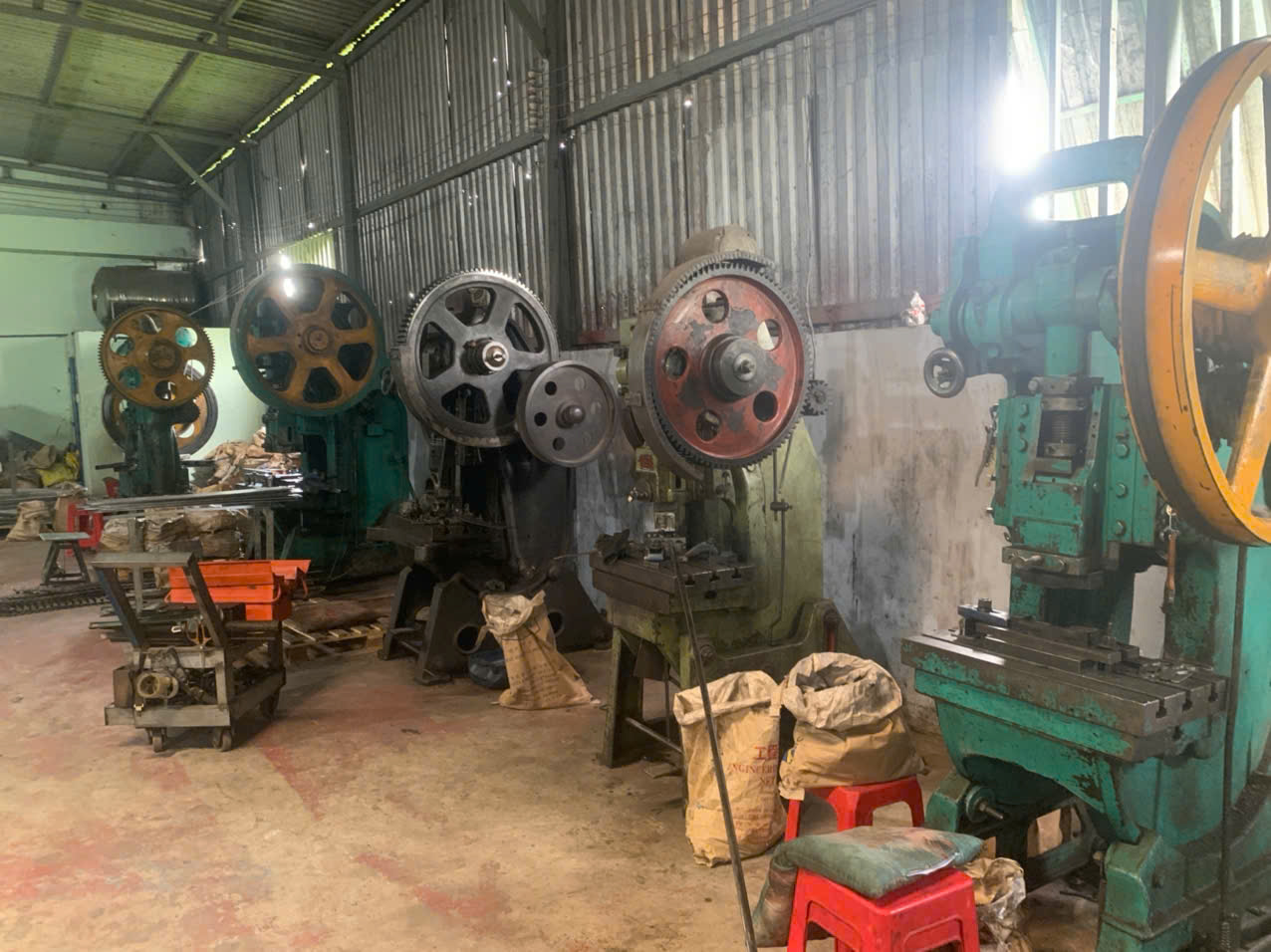

When our Vietnam office started fielding urgent calls from U.S. buyers whose stamping parts shipments were held at port, we realized the compliance landscape had shifted dramatically — and most importers were not ready.
To ensure supplier compliance with U.S. anti-forced labor rules when sourcing stamping parts from Vietnam, importers must map every tier of their supply chain, verify raw material origin through chain of custody records, conduct social responsibility audits, screen suppliers against the UFLPA Entity List, and maintain documentation that meets CBP enforcement standards for the rebuttable presumption.
The stakes are real. A single detained shipment can freeze your production schedule, damage customer relationships, and cost tens of thousands in storage fees. Below, I walk through the exact steps we use at DEWIN to help U.S. clients source stamping brackets, mounting hardware, and custom metal parts from Vietnam without running afoul of forced labor regulations.
How can I verify a Vietnamese stamping supplier's compliance with UFLPA and forced labor regulations?
A lesson we learned early in our Vietnam sourcing operations: a factory can look spotless on the surface yet still carry hidden exposure through its raw material suppliers two or three tiers upstream.
To verify a Vietnamese stamping supplier's UFLPA compliance, screen them against CBP's Entity List, map their steel and aluminum sources back to the smelter, require sworn declarations of raw material origin, and cross-reference their sub-suppliers for any connection to Xinjiang-linked entities or government labor programs.

Why Stamping Parts Are Now a High-Risk Category
For years, UFLPA enforcement focused on textiles, cotton, and polysilicon. That has changed. CBP has expanded its scrutiny to automotive components, copper, steel, and aluminum — the exact materials that make up stamping parts like the brackets, post bases, and flanges we source daily for U.S. buyers.
The core issue is not necessarily the Vietnamese factory itself. Vietnam maintains a zero-tolerance policy 1 toward forced labor and adheres to ILO standards. The risk comes from Chinese inputs. CBP data shows that 87% of all denied shipments originated in Vietnam or Malaysia, largely because goods contained raw materials traceable to Xinjiang. If your Vietnamese stamping supplier buys steel coil 2 from a Chinese mill with links to the UFLPA Entity List, your entire shipment gets blocked — regardless of where the stamping, welding, or powder coating happened.
The Entity List Screen
Before signing any contract, we run every potential supplier 3 and their parent companies through CBP's UFLPA Entity List. This list names specific companies and government programs connected to forced labor in Xinjiang. A direct or indirect relationship with any listed entity triggers the rebuttable presumption — meaning CBP assumes your goods were made with forced labor until you prove otherwise with clear and convincing evidence.
Practical Verification Steps
| Step | Action | What It Proves |
|---|---|---|
| 1 | Screen supplier against UFLPA Entity List | No direct ties to sanctioned entities |
| 2 | Request steel/aluminum mill certificates | Raw material origin is not from high-risk regions |
| 3 | Collect supplier's business registration and ownership records | No hidden Chinese parent company with Xinjiang links |
| 4 | Verify ILO forced labor indicators through worker interviews | No debt bondage, document withholding, or restricted movement |
| 5 | Cross-reference sub-suppliers (Tier 2, Tier 3) | Full Tier 2 supplier transparency across the chain |
Our team in Vietnam physically visits supplier facilities and reviews original purchase orders for steel coil and aluminum sheet. We do not accept photocopies or summaries. We ask to see the actual invoices from the metal mill, shipping documents, and payment receipts. If a supplier cannot name their steel mill or hesitates to share this information, that is a red flag we do not ignore.
The "Clean Source" Question
Vietnamese customs officers have publicly warned local businesses to trace inputs from "clean sources." This means suppliers must demonstrate that their steel, aluminum, or copper did not pass through Xinjiang at any point. We advise our Vietnamese suppliers to diversify raw material sources — importing from mills in India, Australia, South Korea, or Brazil — to ensure clean inputs and reduce risk exposure for our U.S. clients.
What documentation do I need from my supplier to prove supply chain transparency and traceability?
One of our U.S. clients once had a container of custom mounting brackets sit at the port for six weeks because the documentation package was missing a single element — the flow chart showing procurement and production steps.
You need a supply chain overview, a procurement-to-production flow chart, maps showing product origin and manufacturing locations, a complete list of all entities involved, mill test certificates for raw materials, invoices and payment records for every input, and worker recruitment documentation — all organized to meet CBP's clear and convincing evidence standard.

CBP's Required Documentation Package
CBP has published specific guidance on what documentation importers need to overcome the rebuttable presumption. This is not optional paperwork. It is the minimum you must have ready before your goods reach U.S. soil.
| Document | Purpose | Who Provides It |
|---|---|---|
| Supply chain overview | Shows the full chain from raw material to finished part | Importer (compiled from supplier data) |
| Procurement and production flow chart | Visual map of every step and handoff | Supplier + Importer |
| Maps of product origin and production locations | Geographic proof that inputs did not pass through Xinjiang | Supplier |
| List of all entities in the production process | Names every company, sub-supplier, and logistics provider | Supplier |
| Mill test certificates 4 (MTCs) | Proves the chemical composition and origin of steel/aluminum | Raw material mill |
| Commercial invoices and payment records | Chain of custody records showing financial trail | Supplier + Sub-suppliers |
| Worker recruitment and employment records | Proves no forced labor indicators (fees, coercion, document retention) | Supplier |
Building the Chain of Custody
Supply chain traceability for stamping parts means tracking the metal from the mine or smelter, through the rolling mill, to the steel service center, and finally to the stamping factory. Each handoff must have matching documents: a purchase order, an invoice, a packing list, and a shipping record.
At our Vietnam office, we build these packages for every shipment. We request original mill test certificates that identify the heat number of the steel. We then match that heat number against the supplier's incoming material inspection records. If the numbers do not match, we stop and investigate before the part ever ships.
The Bill of Materials Audit
A rigorous BOM audit 5 is the foundation of responsible sourcing practices. We break down every stamping part into its component materials. For a powder-coated steel bracket, that means documenting the origin of the steel coil, the zinc or other plating chemicals, and the powder coating material. Each line item in the BOM must have a traceable source.
This is especially critical for complex assemblies. A single stamped bracket might use steel from one mill, fasteners from another supplier, and welding wire from a third. If any of those inputs trace back to a high-risk source, the entire assembly is at risk under CBP enforcement.
What "Clear and Convincing Evidence" Actually Means
The legal standard is high. CBP does not accept self-declarations alone. You need third-party verification — independent audits, lab reports, and government-issued certificates. We have found that the most effective approach is to compile everything into a single compliance binder for each product line, updated with every new shipment. This way, if CBP issues a Withhold Release Order or detains your goods, you can respond within hours instead of scrambling for weeks.
How do I conduct effective supplier audits to identify forced labor risks before signing a contract?
During a pre-qualification visit to a stamping factory outside Ho Chi Minh City, our team noticed that migrant workers' passports were held in the HR office "for safekeeping." That single observation changed the trajectory of the entire sourcing project.
Conduct effective forced labor audits by combining announced and unannounced facility visits, interviewing workers off-site in their native language, reviewing payroll and recruitment fee records, checking ILO forced labor indicators such as debt bondage and document retention, and deploying anonymous worker voice platforms for ongoing monitoring.

The Two-Phase Audit Approach
We split our audit process into two phases. The first is a standard, announced quality and compliance audit. The second is an unannounced social compliance audit focused specifically on labor practices. Separating these ensures that the supplier does not "prepare" the workforce for a social audit by coaching workers or temporarily improving conditions.
ILO Forced Labor Indicators Checklist
The International Labour Organization defines 11 indicators of forced labor. We use these as our baseline during every audit:
| ILO Indicator | What to Look For | Red Flag Example |
|---|---|---|
| Abuse of vulnerability | Migrant workers with limited local language skills | Workers cannot communicate with local management |
| Deception | Promises made during recruitment differ from actual conditions | Contract terms changed after arrival |
| Restriction of movement | Workers cannot leave the facility or dormitory freely | Locked gates, curfews, confiscated transport |
| Isolation | Workers housed in remote areas with no access to outside contact | Factory in industrial zone with no public transport |
| Physical or sexual violence | Signs of abuse or intimidation | Workers appear fearful during interviews |
| Intimidation and threats | Threats of deportation, reporting to authorities | Verbal threats observed or reported |
| Retention of identity documents | Passports, IDs held by employer | Documents locked in HR office |
| Withholding of wages | Irregular payment, excessive deductions | Pay stubs show deductions exceeding legal limits |
| Debt bondage | Workers owe money to recruiters or employer | Recruitment fees charged to workers |
| Abusive working and living conditions | Unsafe environments, overcrowded dormitories | Fire exits blocked, no ventilation |
| Excessive overtime | Hours exceeding legal limits without consent | Timecards show 70+ hour weeks consistently |
Worker Voice Platforms
One of the most effective tools we have adopted is an anonymous mobile feedback platform 6. Workers can report concerns in their own language — Vietnamese, Khmer, or Chinese — without going through factory management. This bypasses the curated audit environment where managers select which workers get interviewed and what they say.
We review these reports monthly. Patterns matter more than individual complaints. If multiple workers report the same issue — late wages, excessive overtime, or recruitment fees — we escalate immediately.
The "Responsible Recruitment" Standard
For factories that employ migrant workers (common in Vietnam's industrial zones), we require an "Employer Pays" model. This means the factory — not the worker — pays all recruitment fees, travel costs, and visa expenses. Debt bondage through recruitment fees is one of the most common forms of forced labor globally, and it is often invisible in a standard factory audit unless you specifically ask about it.
We include right-to-audit clauses in every Master Service Agreement. This gives our team — or a third-party auditor — the legal right to enter the facility at any time, review records, and interview workers. Suppliers who refuse this clause do not make it into our approved vendor list.
Transshipment Red Flags
Beyond labor practices, we also audit for transshipment risks. If a Vietnamese stamping factory imports semi-finished steel blanks from China, performs minimal transformation (a single stamping operation 7 or cosmetic finishing), and exports the parts as "Made in Vietnam," that is a transshipment scheme. CBP is specifically targeting these arrangements. We verify that the Vietnamese factory performs substantial transformation — meaning the stamping, forming, welding, and finishing that gives the part its essential character — all happen in Vietnam with documented non-Xinjiang materials.
What steps should I take if my custom parts shipment gets detained under U.S. forced labor enforcement?
The call no importer wants to receive came to one of our clients at 7 AM: "Your container has been flagged and detained by CBP under a Withhold Release Order." The next 72 hours determined whether those parts would ever reach the production floor.
If your shipment is detained under U.S. forced labor enforcement, immediately contact your customs broker, request the specific reason for detention from CBP, compile your rebuttable presumption evidence package (supply chain maps, mill certificates, audit reports), submit it within the allowed response window, and engage a trade compliance attorney if the evidence is challenged.

Understanding the Detention Process
When CBP detains a shipment under UFLPA, they issue a detention notice. You typically have a limited window 8 — often 30 days — to submit evidence that overcomes the rebuttable presumption. If you cannot provide clear and convincing evidence, CBP can exclude your goods permanently, seize them, or force re-export.
The financial impact is severe. Storage fees at the port accumulate daily. Your production line 9 may halt. Your end customer may cancel orders. This is why we build the compliance documentation before the goods ship, not after they are detained.
Step-by-Step Response Protocol
Here is the exact process we follow when a client's shipment faces a Withhold Release Order or detention:
- Contact your customs broker immediately. Get the exact CBP reference number, the reason for detention, and any specific questions CBP has raised.
- Identify the specific concern. Is it raw material origin? Entity List association? Lack of documentation? The response must address the exact issue.
- Assemble the evidence package. Pull the compliance binder for that product line. Include mill test certificates, supply chain flow charts, entity lists, audit reports, and worker documentation.
- Submit within the response window. Do not wait. Every day of delay increases the risk of exclusion.
- Engage a trade compliance attorney. If CBP pushes back on your evidence, legal counsel experienced in UFLPA cases can navigate the administrative process.
- Document the resolution. Whether the shipment is released or excluded, record what happened and update your compliance procedures to prevent recurrence.
Prevention Is Always Cheaper Than Response
The cost of responding to a detention — legal fees, storage, production delays, lost orders — almost always exceeds the cost of building a proper compliance program upfront. We have seen clients spend more on a single detention incident than they would have spent on a full year of social responsibility audits and supply chain mapping.
Our approach at DEWIN is to front-load the compliance work. Before a single part ships, we verify raw material origin, complete the documentation package, and conduct the audits. This responsible sourcing approach protects our clients and keeps their supply chains moving.
The 2026 Compliance Deadline
With Section 301 forced labor investigations 10 ongoing and comments invited before July 2026, the regulatory pressure is only increasing. The era of "wait and see" is over. Importers who do not have robust UFLPA compliance systems in place today risk not just individual shipment detentions but systemic exclusion from U.S. markets for their Vietnamese-sourced stamping parts.
The $74 million in electronics and solar panel restrictions from Vietnam and Malaysia in 2023 set a clear precedent. Metal components — including the steel brackets, aluminum post bases, and powder-coated mounting hardware that make up our daily business — are squarely in CBP's crosshairs now. Understanding how to navigate U.S. trade sanctions when sourcing sheet metal fabrication from Vietnam is no longer optional for serious importers.
Conclusion
Sourcing stamping parts from Vietnam under today's anti-forced labor regulations demands proactive supply chain traceability, rigorous audits, and airtight documentation — not reactive scrambling after a CBP detention notice arrives.
Frequently Asked Questions
How can I verify a Vietnamese stamping supplier's compliance with UFLPA and forced labor regulations?
A lesson we learned early in our Vietnam sourcing operations: a factory can look spotless on the surface yet still carry hidden exposure through its raw material suppliers two or three tiers upstream.
What documentation do I need from my supplier to prove supply chain transparency and traceability?
One of our U.S. clients once had a container of custom mounting brackets sit at the port for six weeks because the documentation package was missing a single element — the flow chart showing procurement and production steps.
How do I conduct effective supplier audits to identify forced labor risks before signing a contract?
During a pre-qualification visit to a stamping factory outside Ho Chi Minh City, our team noticed that migrant workers' passports were held in the HR office "for safekeeping." That single observation changed the trajectory of the entire sourcing project.
Footnotes
1. Definition of the zero-tolerance approach adopted by Vietnam regarding forced labor practices. ↩︎
2. World Steel Association provides authoritative data on global steel production and raw material sourcing. ↩︎
3. ISO standards provide the framework for qualifying and auditing potential suppliers in global supply chains. ↩︎
4. The American Iron and Steel Institute defines standards for mill test certificates and material traceability. ↩︎
5. Industry leader SAP explains the importance of BOM management and auditing for supply chain transparency. ↩︎
6. ILO publication on using mobile-based feedback mechanisms to monitor labor conditions and worker voice. ↩︎
7. The Precision Metalforming Association is the leading authority on metal stamping operations and standards. ↩︎
8. CBP FAQ detailing the specific timeframes and windows for responding to UFLPA detention notices. ↩︎
9. Overview of production line operations and the impact of supply chain disruptions on manufacturing. ↩︎
10. USTR page detailing Section 301 investigations affecting trade enforcement. ↩︎