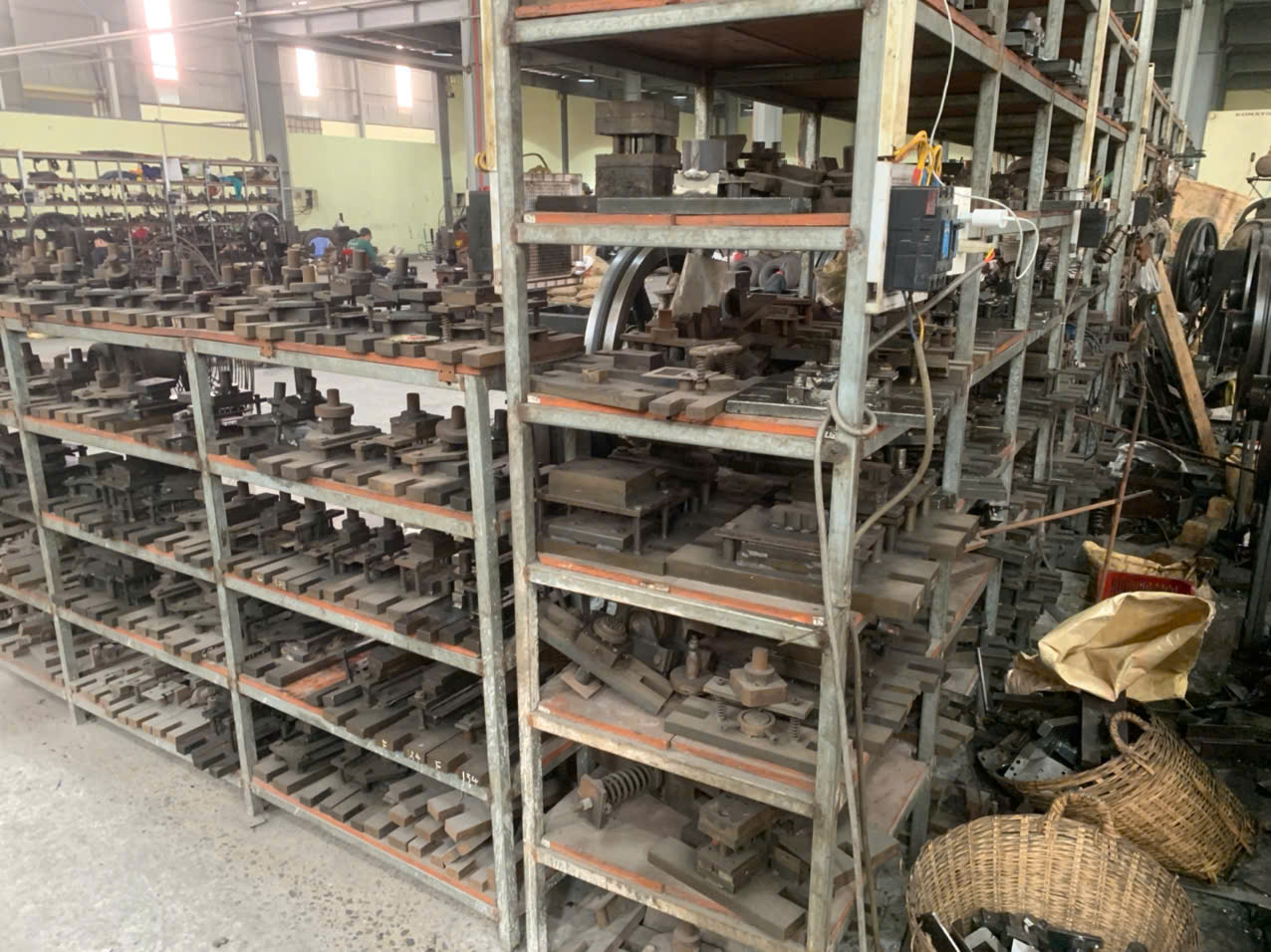

Last year, one of our U.S. clients had a full container of precision metal stamping brackets 1 held at the port of Long Beach — not because the parts were defective, but because the carton labels were missing the correct country-of-origin marking 2 and the packing list did not match the commercial invoice. That single oversight cost three weeks of delay and thousands in demurrage fees. It was a painful reminder that when you source stamping parts from Vietnam, packaging and labeling are not afterthoughts — they are mission-critical.
To ensure suppliers meet packaging and labeling needs when sourcing stamping parts from Vietnam, buyers must issue detailed packaging specifications before production, require VCI anti-rust protection and ISPM 15 compliant pallets, verify labeling accuracy against U.S. customs requirements, and implement pre-shipment inspection protocols at the factory level.
This guide walks through the exact steps we use at our Vietnam office to prevent packaging failures, labeling errors, and customs delays for every stamping order we manage. Let’s break it down section by section.
How can I confirm a Vietnamese stamping supplier understands my packaging and labeling specifications before production starts?
A buyer we work with in the Midwest once told me, "I assumed the supplier would just know how to pack brackets." That assumption led to scratched powder-coated surfaces and mislabeled cartons on the very first shipment. Confirming understanding upfront is the only way to avoid this.
Before production starts, share a signed Packaging Specification Document (PSD) that details materials, dimensions, labeling content, and stacking rules. Then require the supplier to produce a "Golden Sample" of the fully packaged product for your written approval before mass production begins.

Why a Packaging Specification Document Matters
A PSD is not just a nice-to-have. It is a contractual anchor. When we onboard a new stamping supplier in Vietnam for a client, the PSD becomes part of the purchase order. It spells out every detail the supplier must follow. Without it, the supplier will default to whatever packaging method is cheapest — which often means thin corrugated boxes, no VCI anti-rust protection 3, and generic labels with missing information.
Your PSD should cover these items at minimum:
| PSD Element | What to Specify | Why It Matters |
|---|---|---|
| Inner packaging material | VCI film bags, foam inserts, or anti-rust oil wrapping | Prevents corrosion and surface damage on stamped parts |
| Carton specifications | Burst strength rating, dimensions, max gross weight | Avoids crushing during container stacking |
| Labeling content | Part number, quantity, lot ID, gross/net weight, "Made in Vietnam" | Enables traceability and customs compliance |
| Stacking instructions | Max layers per pallet, orientation arrows | Prevents carton collapse in transit |
| Pallet type | ISPM 15 heat-treated wood with IPPC stamp | Required for U.S. import; untreated wood causes quarantine |
The Golden Sample Approval Step
Once the PSD is signed, request a Golden Sample. This is a single unit — or a small batch — packaged exactly as the mass production shipment will be. Our team in Vietnam physically inspects this sample. We check edge protection on stamped brackets, label placement, barcode scannability, and carton seal quality. Only after written approval does production packaging begin. This step catches problems like incorrect label fonts, missing barcoding and SKU labeling fields, or inadequate cushioning for parts with tight tolerances and sharp edges.
Aligning on Language and Regulatory Labels
Vietnam's Decree No. 43/2017/ND-CP requires Vietnamese-language labels for goods circulating domestically. But for export stamping parts, the key requirement is the "Country of Origin" marking — typically "Manufactured in Vietnam" or "Made in Vietnam." Many suppliers confuse domestic and export rules. We always clarify this in writing during the PSD review. For parts destined for the U.S. market, the label must include the origin marking in English, and the content must match what appears on customs clearance documentation.
What packaging standards should I require to prevent damage during long-distance shipping from Vietnam?
We learned a hard lesson on one of our early projects: a shipment of raw steel post-base mounts arrived in Houston with orange rust spots covering 30% of the parts. The supplier had used plain polyethylene bags — no VCI film, no desiccants. The container had spent 28 days on the water through tropical humidity zones. That shipment was a total loss.
Require VCI anti-rust protection film sealed around each part, desiccants sized to carton volume, export-grade corrugated cartons with verified burst strength, and ISPM 15 heat-treated pallets with IPPC marks. These sea freight packaging standards are non-negotiable for stamped metal parts shipping from Vietnam.

Corrosion Prevention: VCI and Desiccants
Vietnam's climate is hot and humid for most of the year. Container interiors can reach 60°C with relative humidity above 90% during a Pacific crossing. Precision metal stamping parts — especially raw steel or galvanized brackets — will corrode without proper protection.
VCI (Vapor Corrosion Inhibitor) film bags release molecules that form a protective layer on the metal surface. But they only work when sealed. An open VCI bag is useless. We require our suppliers to heat-seal every VCI bag and include silica gel desiccant packets sized to the carton volume.
| Packaging Layer | Material | Function |
|---|---|---|
| Direct contact wrap | VCI film bag (heat-sealed) | Creates corrosion-inhibiting atmosphere around the part |
| Cushioning | Foam dividers or corrugated inserts | Prevents part-to-part contact and surface scratching |
| Moisture control | Silica gel desiccant (sized to carton volume) | Absorbs residual moisture inside the sealed carton |
| Outer carton | Double-wall corrugated, min. 275 PSI burst strength | Resists compression during stacking in container |
| Pallet | ISPM 15 heat-treated hardwood, IPPC stamped | Mandatory for U.S. port clearance; prevents pest quarantine |
Carton Strength and Stacking
Stamped steel brackets are heavy. A carton of L-brackets or post-base mounts can easily weigh 20–25 kg. If the supplier uses single-wall corrugated board or recycled fiberboard with low burst strength, the bottom cartons in a pallet stack will crush. We conduct a Packaging Bill of Materials (PBOM) audit on each new supplier. This audit verifies the actual corrugated grade being used — not just what the supplier claims on paper. We have caught suppliers substituting lower-grade local recycled fiberboard that loses structural integrity in high humidity.
Transit Monitoring for Pilot Shipments
For the first shipment from any new supplier, we place shock and humidity data loggers inside select cartons. These small devices record temperature, humidity, and impact events throughout the journey. The data gives us a transit stress baseline for that specific route — say, Ho Chi Minh City to Los Angeles. With that data, we can optimize desiccant volume and carton wall thickness for future orders instead of guessing.
ISPM 15 Compliance
This one is simple but frequently missed. All wooden packaging materials — pallets, crates, dunnage — entering the U.S. must comply with ISPM 15 heat treatment standards 4 and carry the IPPC stamp. If the pallet is not marked, U.S. Customs and Border Protection can quarantine or re-export the entire container. We verify the IPPC mark during every pre-shipment inspection.
How do I verify labeling accuracy and compliance for customs clearance in the U.S.?
A customs broker we partner with in California once flagged something that surprised even us: a shipment of stamped flanges had "Origin: Asia" printed on the carton labels instead of "Made in Vietnam." That vague designation does not satisfy U.S. country-of-origin marking rules. The shipment was held until corrected labels were applied — at the importer's expense.
Verify labeling accuracy by cross-checking every carton label against the commercial invoice, packing list, and bill of lading before shipment. Ensure "Made in Vietnam" appears on each product or its immediate container, confirm correct HTS codes, and validate that CO Form B documentation supports the origin claim with production records.

Country of Origin Marking
U.S. law requires that most imported goods be marked with their country of origin in English, in a conspicuous location. For stamped metal parts, this means either marking the part itself (if practical) or marking the immediate container — the bag or box that holds the part. Simply labeling the outer shipping carton is not always sufficient if the parts are sold or distributed individually.
CO Form B and Substantial Transformation
To claim preferential duty treatment under the U.S.-Vietnam Bilateral Trade Agreement, you need a Certificate of Origin Form B (CO Form B). This document proves that the goods underwent "substantial transformation" in Vietnam. For stamping parts, this means the stamping, bending, welding, and finishing operations must be performed in Vietnam — not just final assembly of components stamped elsewhere.
Our team works with suppliers to maintain production records, raw material purchase receipts, and process logs that demonstrate substantial transformation. Without these records, customs can reject the CO Form B, and your parts may face higher duty rates. To learn more about documentation best practices, see our guide on how to ensure accurate export documents when sourcing stamping parts from Vietnam.
HTS Code Accuracy and ISF Filing
Every stamped part needs a correct 8-digit Harmonized Tariff Schedule 5 (HTS) code. An incorrect code can mean overpaying duties — or underpaying, which triggers penalties. Late or inaccurate ISF 10+2 filing 6 can result in fines of $5,000 per violation.
| Labeling / Documentation Item | Requirement | Risk of Non-Compliance |
|---|---|---|
| Country of origin marking | "Made in Vietnam" on product or immediate container | Customs hold, forced re-labeling, penalties |
| CO Form B | Proof of substantial transformation with production records | Loss of preferential duty rate |
| HTS code | Correct 8-digit classification on commercial invoice | Overpayment or underpayment of duties; fines |
| ISF 10+2 filing | Submitted 24+ hours before vessel departure | $5,000+ fine per violation |
| Tracking label | Company name, manufacturer, importer on packaging | Consumer safety compliance failure |
| RoHS marking (if applicable) | Declaration of compliance for restricted substances | Rejection at port or by end customer |
Digital Labeling and Traceability
More of our clients now require GS1-compliant barcodes 7 on every carton. These barcodes encode part number, batch ID, and quantity — making them scannable by automated warehouse management systems. We also see growing demand for QR codes that link to raw material Mill Test Reports. This gives the end user full metallurgical traceability from the Vietnamese factory floor to the receiving dock. If your stamped parts require RoHS compliance certification 8, that declaration should also be referenced on or linked from the label.
Vietnam's 2026 Labeling Deadline
Vietnam's updated labeling law under Decree 37/2026/ND-CP takes effect on January 1, 2026. While this primarily affects goods sold domestically in Vietnam, suppliers who also serve the local market may need to overhaul their labeling systems. Buyers should confirm that suppliers understand the distinction between domestic and export labeling requirements, and that export labels are not inadvertently changed to comply with domestic rules at the expense of U.S. requirements.
What quality checks can I implement to catch packaging or labeling errors before parts leave the factory?
During a recent supplier quality audit at a stamping facility near Hanoi, our inspector found that 12 out of 50 cartons had the wrong lot ID printed on the label. The parts inside were correct, but the labels referenced a different production batch. If those cartons had shipped, the traceability chain would have been broken — a serious problem for any buyer who needs to track parts back to specific raw material heats.
Implement a multi-stage quality control process: conduct a first-article packaging inspection at production start, perform a pre-shipment inspection covering label accuracy and carton integrity on a statistically sampled basis, and cross-check all shipping documents line-by-line against actual carton contents before container loading.

First-Article Packaging Inspection
This happens at the very start of the packing process. Our inspector verifies the first few packed cartons against the approved Golden Sample and the PSD. We check label content, placement, barcode scannability, VCI bag seal quality, desiccant presence, and carton condition. If anything deviates, packing stops until the issue is corrected. This prevents an entire lot from being packed incorrectly.
Pre-Shipment Inspection (PSI)
Once packing is complete, a formal pre-shipment inspection takes place. This can be done by your own team or a third-party inspection agency. The inspection follows AQL (Acceptable Quality Level 9) sampling. For packaging and labeling, we typically use AQL 1.5 for critical defects (wrong origin marking, missing labels) and AQL 2.5 for minor defects (label alignment, print clarity).
| Inspection Stage | What Is Checked | When It Happens |
|---|---|---|
| First-article packaging | Label content, VCI seal, desiccant, carton match to PSD | Start of packing process |
| In-process spot check | Random carton pull during packing run | Mid-production |
| Pre-shipment inspection (PSI) | AQL sampling of labels, carton integrity, weight verification | After packing is 100% complete |
| Document cross-check | Invoice vs. packing list vs. B/L vs. actual carton labels | Before container loading |
| Container loading supervision | Stacking pattern, pallet condition, IPPC marks, load plan | During container stuffing |
Document Cross-Check Before Booking
Before we book the container, we run a line-by-line cross-check. The commercial invoice, packing list, bill of lading 10 draft, and CO Form B must all match — part numbers, quantities, weights, and origin declarations. Even a single digit mismatch between the packing list quantity and the invoice quantity can trigger a customs hold. We also test the data flow for ISF 10+2 filing with the customs broker to confirm that all ten data elements are ready before the vessel sails.
Warehousing Discipline at the Supplier
Quality checks at the end are important, but what happens in the warehouse between production and packing matters too. We require suppliers to store finished stamped parts indoors in humidity-controlled areas. Parts must be organized by lot ID and rotated on a first-in, first-out (FIFO) basis. This preserves VCI integrity and maintains the traceability chain. If parts sit in an open-air staging area for days, the corrosion protection breaks down before the parts even enter the export carton. For more on meeting U.S. shipping and storage packaging requirements, we have a dedicated guide covering warehouse-to-port best practices.
Embedding Quality in the Supplier Agreement
All of these checks should be formalized in a Quality Assurance Agreement between buyer and supplier. This document defines inspection rights, defect categories, corrective action timelines, and who bears the cost of re-packing or re-labeling. It also covers die ownership and transfer rights — critical for stamped parts where the tooling is custom. If you ever need to move production to a second source, having die transfer rights documented upfront prevents a painful negotiation later.
Conclusion
Getting packaging and labeling right when sourcing stamping parts from Vietnam requires upfront specification, regulatory awareness, corrosion prevention planning, and disciplined inspection. Build these controls into every purchase order, and your shipments will clear customs on time with parts arriving intact.
Frequently Asked Questions
How can I confirm a Vietnamese stamping supplier understands my packaging and labeling specifications before production starts?
A buyer we work with in the Midwest once told me, "I assumed the supplier would just know how to pack brackets." That assumption led to scratched powder-coated surfaces and mislabeled cartons on the very first shipment. Confirming understanding upfront is the only way to avoid this.
What packaging standards should I require to prevent damage during long-distance shipping from Vietnam?
We learned a hard lesson on one of our early projects: a shipment of raw steel post-base mounts arrived in Houston with orange rust spots covering 30% of the parts. The supplier had used plain polyethylene bags — no VCI film, no desiccants. The container had spent 28 days on the water through tropical humidity zones. That shipment was a total loss.
How do I verify labeling accuracy and compliance for customs clearance in the U.S.?
A customs broker we partner with in California once flagged something that surprised even us: a shipment of stamped flanges had "Origin: Asia" printed on the carton labels instead of "Made in Vietnam." That vague designation does not satisfy U.S. country-of-origin marking rules. The shipment was held until corrected labels were applied — at the importer's expense.
Footnotes
1. Provides technical background on the manufacturing process for the stamped metal components discussed. ↩︎
2. Official U.S. Customs and Border Protection guidelines for mandatory origin marking on imported goods. ↩︎
3. Technical explanation of how vapor corrosion inhibitors protect metal surfaces during long-distance transit. ↩︎
4. USDA regulations regarding the treatment and marking of wood packaging materials for international trade. ↩︎
5. The official U.S. government database for classifying imported goods and determining duty rates. ↩︎
6. CBP requirements for the mandatory security filing required for all ocean freight imports. ↩︎
7. Global standards for barcode identification used in supply chain and warehouse management systems. ↩︎
8. Overview of environmental regulations restricting hazardous substances in manufactured products. ↩︎
9. International standard (ISO 2859-1) for sampling procedures used in quality control inspections. ↩︎
10. Authoritative Wikipedia entry defining the bill of lading in international trade. ↩︎