

A rejected shipment of custom mounting brackets taught our team an expensive lesson about US labeling and identification compliance in sheet metal fabrication.
To ensure US labeling and identification compliance when sourcing sheet metal fabrication, you must embed FTC origin-marking rules, IBC Section 1703.5 permanent identification standards, material traceability requirements, and CBP country of origin marking regulations directly into your supplier specifications, technical drawings, and quality control processes before production begins.
This article walks you through the specific regulatory standards, drawing communication methods, quality control checkpoints, and customs-readiness steps that protect your parts from rejection, penalties, and costly delays ISO 9001 certification 1. Each section addresses a real compliance gap we encounter when helping US buyers source custom sheet metal from Asia.
What specific US regulatory standards should I include in my sheet metal fabrication specifications?
When our engineering team reviews a new sheet metal project destined for the US market, the first thing we do is map every applicable regulatory standard to the part's end-use application — whether it is a commercial mounting bracket, a construction housing base, or a defense-related enclosure.
You should include FTC Made in USA guidelines, IBC Section 1703.5 for construction materials, CBP country-of-origin marking rules under 19 CFR 134, ITAR/DFARS compliance for defense articles, and material traceability standards such as ISO 9001 certification or AS9100 standards, all referenced directly in your purchase order and technical drawings.

FTC Made in USA and Qualified Claims
The FTC requires that any unqualified "Made in USA" claim means the product is "all or virtually all" manufactured domestically. FTC Made in USA guidelines 2 For sheet metal parts, this includes final processing, welding, forming, and coating. If you source raw material or sub-assemblies from Asia, you cannot make an unqualified claim. You can use qualified claims like "Assembled in USA with imported components," but only if principal assembly is substantial and US-based.
We help our US clients navigate this by clearly documenting which fabrication steps happen offshore and which happen domestically. This documentation becomes part of the regulatory documentation package we deliver with every shipment.
IBC Section 1703.5 for Construction Applications
If your sheet metal parts go into buildings or structures governed by the International Building Code, Section 1703.5 mandates permanent labeling by an approved agency. Labels must include the manufacturer identification, model or serial number, performance characteristics, and the approved agency's mark.
The key word here is "permanent." Stickers and adhesive labels do not meet this standard. Acceptable methods include laser etching, acid etching, embossing, or ceramic firing. This is a requirement we build into our process control plan from the start.
Defense and Controlled Applications
For defense articles, ITAR compliance 3 is non-negotiable. The fabricator must be registered with the Directorate of Defense Trade Controls. Only US persons can access controlled technical data. DFARS compliance adds another layer, often requiring domestic melting and pouring of raw material.
Even if your parts are not defense-related, many US buyers in aerospace increasingly require AS9100 standards 4 or, at minimum, ISO 9001 certification from their suppliers to ensure a robust quality management system.
Key Standards Reference Table
| Standard | Applies To | Core Requirement | Penalty for Non-Compliance |
|---|---|---|---|
| FTC Made in USA | Consumer-facing products | "All or virtually all" domestic content | Civil penalties, forced corrective advertising |
| IBC Section 1703.5 5 | Construction materials | Permanent labeling by approved agency | Product rejection, code violation |
| 19 CFR 134 6 (CBP) | All imported goods | Country of origin marking on product | Customs detention, additional duties |
| ITAR / DDTC | Defense articles | US-person access, DDTC registration | Criminal penalties, debarment |
| DFARS 252.225-7009 | Defense procurement | Domestic melt and pour for certain metals | Contract termination |
| ISO 9001:2015 | General manufacturing | Documented quality management system | Supplier disqualification |
EPA and Environmental Considerations
Do not overlook environmental compliance. If your fabrication process involves cadmium plating, chromium coating, or other regulated compounds, the facility must meet EPA metal fabrication emission standards 7. We verify this during our supplier audits before production begins.
The bottom line: list every applicable standard in your purchase order. Do not assume your supplier knows which US regulations apply. Spell them out.
How do I ensure my offshore supplier correctly interprets the labeling callouts on my technical drawings?
One of the most common failures we see — and one that causes the most rework — is a disconnect between what a US buyer's drawing specifies for part identification and what the overseas fabrication shop actually delivers.
To ensure correct interpretation, include explicit labeling callouts on your technical drawings with exact text content, font size, marking method (e.g., laser etch, dot peen), placement coordinates, depth tolerances, and a visual reference image, then verify understanding through a pre-production review meeting and a First Article Inspection report.

Why Misinterpretation Happens
Many offshore fabricators are skilled at cutting, bending, and welding sheet metal. But labeling and part identification methods are often treated as afterthoughts. In our experience coordinating between US engineering firms and Asian factories, the root causes of labeling errors include:
- The drawing shows a note like "Mark per MIL-STD-130 8" without specifying the actual content, location, or method.
- The supplier assumes a painted or ink-stamped mark is acceptable when the specification requires a permanent engraving.
- Character height, font, or language requirements are unclear.
- The supplier does not own the correct marking equipment and substitutes without informing the buyer.
How to Structure Your Drawing Callouts
Your technical drawing should treat the label as a feature with the same precision as a hole diameter or bend radius. Here is what to include:
| Drawing Callout Element | What to Specify | Example |
|---|---|---|
| Text content | Exact string or variable fields | "DEWIN-BRK-2024-[Serial]" |
| Marking method | Laser etch, dot peen, chemical etch | "Laser etch, depth 0.003–0.005 in" |
| Location | Datum-referenced coordinates | "1.50 in from edge A, 0.75 in from edge B" |
| Character height | Minimum and maximum | "0.125 in ± 0.010 in" |
| Orientation | Relative to part datum | "Read left-to-right when tab faces up" |
| Durability requirement | Post-process survival | "Legible after powder coating" |
| Machine-readable code | QR, Data Matrix, barcode type | "Data Matrix per ISO/IEC 16022, min 0.25 in" |
The Pre-Production Review
Before any metal is cut, we conduct a pre-production review with the supplier. During this review, we walk through every labeling callout and ask the supplier to confirm their equipment, method, and sequence. For example, if the part requires laser marking before powder coating, the mark depth must be sufficient to remain legible after the coating thickness is applied. If the supplier marks after coating, the laser may damage the finish.
This review also confirms the supplier understands material traceability requirements. Each part must carry a traceability code — whether a serial number, QR code, or barcode — that links it back to the raw material heat lot numbers and Mill Test Reports. Without this linkage, supply chain transparency breaks down.
First Article Inspection as Verification
We require a First Article Inspection on the initial production run. The FAI report must include photographs of the marking, measured character height, mark depth readings, and a scan test of any machine-readable codes. This is the checkpoint where errors get caught before they multiply across an entire production batch. A Certificate of Conformance alone is not enough — you need visual and dimensional evidence that the labeling is correct.
What quality control processes will verify my part identification is compliant before the shipment leaves the factory?
A lesson we learned early in our supply chain work is that compliance verification cannot happen only at final inspection. By then, it is too late to fix a systemic labeling error without scrapping parts or delaying the shipment.
Effective quality control for part identification compliance requires a layered approach: incoming material verification with Mill Test Reports, in-process marking checks at the point of application, First Article Inspection for initial runs, final visual and functional inspection of all labels and codes, and a documented Certificate of Conformance that references each applicable standard.
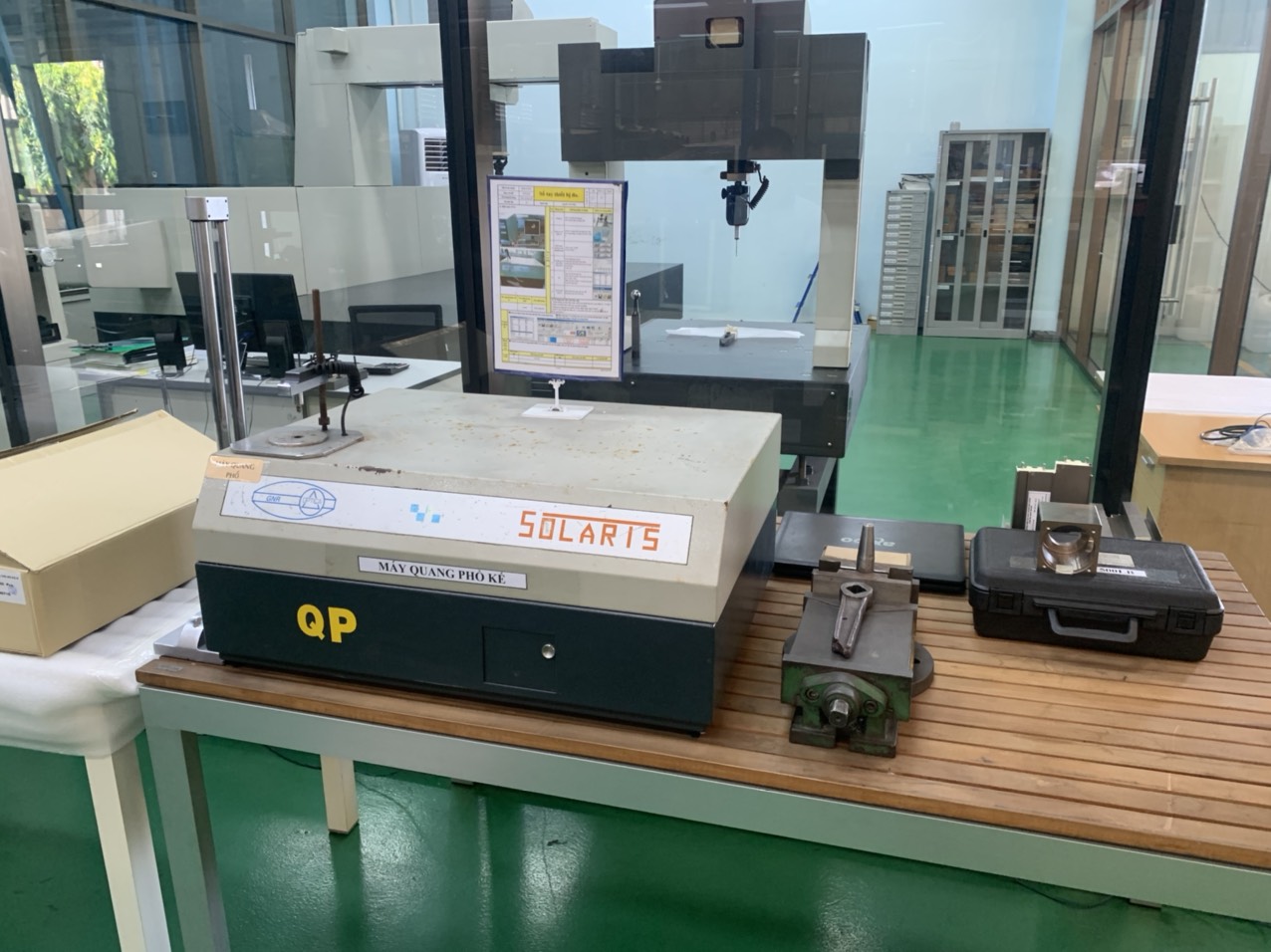
Incoming Material Verification
Compliance starts with the raw sheet. When material arrives at the factory, our team verifies the Mill Test Reports against the purchase order. The MTR confirms alloy grade, chemical composition, mechanical properties, and heat lot numbers. If the MTR does not match the specification — for example, if the drawing calls for 304 stainless steel but the MTR shows 303 — the material is rejected before it enters production.
We also apply identification tags or labels to the raw sheet immediately upon receipt. This prevents material mix-ups on the shop floor. Proper raw material identification is the foundation of the entire traceability chain.
In-Process Marking Checks
The marking operation itself requires a process check. The operator should verify:
- The marking machine is loaded with the correct text template or data file.
- The mark is applied at the correct location per the drawing.
- The character height and depth meet tolerance.
- The mark is legible and free of defects (double strikes, incomplete characters).
- Any QR or Data Matrix code scans correctly with a verification reader.
For high-volume runs, we implement statistical sampling. For low-volume custom parts — which is most of our work — we check every piece.
Final Inspection Checklist
Before any shipment leaves the factory, our inspectors complete a final inspection that includes a dedicated labeling and identification section. Here is a simplified version of the checklist we use:
| Inspection Item | Method | Accept Criteria | Record |
|---|---|---|---|
| Label content accuracy | Visual comparison to drawing | 100% match to specified text | Photo + inspector sign-off |
| Mark permanence | Rubbing test or tape pull test | No transfer, no smearing | Pass/Fail notation |
| QR/barcode scan | Handheld scanner verification | Successful decode, correct data | Scan log |
| Character height | Optical comparator or caliper | Within drawing tolerance | Measured value |
| Mark location | Measurement from datum edges | Within ± tolerance per drawing | Measured value |
| Country of origin marking | Visual | Present, correct, legible | Photo |
| MTR traceability link | Cross-reference serial to MTR | Each part traces to a valid MTR | Traceability matrix |
The Role of Digital Traceability
Increasingly, our clients request digital traceability. This means each part's QR code or serial number links to a digital record containing the MTR, process parameters, inspection results, and Certificate of Conformance. Some buyers integrate this data into their ERP or asset management systems. This level of supply chain transparency is no longer optional for aerospace, medical, or defense applications — and it is quickly becoming expected in commercial sectors too.
AI-powered visual inspection systems are also emerging. These systems use cameras and image recognition to verify label placement, content, and legibility automatically. While not yet standard in every shop, they reduce human error in critical identification checks.
How can I prevent customs delays by ensuring my sheet metal parts have the correct country-of-origin markings?
We once had a shipment of custom brackets held at a US port for eleven days because the country of origin marking was stamped on the inner packaging but not on the parts themselves. The cost was not just the port storage fees — it was the production line shutdown at our client's facility.
To prevent customs delays, ensure every imported sheet metal part bears a legible, permanent country-of-origin marking (e.g., "Made in Vietnam") on the part itself per 19 CFR 134, use both metric and US customary units on packaging labels, include accurate Harmonized Tariff Schedule codes in your commercial invoices, and confirm that steel articles comply with CBP "melt and pour" origin rules where applicable.

What 19 CFR 134 Actually Requires
US Customs and Border Protection requires that every article of foreign origin imported into the United States be marked with its country of origin. The marking must be:
- In English.
- In a conspicuous place on the article itself (not just the packaging, unless the article is exempt).
- Legible and permanent enough to reach the ultimate purchaser.
- Accurate. If the part is fabricated in Vietnam from Chinese steel, the country of origin is determined by where "substantial transformation" occurred.
For sheet metal parts, substantial transformation typically occurs where the cutting, forming, welding, and finishing take place. So if we source raw sheet from a mill in one country but fabricate the finished brackets in Vietnam, the country of origin is Vietnam.
The "Melt and Pour" Rule for Steel
For certain steel articles, CBP applies a stricter "melt and pour" rule. This means the country of origin is where the steel was originally melted and poured, regardless of where it was later fabricated. This rule is especially relevant for DFARS compliance in defense procurement, where domestic melting is often required.
We track this through Mill Test Reports that document the steel's origin from the mill, including heat lot numbers and the country where melting and pouring occurred. This documentation must accompany the shipment.
Packaging and Labeling for Customs Clearance
Beyond the part-level marking, your shipping documentation and packaging labels must also be correct. The Fair Packaging and Labeling Act requires identity, responsibility, and net quantity declarations on consumer packaging. While most custom sheet metal parts are B2B and not consumer-packaged goods, the labeling on your cartons and crates still matters for customs processing.
All labels should include both metric and US customary units. Your commercial invoice must list the correct Harmonized Tariff Schedule code for each line item. Harmonized Tariff Schedule codes 10 Incorrect HTS codes trigger delays, audits, and potential duty adjustments.
Common Customs Delay Triggers
| Delay Trigger | Root Cause | How to Prevent It |
|---|---|---|
| Missing origin mark on part | Supplier did not mark individual pieces | Include marking requirement in PO and verify at final inspection |
| Origin mark on box only | Supplier assumed box-level marking was sufficient | Clarify 19 CFR 134 requirement explicitly |
| Incorrect HTS code | Wrong tariff classification on invoice | Have a licensed customs broker review codes before shipping |
| Missing MTR for steel | No documentation of melt origin | Require MTR with heat lot traceability as a condition of shipment |
| Inconsistent origin claims | Part says one country, invoice says another | Cross-check all documents before shipment release |
| Missing dual-unit labels | Only metric or only imperial on packaging | Require both unit systems in packaging spec |
Proactive Steps We Take
Before any shipment leaves our partner factories, we run a pre-shipment document review. This review cross-checks the commercial invoice, packing list, MTRs, Certificate of Conformance, and the physical markings on the parts. We photograph the origin markings and include them in the shipment documentation package. This gives our US clients a complete regulatory documentation set they can present to their customs broker before the container even arrives at port.
We also advise our clients to work with a licensed customs broker who specializes in metal products. A broker who understands the "melt and pour" rules and DFARS requirements can pre-clear issues that would otherwise cause days of delay.
Conclusion
US labeling and identification compliance in sheet metal fabrication is not a single checkbox — it is a system of standards, drawing callouts, quality checkpoints, and customs-ready documentation that must work together from raw material receipt to port arrival. Understanding what material certifications to request for US compliance is an essential part of building that system.
Frequently Asked Questions
What specific US regulatory standards should I include in my sheet metal fabrication specifications?
When our engineering team reviews a new sheet metal project destined for the US market, the first thing we do is map every applicable regulatory standard to the part's end-use application — whether it is a commercial mounting bracket, a construction housing base, or a defense-related enclosure.
How do I ensure my offshore supplier correctly interprets the labeling callouts on my technical drawings?
One of the most common failures we see — and one that causes the most rework — is a disconnect between what a US buyer's drawing specifies for part identification and what the overseas fabrication shop actually delivers.
What quality control processes will verify my part identification is compliant before the shipment leaves the factory?
A lesson we learned early in our supply chain work is that compliance verification cannot happen only at final inspection. By then, it is too late to fix a systemic labeling error without scrapping parts or delaying the shipment.
Footnotes
1. Official ISO information on certification for quality management systems. ↩︎
2. Official FTC guidance on ‘Made in USA’ claims and compliance. ↩︎
3. Official U.S. Department of State guidance on ITAR compliance. ↩︎
4. Information on the quality management system standard for the aerospace industry. ↩︎
5. Direct reference to the International Building Code section on permanent identification. ↩︎
6. Direct link to the official Code of Federal Regulations for country of origin marking. ↩︎
7. Official EPA regulations for hazardous air pollutants from metal fabrication. ↩︎
8. Provides an overview of the military standard for identification marking. ↩︎
9. Explains the importance and documentation of material traceability in manufacturing. ↩︎
10. Official source for the Harmonized Tariff Schedule of the United States. ↩︎