Getting Vietnam-sourced stamping parts to meet EU CE marking 1 requirements confuses many buyers. I have watched shipments stall at EU customs over one missing document. Our Vietnam sourcing team fixes exactly this gap before parts ever leave the factory.
To ensure Vietnam-sourced stamping parts meet EU CE marking requirements, first determine if the part falls under an EU directive, map its technical requirements, verify supplier testing and traceability, and collect a complete technical file including material certificates, inspection reports, and conformity declarations.
That sounds simple, but each step hides traps. Let me walk you through the process the way we handle it for our own clients, one question at a time.
What CE Marking Requirements Should I Verify Before Sourcing Stamping Parts from Vietnam?
A buyer once asked our team to get a "CE certificate" for a plain steel bracket Machinery Directive 2. We had to explain that CE marking does not work that way, and that saved his project.
Before sourcing, verify whether the stamped part is itself a regulated product, a safety-critical component, or a subcomponent of a CE-marked assembly. Then identify the applicable EU directive, check RoHS and REACH substance limits, and confirm whether a Notified Body assessment is required.

CE is not a generic quality label. It is a legal conformity marking tied to specific EU legislation. Most stamped brackets, clips, and chassis parts are not CE-marked on their own. Instead, they become part of a finished product that carries the CE mark. That distinction changes everything about what you should ask your Vietnamese supplier to provide.
Step One: Classify Your Part Correctly
Start by asking where the part ends up. A mounting clip inside a lighting fixture is a subcomponent. A pressure vessel shell is a regulated product. A partly completed machine assembly may need a Declaration of Incorporation rather than a CE mark. The classification decides the paperwork.
| Part Classification | CE Marking Applied? | What the Supplier Provides |
|---|---|---|
| Standalone regulated product | Yes, by the manufacturer placing it on the EU market | Full technical file, testing, EU Declaration of Conformity |
| Safety-critical component under a specific directive | Sometimes; may need a Declaration of Incorporation | Test data, risk assessment inputs, traceability |
| Subcomponent in a larger assembly | No, the final assembler holds CE duty | Material certs, inspection reports, substance declarations |
Step Two: Identify the Governing Legislation
The applicable directive depends on the intended use of the final product, not the metal or the stamping process. Common regimes include the Machinery Directive 3, the Low Voltage Directive, the EMC Directive, and product rules for toys, medical devices, and pressure equipment. On top of that, RoHS 4 restricts substances like lead, cadmium, and hexavalent chromium in coatings, and REACH governs chemical declarations. We always check plating chemistry early, because a non-compliant zinc passivation can quietly kill an otherwise perfect part.
Step Three: Confirm the Conformity Route
Some product categories allow manufacturer self-declaration. Higher-risk categories require third-party assessment by a Notified Body 5. Confirm this before tooling starts, because it affects cost, timeline, and which test labs you can use.
How Can I Evaluate a Vietnamese Stamping Supplier's CE Compliance Capabilities?
During a factory audit near Hanoi last year, our local team found beautiful stamped samples but no calibration records for the press-line gauges. Pretty parts do not equal compliant parts.
Evaluate a Vietnamese stamping supplier by auditing their quality certifications, material traceability systems, measurement calibration, heat-treatment records, and prior EU export experience. Verify tooling provenance and confirm they can supply mill certificates, inspection data, and substance declarations for every production lot.

Supplier evaluation is where most CE compliance problems are either prevented or planted. Our Vietnam office runs supplier audits every month, and the same weak points appear again and again. Here is what we check, and why each item matters for CE outcomes.
Certifications Are the Baseline, Not the Finish Line
ISO 9001 6 shows the factory runs a controlled quality system. IATF 16949 7 matters if your parts feed automotive supply chains. ISO 14001 signals environmental control, which supports REACH-related claims. But none of these equals CE compliance. They only prove the factory can repeat a process consistently. Product conformity still needs part-level evidence.
Audit Points That Predict CE Success
| Audit Area | What to Verify | Why It Matters for CE |
|---|---|---|
| Material traceability | Coil certificates linked to production lots | Proves material composition claims in the technical file |
| Tooling provenance | Origin and validation history of dies | Transferred tooling needs re-validation against your tolerances |
| Calibration | Gauge and CMM calibration records | Inspection data is worthless without calibrated instruments |
| Heat treatment | Furnace charts and hardness logs | A known documentation weak point in some Vietnamese plants |
| Surface finishing | Plating bath control and coating thickness tests | RoHS-restricted substances often hide in coatings |
| Change control | Written engineering change procedures | Uncontrolled changes invalidate prior conformity evidence |
Watch the Tooling Transfer Trap
Many Vietnamese stampers run tooling transferred from Chinese facilities. That is fine, but you cannot inherit compliance data. Dimensions drift during transfer and re-setup. We always demand a fresh dimensional study on transferred tools before approving production. One of our clients skipped this once with another vendor and received a full container of brackets with hole positions out of tolerance.
Raw Material Sourcing Deserves Extra Scrutiny
Vietnam's steel and aluminum supply chain pulls coil from multiple Asian mills with varying certification rigor. Ask how the supplier verifies incoming material against mill certificates. The strongest suppliers do their own incoming chemistry spot checks rather than trusting paper alone.
What Quality Control Steps Ensure My Vietnam-Made Stamping Parts Pass CE Certification?
There is a trade-off we weigh on every project: how much testing is enough without inflating cost. For a simple mounting clip, a salt-spray test may matter more than a fatigue test. For a load-bearing chassis bracket, the priority flips.
Ensure CE-relevant quality through first-article dimensional inspection, material composition verification, hardness and tensile testing, coating thickness and salt-spray checks, and in-process SPC monitoring. Add PPAP-style approval before mass production and final inspection with documented sampling before every shipment.
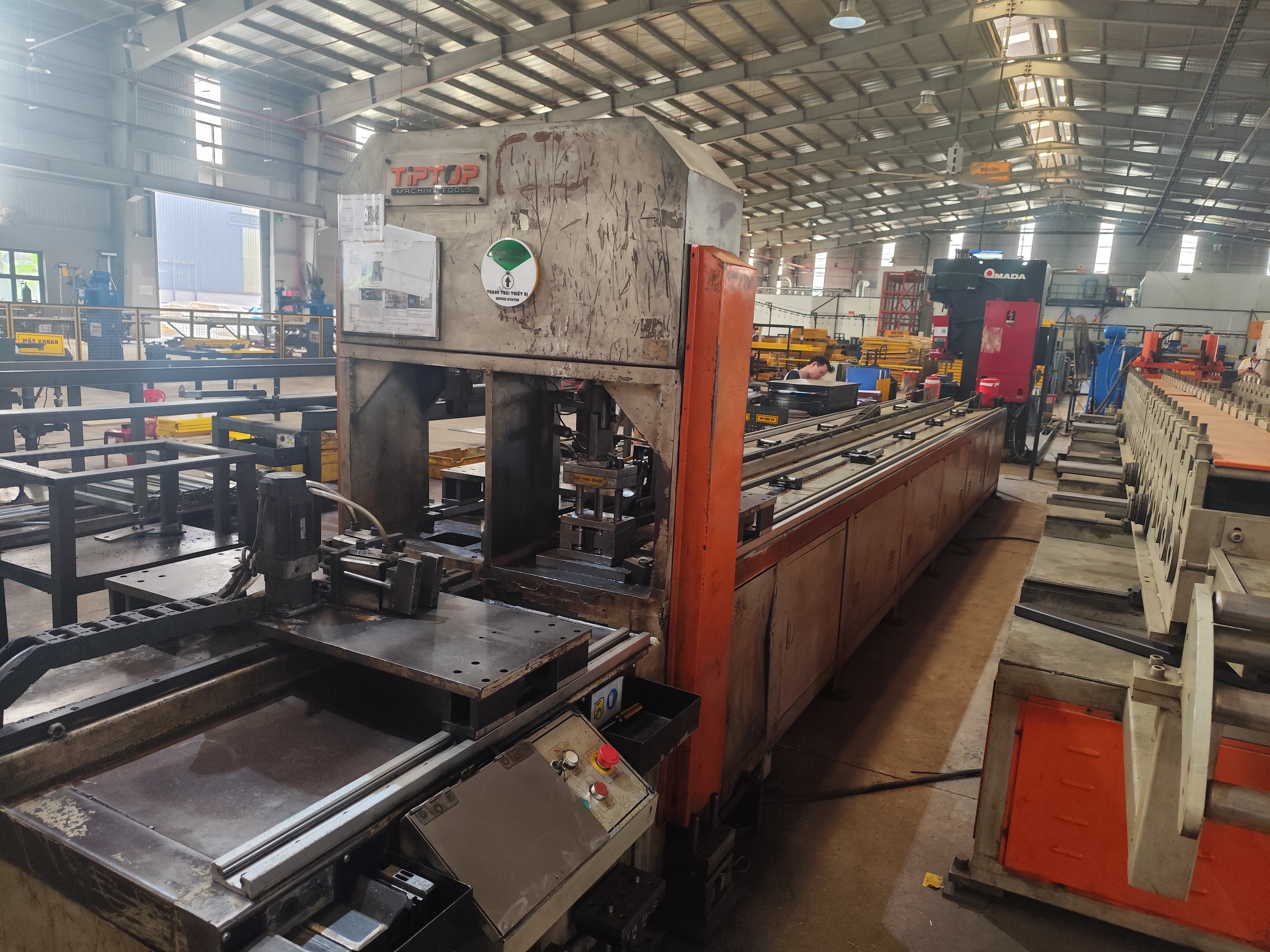
Quality control for CE purposes has one job: generating trustworthy evidence. Every test result you collect becomes ammunition for the technical file. Our process control approach for stamped parts breaks into four phases, and each phase produces documents you will need later.
Phase 1: Pre-Production Validation
Before mass production, we run a first-article inspection against the full drawing. Every dimension gets measured, not just the critical ones. We verify material chemistry against the mill certificate, ideally with an independent spot check. If the part is plated or coated, we test coating thickness and adhesion on the first samples. This is also when we lock the process: press tonnage, feed settings, die maintenance schedule.
Phase 2: In-Process Control
Stamping is a high-volume process, so drift is the enemy. We require statistical process control 8 on critical dimensions, scheduled die inspections, and burr height checks at defined intervals. Sharp edges and burrs are not just cosmetic issues. Under several EU directives, injury risk from sharp edges is an essential safety requirement.
Phase 3: Lot-Level Testing
Each production lot should carry its own evidence trail. Typical tests for stamped parts include:
- Dimensional sampling per an agreed AQL plan
- Hardness testing after any heat treatment
- Tensile verification where mechanical strength is specified
- Salt-spray or corrosion testing on coated parts
- Coating thickness measurement
- RoHS screening on plated surfaces when required
Phase 4: Pre-Shipment Final Inspection
Before the container closes, a final inspection confirms the lot matches the approved first article. We do this with our own team in Vietnam rather than relying on the factory's self-report. The inspection report, photos, and measurement data all go into the shipment package. When a client's EU customer later asks for proof, the evidence already exists.
One practical note: get it right the first time. Rework on stamped parts often means deburring or re-plating, and re-plating can change coating chemistry enough to affect RoHS results. Prevention is genuinely cheaper here.
What Documentation Do I Need from My Vietnamese Supplier to Prove CE Compliance?
A lesson we learned early: documents requested after production are ten times harder to get than documents required in the purchase order. Now our contracts list every deliverable document before the deposit is paid.
You need drawings with revisions, a bill of materials, mill certificates, process flow charts, inspection and test reports, coating and substance declarations, traceability records, and risk assessment inputs. These feed the technical file that supports the EU Declaration of Conformity for the final product.

The technical file is the backbone of CE compliance. Even when your stamped part is only a component, the final manufacturer's technical file depends on data that only the Vietnamese factory can supply. If that data is missing, the whole conformity chain breaks. Here is the documentation set we build for our clients, and who is responsible for each piece.
The Core Document Package
| Document | Provided By | Purpose in the CE Process |
|---|---|---|
| Controlled drawings with revision history | Buyer and supplier jointly | Defines the conformity baseline |
| Bill of materials | Supplier | Identifies every material and coating |
| Mill certificates for steel or aluminum coil | Supplier, from the mill | Proves material composition and grade |
| Process flow chart and work instructions | Supplier | Demonstrates controlled, repeatable production |
| First-article and lot inspection reports | Supplier or third party | Evidence of dimensional and mechanical conformity |
| Coating certificates and RoHS/REACH declarations | Supplier and plating subcontractor | Confirms restricted substances are absent |
| Test reports for hardness, tensile, salt spray | Supplier or accredited lab | Supports essential safety requirements |
| Lot traceability records | Supplier | Links each shipment back to material heats |
| Risk assessment inputs | Supplier feeds the final manufacturer | Required for the finished product's technical file |
| Declaration of Incorporation, if applicable | Supplier or intermediate manufacturer | Covers partly completed machinery |
Who Signs the EU Declaration of Conformity?
Usually not the Vietnamese factory. The party placing the finished product on the EU market issues the Declaration of Conformity. That declaration must identify the product, the responsible manufacturer or representative, the applicable legislation, the harmonised standards used, any Notified Body involved, plus a date and signature. An EU-based importer or Authorized Representative must be able to present the technical documentation to market surveillance authorities on request.
Practical Tips for Document Discipline
Write the document list into your purchase order. Require documents in English. Insist that traceability links are explicit, meaning the inspection report references the lot number, and the lot number references the coil certificate. We store these packages for every shipment so an audit request years later takes hours to answer, not weeks.
Conclusion
CE compliance for Vietnam-sourced stamping parts is a documentation and process challenge, not a certificate purchase. Classify the part, audit the supplier, control the process, and collect complete evidence.
Frequently Asked Questions
The Core Document Package Document Provided By Purpose in the CE Process Controlled drawings with revision history Buyer and supplier jointly Defines the conformity baseline Bill of materials Supplier Identifies every material and coating Mill certificates for steel or aluminum coil Supplier, from the mill Proves material composition and grade Process flow chart and work instructions Supplier Demonstrates controlled, repeatable production First-article and lot inspection reports Supplier or third party Evidence of dimensional and mechanical conformity Coating certificates and RoHS/REACH declarations Supplier and plating subcontractor Confirms restricted substances are absent Test reports for hardness, tensile, salt spray Supplier or accredited lab Supports essential safety requirements Lot traceability records Supplier Links each shipment back to material heats Risk assessment inputs Supplier feeds the final manufacturer Required for the finished product's technical file Declaration of Incorporation, if applicable Supplier or intermediate manufacturer Covers partly completed machinery Who Signs the EU Declaration of Conformity?
Usually not the Vietnamese factory. The party placing the finished product on the EU market issues the Declaration of Conformity. That declaration must identify the product, the responsible manufacturer or representative, the applicable legislation, the harmonised standards used, any Notified Body involved, plus a date and signature. An EU-based importer or Authorized Representative must be able to present the technical documentation to market surveillance authorities on request.
What CE Marking Requirements Should I Verify Before Sourcing Stamping Parts from Vietnam?
A buyer once asked our team to get a "CE certificate" for a plain steel bracket Machinery Directive 2 . We had to explain that CE marking does not work that way, and that saved his project.
How Can I Evaluate a Vietnamese Stamping Supplier's CE Compliance Capabilities?
During a factory audit near Hanoi last year, our local team found beautiful stamped samples but no calibration records for the press-line gauges. Pretty parts do not equal compliant parts.
Footnotes
1. Official EU source explaining the legal basis and requirements of CE marking. ↩︎
2. Official EU source clarifies scope and requirements of the Machinery Directive referenced in the article. ↩︎
3. Official EU page detailing scope and requirements of the Machinery Directive. ↩︎
4. EU environment page describing restricted substances regulated under RoHS. ↩︎
5. EU database explaining Notified Body role in conformity assessment. ↩︎
6. Official ISO page describing ISO 9001 quality management certification. ↩︎
7. Background reference explaining the automotive quality standard mentioned. ↩︎
8. Background concept reference for the manufacturing quality technique mentioned. ↩︎