
Last year, a U.S. buyer nearly lost a six-figure order because their Vietnam stamping parts triggered a Prop 65 enforcement notice — and nobody in the supply chain had tested a single bracket.
To ensure Vietnam stamping parts comply with California Prop 65, you must identify listed chemicals like lead and cadmium in raw materials and coatings, conduct third-party lab testing against Safe Harbor Levels, implement supplier-level quality controls, and maintain documented evidence that exposure falls below NSRL and MADL thresholds.
This guide walks through every step, from figuring out whether your stamping parts even fall under Prop 65, to building compliance checks into a Vietnam supplier’s workflow, to handling a failed shipment OEHHA chemical list 1. Each section includes practical tools our team uses when managing sourcing projects across Southeast Asia.
How do I know if my stamping parts even fall under Prop 65 requirements?
A purchasing manager once asked our Singapore office whether his zinc-plated mounting brackets needed a Prop 65 warning — he assumed bare metal parts were exempt because "they're just steel."
Your stamping parts fall under Prop 65 if they contain any of the 900-plus chemicals on the OEHHA chemical list and if a person in California could be exposed through skin contact, inhalation, or ingestion during normal use or reasonably foreseeable misuse. The law applies to any business with ten or more employees selling into California.

Who Does Prop 65 Actually Cover?
Prop 65 is not a product ban. It is a right-to-know law. If your Vietnam stamping parts contain a listed chemical above Safe Harbor Levels 2, you must provide a "clear and reasonable" warning — or prove exposure is too low to matter. The obligation falls on any entity in the supply chain that "knowingly and intentionally" exposes someone in California to a listed substance.
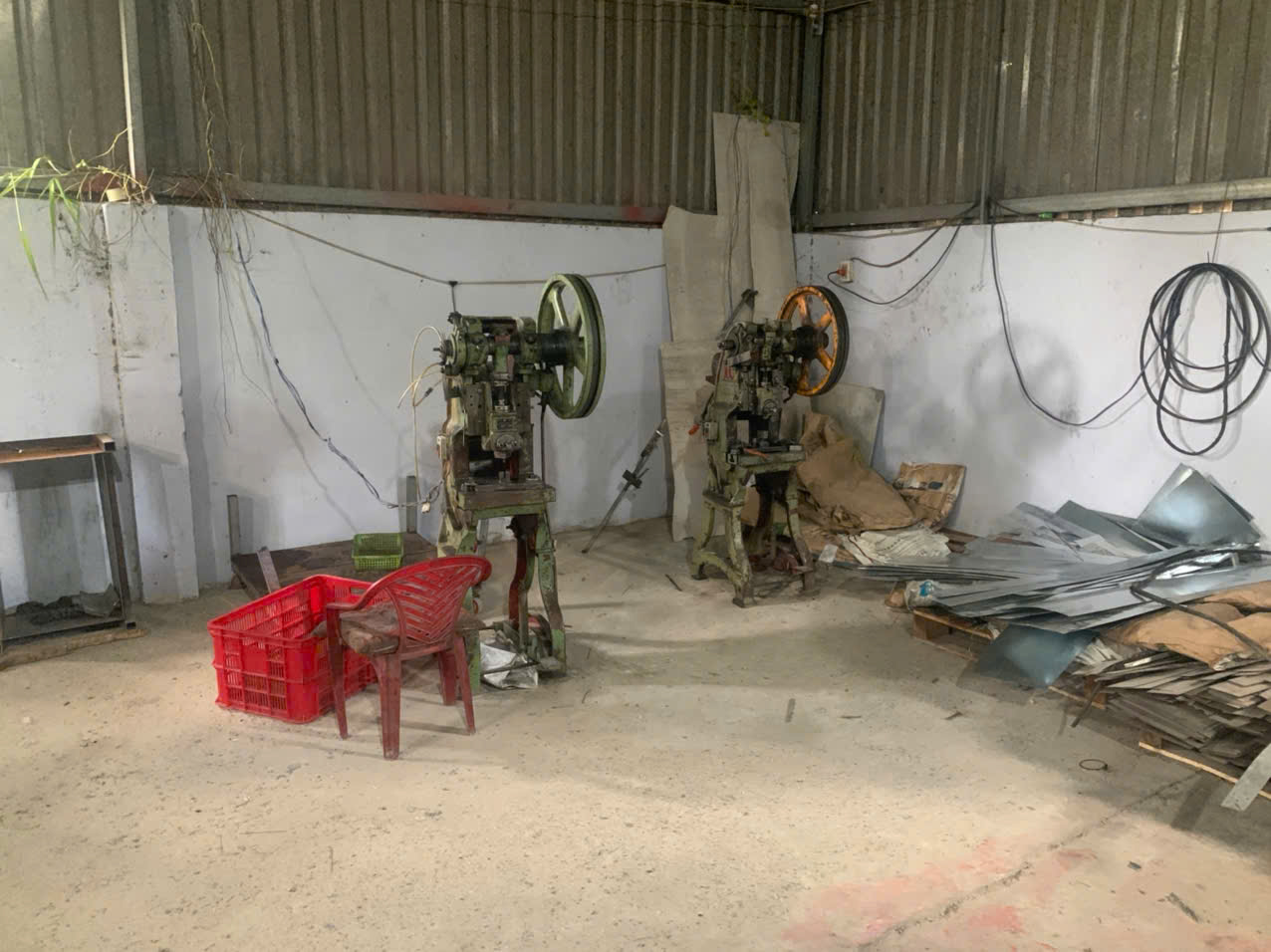
Our Vietnam office coordinates with stamping workshops 3 that press brackets, clips, and structural supports from thin-gauge steel and alloy sheet. These parts look simple. But they carry hidden chemical risks in three areas: base metal composition, surface treatments, and process residues.
Where Do Listed Chemicals Hide in Stamping Parts?
Here is a breakdown of the most common Prop 65-relevant chemicals found in metal stamping:
| Source in Stamping | Prop 65 Chemical | Why It's There |
|---|---|---|
| Base metal (recycled scrap) | Lead, cadmium | "Tramp" metals in regional recycled steel |
| Zinc galvanizing | Lead, cadmium, chromium (VI) | Impurities in zinc bath or passivation |
| Nickel plating | Nickel (metallic) | Intentional coating for corrosion resistance |
| Stamping lubricants | Phthalates, mineral oil mist | Low-cost local cutting oils |
| PVC or rubber gaskets | Lead, phthalates, DEHP | Stabilizers and plasticizers in gasket material |
| Adhesives / coatings | VOCs, formaldehyde | Binders and solvents in paint or adhesive |
| PFAS-based coatings | PFOA, PFOS | Non-stick or anti-corrosion surface treatments |
When Is a Warning Legally Required?
A warning is required only when exposure exceeds the Safe Harbor Levels set by OEHHA. These are expressed as NSRL (No Significant Risk Level) for cancer-causing chemicals and MADL (Maximum Allowable Dose Level) for reproductive toxins. If your test results show exposure below those thresholds, you can skip the warning — but you must keep the documentation to prove it.
The critical question is not "does the chemical exist in the part?" but "can a person be exposed to it at a meaningful level?" For a mounting bracket bolted inside an electrical enclosure, skin contact may be negligible. For a clip a technician handles daily, dermal migration testing becomes essential. Mapping the exposure pathway — touch, friction, heat, handling frequency — is the first real step.
Products from Vietnam are not Prop 65 compliant by default. Compliance requires explicit instruction, compliant materials procurement, and often a shift in the supplier's standard process. That is something we learned early when onboarding Vietnamese stamping vendors for U.S.-bound orders.
What testing and documentation should I request from my Vietnam supplier to verify compliance?
When we first helped a buyer run Prop 65 checks on a batch of Z-shaped spring clamps from a workshop near Ho Chi Minh City, the supplier had no idea what an NSRL was — and their only "compliance document" was a generic mill test certificate.
Request XRF screening on incoming raw materials, accredited third-party lab testing for migration, VOCs, and abrasion on finished parts, Full Material Disclosure at the CAS-number level for every input chemical, and a Certificate of Compliance referencing specific Prop 65 Safe Harbor Levels for each shipment.

Start With Material Disclosure
Full Material Disclosure (FMD) means your supplier lists every substance in the part — base metal, plating bath chemistry, lubricant composition, gasket material — down to the CAS registry number. This is the foundation. Without it, you are guessing which chemicals to test for.
Some suppliers push back, saying FMD is impractical for a complex stamping line. We have found that a workable compromise is to require CAS-level disclosure 4 for coatings, lubricants, adhesives, and gaskets, and to accept a mill certificate plus XRF screening for the base metal. The key is that no input goes undocumented.
What Tests Should the Lab Run?
The testing strategy depends on the exposure pathway. For stamping parts like brackets and clips that may be handled by workers or end-users, focus on:
| Test Type | What It Measures | When to Use |
|---|---|---|
| XRF screening | Elemental composition (lead and cadmium content, Cr, Ni) | Every incoming metal coil or plating batch |
| NIOSH 9100 surface wipe | Dermal exposure to heavy metals from surface contact | Parts with direct skin contact during use |
| Migration testing | Amount of chemical that leaches through simulated skin contact | Coated or plated parts handled frequently |
| Headspace / VOC testing | Volatile organic compound off-gassing | Parts with adhesives, paints, or fresh coatings |
| Abrasion / friction test | Chemical release under repeated mechanical wear | Moving parts, clips, sliding brackets |
| Heat exposure test | Chemical release at elevated operating temperatures | Parts near engines, electronics, or heat sources |
Sample Packaging and Report Requirements
When sending samples to a U.S.-accredited lab, package each component in a clear sealed bag with a label showing the part number, description, and date. The lab report should include a photograph of the tested part, a written description, the part number, test method used, quantitative results, and a comparison to the applicable NSRL or MADL.
If results are borderline, some labs recommend a certified toxicologist review to interpret exposure under realistic use conditions. This adds cost but can prevent an unnecessary warning label — or catch a genuine risk that a raw number alone would miss.
Material Safety Data Sheets from raw material suppliers are a starting point, but they are not a substitute for finished-part testing. An MSDS tells you what is in the lubricant as supplied; it does not tell you how much remains on the bracket after stamping, cleaning, and plating.
Our approach is to require the Vietnam supplier to provide FMD and MSDS upfront, then run third-party lab testing on the first production batch and at least once per year afterward — or whenever materials, coatings, or sub-suppliers change. This aligns with what large OEMs expect and creates a defensible documentation trail against enforcement actions.
Connecting to RoHS and REACH
Many Vietnam stamping suppliers already test for RoHS and REACH compliance because European buyers require it. There is meaningful overlap: RoHS restricts lead, cadmium, and chromium (VI) 6 in electronics. REACH covers a broader chemical universe. But Prop 65 has its own list and its own thresholds. A part can pass RoHS and still fail Prop 65 if, for example, lead is present above the NSRL but below the RoHS limit. Never assume that RoHS and REACH compliance automatically satisfies Prop 65.
How can I build Prop 65 checks into my supplier's quality control process from the start?
One lesson we learned the hard way: bolting compliance onto a finished production run is expensive and disruptive. The time to address Prop 65 is during the co-development phase, before a single coil of steel is loaded into the press.
Build Prop 65 checks into your Vietnam supplier's quality control by embedding chemical requirements into the purchase specification, requiring batch-level XRF screening on incoming materials, mandating approved material and coating lists, and conducting periodic third-party lab testing tied to PPAP milestones and annual re-qualification.

The 7-Step OEM Decision Flow, Adapted for Stamping
Large OEMs use a standardized decision flow that we have adapted for our Vietnam stamping projects. Here is how it works in practice:
- Identify high-risk inputs. Flag every material that could contain a Prop 65 chemical: coils, lubricants, plating solutions, gaskets, adhesives, pigments.
- Map exposure pathways. Determine whether the end-user will touch, breathe near, or heat the part during normal use.
- Obtain FMD. Collect CAS-level material declarations from every Tier 1 and Tier 2 supplier in the chain.
- Triage the BOM. Sort components into low, medium, and high risk based on chemical content and exposure likelihood.
- Test high-risk components. Send samples to an accredited lab for migration, VOC, abrasion, or heat testing as appropriate.
- Compare to Safe Harbor. Check each result against the NSRL or MADL for that chemical.
- Decide. If below Safe Harbor, document and proceed without a warning. If above, apply the standard Prop 65 warning or reformulate.
Embedding Compliance Into the Purchase Order
The purchase specification is the single most effective compliance tool. It should include:
- A clause listing prohibited chemicals or maximum allowable levels referencing Prop 65 Safe Harbor Levels.
- A requirement to use only approved raw material sources (no uncertified recycled scrap).
- A ban on PFAS-based coatings and a requirement for halogen-free, low-VOC alternatives.
- A mandate for phthalate-free and lead-free stamping lubricants.
- A requirement for batch-level Positive Material Identification (PMI) testing on incoming steel.
We also include a contractual indemnity clause 7. If the supplier ships parts that cause a Prop 65 enforcement action, the supplier bears the cost. This is standard practice among U.S. buyers, and it motivates the workshop to take compliance seriously.
Onsite Audits: What to Look For
Our Vietnam team conducts onsite audits of Tier 2 finishing workshops specifically to catch cross-contamination risks. Shared chlorinated solvent degreasing tanks 8 are a common problem — one tank serves multiple customers' parts, and residues from a high-lead job can transfer to your "clean" brackets. We check for dedicated cleaning lines, segregated material storage, and traceability from coil receipt to finished part.
| QC Checkpoint | Action | Frequency |
|---|---|---|
| Incoming material inspection | XRF screening of each steel coil / plating batch | Every delivery |
| Lubricant verification | Confirm phthalate-free, lead-free formulation | Quarterly or on supplier change |
| In-process coating check | Verify PFAS-free, halogen-free coating used | Each production batch |
| Finished-part lab test | Migration, VOC, or wipe test at accredited lab | First article + annually |
| Onsite workshop audit | Inspect degreasing tanks, storage, traceability | Semi-annually |
| Documentation review | Confirm FMD, MSDS, Certificate of Compliance on file | Every shipment |
Supply chain transparency is not a buzzword here — it is a legal shield. Without it, you cannot prove that your exposure assessment is valid.
Warning or Reformulate?
This is a genuine trade-off. Some businesses prefer to slap a Prop 65 warning label on the product and move on. It avoids the cost of reformulating coatings or switching steel sources. But warning labels carry their own risk: consumer distrust, competitive disadvantage, and the signal to enforcement groups that a chemical is present. In our experience, reformulation — eliminating PVC gaskets, switching to certified low-lead steel, adopting halogen-free coatings — costs more upfront but reduces long-term litigation exposure and makes the product more marketable across multiple regulatory regimes.
What steps do I take if a shipment fails to meet Prop 65 standards after it arrives?
We once had a shipment of brushed-finish brackets arrive at a U.S. warehouse, and the buyer's incoming inspection flagged cadmium levels above the MADL on the zinc-galvanized surface 9. The clock started ticking.
If a shipment fails Prop 65, immediately quarantine the goods, conduct confirmatory third-party lab testing, notify your buyer with full documentation, assess whether compliant warning labels can be applied, and trace the root cause back to the Vietnam supplier's material or process to prevent recurrence.

Immediate Quarantine and Confirmatory Testing
Do not ship the product to end-users or retailers. Isolate the affected lot. Then send representative samples to a second accredited lab for confirmatory testing. The original test could have been affected by surface contamination during transit, or the sample may not have been representative. Confirmatory results give you a defensible position either way.
Can You Label Instead of Reject?
If the parts genuinely exceed Safe Harbor Levels, one option is to apply Prop 65 warning labels before distribution. The warning must include:
- The yellow triangle symbol with a black exclamation point (or white triangle with bold black outline).
- The word WARNING in bold capital letters.
- A specific statement identifying the chemical and the type of harm (cancer, reproductive toxicity, or both).
- If the product label uses another language, the warning must also appear in that language.
For retail display, minimum sign size is 5×5 inches with 20-point type. For online sales, the warning must appear prominently on the product page with a hyperlink labeled "WARNING" and the chemical names included. Your Vietnam supplier can support digital sales compliance by providing accurate chemical data that you include on your product listings.
Root Cause Analysis and Supplier Corrective Action
Trace the failure back to its source. Was it a new steel coil from an uncertified recycler? A change in the plating bath? A substitution of lubricant? Our process is to issue a formal corrective action request (CAR) to the Vietnam supplier, require them to identify the root cause within 10 business days, and submit a corrective action plan with evidence of implementation before the next production run is authorized.
Contractual Protections
This is where the indemnity clause in your purchase agreement pays for itself. If the supplier's non-conformance causes an enforcement action — or worse, a "bounty hunter" lawsuit from a private enforcement group — the contract should allocate financial responsibility. Require upstream certification, labeling, or indemnity for Prop 65 violations as a standard term in every supply agreement with Vietnamese vendors.
Occupational Exposure: Don't Forget the Workshop
Prop 65 also covers occupational exposure 10. If employees at the Vietnam stamping workshop handle chemicals on the OEHHA list — chromium (VI) from plating, nickel dust from grinding, solvent vapors from degreasing — occupational warnings must be posted in the workplace. This is a dual obligation: protect the consumer and protect the worker. We include occupational warning requirements in our supplier audit checklist to ensure both are met.
Conclusion
Ensuring your Vietnam stamping parts meet California Prop 65 demands proactive material control, rigorous third-party lab testing, and documented exposure assessments — built into your supply chain from day one, not patched on after problems surface. If your parts also need to meet UL certification requirements, integrating both compliance programs from the outset will save significant time and cost.
Frequently Asked Questions
Who Does Prop 65 Actually Cover?
Prop 65 is not a product ban. It is a right-to-know law. If your Vietnam stamping parts contain a listed chemical above Safe Harbor Levels 2 , you must provide a "clear and reasonable" warning — or prove exposure is too low to matter. The obligation falls on any entity in the supply chain that "knowingly and intentionally" exposes someone in California to a listed substance.
Where Do Listed Chemicals Hide in Stamping Parts?
Here is a breakdown of the most common Prop 65-relevant chemicals found in metal stamping:
When Is a Warning Legally Required?
A warning is required only when exposure exceeds the Safe Harbor Levels set by OEHHA. These are expressed as NSRL (No Significant Risk Level) for cancer-causing chemicals and MADL (Maximum Allowable Dose Level) for reproductive toxins. If your test results show exposure below those thresholds, you can skip the warning — but you must keep the documentation to prove it.
Footnotes
1. The official, current list of chemicals regulated under California’s Proposition 65. ↩︎
2. OEHHA guidance on the specific exposure thresholds for Prop 65 listed chemicals. ↩︎
3. Wikipedia entry describing the industrial metalworking process used to produce brackets and clips. ↩︎
4. Information on the CAS Registry, the authoritative source for chemical substance identification. ↩︎
5. Official European Commission page explaining the RoHS directive for hazardous substances in electronics. ↩︎
6. Authoritative OSHA resource that explicitly lists and provides health information for lead, cadmium, and hexavalent chromium. ↩︎
7. Legal definition and application of indemnity clauses in commercial supply agreements. ↩︎
8. EPA standards for halogenated solvent cleaning, addressing risks in industrial degreasing processes. ↩︎
9. Technical explanation of the galvanization process used to apply zinc coatings to steel parts. ↩︎
10. Official OEHHA landing page for Proposition 65, covering consumer and occupational exposure rules. ↩︎