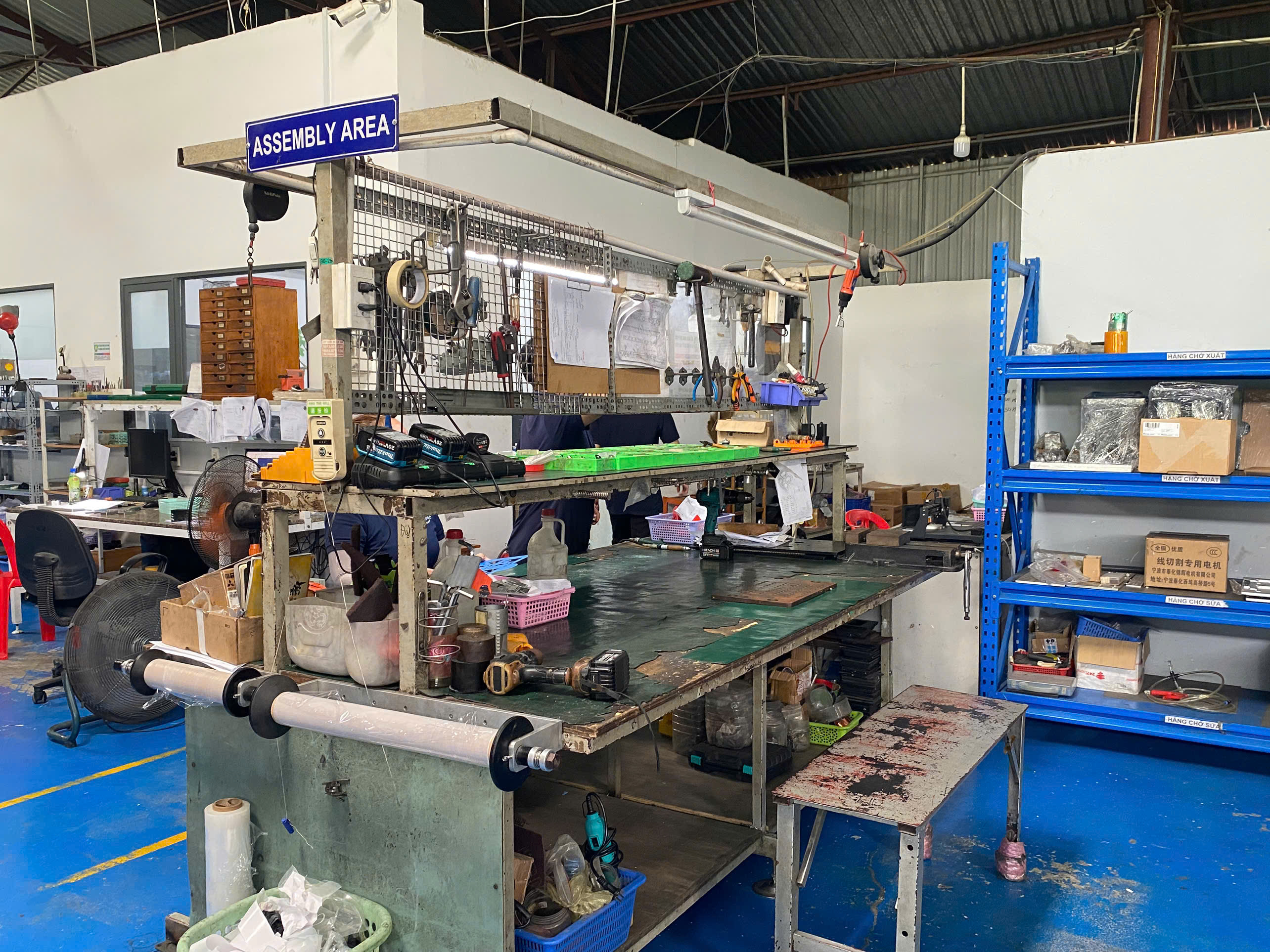

Ensuring Vietnam stamping parts suppliers meet EU ESG audit requirements has become urgent for buyers Corporate Sustainability Due Diligence Directive 1. Our Vietnam team sees factories lose EU orders over missing records, not bad products.
To ensure Vietnam stamping parts suppliers meet EU ESG audit requirements, request documented compliance evidence, verify labor and environmental records against EU frameworks like CSDDD and CBAM, run a structured audit checklist covering traceability and subcontractors, and manage gaps through phased corrective action plans.
That answer sounds simple. In practice, each step has traps. Let me walk you through what actually works, based on the audits we run on the ground in Vietnam.
What ESG Compliance Documents Should I Request from My Vietnam Stamping Supplier?
Last year, our Vietnam office reviewed a stamping plant that looked spotless. Clean floors, new presses. But when we asked for wastewater logs, the manager went quiet.
Request the supplier code of conduct, ISO 14001 or SA8000 certificates, labor contracts, payroll and working-hours records, environmental permits, wastewater and waste manifests, chemical inventories, energy consumption data, an approved sub-supplier list, and corrective-action logs. Certificates alone are not enough; EU auditors want operational records.

Documents are the backbone of any EU ESG audit. I have sat in dozens of factory meeting rooms across Vietnam, and the pattern is always the same. Suppliers show certificates first. Auditors ask for records second. The gap between those two things is where deals fall apart.
EU buyers increasingly push obligations down through contracts. The Corporate Sustainability Due Diligence Directive 2 (CSDDD) requires large EU companies to identify and mitigate human-rights and environmental risks across their value chains. Your Vietnamese stamping supplier is not directly regulated. But your customer's auditor will still ask you to prove the supplier's compliance. So you need the paper trail before the audit, not after.
The Three Document Layers
I group requests into three layers. This makes it easier for suppliers to respond, and easier for you to spot gaps.
| Layer | What to Request | Why It Matters |
|---|---|---|
| Governance | Code of conduct, ESG policy, named ESG owner, escalation process | Proves the system exists and someone runs it |
| Labor & Social | Contracts, payroll, hours logs, age verification, grievance records | Core CSDDD human-rights evidence |
| Environmental | Permits, wastewater logs, waste manifests, chemical inventory, energy bills | Covers ISO 14001 substance and CBAM readiness |
For stamping specifically, add material declarations. Stamped brackets and clips often involve steel coil, galvanizing, plating, and lubricants. REACH and RoHS compliance depends on knowing exactly what chemicals touch the part. When we onboard a stamping supplier for a US or EU client, we require material certs and plating process sheets in the first document pack. If a supplier cannot produce these within two weeks, that tells you something about their internal system.
Also request signed supplier commitments. A code of conduct that nobody signed carries little weight in an EU audit.
How Can I Verify My Supplier's Environmental and Labor Practices Meet EU Standards?
A buyer once told me he trusted a supplier because the rooftop had solar panels 3. I asked to see the inverter output data. There was none. The panels were disconnected.
Verify practices by cross-checking documents against physical evidence: match payroll to time-clock data, trace wastewater logs to treatment equipment, confirm solar claims with inverter and utility records, interview workers privately, and engage third-party auditors like SGS, Bureau Veritas, or TÜV with local Vietnam expertise.

Verification is where most buyers fail. Our team in Vietnam does this weekly, so let me share the method that holds up under EU scrutiny.
The core principle is triangulation. Never accept one source of evidence. Every claim should be confirmed by at least two independent records plus physical observation. If a supplier says overtime never exceeds legal limits, check three things: the payroll, the electronic time-clock exports, and the production output records. If the factory shipped a large order during Tet season but the hours logs show normal shifts, the numbers do not add up.
A Practical Verification Sequence
- Send a pre-assessment questionnaire covering labor, environment, subcontracting, and governance before any visit.
- Request documentary proof before the site visit, not during it. This prevents staged paperwork.
- Walk the floor and match what you see to the documents. Chemical drums should match the chemical inventory. Waste bins should match the waste manifests.
- Interview workers privately, without managers present, using a local-language interviewer.
- Cross-check one environmental claim in depth. For energy claims, pull electricity bills, fuel invoices, and machine logs for the same month.
- Close with a written findings report and agreed timelines.
Third-party auditors add objectivity, and EU customers respect names like SGS, Bureau Veritas 4, and TÜV. But do not outsource judgment entirely. In our experience serving US and European clients, the best results come from combining a third-party audit with your own team's ongoing presence. An annual audit is a snapshot. A local team catches drift between audits, like new subcontractors appearing without notice or a plating line changing chemistry.
Also benchmark against EU frameworks directly. Check chemical usage against REACH restrictions. Check material sourcing against RoHS 5. For steel stamped parts, start Scope 1 and Scope 2 emissions tracking now, because CBAM directly affects metal components entering the EU.
What Should I Include in an ESG Audit Checklist for Vietnamese Manufacturing Partners?
When we built our first ESG audit checklist for a stamping project, we borrowed heavily from our PPAP discipline 6. Traceability logic transfers almost perfectly from quality to ESG.
An effective ESG audit checklist covers five areas: governance and assigned ESG ownership, labor rights and working conditions, environmental permits and emissions data, full supply-chain traceability including plating and coating subcontractors, and a corrective-action system with documented closure of past nonconformities.

A checklist keeps audits consistent and comparable across suppliers. Without one, every visit becomes an improvised conversation, and you cannot benchmark one Vietnamese stamping plant against another.
Stamping deserves special attention here. A simple bracket or mounting clip touches more processes than most buyers realize: steel coil sourcing, blanking, bending, punching, then often plating, galvanizing, or heat treatment at a subcontractor. Each step carries environmental and labor risk. Your checklist must extend beyond the primary factory into that sub-tier.
The Five-Section Checklist
| Section | Key Checkpoints | Evidence to Collect |
|---|---|---|
| Governance | ESG owner named, internal audit cycle, escalation process | Responsibility matrix, internal audit reports |
| Labor | Contracts, wages, hours, age checks, grievance mechanism | Payroll samples, time-clock exports, grievance log |
| Environment | Permits current, wastewater treated, chemicals controlled | Permit register, waste manifests, chemical inventory |
| Traceability | Batch tracking, approved supplier list, subcontractor control | POs, goods receipt notes, chain-of-custody certs |
| Corrective Action | Nonconformities logged, CAPA closed on time | CAPA log, closure evidence, follow-up records |
Run a Shipment Trace
The single most revealing checklist item is a backward trace. Pick one finished shipment of stamped brackets. Ask the supplier to trace it back through batch numbers to the incoming steel coil, the plating subcontractor lot, and the original mill certificate. In our audits, this one exercise exposes more gaps than any questionnaire. If the trace breaks at the plating step, you have found an uncontrolled subcontractor, which is exactly what CSDDD-style due diligence targets.
Score each section rather than issuing a binary pass or fail. A scored checklist gives you a baseline for improvement and supports phased corrective action, which matters when working with Vietnamese SMEs that need capacity building rather than disqualification.
How Do I Handle ESG Non-Compliance Issues Without Disrupting My Supply Chain?
One of our US clients once wanted to drop a stamping supplier the day after a failed audit. We convinced him to wait ninety days. That supplier is now his best performer.
Handle non-compliance through phased corrective action plans with measurable milestones, prioritized by risk severity. Keep production running while critical issues are fixed on strict deadlines, qualify a backup supplier in parallel, and reserve termination for zero-tolerance findings like forced labor or falsified records.

Dropping a supplier over every finding is not a strategy. It is a supply disruption with extra steps. Requalifying a stamping supplier means new tooling trials, PPAP runs, and months of lead time. So the smarter path is structured remediation, and EU frameworks actually support this. CSDDD emphasizes prevention and mitigation, not automatic disengagement.
The key is severity classification. Not all findings carry equal weight. We sort them into three tiers and attach different responses to each.
Severity Tiers and Response Timelines
| Severity | Examples | Response | Typical Deadline |
|---|---|---|---|
| Critical | Child labor, forced labor, falsified records, illegal discharge | Immediate containment; suspend new POs; escalate | 0–30 days or exit |
| Major | Excessive overtime, expired permits, missing waste manifests | Formal CAPA with milestones; follow-up audit | 60–90 days |
| Minor | Incomplete training records, unsigned policies | Written CAPA; verify at next scheduled audit | 90–180 days |
Every CAPA should name a responsible person, a measurable milestone, and a verification method. A promise to improve is not a corrective action. A dated plan with evidence requirements is.
While remediation runs, protect yourself. Keep existing orders flowing on parts already in production, but hold new program awards until major findings close. Quietly qualify a second source if the risk is high. Our Vietnam team typically schedules a follow-up audit at the deadline, and we tie continued preferred-supplier status to verified closure, not to promises.
Finally, offer support, not just pressure. Many Vietnamese SMEs fail on documentation systems, not intent. Sharing templates for permit registers, CAPA logs, and energy data collection often fixes in weeks what threats cannot fix in months. The EVFTA sustainable development chapter also gives you legitimate leverage: suppliers who want EU market access understand that these standards are the price of entry.
Conclusion
EU ESG audits punish missing evidence, not just bad practice. Request documents early, verify with triangulation, audit against a scored checklist, and remediate through phased CAPA 7. Our Vietnam team helps buyers do exactly that.
Frequently Asked Questions
What ESG Compliance Documents Should I Request from My Vietnam Stamping Supplier?
Last year, our Vietnam office reviewed a stamping plant that looked spotless. Clean floors, new presses. But when we asked for wastewater logs, the manager went quiet.
How Can I Verify My Supplier's Environmental and Labor Practices Meet EU Standards?
A buyer once told me he trusted a supplier because the rooftop had solar panels 3 . I asked to see the inverter output data. There was none. The panels were disconnected.
What Should I Include in an ESG Audit Checklist for Vietnamese Manufacturing Partners?
When we built our first ESG audit checklist for a stamping project, we borrowed heavily from our PPAP discipline 6 . Traceability logic transfers almost perfectly from quality to ESG.
Footnotes
1. Provides official EU source explaining CSDDD scope and obligations referenced in the article. ↩︎
2. Official EU source explaining the directive suppliers are indirectly held to through buyer contracts. ↩︎
3. General background on solar panel systems referenced in the environmental-claims example. ↩︎
4. Official site of a named third-party auditor used for EU-standard supplier verification. ↩︎
5. EU Commission page defines RoHS hazardous substance limits referenced for stamped part materials. ↩︎
6. Background on PPAP explains the traceability logic the article borrows for ESG checklists. ↩︎
7. Explains corrective and preventive action systems central to the article’s remediation approach. ↩︎