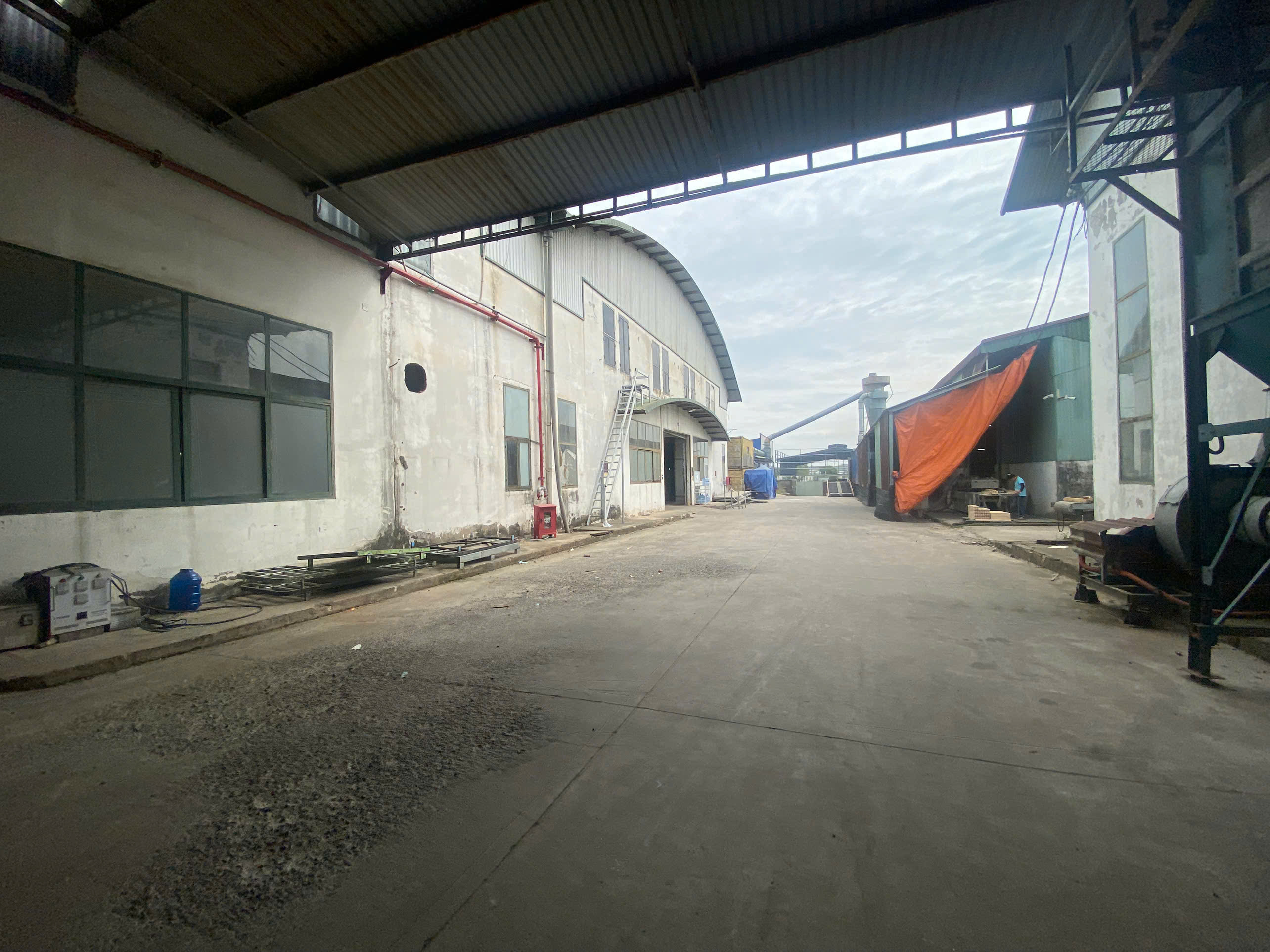

Ensuring Vietnamese suppliers source raw materials from specified suppliers is a problem our Vietnam team fights weekly. One quiet steel substitution can wreck a stamping program overnight.
To ensure Vietnamese suppliers source raw materials from specified suppliers for stamping parts, name approved mills in the contract, require mill test certificates and lot traceability for every batch, verify incoming material with PMI or spectrometer testing, and enforce written deviation approval before any sourcing change.
That is the short answer. The longer answer is a control system, not a request. Below, I break it into four practical questions our clients ask us most often.
How can I verify that my Vietnamese stamping supplier is actually sourcing from my approved material vendors?
A purchasing manager once told me his brackets "looked fine" until springback drifted across lots. Our Vietnam office traced it to a trader-supplied coil nobody had approved. Verification, not trust, would have caught it.
Verify sourcing by cross-checking mill test certificates against your approved vendor list, matching heat and lot numbers on coils to purchase invoices, conducting unannounced factory visits to inspect material storage and labels, and running spectrometer or PMI tests on incoming batches.

Most Vietnamese stamping factories are contract manufacturers, not raw-material custodians. They quote from your drawing and a target cost. Unless you lock down the source, they will buy from whichever mill or trader gives the best price that week. So you need evidence, not assurances.
Follow the paper trail first
Start with documents. Every coil or sheet should arrive with a Mill Test Certificate 1 (MTC). The MTC lists the mill name, heat number, chemistry, and mechanical properties. Ask your supplier to send the MTC before production starts, not after shipment. Then match three things: the mill name against your approved list, the heat number against the coil label, and the purchase invoice against the MTC. If the invoice shows a trading company, ask who the upstream mill is. In our audits across Vietnam, this simple three-way match exposes most substitutions.
Then verify physically
Paper can be recycled from an old shipment. Physical checks close that gap.
| Verification Method | What It Confirms | When to Use |
|---|---|---|
| MTC cross-check | Mill identity, chemistry on paper | Every batch |
| Heat/lot number match | Coil matches the certificate | Every batch |
| PMI / spectrometer test | Actual chemical composition | High-risk or new suppliers |
| Unannounced site visit | Real storage, labeling, origin docs | Quarterly or per program |
| Third-party inspection | Independent confirmation | Large orders, remote buyers |
Our team in Vietnam performs receiving inspections on-site, which is far cheaper than discovering the problem in your incoming dock in Ohio. If you have no local team, hire a third-party inspector to witness material receipt. Also watch for hidden dependency on imported Chinese coil. Vietnam's domestic steel base is real, with mills like Hoa Phat 2 and POSCO Vietnam, but many traders still blend in imported material. Documentation can look compliant while the source is not.
What contract terms should I include to enforce specified raw material sourcing with suppliers in Vietnam?
Contract drafting is where we spend the most time before any stamping program launches. A vague line like "material: SPCC or equivalent" hands the factory a blank check on sourcing.
Include an approved vendor list naming exact mills, a clause prohibiting substitution without written approval, mandatory MTC submission per batch, audit and testing rights, rejection and chargeback rights for unauthorized material, and payment terms tied to documented sourcing compliance.

A contract only works if it removes ambiguity. In our experience helping U.S. clients source from Vietnam, the strongest agreements define three levels of control and pick one deliberately.
Choose your control level
| Control Level | What It Means | Best For |
|---|---|---|
| Level 1: Spec only | Any material meeting the named grade (e.g., SPCC per JIS G3141) | Low-risk, commodity parts |
| Level 2: Approved vendor list | Only pre-approved mills or traders may be used | Most mid-to-high quality programs |
| Level 3: Nominated supplier | Buyer directs purchase from one named source, with proof | Regulated, safety, or brand-critical parts |
Level 2 is the practical sweet spot for most stamping programs. It preserves some supplier flexibility while blocking silent substitution.
Clauses that actually get enforced
Write these into the purchase contract or a separate quality agreement:
- Approved Vendor List (AVL). Name the mills, the trader (if any), and the country of origin. Attach it as an exhibit.
- No-substitution clause. Any change in mill, trader, grade, coating, or origin requires prior written approval. Verbal or email hints do not count.
- Documentation clause. MTC or Certificate of Analysis for every batch, submitted before production release.
- Audit rights. You or your agent may inspect material storage, records, and invoices, announced or unannounced.
- Remedies. Rejection rights, rework at supplier cost, chargebacks, and termination triggers for unauthorized sourcing.
- FTA origin clause. If you claim CPTPP 4 or EVFTA preferential tariffs, require origin documentation that survives customs audit.
One more practical tip. Put the material spec on the drawing and in the contract, and make them identical. When we prepare drawings with clients, we state grade, standard, thickness tolerance, coating, temper, and surface condition in full. Vietnamese factories respond well to precise documentation; they struggle with assumptions buried in email threads.
How do I audit material traceability and certifications for stamping parts made in Vietnam?
During a factory audit near Hai Phong last year, our engineer found unlabeled coils leaning against a wall. The MTCs were filed neatly in the office. The two had no connection. That is the traceability gap an audit must close.
Audit traceability by walking the material flow from receiving dock to press: check coil labels against MTCs and purchase records, review IQC logs and chemistry test results, confirm lot numbers carry through production travelers, and verify finished-part cartons trace back to specific heats.

A traceability audit is not a paperwork review in a conference room. It is a physical walk-through that tests whether documents and reality match. Here is the sequence we use.
Walk the flow, backwards and forwards
Start at the receiving dock. Pick a coil at random. Read the label. Ask for the MTC and the purchase invoice for that exact heat number. Then walk forward: does the production traveler for the current job reference that heat? Do the finished-part cartons carry a lot code that maps back to it? Then reverse the test. Pick a finished carton and trace it back to a coil. If either direction breaks, traceability is decorative, not real.
What to check at each stage
| Stage | Records to Review | Physical Check |
|---|---|---|
| Receiving | MTC, invoice, IQC log | Coil labels, storage segregation |
| Incoming QC | Chemistry/thickness test results | Spectrometer or gauge on the spot |
| Production | Job traveler with heat/lot reference | Coil loaded on the press matches traveler |
| Finished goods | Lot codes on cartons | Random carton trace-back test |
| Shipping | Packing list, CO documents | Lot codes match shipping docs |
Certifications: read them critically
Do not just confirm an MTC exists. Read it. Check that the chemistry matches the grade standard, that mechanical values sit inside spec, and that the mill name matches your AVL. Some certificates in the region are trader-issued summaries, not original mill documents. Ask for the original mill certificate whenever possible. For higher-risk programs, we commission independent chemistry verification through a third-party lab 5 or use portable PMI on-site. Also remember Vietnam's FTA angle: if your parts claim EVFTA 6 or CPTPP preferential origin, the raw material paper trail must support the certificate of origin 7, or you risk a customs claw-back long after shipment.
What steps can I take if my Vietnamese supplier substitutes unauthorized raw material sources for stamping parts?
The hardest call I make is telling a client their in-transit shipment was pressed from unapproved coil. What happens next depends almost entirely on what was agreed before the substitution occurred.
If substitution is found, quarantine affected lots immediately, demand full disclosure of the actual source and affected shipments, invoke contractual rejection and chargeback rights, require containment and re-verification of inventory, and decide between corrective action with tighter controls or supplier exit.

Discovery is only step one. Your response should follow a containment-then-decision sequence, and it should be fast. Substituted material may still pass a visual check while failing later in forming consistency, springback, plating adhesion, or downstream assembly. In stamping, chemistry and temper drive press behavior, so a "looks fine" part is not evidence of conformance.
The response sequence we use
- Quarantine. Freeze all suspect lots at the factory, in transit, and in your warehouse. Stop the presses on that job.
- Demand disclosure. Require the supplier to identify the actual mill, the affected heats, and every shipment that used them. Partial honesty here predicts future behavior.
- Assess risk. Test retained samples. Compare actual chemistry and mechanicals against spec. Decide lot by lot: accept with concession, sort, rework, or scrap.
- Invoke remedies. Apply the rejection, chargeback, and penalty clauses you wrote earlier. If you skipped that step in contracting, your leverage now is mostly future business.
- Fix the system. Require a corrective action plan: retraining, receiving controls, and MTC submission before production release. Add unannounced verification for the next several lots.
- Decide the relationship. A supplier who substituted for convenience and cooperates fully may deserve a second chance under tighter control. One who forged documents does not.
Prevention beats remediation
The strongest fix is structural. For critical programs, we sometimes arrange direct framework agreements with the mill, with coil shipped straight to the stamping factory. The supplier then has no sourcing discretion at all. Between orders, sample validation and pilot runs using the nominated material catch drift before it scales. Payment terms help too: tying acceptance and payment to documented sourcing compliance keeps attention focused where you need it.
Conclusion
Uncontrolled material sourcing quietly destroys stamping programs. The fix is a system: named suppliers, enforceable contracts, verified certificates, physical audits, and decisive remedies. Build the system before the first coil ships.
Frequently Asked Questions
How can I verify that my Vietnamese stamping supplier is actually sourcing from my approved material vendors?
A purchasing manager once told me his brackets "looked fine" until springback drifted across lots. Our Vietnam office traced it to a trader-supplied coil nobody had approved. Verification, not trust, would have caught it.
What contract terms should I include to enforce specified raw material sourcing with suppliers in Vietnam?
Contract drafting is where we spend the most time before any stamping program launches. A vague line like "material: SPCC or equivalent" hands the factory a blank check on sourcing.
How do I audit material traceability and certifications for stamping parts made in Vietnam?
During a factory audit near Hai Phong last year, our engineer found unlabeled coils leaning against a wall. The MTCs were filed neatly in the office. The two had no connection. That is the traceability gap an audit must close.
Footnotes
1. Explains the standard document verifying material chemistry and mechanical properties for traceability. ↩︎
2. Official site of a major Vietnamese steel mill named as an approved domestic supplier example. ↩︎
3. Official ISO page clarifying what ISO 9001 certification actually covers versus sourcing control. ↩︎
4. Background on the trade agreement affecting preferential tariff claims mentioned in origin compliance. ↩︎
5. ISO/IEC 17025 defines competence requirements for labs performing independent material testing. ↩︎
6. Official EU trade page detailing the Vietnam free trade agreement referenced for origin rules. ↩︎
7. WTO overview of rules of origin relevant to customs documentation and claw-back risk. ↩︎