

A U.S. client once sent us rejected brackets — warped, burned through, and unusable — all because the previous supplier never verified AWS welding compliance for thin-gauge sheet metal.
To evaluate AWS welding compliance when sourcing sheet metal fabrication, request AWS D9.1 certifications, verify Welding Procedure Specifications and welder qualification records, confirm Certified Welding Inspector oversight, and ensure your RFQ explicitly references the correct AWS code for every weld joint.
The difference between a good sheet metal weld and a failed one often comes down to documentation, process control, and the right code Non-Destructive Testing 1. This guide walks you through exactly what to check and why it matters.
What specific AWS documentation should I request to verify my supplier's welding procedures?
When our team audits a new fabrication partner in Vietnam or across Asia, the first thing we ask for is not samples — it is paperwork ITAR restrictions 2. Documentation tells us whether a supplier controls their welding process or just hopes for the best.
You should request the supplier's Welding Procedure Specifications (WPS), supporting Procedure Qualification Records (PQR), welder qualification records, AWS D9.1 certification copies, and any quality management certifications such as ISO 3834 or ISO 9001 to verify their welding procedures are documented and qualified.
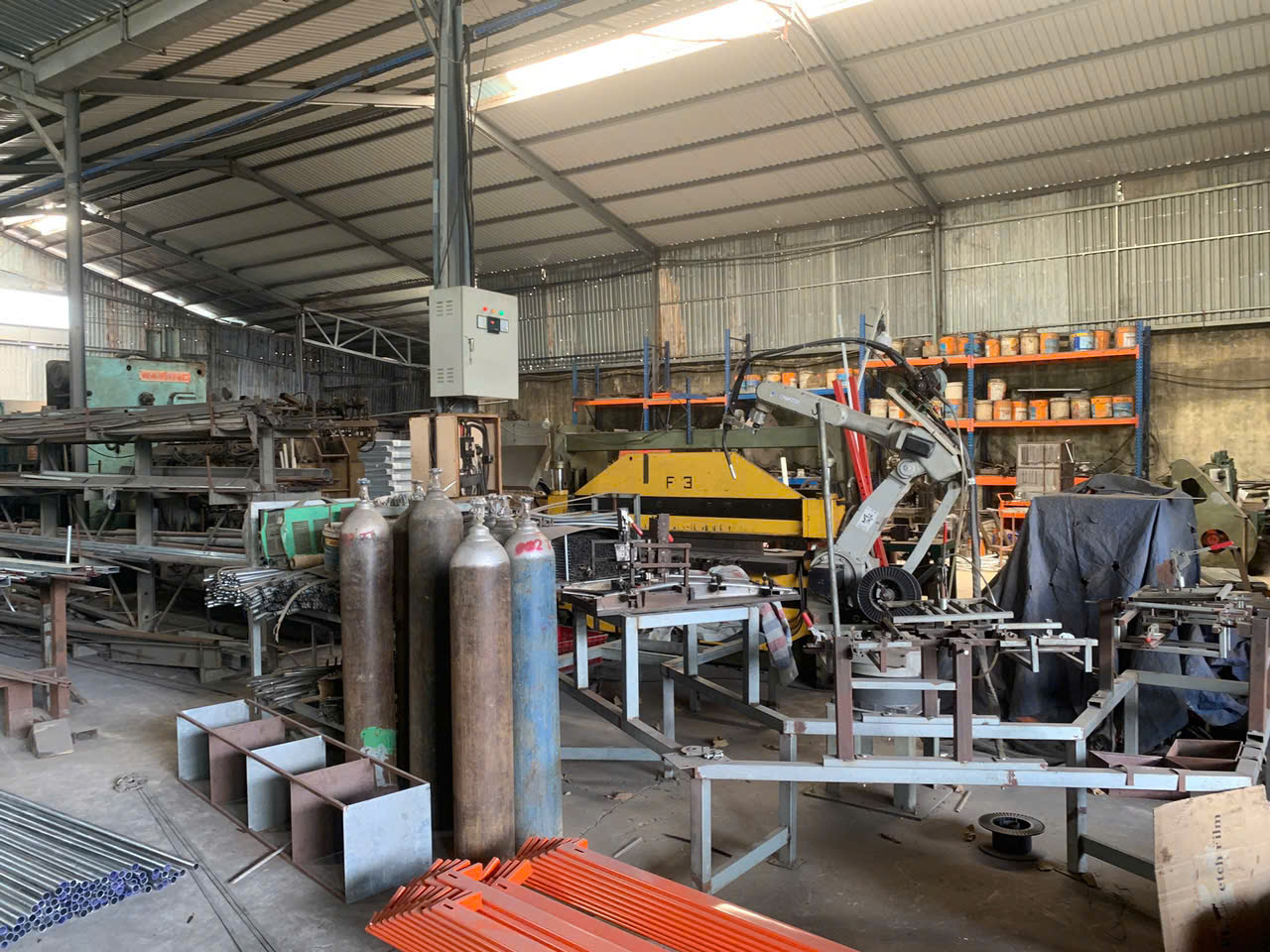
Why WPS and PQR Matter
A Welding Procedure Specification 3 is the recipe. It tells the welder exactly what process, filler metal, shielding gas, welding parameters, preheat, and travel speed to use for a specific joint. The Procedure Qualification Record 4 proves that recipe works — it documents the test welds and mechanical testing that qualified the WPS.
Without these two documents, a fabricator is guessing. And guessing on thin sheet metal leads to distortion, burn-through, and scrap.
The Right AWS Code for Sheet Metal
Many buyers assume AWS D1.1 (structural steel welding) covers everything. It does not. AWS D9.1 5 is the code written specifically for sheet metal welding. It addresses the unique challenges of thin-gauge materials: heat management, distortion control, and joint design for materials that burn through easily.
Here is a quick comparison of the most relevant AWS codes:
| AWS Code | Scope | Typical Material Thickness | Key Focus |
|---|---|---|---|
| AWS D9.1 | Sheet Metal Welding | Thin gauge (typically ≤ 3/16") | Distortion control, burn-through prevention, joint design for thin materials |
| AWS D1.1 | Structural Steel Welding | 1/8" and above (qualified on 3/8" plate covers up to 3/4") | Structural integrity, load-bearing joints |
| AWS D1.2 | Structural Aluminum Welding | Varies | Aluminum-specific procedures and qualifications |
| AWS D1.3 | Structural Sheet Steel | Light-gauge steel used structurally | Thin structural members, connections |
| ASME Section IX | Pressure Vessels and Boilers | Varies | Pressure containment, safety-critical welds |
What a Complete Documentation Package Looks Like
When we qualify a supplier for a U.S. client's sheet metal project, we compile and verify the following:
| Document | What It Proves | Red Flag If Missing |
|---|---|---|
| WPS (per AWS D9.1) | Process is defined and repeatable | Welders improvise — inconsistent results |
| PQR | WPS has been tested and proven | Procedures are unvalidated assumptions |
| Welder Qualification Records | Individual welders passed qualification tests | Unqualified operators on your parts |
| AWS D9.1 Certification | Facility meets D9.1 requirements | Supplier may only hold D1.1, which is insufficient for sheet metal |
| ISO 9001 6 or ISO 3834 7 | Quality management system is in place | No structured quality assurance plan |
| Material Certifications (MTRs) | Material traceability is maintained | Cannot verify base metal compliance |
I always tell our clients: if a supplier hesitates to share this documentation, that is your answer. Walk away.
Beyond the Basics: Welding Quality Management
ISO 3834 specifically addresses welding quality management. It defines quality requirements for fusion welding of metallic materials. A fabricator certified to ISO 3834 has demonstrated that their welding operations — from design review through final inspection — follow a controlled, documented system. This is a strong signal of fabrication supplier qualification.
How can I confirm that the individual welders working on my project are currently AWS certified?
A lesson we learned early in our supply chain work: a facility can hold every certification on paper, but if the welder actually running your job is not individually qualified, none of it protects you.
To confirm individual welders are currently AWS certified, request their welder qualification records by name, verify the records cover your project's specific materials, processes, positions, and joint configurations, and check expiration dates — AWS qualifications must be maintained through documented continuity of welding activity.
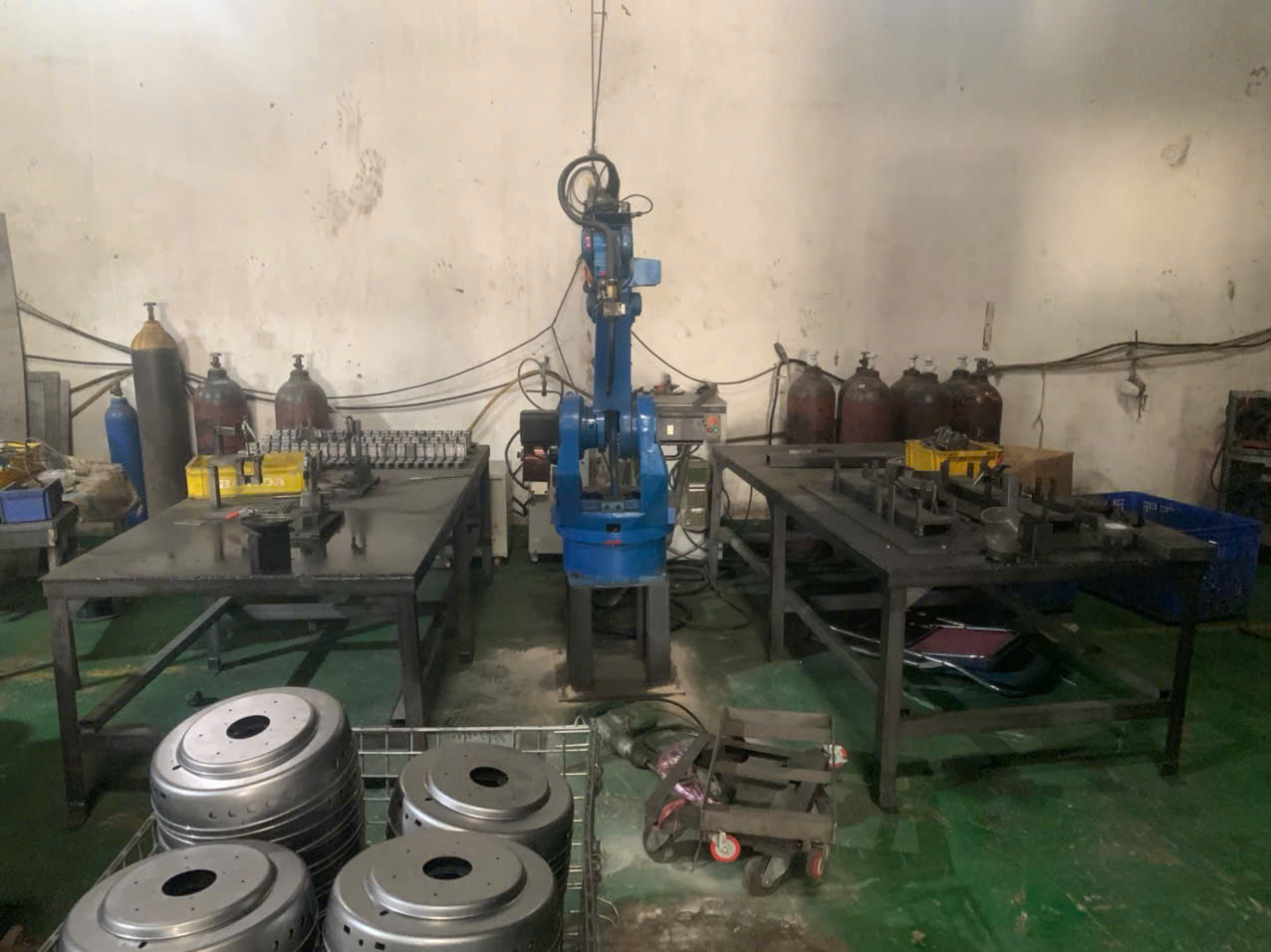
What Welder Qualification Records Must Show
Each welder qualification record ties a specific person to a specific set of capabilities. It is not a blanket credential. A welder qualified in GMAW (MIG) on carbon steel in the flat position is not automatically qualified for GTAW (TIG) on stainless steel in the vertical position.
Here is what you need to verify on each record:
- Welder name and identification number
- Welding process (GMAW, GTAW, SMAW, etc.)
- Base material type and group (carbon steel, stainless, aluminum)
- Thickness range qualified
- Welding position (1G, 2G, 3G, 4G, etc.)
- Joint type (groove, fillet)
- Date of qualification and expiration or continuity log
Matching Qualifications to Your Project
When we manage contract manufacturing for sheet metal brackets, housings, or mounting components, we map each weld on the drawing to a specific qualification requirement. Then we confirm the assigned welder holds that qualification.
For example, a pair of mirrored mounting brackets with multiple folds, angular geometry, and pre-drilled mounting holes might require fillet welds in the 2F and 3F positions using GMAW on mild steel. We verify the assigned welder is qualified for exactly that combination.
Dual-Qualified Welders for Multi-Code Projects
A growing trend we see among top-tier fabricators: dual-qualified welders. These operators hold qualifications under multiple AWS codes — say, D9.1 for sheet metal and D1.2 for structural aluminum. For projects that span different material types or code requirements, dual qualification eliminates the bottleneck of routing work between specialized operators.
Continuity and Expiration
AWS qualifications are not lifetime credentials. Welders must demonstrate continuity — meaning they must have performed welding using the qualified process within a defined period (typically six months). If a welder has not used a specific process for an extended period, the qualification lapses.
Ask the fabricator: "Can you show me the continuity log for the welders assigned to my project?" If they cannot, that qualification record may no longer be valid.
What inspection steps should I take to ensure my sheet metal parts meet AWS quality standards?
One of our clients in the defense sector once received a shipment of sheet metal enclosures where every weld passed the fabricator's internal visual check — but an independent Certified Welding Inspector 8 found undercut, incomplete fusion, and porosity on over 30% of the parts. That experience reshaped how we structure inspection for every project.
To ensure sheet metal parts meet AWS quality standards, implement a multi-step inspection process: visual inspection per AWS D9.1 criteria, non-destructive testing such as dye penetrant or radiographic testing where specified, dimensional verification, and independent review by a Certified Welding Inspector before shipment.

Self-Inspection vs. CWI Verification
There is an ongoing debate in the fabrication industry. Some suppliers rely on operator self-inspection — the welder checks their own work. Others employ Certified Welding Inspectors who provide independent verification.
Our position is clear: for any project where quality matters — and especially in regulated industries like aerospace and defense — CWI oversight is not optional. A welder checking their own work is like a student grading their own exam. It is better than nothing, but it is not reliable.
Non-Destructive Testing Methods
The welding inspection criteria you specify depend on the application. Here is a comparison of common NDT methods used in sheet metal fabrication:
| NDT Method | What It Detects | Best For | Limitations |
|---|---|---|---|
| Visual Inspection (VT) | Surface defects: cracks, undercut, porosity, incomplete fusion | All welds — the mandatory first step | Cannot detect subsurface defects |
| Dye Penetrant Testing (PT) | Surface-breaking cracks and porosity | Non-magnetic materials, thin sheet metal | Only finds surface defects; requires clean surfaces |
| Magnetic Particle Testing (MT) | Surface and near-surface defects | Ferromagnetic materials (steel, iron) | Not applicable to aluminum, stainless steel |
| Radiographic Testing (RT) | Internal defects: porosity, inclusions, lack of fusion | Critical welds requiring volumetric inspection | Expensive, requires radiation safety protocols |
| Ultrasonic Testing (UT) | Internal defects and thickness measurement | Thicker materials, critical joints | Less effective on very thin sheet metal |
Building an Inspection Sequence
For a typical sheet metal fabrication project, I recommend this sequence:
- In-process visual inspection by the welder during welding
- Post-weld visual inspection by a CWI per AWS D9.1 acceptance criteria
- NDT (PT or MT) on critical welds as specified on the drawing
- Dimensional inspection to verify the part meets drawing tolerances after welding (distortion check)
- First Article Inspection (AS9102 format) if the contract requires it
- Final documentation package: material certs, welder records, inspection reports, and Certificate of Conformance
The Role of the CWI
A Certified Welding Inspector holds credentials from AWS that qualify them to interpret codes, evaluate weld quality, and verify compliance. When a fabricator employs CWIs on staff, it signals a commitment to quality beyond the minimum. During our supplier audits, the presence of a CWI is one of the strongest indicators of a mature quality assurance plan.
For buyers sourcing from Asia, asking "Do you have a CWI on staff or do you subcontract CWI services?" is a critical qualifying question. If the answer is neither, proceed with caution.
Emerging Inspection Technologies
Some advanced fabricators are adopting AI-powered visual inspection systems and real-time welding parameter monitoring using IoT sensors. These technologies can flag deviations from the WPS in real time — for example, if travel speed drops or voltage spikes beyond the qualified range. While not yet standard across the industry, they represent where inspection is heading and can significantly improve first-pass yield.
How do I ensure my specific AWS drawing requirements are correctly interpreted and followed?
A trade-off we weigh on nearly every project: how much detail to put on a drawing versus how much to leave to the fabricator's judgment. For AWS welding compliance, the answer is simple — spell out everything. Ambiguity in weld callouts leads to non-conforming parts.
To ensure AWS drawing requirements are correctly interpreted, provide native CAD files with explicit AWS weld symbols per joint, specify the applicable AWS code (e.g., D9.1) on the drawing, define inspection levels and post-weld treatments, and conduct a pre-production review meeting with the fabricator to confirm understanding.

What Your RFQ Must Include
When we help U.S. clients develop RFQ packages for sheet metal fabrication, we ensure the following elements are present. Missing any one of these creates room for misinterpretation.
- Native CAD files (STEP, IGES, or SolidWorks) with explicit weld symbols on every joint
- AWS code reference per weld (e.g., "Weld per AWS D9.1" on each weld callout)
- Material specification: alloy, grade, thickness, and condition
- Filler material specification if critical to the application
- Inspection level per weld: visual only, PT, RT, etc.
- Post-weld treatment: stress relief, grinding, passivation, powder coating
- Contract flowdowns: AS9100, DFARS, ITAR, or other regulatory requirements
- First Article Inspection requirement (AS9102 if applicable)
- Acceptance criteria: reference the specific section of D9.1 that governs acceptance
Joint Design and Preparation Standards
AWS D9.1 provides specific guidance on joint design and preparation for thin-gauge materials. The code recognizes that a butt joint on 20-gauge stainless steel requires a fundamentally different approach than a butt joint on 3/8" structural steel.
Key joint design considerations for sheet metal include:
- Edge preparation: square edge vs. beveled, depending on thickness
- Fit-up tolerances: tighter gaps required for thin material to prevent burn-through
- Backing: whether a backing bar or purge gas is required
- Tack weld spacing and sequence: critical for distortion control
Pre-Production Review: The Most Overlooked Step
In our experience managing projects across Vietnam and other Asian manufacturing hubs, the pre-production review is where most failures are prevented. We sit down with the fabricator — virtually or in person — and walk through every weld callout on the drawing.
We ask:
- "Show me the WPS you will use for this joint."
- "Which welder will perform this weld, and can I see their qualification record?"
- "What is your distortion control plan for this assembly?"
- "How will you inspect this weld, and who will sign off?"
If the fabricator cannot answer these questions clearly, they are not ready to produce your parts.
Flowdown Requirements for Regulated Industries
For aerospace and defense clients, contract flowdowns add another layer. AS9100 quality management 9, DFARS compliance, and ITAR restrictions must be documented and acknowledged by the fabricator before production begins. These are not optional add-ons — they are contractual obligations that flow down from the prime contractor to every sub-tier supplier.
We compile material certs, welder records, inspection reports, and a Certificate of Conformance into a complete documentation package. This package travels with the parts and supports audit readiness at every level. Understanding what international welding standards apply to sheet metal fabrication can further strengthen your compliance framework when sourcing globally.
Conclusion
Evaluating AWS welding compliance requires verifying D9.1 qualifications, reviewing WPS and PQR documentation, confirming individual welder certifications, requiring CWI oversight, and specifying every requirement in your RFQ — before production begins.
Frequently Asked Questions
What specific AWS documentation should I request to verify my supplier's welding procedures?
When our team audits a new fabrication partner in Vietnam or across Asia, the first thing we ask for is not samples — it is paperwork ITAR restrictions 2 . Documentation tells us whether a supplier controls their welding process or just hopes for the best.
How can I confirm that the individual welders working on my project are currently AWS certified?
A lesson we learned early in our supply chain work: a facility can hold every certification on paper, but if the welder actually running your job is not individually qualified, none of it protects you.
What inspection steps should I take to ensure my sheet metal parts meet AWS quality standards?
One of our clients in the defense sector once received a shipment of sheet metal enclosures where every weld passed the fabricator's internal visual check — but an independent Certified Welding Inspector 8 found undercut, incomplete fusion, and porosity on over 30% of the parts. That experience reshaped how we structure inspection for every project.
Footnotes
1. Authoritative overview of non-destructive testing methods for welds. ↩︎
2. Authoritative legal definition and explanation of ITAR regulations. ↩︎
3. Official AWS resource detailing Welding Procedure Specifications. ↩︎
4. Defines and explains the importance of Procedure Qualification Records in welding. ↩︎
5. Explains the AWS D9.1 standard for sheet metal welding. ↩︎
6. Official ISO page explaining the ISO 9001 quality management standard. ↩︎
7. Official ISO overview of the ISO 3834 standard for welding quality. ↩︎
8. Official AWS program details for Certified Welding Inspectors. ↩︎
9. Boeing’s supplier requirements, including AS9100 quality management. ↩︎