

I learned the hard way that choosing a sheet metal fabrication 1 supplier based on price alone leads to costly rework, missed deadlines, and frustration. When our team began managing sourcing projects for U.S. clients across Asia, we quickly discovered that the real differentiator was not the quote — it was the depth of engineering support behind it. Suppliers who lacked technical competency 2 delivered parts that looked right on paper but failed in assembly, driving up total program costs. The problem grew worse when design iterations piled up and nobody on the supplier side flagged manufacturability issues early.
Evaluating engineering support for sheet metal fabrication cost optimization requires assessing a supplier’s Design for Manufacturability expertise, material selection guidance, tolerance rationalization capability, process automation investment, and willingness to collaborate early in the design phase before drawings are finalized.
This article walks through the specific benchmarks and questions you should use to judge whether a supplier’s engineering team can truly drive cost reduction. Each section targets a critical evaluation area that purchasing managers and engineers face daily.
How can I assess if a supplier's engineering team will proactively suggest Design for Manufacturing (DfM) improvements to lower my unit costs?
A few years ago, one of our U.S. clients sent finalized drawings to three different suppliers. Two quoted without comment. The third came back with seven DfM suggestions 3 that reduced the unit cost by over 15%. That experience reshaped how we evaluate supplier evaluation criteria for every project we manage.
Assess a supplier's DfM capability by checking whether they initiate design reviews before quoting, provide documented DfM feedback with cost impact estimates, and demonstrate a track record of simplifying designs to reduce fabrication steps, material waste, and assembly considerations.
Why Early Collaboration Matters More Than the Quote
The biggest cost reduction opportunity in sheet metal fabrication exists before the drawing is released. Once a design is locked, changes become expensive. A supplier with strong engineering support will request a collaborative design review 4 at the concept or validation stage. This is where they can suggest changes to bend radii, hole placements, and feature simplification that align with their standard tooling.
When we coordinate projects between our clients and fabrication partners in Vietnam and China, we always push for this early engagement. We have seen that suppliers who wait until the quoting phase to raise concerns are usually the same ones who deliver late or ship non-conforming parts.
What to Look For in a DfM Review
Here is a practical checklist for evaluating a supplier's DfM approach:
| Evaluation Criteria | Strong Indicator | Weak Indicator |
|---|---|---|
| Timing of DfM feedback | Proactively requests review before quoting | Only quotes without design feedback |
| Specificity of suggestions | Provides marked-up drawings with cost estimates | Gives vague verbal comments |
| Scope of review | Covers material, tolerances, bends, hardware, finishes | Only addresses obvious errors |
| Follow-up process | Documents changes and tracks revision history | No formal tracking |
| Cost impact quantification | Shows dollar savings per suggestion | No cost data provided |
The "Before You Draw" Test
One method I use is what I call the "Before You Draw" test. Send a preliminary sketch or concept to the supplier and ask them to review it. If they come back with specific, actionable suggestions — like reducing cutouts, switching from welding to fasteners, or recommending standard punch-form features — you know their engineering team is engaged. If they simply ask for final drawings, they are order-takers, not partners.
A supplier focused on value engineering 5 will also recommend reducing the number of unique parts. Fewer parts means fewer setups, less tooling, and simpler assembly. This directly lowers unit costs and lead times.
The Cost Impact by Phase
Understanding when engineering input has the most impact helps you prioritize supplier engagement:
| Design Phase | Cost Impact Level | Engineering Support Role |
|---|---|---|
| Design Development | Maximum | Suggest geometry, material, and process changes |
| Drawing Release | Moderate | Flag tolerance and feature issues |
| Quote Review | Limited | Negotiate process alternatives |
| Production | Minimal | Only minor adjustments possible |
The takeaway is clear. If a supplier's engineering team is not involved in the design development phase, you are leaving the biggest cost reduction strategies on the table.
What technical benchmarks should I use to evaluate a supplier's ability to optimize sheet metal material utilization for my project?
During a recent project involving precision-engineered mounting brackets — the kind with complex angular folds, multiple mounting holes, and mirrored left-right configurations — we discovered that material utilization varied by nearly 20% between two qualified suppliers. Same part. Same material. Vastly different nesting efficiency.
Evaluate material utilization by reviewing the supplier's nesting software capabilities, their scrap rate benchmarks, their ability to recommend standard gauges and common material grades, and their willingness to perform cost-benefit analysis comparing material options against functional requirements.
Nesting Efficiency and Scrap Rate
Material cost is the single largest component of most sheet metal parts. A supplier with advanced nesting software 6 can arrange parts on a sheet to minimize waste. Ask for their typical scrap rates. A well-optimized shop should target scrap rates below 15% for standard parts.
When our engineering team reviews supplier capabilities, we ask to see sample nesting layouts. This tells us immediately whether the supplier is using automated nesting or manual placement. Automated nesting with AI-driven optimization is a sign of serious process capabilities.
Material Selection Guidance
Strong engineering support includes proactive material selection advice. This means recommending common gauges that are readily available, avoiding custom sourcing that adds lead time, and suggesting thinner material where the part geometry provides sufficient structural integrity.
For example, a bracket with multiple bends and ribs can often use a lighter gauge than a flat plate of the same span. A knowledgeable engineer will identify these opportunities and present them with supporting data.
| Material Decision | Cost-Effective Approach | Costly Approach |
|---|---|---|
| Gauge selection | Use standard gauges (e.g., 14, 16, 18 ga) | Specify non-standard gauges |
| Material grade | Choose common grades (e.g., A36, 304 SS) | Require specialty alloys without functional need |
| Sheet size | Design parts to fit standard sheet sizes | Ignore sheet dimensions during design |
| Thickness consistency | Maintain uniform wall thickness | Vary thickness across the part |
How to Benchmark Material Utilization
Ask potential suppliers these specific questions:
- What nesting software do you use?
- What is your average scrap rate for parts similar to mine?
- Can you provide a nesting report with my quote?
- Do you stock common gauges, or do you source per order?
- Have you identified any material substitutions that would lower cost without sacrificing performance?
A supplier that can answer all five with specifics has the technical competency to optimize your material costs. One that hesitates or defers is likely not investing in this area.
Bulk Procurement and Supply Chain Resilience
Beyond nesting, evaluate whether the supplier leverages bulk material purchasing for volume discounts. Suppliers with strong supply chain management 7 can lock in material prices and maintain consistent availability. This matters especially when material prices fluctuate. Our team in Vietnam, for instance, works with suppliers who maintain lean inventory of common gauges to avoid production stalls from sourcing delays.
How do I determine if their engineering support is capable of managing complex design iterations without causing production delays?
We once managed a project where the client revised the design six times over eight weeks. The supplier handled the first three revisions smoothly. By revision four, communication broke down. By revision six, the production schedule had slipped by a month. The root cause was not the number of changes — it was the supplier's lack of a structured revision management process.
Determine iteration management capability by evaluating the supplier's revision control system, their CAD/CAM data exchange compatibility, their response time to design changes, and their ability to maintain production schedules through prototyping services and phased validation.
Revision Control and Data Exchange
Complex custom parts, like the mirrored mounting brackets with multiple folds and precisely placed mounting holes that we frequently handle, inevitably go through design iterations. The question is not whether changes will happen, but whether the supplier can manage them without chaos.
A capable engineering team uses formal revision control 8. Every design change is logged with a revision number, a description of the change, and an impact assessment covering cost and lead time. They should be able to receive and process native CAD files — not just PDFs — so they can update tooling paths quickly.
When we audit suppliers for our clients, we specifically check whether they maintain a digital thread from the client's CAD file through their CAM system to the shop floor. Seamless CAD/CAM integration means faster turnaround on revisions and fewer transcription errors.
Response Time Benchmarks
How fast a supplier responds to a design change request tells you a lot about their engineering depth. Here is what we consider acceptable:
- Initial review of a revision: Within 24–48 hours
- Updated cost and lead time estimate: Within 3 business days
- First article from revised design: Within the agreed prototype timeline, not restarted from scratch
If a supplier takes a week just to acknowledge a revision, they likely lack dedicated engineering resources. That delay compounds through every subsequent step.
Prototyping as an Iteration Tool
Suppliers with in-house prototyping services can validate design changes quickly before committing to full production tooling. This is critical for lead time optimization. Rather than building a complete production run from a revised design and hoping it works, a quick prototype catches issues early.
We always recommend our clients request prototyping capability during supplier evaluation. It is a small upfront investment that prevents much larger downstream costs. The PPAP (Production Part Approval Process) documentation that we manage for our clients also feeds into this — every revision needs to be validated, not assumed.
Phased Validation Prevents Surprises
A structured approach to design iterations looks like this:
- Client submits revised drawing.
- Supplier engineering reviews and provides DfM feedback within 48 hours.
- Both parties agree on changes and cost impact.
- Supplier produces a prototype or first article.
- Client approves the first article.
- Production proceeds on the validated revision.
Skipping any of these steps invites quality failures and delays. The suppliers we work with who follow this discipline consistently deliver on time.
How can I verify that their engineers truly understand my critical tolerances to prevent expensive rework and quality failures?
Last year, a client sent us a bracket drawing with ±0.1 mm tolerances on every dimension — including non-critical cosmetic edges. The fabricator quoted accordingly, and the price was 30% higher than expected. When we reviewed the drawing together, we identified that only four out of twenty-two dimensions actually needed tight tolerances. The rest could default to standard sheet metal tolerances. That single conversation saved thousands of dollars.
Verify tolerance understanding by requesting the supplier to perform a tolerance review of your drawings, identify which dimensions are functionally critical versus over-constrained, demonstrate GD&T literacy, and provide a quality control inspection plan that maps each critical tolerance to a specific measurement method.
Tolerance Rationalization Is a Cost Lever
Many engineers default to tight tolerances across an entire drawing because it feels safer. But in sheet metal fabrication, every unnecessarily tight tolerance adds cost. It requires slower machine speeds, more frequent inspection, and higher reject rates.
A supplier with genuine tolerance expertise will push back — respectfully — on over-constrained drawings. They will ask why a specific tolerance is needed and whether a standard tolerance would serve the same function. This is not a sign of incompetence. It is a sign of a mature engineering team practicing value engineering.
GD&T Literacy Test
Geometric Dimensioning and Tolerancing (GD&T) is the language of precision manufacturing. If a supplier's engineers cannot read and interpret GD&T callouts 9 correctly, they will either over-produce (wasting money) or under-produce (causing quality failures).
Here is a simple test. Include a few GD&T callouts in your drawing — position tolerances, flatness, and perpendicularity, for example. During the design review, ask the supplier's engineer to explain how they will achieve and verify each callout. Their answer tells you everything.
| GD&T Competency Level | What You Will Observe |
|---|---|
| Advanced | Engineer explains measurement method and fixture strategy for each callout |
| Intermediate | Engineer understands callouts but needs guidance on measurement approach |
| Basic | Engineer can read symbols but cannot explain manufacturing or verification strategy |
| None | Engineer ignores GD&T or asks what the symbols mean |
Quality Control and Inspection Planning
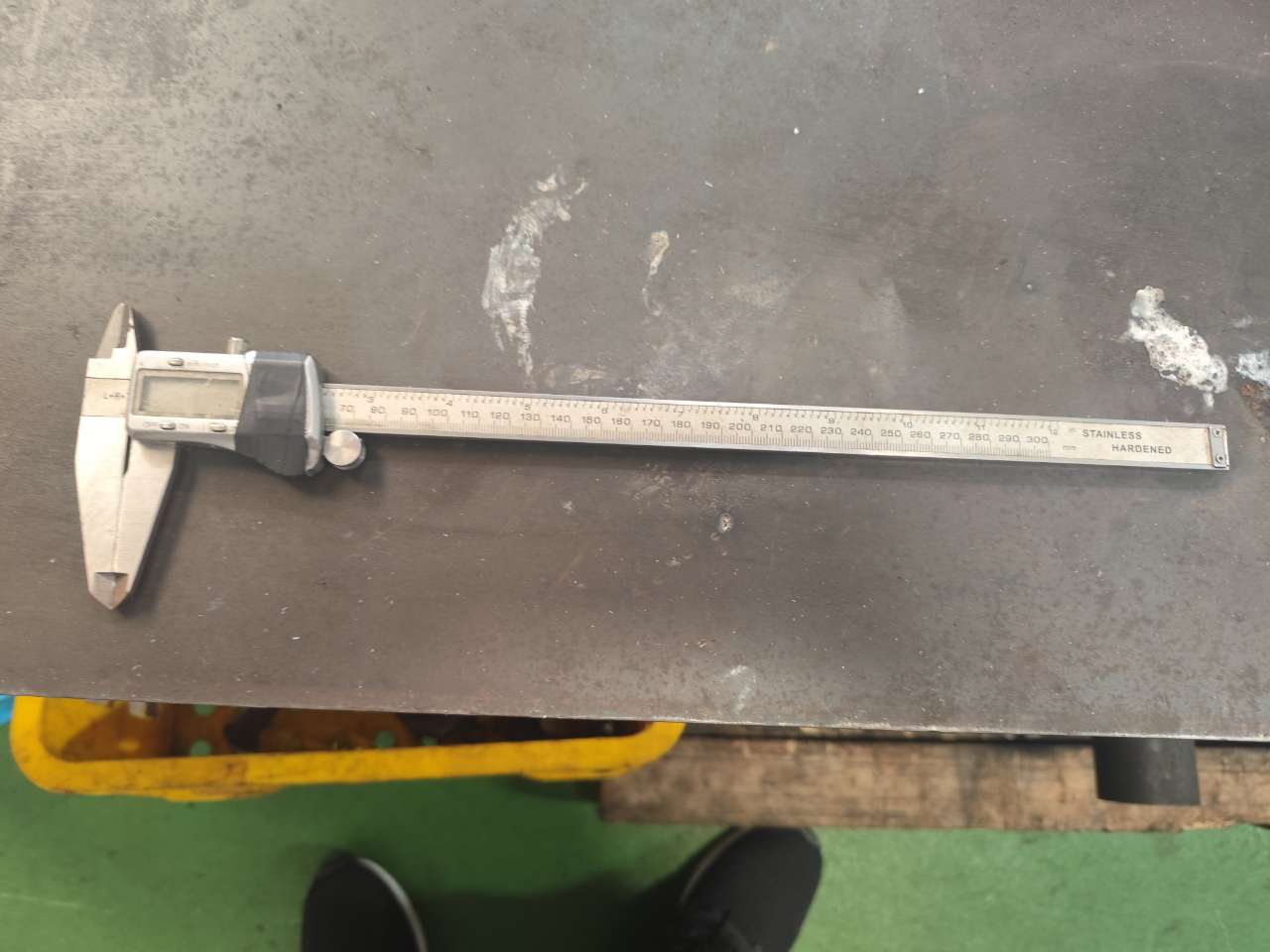
Tolerance understanding is meaningless without a quality control process to enforce it. Ask the supplier for their inspection plan. A good plan maps each critical dimension to a specific measurement tool — calipers, CMM, go/no-go gauges — and defines the sampling rate.
When we manage quality control for our clients, we require every supplier to submit a process control plan before first article production. This plan must identify critical-to-quality (CTQ) dimensions and the inspection method for each. Suppliers who cannot produce this document are not ready for projects with tight tolerances.
The Cost of Getting It Wrong
Rework in sheet metal fabrication is expensive. Re-cutting, re-bending, and re-welding a batch of brackets does not just cost money. It delays the entire program. For our U.S. clients who are distributing custom parts to their own customers, a quality failure at the fabrication stage cascades into missed delivery commitments and damaged credibility.
The right first time philosophy is not just a quality slogan. It is a financial imperative. And it starts with verifying that your supplier's engineers genuinely understand which tolerances matter and how to hold them.
Conclusion
Evaluating engineering support when sourcing sheet metal fabrication is about much more than reviewing a quote. It demands verifying DfM capability, material optimization, iteration management, and tolerance understanding — the factors that truly determine your total program cost and quality outcomes. If you are sourcing sheet metal fabrication for the first time, building this evaluation framework early will save significant time and cost. For a structured approach to comparing vendors across these criteria, consider learning how to build a supplier scorecard to compare sheet metal fabrication vendors.
Frequently Asked Questions
How can I assess if a supplier's engineering team will proactively suggest Design for Manufacturing (DfM) improvements to lower my unit costs?
A few years ago, one of our U.S. clients sent finalized drawings to three different suppliers. Two quoted without comment. The third came back with seven DfM suggestions 3 that reduced the unit cost by over 15%. That experience reshaped how we evaluate supplier evaluation criteria for every project we manage.
What technical benchmarks should I use to evaluate a supplier's ability to optimize sheet metal material utilization for my project?
During a recent project involving precision-engineered mounting brackets — the kind with complex angular folds, multiple mounting holes, and mirrored left-right configurations — we discovered that material utilization varied by nearly 20% between two qualified suppliers. Same part. Same material. Vastly different nesting efficiency.
How do I determine if their engineering support is capable of managing complex design iterations without causing production delays?
We once managed a project where the client revised the design six times over eight weeks. The supplier handled the first three revisions smoothly. By revision four, communication broke down. By revision six, the production schedule had slipped by a month. The root cause was not the number of changes — it was the supplier's lack of a structured revision management process.
Footnotes
1. Explains the fundamental process of sheet metal fabrication. ↩︎
2. Defines technical competency in a manufacturing context. ↩︎
3. Provides a comprehensive guide to Design for Manufacturing (DFM) principles. ↩︎
4. Defines the purpose and nature of a design review in a collaborative setting. ↩︎
5. Provides a clear definition and systematic method for value engineering. ↩︎
6. Explains how nesting software optimizes material utilization in manufacturing. ↩︎
7. Offers a concise definition of supply chain management in manufacturing. ↩︎
8. Replaced HTTP 404 link with a definition from the original domain, Arena Solutions, explaining revision control. ↩︎
9. Explains the concept of GD&T callouts within a feature control frame. ↩︎