
A client once asked us to rescue a stamping project after their previous Vietnamese supplier suddenly shut down mid-production — no warning, no communication, just locked gates and unanswered phones balance sheets and income statements 1. That experience taught everyone involved a painful lesson: price comparisons mean nothing if you skip supplier due diligence on financial health.
To evaluate the financial health of Vietnamese stamping parts suppliers, request three years of balance sheets and income statements, calculate key ratios like current ratio and debt-to-equity, build a weighted financial risk scorecard, and flag negative profitability, shrinking sales, rising debt, or diminishing cash reserves before committing to any order.
This guide walks you through every step of that process. Whether you source stamping brackets, mounting clips, or custom sheet metal components from Vietnam, a structured financial stability analysis protects your supply chain and your bottom line. Let me share the framework our team uses daily.
How can I verify the creditworthiness of a Vietnamese stamping factory before placing a high-volume order?
Before we place our first purchase order with any Vietnamese stamping supplier, our Vietnam office runs a credit risk assessment that goes far beyond checking a website or reading an Alibaba profile. We learned early that surface-level checks miss the risks that matter most.
Verify creditworthiness by requesting audited financial statements for three years, confirming legal registration and tax compliance with Vietnamese authorities, checking trade references from existing export customers, and calculating liquidity and solvency ratios to confirm the factory can sustain high-volume production commitments.

Step 1: Confirm Legal and Tax Status
Start with the basics. Every legitimate Vietnamese manufacturer has a business registration certificate and a customs registration code. Request these documents directly. Cross-reference the company name and tax identification number with Vietnam's National Business Registration Portal. This step costs nothing but catches shell companies and unregistered operations immediately.
Tax compliance is a strong indicator of financial discipline. Ask for evidence of corporate income tax filings and VAT returns. If a supplier has unresolved tax disputes or penalties, that signals either poor financial management or hidden liabilities. Our team in Vietnam checks this routinely because it takes local knowledge to navigate the registry systems effectively.
Step 2: Request and Analyze Financial Statements
Ask for three years of balance sheets, income statements, and cash flow statements. Many Vietnamese stamping factories are privately held and may resist sharing this data. If a supplier refuses outright, that itself is a red flag. A financially healthy factory has nothing to hide.
Once you have the documents, calculate these core ratios:
| Financial Ratio | Formula | What It Tells You | Healthy Benchmark |
|---|---|---|---|
| Current Ratio 2 | Current Assets ÷ Current Liabilities | Ability to pay short-term debts | 1.5 or above |
| Debt-to-Equity 3 | Total Debt ÷ Total Equity | Leverage and solvency risk | Below 2.0 |
| Gross Profit Margin | (Revenue − COGS) ÷ Revenue | Pricing power and cost control | 15%+ for stamping |
| Net Profit Margin | Net Income ÷ Revenue | Overall profitability | 5%+ |
| Working Capital | Current Assets − Current Liabilities | Operational liquidity cushion | Positive and growing |
Trends matter more than single snapshots. If revenue is declining for two consecutive years while debt is rising, that supplier is under financial pressure. They may cut corners on material quality or delay your order to prioritize cash-paying customers.
Step 3: Check Trade References and Payment History
Contact the supplier's existing customers — especially export customers in the US or Europe. Ask about on-time delivery rates, quality consistency, and whether the factory has ever requested early payment or changed pricing mid-contract. These behaviors often signal cash flow stress.
We also recommend checking with local material suppliers. Steel and aluminum distributors in Vietnam know which stamping factories pay on time and which ones stretch their payables. This informal intelligence is surprisingly accurate.
Step 4: Assess Digital Maturity
A factory that uses modern ERP or financial management systems tends to produce more accurate and transparent financial data. During early communications, observe whether the supplier provides organized documentation quickly. Reliable factories offer clear records and fast responses. Disorganized or delayed financial reporting often correlates with poor internal controls.
What financial red flags should I look for during my on-site audit of a Vietnam-based supplier?
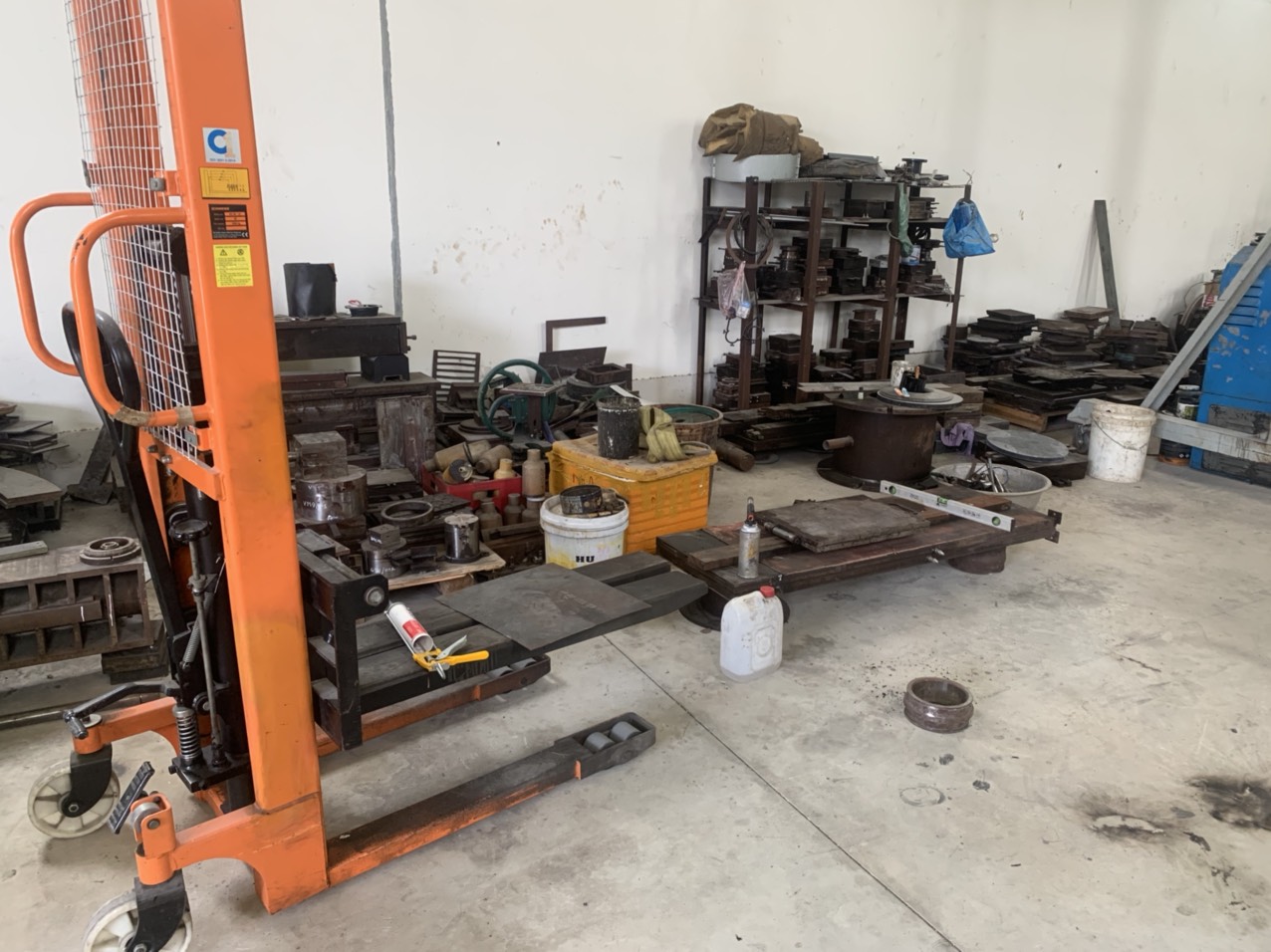
During a recent factory audit in Hai Phong, our team noticed brand-new CNC equipment sitting idle beside visibly worn stamping presses. The factory manager explained the machines were "recently financed." That observation, combined with the financial statements we reviewed later, revealed an aggressive debt expansion that the supplier could not service. The audit saved our client from a risky commitment.
During on-site audits, watch for idle or heavily financed equipment, delayed wage payments visible in worker morale, outdated or missing quality certifications, excessive raw material stockouts, disorganized financial records, and any reluctance to show production or accounting areas — these all indicate financial instability that threatens your stamping project.

Physical Signs of Financial Stress
Your eyes tell you what financial statements sometimes hide. Here is a checklist our auditors use when walking the factory floor:
- Idle machines or empty production lines: If capacity utilization looks low, the factory may be losing orders.
- Poor facility maintenance: Leaking roofs, broken lighting, or deteriorating floors signal deferred maintenance — a classic cost-cutting move by financially stressed companies.
- Raw material shortages: Empty steel racks or limited aluminum stock suggest the supplier cannot afford to maintain inventory. This directly impacts your lead times.
- Worker turnover or low morale: High turnover, especially among skilled press operators, often traces back to delayed payroll or poor benefits. Ask workers indirect questions about tenure.
- Reluctance to show certain areas: If management steers you away from the accounting office or warehouse, ask why. Transparency is non-negotiable.
Document Review During the Audit
An on-site audit complements your financial analysis. Request to see these documents physically during the visit:
| Document | What to Verify | Red Flag |
|---|---|---|
| Business License | Valid, current, matches company name | Expired or mismatched entity |
| Export Certificates | Active customs registration | No export history |
| ISO 9001 Certificate 4 | Current and issued by accredited body | Expired or self-declared |
| Payroll Records | Regular payment schedule | Irregular or delayed payments |
| Equipment Leases/Loans | Terms and outstanding balances | Overleveraged on equipment |
| Utility Bills | Consistent production activity | Large unpaid balances |
Factory audit procedures should always include a review of quality management systems 5. A valid ISO 9001 certificate issued by an accredited body indicates the supplier has invested in process control. Expired or self-declared certifications suggest either financial inability to maintain the standard or disregard for quality discipline.
Grading Systems and What They Mean
Vietnam's supplier evaluation frameworks assign grades based on system quality and performance. Understanding these grades helps you benchmark suppliers objectively:
| Grade | Score Range | Meaning | Risk Level |
|---|---|---|---|
| A | 85% and above | Good system, well maintained | Low |
| B | 70–84% | Average, needs improvement | Moderate |
| C | 50–69% | Significant improvement needed within 6 months | High |
| D | Below 50% | Poor system, disqualified | Critical |
A Grade C or D supplier almost certainly has underlying financial problems. The cost of maintaining quality systems, training workers, and calibrating equipment requires consistent investment. When finances deteriorate, quality systems are often the first casualty.
Audit costs for a basic supplier assessment in Vietnam start around $300–$400. Given that tooling alone for stamping projects can run $1,500 or more, and per-part costs start at roughly $0.02, the audit investment is negligible compared to the potential loss from a failed supply chain relationship.
Ethical and Compliance Checks
Check HR practices, payroll tax compliance, safety policies, and environmental standards. Suppliers must abide by honesty policies — no gifts, no commissions, no undisclosed related-party transactions. Related-party transactions that are not conducted at arm's length can distort financial statements and mask real operational problems. Our team specifically asks about ownership structures and affiliate company relationships during every audit.
How does my supplier's cash flow affect the lead times and quality of my custom stamping project?
One trade-off we constantly weigh is whether to prioritize a lower-cost supplier or one with stronger cash reserves. From managing hundreds of custom stamping projects sourced from Vietnam, the answer is clear: a supplier's cash position directly determines whether your parts arrive on time and meet spec.
A supplier with weak cash flow cannot prepurchase raw materials, maintain tooling, pay skilled workers consistently, or invest in quality controls — all of which cause delayed lead times, inconsistent part dimensions, surface finish defects, and increased reject rates on your custom stamping project.

The Cash Flow–Lead Time Connection
Here is how the chain reaction works. A stamping project for a custom bracket — like the angular sheet metal component with precision-cut holes and elongated slots — requires specific steel or stainless steel stock. Suppliers purchase this material weeks before production begins. If the factory lacks cash, they delay the purchase. They wait for another customer's payment to come in. Your lead time slips.
This is not hypothetical. Vietnam's metal stamping market reached USD 880.8 million in 2024 and is projected to grow to USD 1,212.0 million by 2033 at a CAGR of roughly 3.61%. That growth means more demand for raw materials and more competition for supply. Factories with strong cash flow secure materials first. Cash-strapped factories wait in line.
The Cash Flow–Quality Connection
Quality suffers in subtler ways. When cash is tight, factories may:
- Substitute cheaper material grades without telling you.
- Skip preventive maintenance on stamping dies, leading to burrs and dimensional drift.
- Reduce QC staffing or inspection frequency.
- Rush production to invoice faster, increasing defect rates.
Our approach to risk management strategies includes monitoring supplier cash flow indicators quarterly. We look at the cash flow statement's operating cash flow line 6. If operating cash flow is negative for two or more quarters, we escalate the review and consider secondary sourcing. Supply chain resilience 7 depends on this kind of early warning system.
Working Capital and Payment Terms Interaction
Your payment terms also interact with the supplier's cash position. If you negotiate 60-day payment terms but the supplier's working capital is thin, you effectively become an unsecured lender. The supplier uses your order's materials and labor without payment for two months. If they cannot bridge that gap, they delay your project or redirect resources to cash-paying customers.
Evaluate whether your supplier has access to diverse working capital financing options 8 — bank credit lines, factoring facilities, or trade finance instruments. A supplier that relies solely on customer payments for cash flow is fragile. At our Singapore headquarters, we offer open account payment terms to our US clients because we have the financial infrastructure to absorb the timing gap. Not every factory in Vietnam can do the same.
Foreign Exchange Risk and Pricing Stability
Vietnam's dong fluctuates against the US dollar. If your supplier does not manage foreign exchange risk effectively, a currency swing can erode their margins overnight. A factory with healthy cash reserves can absorb short-term FX losses. A cash-poor factory may suddenly request price increases or delay shipments while renegotiating terms. Ask how the supplier manages FX exposure — hedging, dollar-denominated accounts, or pricing adjustments.
What specific financial records should I request to ensure my Vietnamese partner can support 60-day payment terms?
A buyer recently told us he lost two months of production because his Vietnamese stamping supplier could not sustain 60-day payment terms and started prioritizing other clients who paid on delivery. That conversation reinforced why payment terms negotiation must be backed by hard financial evidence, not just verbal promises.
Request audited balance sheets, income statements, and cash flow statements for three years; bank reference letters confirming credit lines; accounts receivable and payable aging reports; and evidence of working capital financing facilities to confirm your Vietnamese stamping partner can genuinely support 60-day payment terms without compromising your project.

The Document Checklist
Here is the specific list of records to request and what each one tells you about 60-day term viability:
| Document | Purpose | What to Look For |
|---|---|---|
| Audited Balance Sheet (3 years) | Assess asset base and liability structure | Current ratio above 1.5; positive working capital trend |
| Audited Income Statement (3 years) | Confirm sustained profitability | Stable or growing revenue; gross margins above 15% |
| Cash Flow Statement (3 years) | Verify cash generation ability | Positive operating cash flow; no pattern of diminishing cash reserves |
| Bank Reference Letter | Confirm access to credit facilities | Active credit lines sufficient to cover production costs |
| AR/AP Aging Report | Assess collection and payment discipline | AR collection within 45 days; AP not stretched beyond terms |
| Loan/Debt Schedule | Understand existing obligations | Manageable repayment schedule; debt-to-equity below 2.0 |
| Tax Compliance Records | Confirm no hidden liabilities | No outstanding tax disputes or penalties |
How to Interpret the Data for 60-Day Terms
The core question is simple: can the supplier finance your order's production costs for 60 days without external payment? To answer this, calculate the supplier's cash conversion cycle 9. This is the number of days between paying for raw materials and receiving payment from customers.
If the supplier's cash conversion cycle is already 45 days and you add 60-day terms, they need to finance 105 days of working capital. Multiply that by their average monthly production cost. Compare the result to their available cash and credit lines. If the gap is large, the supplier will struggle.
Building a Weighted Financial Risk Scorecard
Our finance team uses a scorecard approach to compare Vietnamese stamping suppliers objectively. Assign weights based on what matters most for your project:
| Metric | Weight | Score 1 (Weak) | Score 3 (Adequate) | Score 5 (Strong) |
|---|---|---|---|---|
| Current Ratio | 20% | Below 1.0 | 1.0–1.5 | Above 1.5 |
| Debt-to-Equity | 20% | Above 3.0 | 1.5–3.0 | Below 1.5 |
| Net Profit Margin | 15% | Negative | 0–5% | Above 5% |
| Revenue Trend (3yr) | 15% | Declining | Flat | Growing |
| Operating Cash Flow | 15% | Negative | Break-even | Positive and growing |
| Credit Line Availability | 15% | None | Limited | Adequate for order size |
Multiply each score by its weight and sum for a composite score out of 5.0. Suppliers scoring below 3.0 should not receive 60-day terms without additional risk mitigation such as letters of credit or escrow arrangements. Suppliers scoring above 4.0 are strong candidates for open account terms.
Vietnam's Cost Advantage Context
Understanding why this financial scrutiny matters requires context. Vietnam offers approximately 42% total cost of ownership savings versus China and roughly 17% versus Thailand for export-focused stamping operations. Manufacturing wages in Vietnam remain the lowest in Southeast Asia with stable growth of 6–8% annually — below productivity growth. Trade agreements 10 like EVFTA, RCEP, and CPTPP enhance export competitiveness further.
These structural advantages make the Vietnamese manufacturing sector highly attractive for automotive component sourcing and precision stamping. But cost savings evaporate if your supplier fails mid-project due to financial instability. The manufacturing capabilities assessment must include financial health as a core pillar, not an afterthought.
Engage your organization's finance experts to interpret complex footnotes, unusual line items, or related-party disclosures in Vietnamese financial statements. Local accounting standards may differ from US GAAP or IFRS. Our Vietnam team helps bridge this gap for our clients because we understand both systems.
Conclusion
Evaluating the financial health of Vietnamese stamping parts suppliers is not optional — it is the foundation of every reliable sourcing relationship. Use the frameworks, ratios, scorecards, and audit checklists in this guide to protect your supply chain and secure the cost advantages Vietnam offers.
Frequently Asked Questions
How can I verify the creditworthiness of a Vietnamese stamping factory before placing a high-volume order?
Before we place our first purchase order with any Vietnamese stamping supplier, our Vietnam office runs a credit risk assessment that goes far beyond checking a website or reading an Alibaba profile. We learned early that surface-level checks miss the risks that matter most.
What financial red flags should I look for during my on-site audit of a Vietnam-based supplier?
During a recent factory audit in Hai Phong, our team noticed brand-new CNC equipment sitting idle beside visibly worn stamping presses. The factory manager explained the machines were "recently financed." That observation, combined with the financial statements we reviewed later, revealed an aggressive debt expansion that the supplier could not service. The audit saved our client from a risky commitment.
How does my supplier's cash flow affect the lead times and quality of my custom stamping project?
One trade-off we constantly weigh is whether to prioritize a lower-cost supplier or one with stronger cash reserves. From managing hundreds of custom stamping projects sourced from Vietnam, the answer is clear: a supplier's cash position directly determines whether your parts arrive on time and meet spec.
Footnotes
1. Explains fundamental financial statements for company evaluation. ↩︎
2. Defines this key liquidity metric for assessing short-term financial health. ↩︎
3. Original URL was HTTP 403. Replaced with a working link from Wikipedia, an authoritative source, defining the Debt-to-Equity ratio. ↩︎
4. Official standard for quality management systems, demonstrating commitment to quality. ↩︎
5. Defines the structured framework for achieving quality policies and objectives. ↩︎
6. Explains how to understand cash generated from core business operations. ↩︎
7. Defines the ability of a supply chain to anticipate, adapt, and recover from disruptions. ↩︎
8. Outlines various methods companies use to manage short-term liquidity and operational needs. ↩︎
9. Measures how long cash is tied up in operations, indicating efficiency. ↩︎
10. Provides official information on international pacts influencing trade and export competitiveness. ↩︎