When our Vietnam office began vetting welding part suppliers for U.S. clients, we quickly learned that skipping a proper financial health assessment could derail an entire project.
To evaluate Vietnamese welding part suppliers, verify their legal licenses, analyze financial ratios like current ratio and debt-to-equity, audit welding certifications such as ISO 9606 and AWS, inspect in-house production capacity, and confirm raw material sourcing strategies—all before signing any contract.
This guide breaks down the exact steps we follow at DEWIN when helping procurement teams assess suppliers in Vietnam. Each section covers a specific dimension—financial stability, operational red flags, payment terms, and technical capacity—so you can build a reliable, data-driven supplier qualification process.
How do I verify the financial stability of a Vietnamese welding factory before signing a contract?
A lesson we learned early in our sourcing work: a supplier with the lowest quote is sometimes the one most likely to collapse mid-order. One of our U.S. clients nearly lost six figures because their previous supplier had a debt-to-equity ratio above 3.0 and no one checked.
Verify financial stability by requesting audited financial statements for the past two to three years, then calculating key ratios—current ratio above 1.5, quick ratio above 1.0, and debt-to-equity below 2.0. Cross-reference these with Vietnamese business registry records and bank references.
Where to Start: Legal and Registry Verification
Before diving into balance sheets, confirm the supplier is a legitimate entity. In Vietnam, every manufacturing company must register with the Department of Planning and Investment. You can verify this through the National Business Registration Portal 1. We also check whether the factory holds Ministry of Industry and Trade approvals relevant to metalworking and welding operations.
For labor-exporting welding firms, VAWAS (Vietnam Association of Manpower Supply) membership serves as a credibility marker. While not every welding parts manufacturer needs VAWAS membership, it signals the company meets baseline regulatory standards for workforce management.
Key Financial Ratios to Analyze
We request audited annual reports—ideally covering 2020 through 2023—and calculate these ratios ourselves rather than trusting supplier-provided summaries.
| Financial Ratio | Formula | Healthy Benchmark | Red Flag Threshold |
|---|---|---|---|
| Current Ratio | Current Assets ÷ Current Liabilities | ≥ 1.5 | < 1.0 |
| Quick Ratio | (Current Assets – Inventories) ÷ Current Liabilities | ≥ 1.0 | < 0.7 |
| Debt-to-Equity | Total Debt ÷ Shareholders' Equity | ≤ 2.0 | > 3.0 |
| Inventory Turnover | Cost of Goods Sold ÷ Average Inventory | 5–10x per year | < 3x per year |
| Gross Profit Margin | (Revenue – COGS) ÷ Revenue | ≥ 15% | < 8% |
A current ratio below 1.0 means the factory may not be able to pay its short-term obligations. We have seen Vietnamese suppliers with impressive-looking workshops but dangerously low liquidity. The quick ratio strips out inventory, which matters because welding parts suppliers often hold large steel stock that may not convert to cash quickly.
Debt-to-equity tells you how leveraged the business is. A ratio above 3.0 in the Vietnamese manufacturing ecosystem is a serious concern—it means the company is heavily reliant on borrowed money and may struggle if orders slow down.
Beyond the Numbers: Practical Financial Checks
Numbers on paper only tell part of the story. We also look at payment behavior. Does the supplier pay its own raw material vendors on time? We ask for bank references and sometimes contact steel mill suppliers directly. A factory that is consistently late paying its own vendors will eventually have supply chain problems that affect your orders.
Post-COVID performance evaluation matters too. Research using integrated multi-criteria decision-making methods found that 45 Vietnamese industrial firms met data requirements for rigorous assessment using 2020–2022 audited reports. That dataset shows which companies weathered the pandemic well and which barely survived. We use similar logic: if a welding supplier grew or remained stable through 2020–2022, that is a strong resilience signal. For a deeper dive into this topic, see our guide on how to evaluate financial health of Vietnamese sheet metal fabrication suppliers for stability.
What operational red flags should I look for when auditing a Vietnamese welding part supplier?
During a recent supplier audit our Vietnam team conducted in Hai Phong, we discovered that a factory claiming full in-house capability was actually outsourcing its most critical welding step—root pass welding on pressure-bearing components—to an uncertified subcontractor two hours away.
Key operational red flags include outsourcing critical welding processes without disclosure, absence of ISO 9606 or AWS-certified welders, lack of documented quality control procedures for pre-weld, in-process, and post-weld inspection, poor material traceability, and no calibration records for welding equipment.
Certification Is Non-Negotiable for Export-Grade Parts
Global buyers increasingly demand compliance and certifications to international welding industry standards. The certifications that matter most for custom welding parts depend on the end application:
| Certification / Standard | What It Covers | When It's Required |
|---|---|---|
| ISO 9606 2 / EN 287 | Welder qualification testing | Structural and pressure welding for EU markets |
| AWS D1.1 3 | Structural steel welding code | U.S. structural applications |
| ASME Section IX 4 | Welding and brazing qualifications | Pressure vessels, boilers, piping |
| ISO 9001 5 | Quality management system | Baseline for any serious export supplier |
| DNV Certification 6 | Maritime and offshore welding | Shipbuilding and offshore energy components |
If a Vietnamese supplier cannot produce valid welder qualification certificates to at least one of these standards, that is an immediate red flag. We walk away from suppliers who claim their welders are "experienced" but have no third-party certification to prove it. For a detailed walkthrough on verifying ISO 9001 and quality certifications for Vietnamese welding parts suppliers, we have published a separate guide.
In-House vs. Outsourced Processes
This is where many buyers get burned. A factory may own cutting, forming, and painting equipment but outsource the actual welding to a smaller shop. For standard commercial parts, this might be acceptable if quality is controlled. For export-grade custom welding parts—especially those going into structural frames, mounting brackets, or heavy-duty assemblies like the ones we source for U.S. clients—outsourcing critical welding steps without buyer knowledge is a serious concern.
During our audits, we map every process step. We ask: which machines performed the work? Who are the operators? Where exactly was each weld made? We verify this against the supplier's process flow diagram. If the diagram says "welding—in-house" but we find no welding stations on the floor, something is wrong.
Quality Control Procedure Walkthrough
We break quality control procedures into three phases and check each one:
Pre-weld: Does the supplier verify incoming raw material with mill certificates? Do they perform independent material verification such as XRF analysis 7? Is there a documented WPS (Welding Procedure Specification 8) for each joint type?
During welding: Are in-process inspections documented? Does the factory use visual inspection, dimensional checks, and weld parameter monitoring? Are welders following the approved WPS?
Post-weld: Does the supplier perform NDT (non-destructive testing) 9 such as ultrasonic or radiographic inspection when required? Are final dimensional inspections done against drawing tolerances? Is there a clear accept/reject decision trail?
A supplier that cannot walk you through all three phases with documentation is not ready for export-grade work. We have seen factories with excellent equipment but zero process discipline—the machines are there, but nobody follows a standard procedure. Operational efficiency depends on systems, not just hardware.
Workforce and Skill Rigor
We always ask to see welder qualification records. In Vietnam, skilled welders are in high demand. Some factories rotate welders between projects without regard for whether they are qualified for the specific weld type. We check that each welder assigned to our project holds a valid qualification for the relevant process (MIG, TIG, SMAW, FCAW) and material type.
Can I get open account payment terms from my custom welding part manufacturer in Vietnam?
A question we hear from nearly every new U.S. client: "Can I avoid tying up cash with upfront deposits?" The short answer is yes, but the path to getting there depends on the supplier relationship and who stands behind the risk.
Yes, open account payment terms of 60–90 days are achievable with Vietnamese welding part manufacturers, especially when working through an intermediary like a Singapore-based sourcing partner that absorbs the credit risk, maintains local oversight, and guarantees supplier payment while extending terms to the buyer.
Why Most Vietnamese Suppliers Resist Open Account
Most small-to-mid-size Vietnamese welding factories operate on thin margins and limited working capital. They cannot afford to ship goods and wait 60–90 days for payment. Their standard terms are typically 30% deposit before production and 70% before shipment. This protects the factory but puts enormous cash flow pressure on U.S. buyers, especially those managing multiple SKUs and long lead times.
From our experience managing supply chains across Vietnam, the gap between what buyers need and what suppliers can offer is one of the biggest friction points in the Vietnamese manufacturing ecosystem. Buyers want NET 60 or NET 90. Suppliers want cash upfront.
How We Bridge the Gap
At DEWIN, we offer open account terms to qualified U.S. clients. Here is how the structure works in practice:
- We pay the Vietnamese supplier on their preferred terms (deposit + balance before shipment).
- We extend 60–90 day payment terms to our U.S. client after goods ship.
- Our Singapore entity absorbs the credit risk and manages collections.
This model works because we have local staff in Vietnam—seven employees—who maintain direct oversight of production and quality. We are not a distant middleman. We are on the factory floor, so the supplier trusts us, and we can extend that trust to the buyer through structured payment terms.
What Buyers Should Evaluate Before Requesting Open Account
Not every intermediary or supplier can offer this. Here is what to verify:
| Factor | What to Check | Why It Matters |
|---|---|---|
| Intermediary's financial backing | Audited financial statements, credit references | Confirms they can absorb the float |
| Local presence | Office and staff in Vietnam | Ensures real-time oversight, not remote management |
| Supplier payment track record | References from the Vietnamese factory | A supplier that has been burned before will not cooperate |
| Contract terms | Clear dispute resolution, incoterms, late payment penalties | Protects both parties |
| Insurance or guarantees | Trade credit insurance, parent company guarantee | Reduces risk for the buyer |
Open-book costing is becoming a standard transparency tool alongside these payment arrangements. When steel prices fluctuate, an open-book model lets both parties see the actual material cost, agreed markup, and processing fees. This prevents disputes when raw material prices shift mid-contract and builds the kind of trust that makes open account terms sustainable over time.
How do I assess if a Vietnamese supplier has the technical capacity to meet my welding specifications?
The trade-off I weigh most carefully when qualifying a new welding supplier is this: can they do it, or can they only say they can do it? We once visited a factory that showed us beautiful sample brackets—only to discover those samples were made by a completely different workshop as a one-off favor.
Assess technical capacity by reviewing the supplier's Welding Procedure Specifications, verifying welder certifications to AWS or ISO 9606, inspecting equipment condition and calibration records, requesting trial production runs with full PPAP documentation, and confirming their ability to handle your specific materials, joint types, and tolerance requirements.
Start with the Welding Procedure Specification (WPS)
A WPS defines exactly how a weld should be made: material type, filler metal, shielding gas, preheat temperature, interpass temperature, travel speed, voltage, amperage, and joint design. Any supplier that cannot produce a WPS for your specific part is not ready for the job.
We review the WPS against the actual drawing requirements. For example, the heavy-duty structural frames and mounting brackets we source for U.S. clients—components with square and rectangular hollow tubing, V-shaped brackets, and reinforced gussets—require specific joint preparations and weld sequences. If the supplier's WPS does not match the drawing callouts, we flag it immediately.
Equipment and Technology Audit
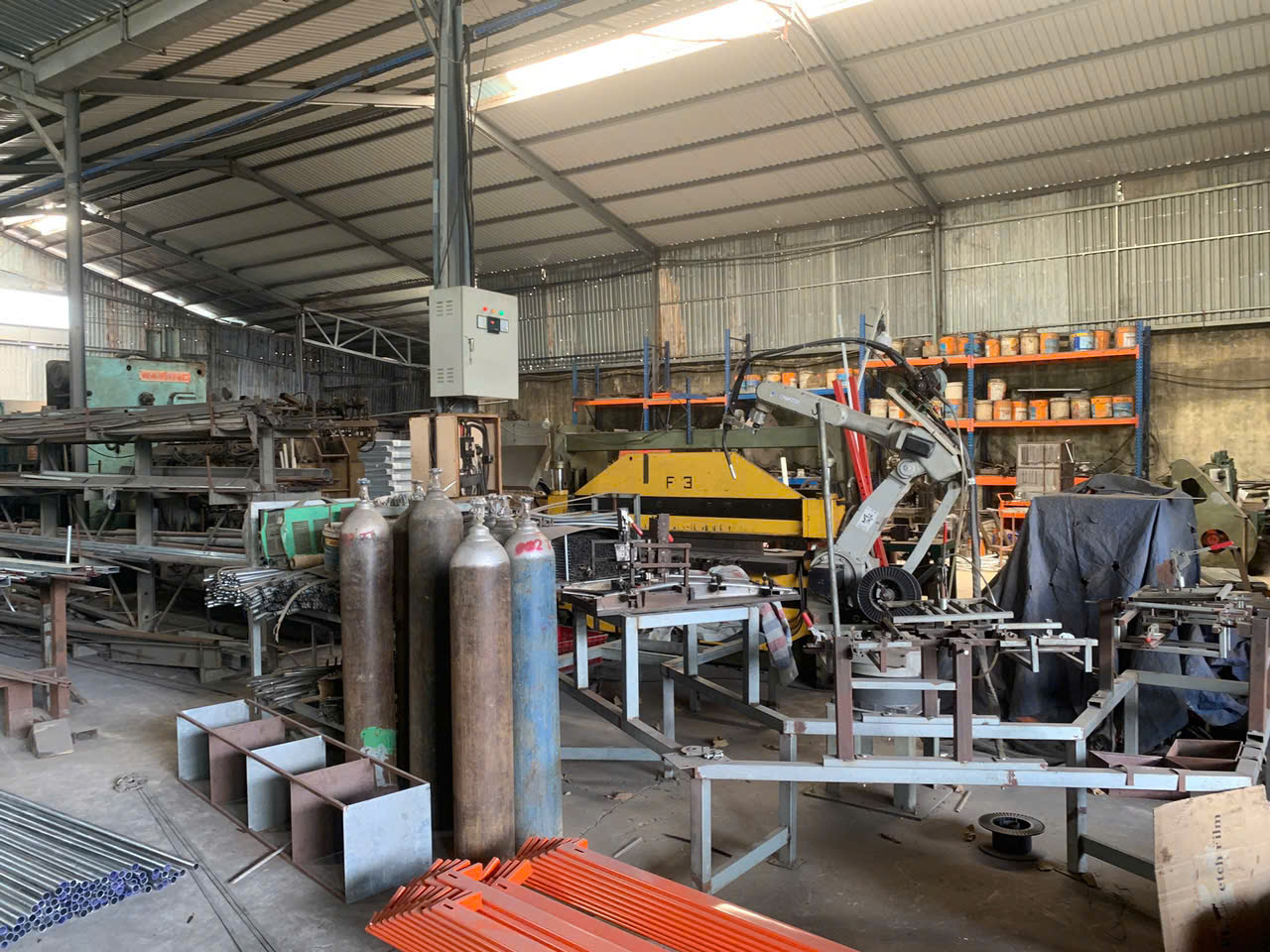
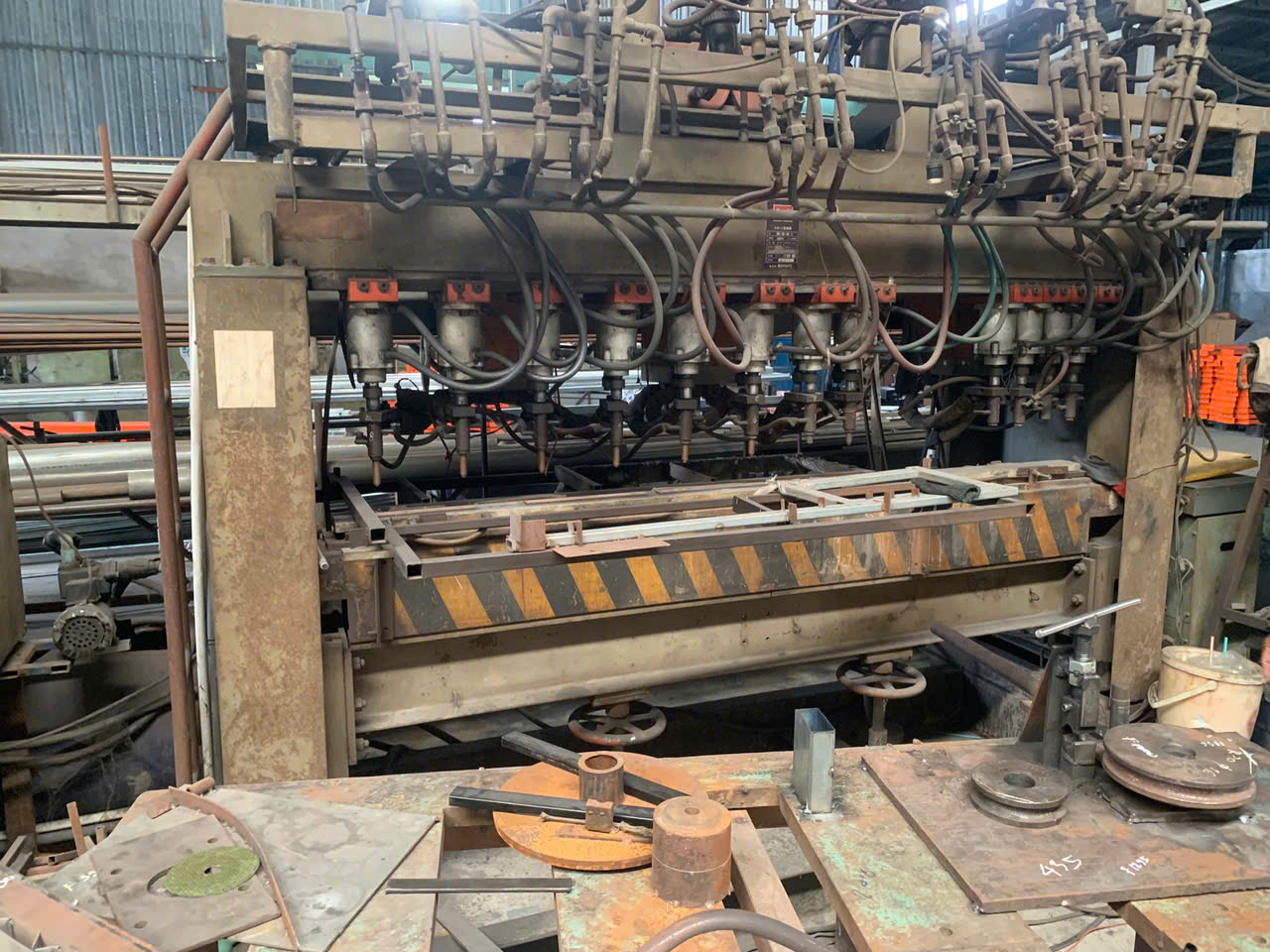
Modern welding production capacity depends heavily on equipment. Here is what we look for during a facility walkthrough:
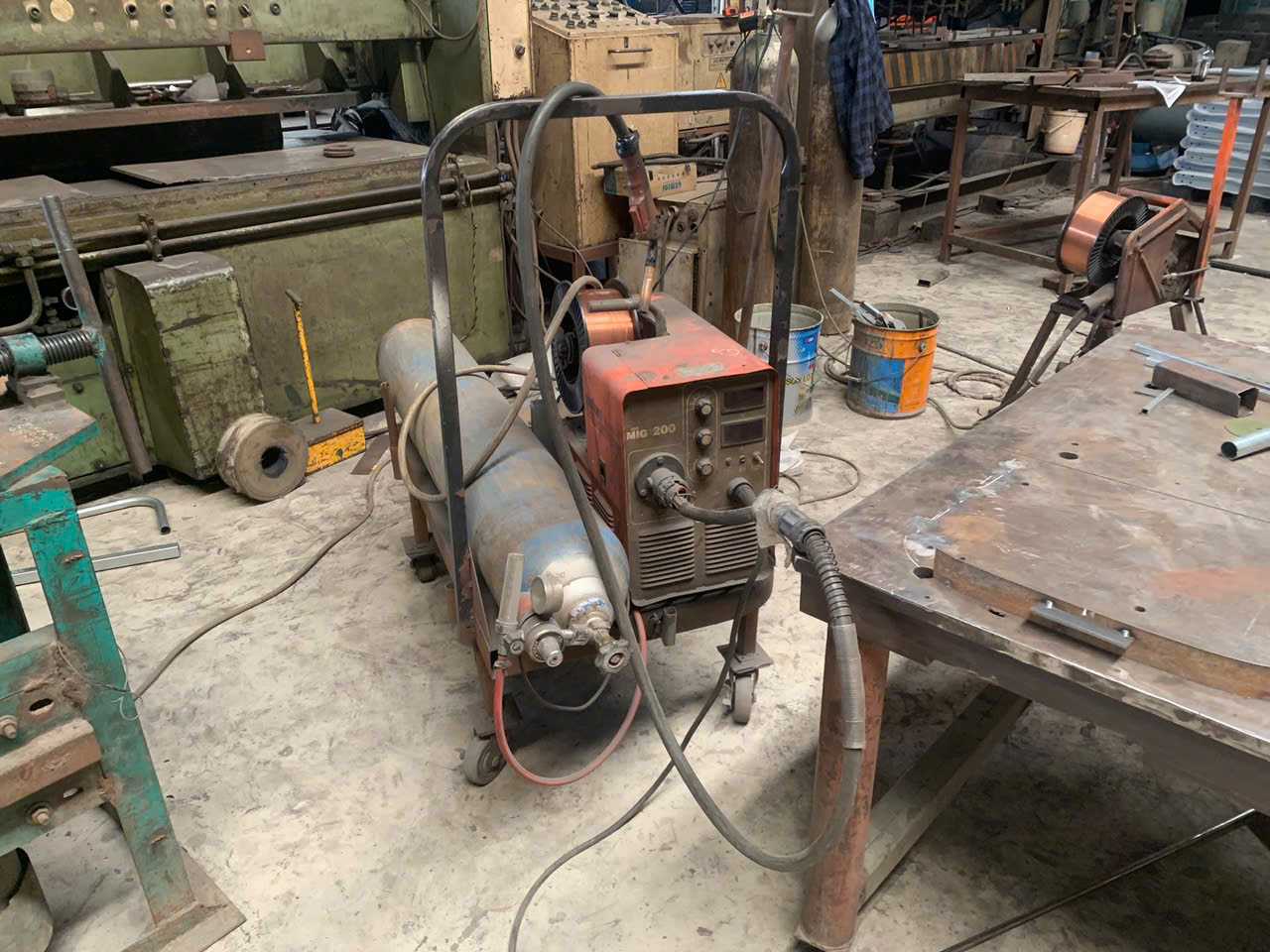
- Welding machines: Brand, model, age, and maintenance logs. Are they capable of the required processes (MIG, TIG, SMAW, robotic)?
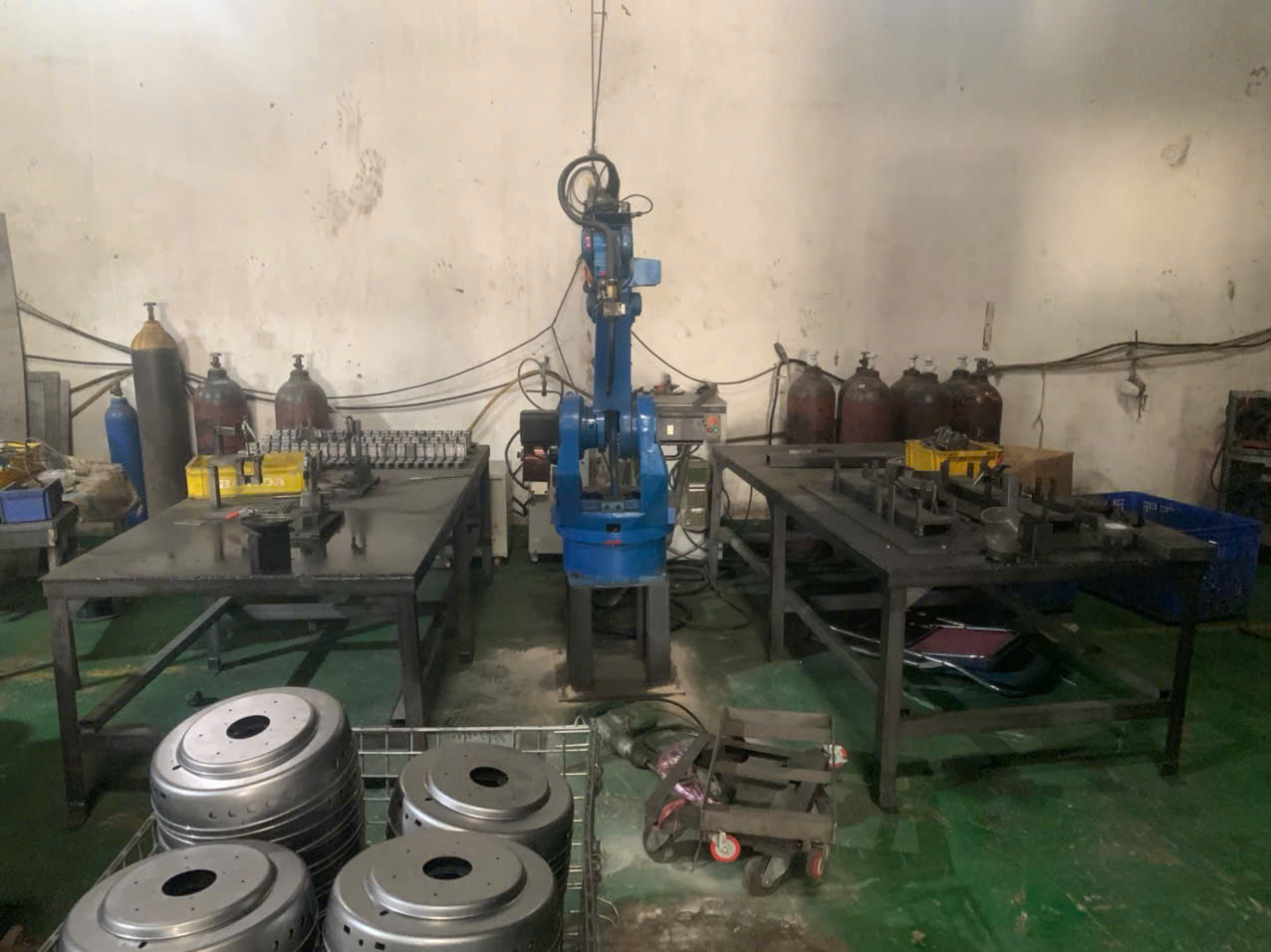
- Robotic welding cells: For high-volume production, automation improves consistency. We check programming capability and fixture design.
- Cutting and forming equipment: CNC plasma, laser cutting, press brakes. These upstream processes directly affect weld fit-up quality.
- Inspection tools: Calipers, CMMs, weld gauges, surface roughness testers. A factory without proper inspection tools cannot verify its own work.
- Calibration records: Every measuring instrument and welding machine should have current calibration certificates.
You can learn more about how to verify Vietnam sheet metal factory existence and production capacity in our dedicated guide, which covers many of these on-site verification steps in detail.
Trial Production and PPAP
We never commit to volume production without a trial run. Our standard approach follows the PPAP (Production Part Approval Process) 10 framework:
- Submit the drawing and specifications to the supplier.
- Supplier develops WPS and submits for approval.
- Trial production of 5–20 pieces.
- Full dimensional inspection report against drawing tolerances.
- Weld quality inspection (visual, dimensional, NDT if specified).
- Material certificates and traceability documentation.
- Process capability study if volume warrants it.
This manufacturing capability assessment process typically takes four to six weeks. It costs time and money upfront, but it is the only reliable way to confirm a supplier can deliver what they promise. We have learned that "right first time" results come from rigorous front-end qualification, not from hoping the supplier figures it out during mass production.
Material Traceability and Supply Chain Risk
For the types of heavy-duty steel and aluminum components we source—thick-gauge steel brackets, L-shaped mounts, U-channels, and flat base plates with precision-drilled mounting holes—material traceability is essential. We verify that the supplier can trace every piece of raw material back to the steel mill, with mill test certificates matching the grade and specification called out on the drawing.
Supply chain risk management also means understanding where the supplier gets its steel. Do they source from a single mill, or do they diversify? A supplier relying on one source is vulnerable to price spikes and delivery disruptions. We prefer suppliers who maintain relationships with at least two to three steel mills and hold reasonable inventory buffers—typically two to four weeks of stock for their most common grades.
The Vietnamese welding parts market is expanding rapidly, with strong growth in structural components, welding torches, and wear parts. This growth brings opportunity, but it also means more demand on raw material supply chains. Suppliers who proactively manage this risk through diversification and open-book costing are the ones worth partnering with long-term.
Conclusion
Evaluating Vietnamese welding part suppliers requires a disciplined, multi-dimensional approach—financial ratio analysis, operational audits, certification verification, and raw material risk assessment. Start with the checklist above, and partner with a team that has boots on the ground.
Frequently Asked Questions
How do I verify the financial stability of a Vietnamese welding factory before signing a contract?
A lesson we learned early in our sourcing work: a supplier with the lowest quote is sometimes the one most likely to collapse mid-order. One of our U.S. clients nearly lost six figures because their previous supplier had a debt-to-equity ratio above 3.0 and no one checked.
What operational red flags should I look for when auditing a Vietnamese welding part supplier?
During a recent supplier audit our Vietnam team conducted in Hai Phong, we discovered that a factory claiming full in-house capability was actually outsourcing its most critical welding step—root pass welding on pressure-bearing components—to an uncertified subcontractor two hours away.
Can I get open account payment terms from my custom welding part manufacturer in Vietnam?
A question we hear from nearly every new U.S. client: "Can I avoid tying up cash with upfront deposits?" The short answer is yes, but the path to getting there depends on the supplier relationship and who stands behind the risk.
Footnotes
1. Official government portal for business registration in Vietnam, for legal entity verification. ↩︎
2. Official standard for qualification testing of welders for fusion welding of steels. ↩︎
3. Official code for structural steel welding, defining requirements for welders and procedures. ↩︎
4. Official standard for welding, brazing, and fusing qualifications for pressure vessels and piping. ↩︎
5. Official standard for quality management systems, a baseline for export suppliers. ↩︎
6. Provides information on DNV’s services for welding qualification and certification. ↩︎
7. Explains X-ray fluorescence (XRF) analysis, a non-destructive method for material verification. ↩︎
8. Found a clear and concise definition on Wikipedia, which is a generally authoritative source for definitions. ↩︎
9. Found an authoritative introduction to NDT on the American Welding Society (AWS) website. ↩︎
10. Official information on the Production Part Approval Process (PPAP) framework for manufacturing. ↩︎