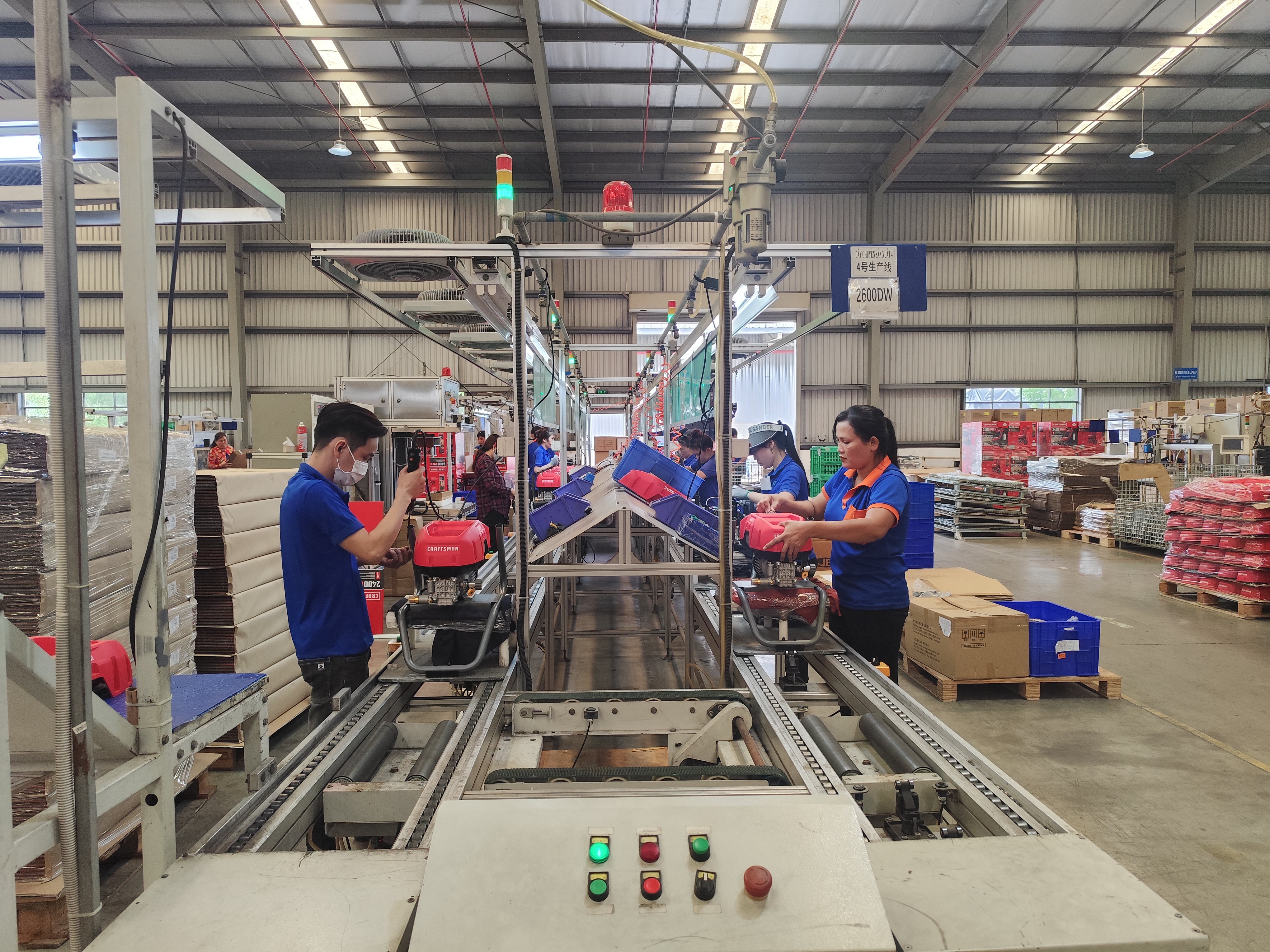

Evaluating heavy equipment for infrastructure sheet metal fabrication became a top priority after we helped a US client recover from months of delays caused by a supplier running outdated press brakes.
To evaluate heavy equipment when sourcing infrastructure sheet metal fabrication, assess the fabricator’s laser cutting capacity, CNC bending tonnage, robotic welding capability, material compatibility, certifications like ISO 9001, vertical integration depth, and equipment age — then verify everything through factory audits and production records.
This guide walks through every piece of machinery and every checkpoint that matters fiber laser systems 1. Whether you are a purchasing manager sourcing from Asia or an engineering firm specifying tolerances, these steps will help you avoid costly mistakes and find a fabricator that delivers on time, every time.
What specific laser cutting and bending capacities should I look for in a sheet metal supplier?
A lesson our team learned early: a supplier who claims "full cutting capability" may only own a single fiber laser rated for 6mm mild steel — nowhere near enough for heavy infrastructure brackets and mounting plates CNC press brakes 2.
Look for fiber laser systems cutting at least 20mm carbon steel, plasma or waterjet capacity for thicker gauges up to 250mm, and CNC press brakes with a minimum 250-ton capacity — ideally reaching 1,000 tons or more for heavy-gauge infrastructure forming.

Why Cutting Method Matters for Infrastructure Parts
Infrastructure sheet metal is not the same as enclosure-grade sheet metal preventive maintenance logs 3. The parts are thicker, wider, and subject to structural loads. A precision-engineered mounting bracket — the kind with multiple sharp bends, pre-drilled holes, and weld joints — demands cutting equipment that handles heavy-gauge steel without thermal distortion 4.
Here is how different cutting methods compare for infrastructure work:
| Cutting Method | Max Thickness (Steel) | Edge Quality | Speed on Thick Plate | Best For |
|---|---|---|---|---|
| Fiber Laser | ~50mm | Excellent | Moderate | Precision cuts, complex profiles |
| Plasma | ~80mm | Good | Fast | Mid-to-heavy gauge, high throughput |
| Waterjet | ~250mm | Excellent | Slow | Heat-sensitive alloys, very thick plate |
| Flame/Oxy-fuel | ~500mm | Rough | Slow | Ultra-thick structural plate |
| Turret Punch | ~8mm | Good | Very fast | Thin sheet, high-volume holes/patterns |
When we audit a potential supplier for a US client's infrastructure project, we look at the actual installed laser power — a 6kW fiber laser handles 20mm carbon steel well, but a 12kW or 15kW unit cuts much faster and cleaner at that thickness. Speed matters for lead time management.
Bending Capacity: Tonnage and Bed Length
Press brakes are the backbone of forming. For infrastructure parts, the tonnage requirement climbs fast. A 2-meter-long bracket in 10mm steel may need 300 tons. Scale that to 3 meters in 16mm steel, and you could need 800 tons or more.
Key things I check during a supplier evaluation:
- Press brake tonnage range: Can the supplier handle parts requiring 500 to 5,000 tons of force?
- Bed length: Infrastructure components can reach 6 meters or more. Short beds mean seam welding, which weakens the part.
- CNC backgauge accuracy: Look for ±0.05mm repeatability. This directly affects dimensional tolerances on formed parts.
- Tooling library: V-die widths, gooseneck punches, and radius tooling must match your part geometry.
Our team in Vietnam recently helped a client verify that a fabricator's 600-ton press brake had the correct V-die ratio for a 12mm stainless steel bracket. The supplier had the tonnage but lacked the right tooling — a detail that would have caused cracking at the bend line.
Material Compatibility Check
Not all machines handle all materials equally. Stainless steel, for example, is rigid and spring-backs more than carbon steel. Aluminum is soft but prone to surface marking. Your supplier's equipment must be set up for the specific material your project demands.
| Material | Cutting Consideration | Bending Consideration | Common Infrastructure Use |
|---|---|---|---|
| Carbon Steel | Standard; most equipment handles it well | Predictable spring-back | Structural frames, mounting brackets |
| Stainless Steel | Requires more laser power; slower | High spring-back; harder to form | Corrosion-resistant housings, marine parts |
| Aluminum | Fast cutting; risk of burr | Soft; risk of cracking at tight bends | Weight-restricted components, covers |
| Heavy-Gauge Plate (>16mm) | Plasma or waterjet preferred | High tonnage required | Base plates, heavy mounts, chassis parts |
When you ask a supplier about their equipment, do not accept vague answers. Ask for the model number, the rated capacity, and how often they run jobs in your material and thickness range. This is the foundation of any solid supplier evaluation criteria.
How can I verify that the supplier's CNC machinery meets my precision and tolerance requirements?
During a recent supplier audit in Vietnam, we measured sample parts from three different CNC machines in the same facility — and only one consistently held the ±0.1mm tolerance our client's drawings specified.
Verify CNC precision by requesting first-article inspection reports with CMM data, reviewing the machine's rated positional accuracy and repeatability, checking calibration records, and — when possible — running a test cut or bend on your actual material to confirm dimensional tolerances under real production conditions.

Rated Accuracy vs. Real-World Performance
Every CNC machine has a published accuracy specification. A modern CNC press brake might claim ±0.01mm backgauge repeatability. A fiber laser might state ±0.03mm positioning accuracy. But these numbers come from factory-controlled conditions — clean, climate-controlled, and freshly calibrated.
In a real fabrication shop running three shifts, accuracy degrades. Heat buildup, worn ball screws, dirty linear guides, and vibration all erode precision. That is why I never rely on spec sheets alone.
Here is what I ask for during verification:
- Calibration certificates: When was the machine last calibrated? By whom? Was a laser interferometer 5 used?
- First-article inspection (FAI) data: Request a full dimensional report — ideally generated on a coordinate measuring machine 6 (CMM) — for a part similar to yours.
- Cpk or capability study: For recurring parts, ask if the supplier tracks process capability 7. A Cpk above 1.33 means the process comfortably holds tolerance.
- Sample production run: If the order is large enough, ask the supplier to produce 10–20 pieces from your drawing and measure them independently.
Matching Machine Capability to Drawing Tolerances
Not every infrastructure part needs aerospace-level precision. A structural mounting bracket may only need ±0.5mm on hole positions, while a mating surface that interfaces with hydraulic components might need ±0.05mm. The key is matching the right machine to the right feature.
| Feature Type | Typical Tolerance | Recommended Verification Method |
|---|---|---|
| Laser-cut hole position | ±0.1mm | CMM or optical comparator |
| Bent angle | ±0.5° | Digital protractor or CMM |
| Overall formed length | ±0.5mm | Tape measure + CMM for critical dims |
| Machined bore | ±0.025mm | Bore gauge or CMM |
| Weld joint gap | ±0.3mm | Visual + go/no-go gauge |
| Surface flatness | ±0.2mm/m | Straightedge + feeler gauge |
Our quality control processes 8 at DEWIN include independent measurement of incoming samples before we approve mass production. We do not rely on the supplier's own inspection alone. This third-party verification step catches tolerance drift before it becomes a costly problem for our US clients.
CNC Machining Technology for Post-Fabrication Precision
Some infrastructure parts require CNC milling, turning, or boring after the sheet metal fabrication steps are complete. This is common for mounting surfaces, precision bores, and threaded features. When evaluating this capability, check whether the supplier owns multi-axis CNC mills and lathes, or subcontracts this work.
Subcontracting machining adds transit time, handling risk, and communication gaps. A vertically integrated fabricator who cuts, bends, welds, and machines under one roof gives you single-point accountability — and tighter control over equipment performance metrics across the entire process.
What role does automated equipment play in ensuring my infrastructure parts are delivered on time?
A buyer interaction taught me this lesson clearly: a client's previous supplier quoted a 6-week lead time, but manual welding and hand-loaded press brakes stretched the actual delivery to 14 weeks — and the parts still had quality issues.
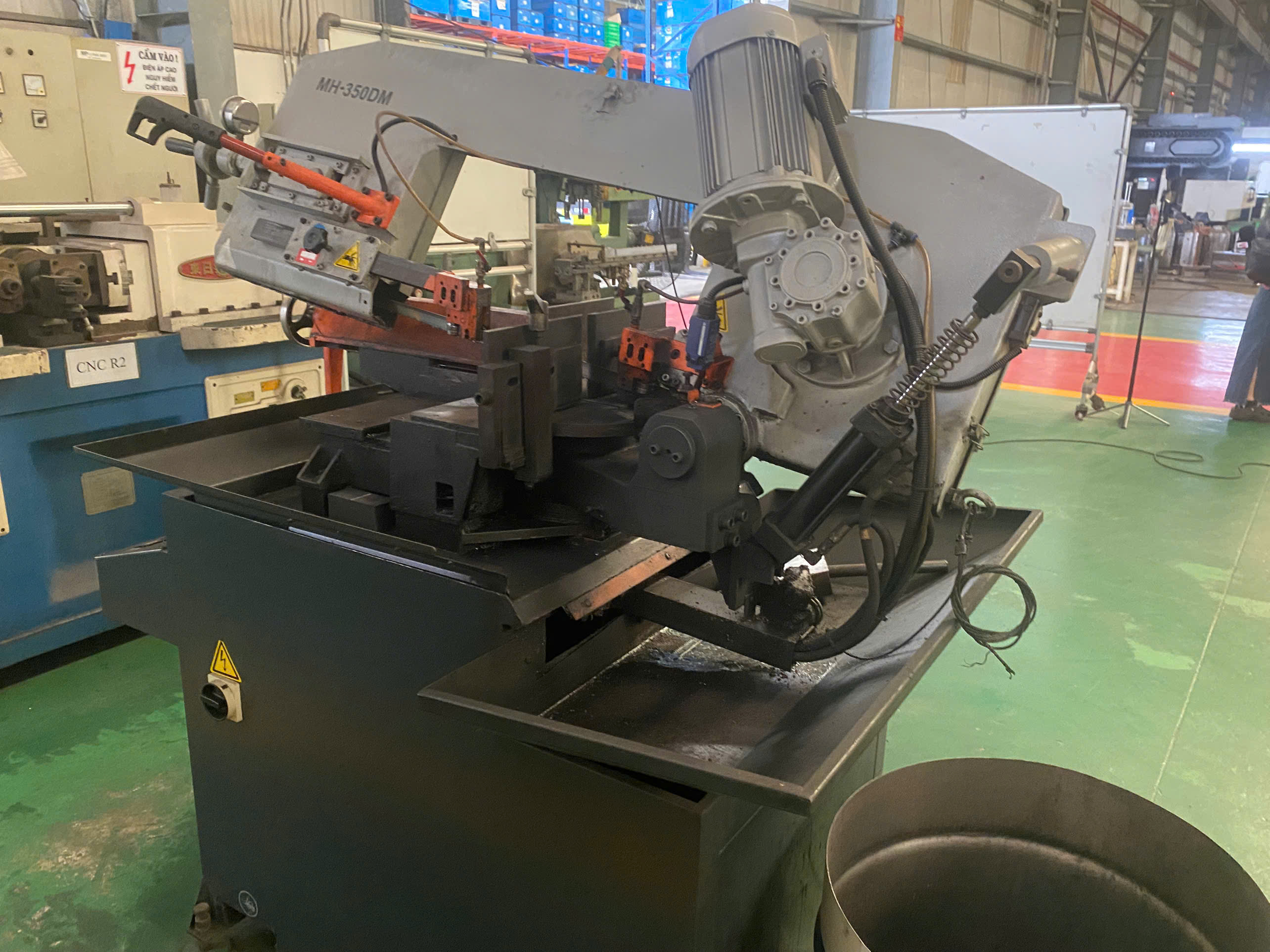
Automated equipment — including robotic welding cells, auto-loading laser cutters, CNC press brakes with automatic tool changers, and conveyor-fed finishing lines — reduces cycle time by 30–60%, eliminates operator-dependent quality variation, and is the single biggest factor in achieving reliable on-time delivery for infrastructure sheet metal projects.
How Automation Shortens Lead Time
Lead time management in infrastructure fabrication depends on two things: cycle time per part and changeover time between jobs. Automation attacks both.
A robotic welding cell 9, for example, does not take breaks, does not fatigue, and welds at a consistent speed. A CNC press brake with automatic backgauge and angle measurement can form a complex bracket in 90 seconds that would take a manual operator 5 minutes. Multiply that by 500 pieces, and you save days.
Auto-loading systems on laser cutters keep the machine running while the operator unloads finished sheets on the other table. This "lights-out" capability means cutting continues through breaks and shift changes.
Automation Features That Matter Most
Not all automation is equal. Here are the features I prioritize when evaluating a supplier's automation level:
- Robotic welding: Consistent weld bead, reduced spatter, faster cycle — critical for parts with multiple weld joints like mirrored mounting brackets.
- Automatic tool changers on press brakes: Eliminate manual die swaps that can take 30–60 minutes per setup.
- Nesting software: Optimizes material usage on the laser table, reducing waste and cutting time.
- Real-time monitoring dashboards: Let the supplier — and sometimes the buyer — track job progress, machine utilization, and downtime in real time.
- AI-driven predictive maintenance: Sensors on spindles, bearings, and laser heads predict failures before they cause unplanned downtime.
The Trade-Off: Automation vs. Flexibility
There is a counterpoint worth noting. Highly automated lines are optimized for production capacity at scale — they excel at 200-piece or 2,000-piece runs. But for prototype quantities or one-off custom parts, a skilled manual operator with a well-maintained machine may be faster to set up.
The best fabricators for infrastructure work offer both. They run automated cells for production volumes and keep skilled operators available for prototyping and DFM collaboration. This mid-volume agility — the ability to scale from 10 pieces to 10,000 without changing suppliers — is a key differentiator. It is also what we look for when qualifying fabrication partners in Vietnam and across Asia for our US clients.
Total cost of ownership plays into this decision too. Automated equipment costs more upfront, but it drives down per-piece cost, reduces rework, and delivers consistent quality — all of which lower your landed cost over time.
How do I assess the maintenance and age of heavy equipment during a remote or on-site factory audit?
One trade-off we constantly weigh: a supplier may offer the lowest price, but if their equipment is 15 years old and poorly maintained, the risk of breakdowns mid-production — and the resulting delivery delays — far outweighs any cost savings.
Assess equipment maintenance and age by requesting machine serial numbers and manufacture dates, reviewing preventive maintenance logs and calibration records, checking for visible wear on guides, tables, and tooling during on-site visits, and — for remote audits — requesting timestamped photos or live video walkthroughs with close-ups of critical machine components.
On-Site Audit: What to Inspect Physically
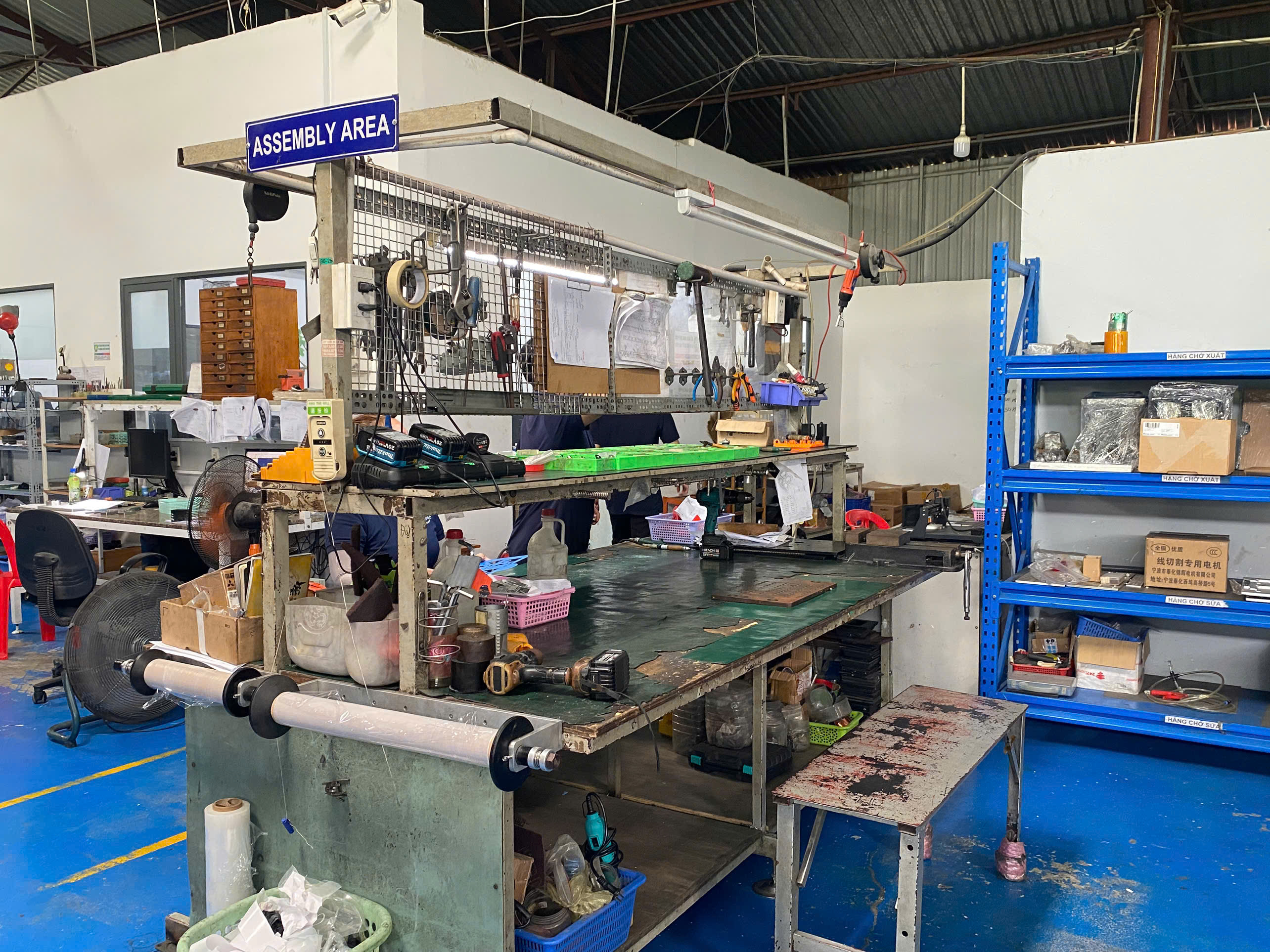
When our team walks a factory floor — whether in Vietnam, China, or Taiwan — we follow a structured checklist. Here are the physical indicators we look for:
- Machine nameplates: These show the manufacturer, model, year of manufacture, and serial number. A machine from 2008 is not necessarily bad, but a machine from 2008 with no upgrades or retrofits raises concerns.
- Linear guide condition: Run your finger along the guide rails. Excessive grease buildup, scoring, or play indicates wear.
- Hydraulic system: Check for leaks around cylinders, hoses, and valves. Leaking hydraulics mean inconsistent pressure — and inconsistent bending or clamping.
- Control system version: A CNC controller running outdated software may lack compatibility with modern CAD/CAM files and BIM workflows. Ask when the controller was last updated.
- Tooling condition: Worn punch tips and die shoulders cause poor bend quality. Look for chipping, mushrooming, or polished wear marks.
- Cleanliness: A clean, organized shop floor correlates strongly with disciplined maintenance practices. Cluttered, dirty facilities often signal deferred maintenance.
Remote Audit: Making It Work Without Being There
Not every audit can happen in person. For remote evaluations, we have developed a protocol that gets close to on-site quality:
- Request a live video call — not a pre-recorded tour. Ask the factory contact to walk you through specific machines.
- Ask them to zoom in on machine nameplates, controller screens, and maintenance log books.
- Request timestamped photos of calibration stickers on measuring equipment (calipers, CMMs, gauges).
- Ask for the preventive maintenance schedule — a real document, not a generic template.
- Request production data: machine utilization rates, downtime logs, and after-sales support records from the equipment OEM.
Equipment Age: When Is Old Too Old?
There is no hard rule, but here are general benchmarks:
| Equipment Type | Typical Useful Life | Red Flag Age (Without Major Retrofit) |
|---|---|---|
| Fiber Laser Cutter | 8–12 years | >10 years |
| CO2 Laser Cutter | 10–15 years | >12 years |
| CNC Press Brake | 15–20 years | >15 years without CNC upgrade |
| Robotic Welding Cell | 10–15 years | >12 years |
| CNC Machining Center | 12–18 years | >15 years |
| Plasma Cutter | 8–12 years | >10 years |
A well-maintained 12-year-old press brake with a retrofitted CNC controller can outperform a neglected 5-year-old machine. Maintenance discipline matters more than age alone. That is why we review maintenance logs, not just equipment lists.
Certifications also play a role here. A supplier holding ISO 9001 10 is required to maintain documented procedures for equipment maintenance and calibration. If they cannot produce these records, their certification may not reflect actual practice. Similarly, welding certifications like AWS D1.1 require qualified procedures and maintained equipment — ask to see the welding procedure specifications (WPS) and the equipment used to execute them.
Connecting Equipment Quality to Project Outcomes
Ultimately, equipment evaluation is not about checking boxes. It is about predicting whether the supplier can deliver your infrastructure parts — on time, in tolerance, with the structural strength the application demands. A fabricator running modern, well-maintained machinery with strong automation features and rigorous quality control processes is far more likely to get it right the first time. And for purchasing managers sourcing from Asia, getting it right the first time is not a luxury — it is a requirement.
Conclusion
Evaluating heavy equipment for infrastructure sheet metal fabrication comes down to verifying cutting and bending capacity, CNC precision, automation depth, and maintenance discipline — then confirming everything through audits and real production data.
Frequently Asked Questions
Equipment Age: When Is Old Too Old?
There is no hard rule, but here are general benchmarks:
What specific laser cutting and bending capacities should I look for in a sheet metal supplier?
A lesson our team learned early: a supplier who claims "full cutting capability" may only own a single fiber laser rated for 6mm mild steel — nowhere near enough for heavy infrastructure brackets and mounting plates CNC press brakes 2 .
How can I verify that the supplier's CNC machinery meets my precision and tolerance requirements?
During a recent supplier audit in Vietnam, we measured sample parts from three different CNC machines in the same facility — and only one consistently held the ±0.1mm tolerance our client's drawings specified.
Footnotes
1. Provides details on advanced laser cutting technology for metal fabrication. ↩︎
2. Describes the function and importance of CNC press brakes in forming heavy-gauge metals. ↩︎
3. Emphasizes the importance of documented maintenance for equipment reliability and performance. ↩︎
4. Explains a critical issue in metal cutting and welding that affects part quality. ↩︎
5. Describes a high-precision instrument used for calibrating CNC machinery. ↩︎
6. Explains the precision measurement tool used for verifying part dimensions. ↩︎
7. Defines how consistently a manufacturing process meets specified tolerances. ↩︎
8. Details the systematic approach to ensuring product quality throughout manufacturing. ↩︎
9. Highlights the benefits of automated welding for efficiency and quality in fabrication. ↩︎
10. Explains the international standard for quality management systems. ↩︎