Every week, our team reviews sheet metal fabrication 1 quotes from suppliers across Asia — and the price gaps between them can be staggering, sometimes 40% or more for identical parts.
A sheet metal fabrication quote is reasonable when its line-item breakdown for materials, labor, tooling, and finishing aligns with current market rates, applies standard margin multipliers of 25–50%, and is based on complete, comparable specifications including CAD files, tolerances, and production volume.
The difference between a good quote and a bad one is not always the bottom-line number. It is what sits behind that number. Let me walk you through the exact process we use to evaluate quotes for our U.S. clients — step by step, with real benchmarks and practical tools.
How can I determine if the material and labor breakdown in my sheet metal quote reflects current market prices?
A lesson we learned early in our sourcing operations: a quote that looks cheap on the surface can hide inflated material markups or understated labor hours that cause problems later.
To verify material and labor pricing, cross-reference the quoted material cost against current commodity indices for the specified alloy and thickness, then confirm that labor rates align with regional benchmarks and that the total follows the industry-standard formula of 1.5 × (Labor + Material) for a 50% contribution margin.
Start with the Material Cost
Material cost is the most transparent part of any sheet metal fabrication quote. You can verify it. Check the current price of the specified alloy — whether it is 304 stainless steel 2, 6061 aluminum, or cold-rolled carbon steel — against commodity price indices like the London Metal Exchange 3 or regional steel distributors. The material type and thickness directly impact base cost. A 3mm 304 stainless sheet costs significantly more than a 1.6mm carbon steel sheet.
Here is a rough benchmark table for common sheet metal materials:
| Material | Typical Thickness Range | Approximate Cost per kg (2024) | Notes |
|---|---|---|---|
| Cold-Rolled Carbon Steel (SPCC) | 0.8–3.0 mm | $0.80–$1.20 | Most economical option |
| 304 Stainless Steel | 1.0–3.0 mm | $2.50–$4.00 | Corrosion-resistant; widely used |
| 6061 Aluminum 4 | 1.0–4.0 mm | $3.00–$5.00 | Lightweight; aerospace-grade available |
| Galvanized Steel | 0.8–2.5 mm | $1.00–$1.60 | Pre-coated; reduces finishing cost |
A rule of thumb in the industry is that material costs should represent roughly 30% of the total sales price. If the quoted material cost is 60% of the total, something is off — either the labor is underestimated, or the material is overpriced.
Verify the Labor Component
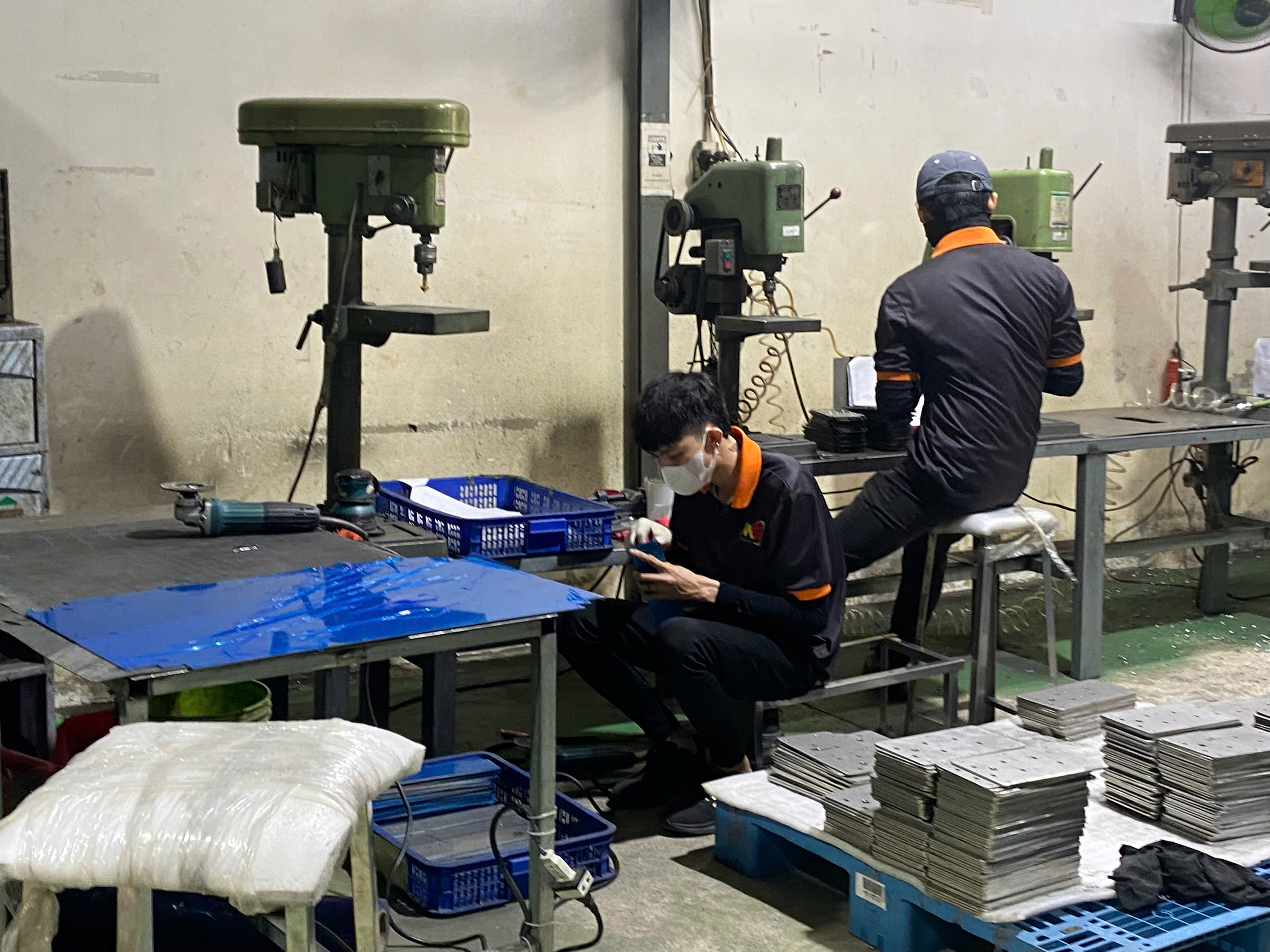
Labor costs vary widely by region. A fabricator in Vietnam will have different hourly rates than one in Taiwan or the U.S. When we audit supplier quotes for our clients, we compare the quoted labor hours against our internal estimates for each operation: laser cutting, CNC bending, welding, deburring, and assembly.
Part geometry and complexity play a huge role here. A simple flat bracket with two holes and one bend takes far less labor than a mirrored pair of multi-bend mounting brackets with weld joints and irregular cutouts. If the quote does not break out labor by operation, ask for it. A professional supplier will provide this without hesitation.
Apply the Margin Multiplier
Once you have the material and labor figures, apply the standard margin check. Multiply (Labor + Material) by 1.25 for a 25% margin or by 1.5 for a 50% margin. Most fabricators fall within this range. If the quoted price is significantly above 1.5× the combined cost, you need to ask why. It could be justified by tight tolerance requirements, specialized tooling costs, or rush lead time. Or it could simply be inflated.
Request Step Quotes
One of the most powerful tools in our evaluation process is the step quote. We ask every supplier to quote at multiple quantities — for example, 1, 10, 50, and 100 units. This reveals the true setup cost versus the per-part cost. If the price barely drops between 10 and 100 units, the supplier may be padding the per-unit price rather than amortizing setup honestly. Understanding how unit price differs between mass production and small-batch orders is essential for spotting this pattern.
What specific quality control and inspection steps should I expect to see in a professional sheet metal fabrication quote?
A buyer we work with in the Midwest once received parts from a previous supplier that passed basic dimensional checks — but failed in assembly because the hole locations were off by 0.3 mm, a detail no one inspected.
A professional sheet metal fabrication quote should include defined QC steps such as incoming material inspection, in-process dimensional checks, First Article Inspection (FAI) with documented reports, final visual and dimensional inspection against drawings, and PPAP documentation if required by the buyer's quality standards.

Why Quality Steps Belong in the Quote
Quality is not free. Every inspection step consumes time and resources. When a fabricator includes quality control in the quote, it means they have budgeted for it. When they leave it out, one of two things happens: they skip it entirely, or they charge you extra later. Neither outcome is acceptable.
Our team in Vietnam and China follows a structured QC process for every custom project. We include these steps in every quote we prepare, because our U.S. clients — especially purchasing managers — need confidence that parts will be right the first time. Here are the key stages:
The Quality Control Process Flow
| QC Stage | What It Covers | When It Happens |
|---|---|---|
| Incoming Material Inspection | Verify alloy, grade, thickness, and material certificates (MTR) | Before production starts |
| First Article Inspection (FAI) 5 | Full dimensional check of the first piece against CAD files and drawings | After first part is produced |
| In-Process Inspection | Monitor critical dimensions, bend angles, weld quality during production | During each operation stage |
| Final Inspection | 100% visual check + AQL sampling for dimensions, finish, and cosmetics | After all operations are complete |
| Pre-Shipment Inspection | Packaging integrity, quantity verification, labeling accuracy | Before parts leave the facility |
First Article Inspection Is Non-Negotiable
If a quote does not mention FAI, that is a red flag. First Article Inspection is the single most important quality gate in sheet metal fabrication. It catches errors in interpretation of drawings, tooling setup mistakes, and material mix-ups before a full production run is committed. Our engineers create detailed FAI reports with photographs, measured values versus nominal dimensions, and pass/fail status for every critical feature. This is especially important when tolerance requirements are tight — say ±0.1 mm on hole locations or ±0.5° on bend angles.
PPAP and Beyond
For clients in automotive, industrial equipment, or defense supply chains, Production Part Approval Process (PPAP) 6 documentation may be required. This goes beyond FAI and includes control plans, process flow diagrams, measurement system analysis, and capability studies. Not every fabricator can provide this. If your project demands it, confirm the supplier's capability during the quoting phase — not after production begins.
Secondary Operations Inspection
Do not overlook quality standards for secondary operations like welding, powder coating, or hardware insertion. Weld quality should be inspected visually and, for structural parts, with penetrant testing. Powder coating thickness should be measured with a mil gauge. Thread inserts should be checked with go/no-go gauges. Each of these steps adds cost, but they prevent field failures that cost far more.
How do I calculate the total landed cost of my sheet metal parts to ensure the quote is truly cost-effective?
One trade-off we weigh on nearly every project: a supplier in one country may quote 15% lower per unit, but once you add freight, duties, and potential rework, the total cost flips.
To calculate total landed cost, add the unit price from your quote to tooling amortization, finishing costs, packaging, inland freight, ocean or air freight, customs duties, insurance, and an allowance for reject rate and rework — then divide by the number of good parts received to get the true per-unit cost.
The Hidden Cost Iceberg
The unit price on a sheet metal fabrication quote is just the tip of the iceberg. Buyers who compare quotes on unit price alone are making a mistake I have seen repeatedly over the years. The real comparison happens at the total landed cost 7 level — what you actually pay per good part delivered to your door. Learning how to identify hidden costs in sheet metal fabrication unit prices is critical to making accurate comparisons.
Here is a breakdown of cost components that should factor into your calculation:
| Cost Component | Typical Range (% of Unit Price) | Often Included in Quote? |
|---|---|---|
| Raw Material | 25–35% | Yes |
| Labor & Machine Time | 20–35% | Yes |
| Tooling (amortized) | 5–15% | Sometimes |
| Finishing (powder coat, anodize) | 10–20% | Sometimes |
| Packaging | 2–5% | Rarely |
| Inland Freight (factory to port) | 2–4% | Rarely |
| Ocean/Air Freight | 5–15% | Rarely |
| Customs Duties 8 & Tariffs | 0–25% | Never |
| Insurance | 0.5–1% | Rarely |
| Reject/Rework Allowance | 1–5% | Never |
How to Build the Calculation
Start with the quoted unit price. Then add every line item above that the quote excludes. For finishing requirements like powder coating, confirm whether the quote includes the specific RAL color or if it references a generic finish. A quote that says "powder coated" without specifying color or manufacturer can mean a cheaper, thinner coating that fails in the field.
For production volume orders shipped from Asia, ocean freight is usually the most economical option. But lead time extends by 4–6 weeks. If your project timeline is tight, air freight can be 5–10× more expensive. Factor this into the quote comparison.
The True Per-Unit Cost Formula
Here is a simple formula we use internally:
True Per-Unit Cost = (Unit Price + Tooling ÷ Order Qty + Finishing + Packaging + Freight + Duties + Insurance) ÷ (1 − Reject Rate)
For example, if your unit price is $12.00, tooling is $500 amortized over 100 units ($5.00), finishing adds $2.00, freight and duties add $3.00, and your expected reject rate is 3%, then:
True Per-Unit Cost = ($12.00 + $5.00 + $2.00 + $3.00) ÷ (1 − 0.03) = $22.00 ÷ 0.97 = $22.68
Compare that $22.68 against a domestic supplier quoting $25.00 with everything included. The gap is smaller than it appeared. Now factor in communication overhead, design for manufacturability support, and delivery reliability. The "cheapest" quote is not always the most cost-effective.
Watch for Exclusions
When we prepare quotes through DEWIN, we make a point of listing every inclusion and exclusion clearly. Our clients in the U.S. tell us this is uncommon. Many quotes from other suppliers exclude logistics, specific finishes, or inspection costs — leading to surprise invoices. Always ask: "What is NOT included in this price?" If the supplier cannot answer clearly, that is a warning sign. For a deeper dive into this topic, see our guide on understanding sheet metal fabrication quotes and cost breakdowns.
Can I secure open account payment terms within my sheet metal quote to help manage my project's cash flow?
During a recent project discussion with a purchasing manager in Ohio, the conversation shifted from unit price to payment terms within minutes — because for his business, cash flow timing mattered more than saving a dollar per part.
Yes, you can secure open account payment terms — typically Net 30, 60, or 90 days — within your sheet metal fabrication quote, though most overseas suppliers require prepayment or letters of credit; working with a supply chain partner like DEWIN that offers credit terms can significantly ease your project's cash flow.
Why Payment Terms Matter in Fabrication Quotes
Most sheet metal fabrication quotes focus on price, lead time, and specifications. But payment terms are a critical and often overlooked component. For a purchasing manager handling multiple projects, paying 50% upfront and 50% before shipment ties up capital for weeks or months before parts arrive and generate revenue. This is especially painful for prototype runs or new product development where the return on investment is still uncertain.
Typical Payment Structures in International Sourcing
| Payment Term | Cash Flow Impact | Common With |
|---|---|---|
| 100% Prepayment | Maximum cash burden on buyer | Small or new suppliers |
| 50/50 (deposit + before shipment) | Moderate burden; no leverage after payment | Most Asian fabricators |
| 30/70 (deposit + after shipment) | Slightly better; some leverage retained | Established supplier relationships |
| Letter of Credit (L/C) | Bank-guaranteed; moderate cost and complexity | Large orders; new relationships |
| Net 30 Open Account | Parts arrive, then you pay in 30 days | Rare from direct factories |
| Net 60–90 Open Account | Maximum cash flow flexibility for buyer | Supply chain partner 9s like DEWIN |
How Open Account Terms Work
With open account terms, the supplier ships the parts and invoices you. You pay 30, 60, or 90 days after receiving the invoice — or after the parts land at your warehouse. This is standard in domestic U.S. transactions but extremely rare when sourcing directly from Asian factories. Most factories cannot absorb the credit risk or the working capital gap.
This is one of the key reasons our clients work with us. Because DEWIN is headquartered in Singapore with established operations in Vietnam and China, we can offer 60–90 day open account terms to qualified U.S. buyers. We absorb the supplier payment upfront and extend credit to our client. This means you receive your sheet metal parts, inspect them, put them into your inventory or ship them to your end customer, and then pay us — after you have confirmed the parts meet your quality standards.
Negotiating Terms into Your Quote
If open account terms matter to your business, raise the topic during the quoting phase — not after. Here are practical steps:
- State your preferred terms in the RFQ. Include "Net 60 payment terms required" alongside your CAD files and specifications.
- Provide trade references. Suppliers and partners are more likely to extend credit if you can demonstrate a solid payment history.
- Start with a smaller order. Build trust with a pilot order on standard terms, then negotiate open account for repeat production volume orders.
- Work with an intermediary. If the factory will not offer credit, a supply chain partner like DEWIN can bridge the gap by paying the factory and extending terms to you.
Payment terms directly affect your total project economics. A quote that is 5% higher but offers Net 60 terms may be far more attractive than a lower quote requiring 50% prepayment — especially when you factor in the cost of capital and the risk of paying for parts before you verify their quality.
Conclusion
Evaluating a sheet metal fabrication quote requires looking beyond the unit price — scrutinize the material and labor breakdown, verify quality control steps, calculate total landed cost, and negotiate payment terms that protect your cash flow.
Frequently Asked Questions
How can I determine if the material and labor breakdown in my sheet metal quote reflects current market prices?
A lesson we learned early in our sourcing operations: a quote that looks cheap on the surface can hide inflated material markups or understated labor hours that cause problems later.
What specific quality control and inspection steps should I expect to see in a professional sheet metal fabrication quote?
A buyer we work with in the Midwest once received parts from a previous supplier that passed basic dimensional checks — but failed in assembly because the hole locations were off by 0.3 mm, a detail no one inspected.
How do I calculate the total landed cost of my sheet metal parts to ensure the quote is truly cost-effective?
One trade-off we weigh on nearly every project: a supplier in one country may quote 15% lower per unit, but once you add freight, duties, and potential rework, the total cost flips.
Footnotes
1. Replaced HTTP unknown link with a comprehensive overview of sheet metal fabrication. ↩︎
2. Replaced HTTP 403 link with an authoritative Wikipedia page on 304 stainless steel. ↩︎
3. Official website for the world’s center for industrial metals trading. ↩︎
4. Replaced HTTP 403 link with an authoritative Wikipedia page on 6061 aluminum alloy. ↩︎
5. Replaced HTTP 404 link with an authoritative Wikipedia page on First Article Inspection. ↩︎
6. Defines PPAP as a standardized quality assurance process in manufacturing. ↩︎
7. Provides a clear definition and calculation of total landed cost. ↩︎
8. Explains customs duties as taxes imposed on imported goods. ↩︎
9. Defines a supply chain partner as an organization procuring goods and services. ↩︎
10. Authoritative explanation of open account transactions in international trade. ↩︎