When our Vietnam office recently coordinated a set of custom mounting brackets for an energy client in Texas, the project exposed a hard truth — oil and gas sheet metal fabrication 1 expertise is not something you can assume. The drawings called for tight tolerances, corrosion-resistant alloys, and ASME-level weld quality. One supplier quoted fast and cheap. They missed three critical callouts on the drawing. The parts failed incoming inspection. That single mistake cost the buyer six weeks and a five-figure reshipping bill. This scenario plays out far too often when purchasing managers pick fabricators based on price alone instead of verifiable capability.
To evaluate oil and gas sheet metal fabrication expertise, verify sector-specific certifications like ISO 9001 and ASME, audit quality control procedures at every production stage, confirm advanced in-house capabilities, review project portfolios for similar energy work, and assess on-time delivery track records before awarding any contract.
The sheet metal fabrication services market reached $10.4 billion in 2025, with a projected 4.2% CAGR through 2033 — and oil and gas remains a major driver. But market growth does not mean every shop can handle your energy project. Below, I break down the exact steps and criteria you need to separate qualified partners from risky ones.
How do I verify that a sheet metal fabricator has the specific certifications and QC processes needed for my oil and gas components?
A client once sent us a rejection report from a previous supplier. The root cause? The fabricator held a general ISO certificate but had zero experience with pressure vessel fabrication requirements. Their welds looked fine visually, but they had never performed the radiographic inspection the spec demanded.
Verify oil and gas certifications by requesting current copies of ISO 9001, ASME code stamps, and AWS welding qualifications, then cross-check them against your project's regulatory requirements. Audit their QC processes by reviewing documented inspection plans, non-destructive testing protocols, and material traceability records.
Certifications in the energy sector are not decorative. They are legal gates. If your component operates under pressure or in a hazardous environment, the fabricator must hold the right stamps — period. But verifying certifications goes deeper than asking for a PDF.
Which Certifications Matter Most?
Not all certifications carry equal weight for oil and gas work. Here is a breakdown of the key credentials and what each one proves:
| Certification | What It Covers | Why It Matters for Oil & Gas |
|---|---|---|
| ISO 9001 2 | Quality management systems | Ensures repeatable, documented processes across all production |
| ASME Code Stamps 3 (U, S, R) | Pressure vessels, boilers, repairs | Legally required for any pressure-containing component |
| AWS D1.1 4 | Structural welding code | Validates welder qualifications and weld procedure specifications |
| NACE/SSPC | Corrosion protection standards 5 | Critical for components exposed to H₂S, saltwater, or chemical environments |
| API (various) | American Petroleum Institute standards 6 | Industry-specific standards for piping, valves, and equipment |
How to Audit QC Processes Beyond the Certificate
A certificate tells you the fabricator passed an audit at some point. It does not tell you what happens on the shop floor today. When we audit suppliers in Vietnam for our U.S. clients, we follow a structured approach:
- Request the Inspection and Test Plan (ITP). This document maps every checkpoint from raw material receiving to final shipment. If they cannot produce one, walk away.
- Ask for sample First Article Inspection Reports (FAIR). These show dimensional checks against the drawing. Look for CMM data, not just "pass/fail" notes.
- Verify material traceability. Every plate, bar, or sheet should have a Mill Test Report 7 (MTR) linked to a heat number. This is non-negotiable for safety standards compliance in energy work.
- Confirm non-destructive testing capabilities. Does the shop perform radiographic, ultrasonic, or dye penetrant testing in-house? Or do they subcontract it? Subcontracting adds lead time and risk. For a deeper dive into this topic, see our guide on how to evaluate supplier NDT capabilities and equipment when sourcing sheet metal fabrication.
- Review weld procedure specifications (WPS) and procedure qualification records (PQR). These documents prove the welding qualifications of their team for the specific materials and joint configurations your project requires.
I have seen fabricators who hold valid certificates but lack the discipline to apply their QC system consistently. The certificate is the starting point. The audit is where you find the truth.
What steps should I take to evaluate a supplier's technical expertise in handling the complex drawings and material specs of my energy projects?
Last year, we received a set of drawings from a U.S. engineering firm for custom metal solutions — heavy-duty mounting brackets with multi-axis bends, irregular cutouts, and multiple mounting holes requiring positional tolerances within ±0.15 mm. The material spec called for a specific grade of duplex stainless steel 8 for corrosion resistance in an offshore environment. When we forwarded the package to three potential fabricators, only one came back with intelligent questions about the bend sequence and grain direction. The other two quoted without reading the notes. That difference tells you everything.
Evaluate a supplier's technical expertise by submitting your most complex drawing as a test case, then assess the quality of their questions, their Design for Manufacturability feedback, their material specification knowledge, and their in-house capabilities in laser cutting, CNC bending, and certified welding processes.

Technical expertise in oil and gas sheet metal fabrication is not just about owning expensive machines. It is about understanding what the drawing demands and knowing how to execute it without rework.
The Drawing Review Test
The fastest way to gauge a fabricator's capability is to send them a real drawing and observe their response. Here is what separates a competent energy fabricator from a general shop:
| Indicator | Competent Oil & Gas Fabricator | General Fabricator |
|---|---|---|
| Drawing review turnaround | 24–48 hours with technical questions | Days or weeks, no questions asked |
| DFM feedback | Suggests bend radius optimization, flags tolerance conflicts | Accepts drawing as-is without comment |
| Material knowledge | Identifies correct alloy grade, asks about heat treatment | Substitutes with "equivalent" without asking |
| Welding approach | Specifies WPS for each joint type | Offers generic "we can weld anything" |
| Tolerance awareness | Flags tight tolerances and proposes inspection methods | Ignores tolerance notes |
A fabricator who quotes without asking questions is a fabricator who will miss something. In our experience coordinating projects between U.S. buyers and Asian suppliers, the quality of the pre-production dialogue predicts the quality of the final parts.
Equipment and In-House Capabilities
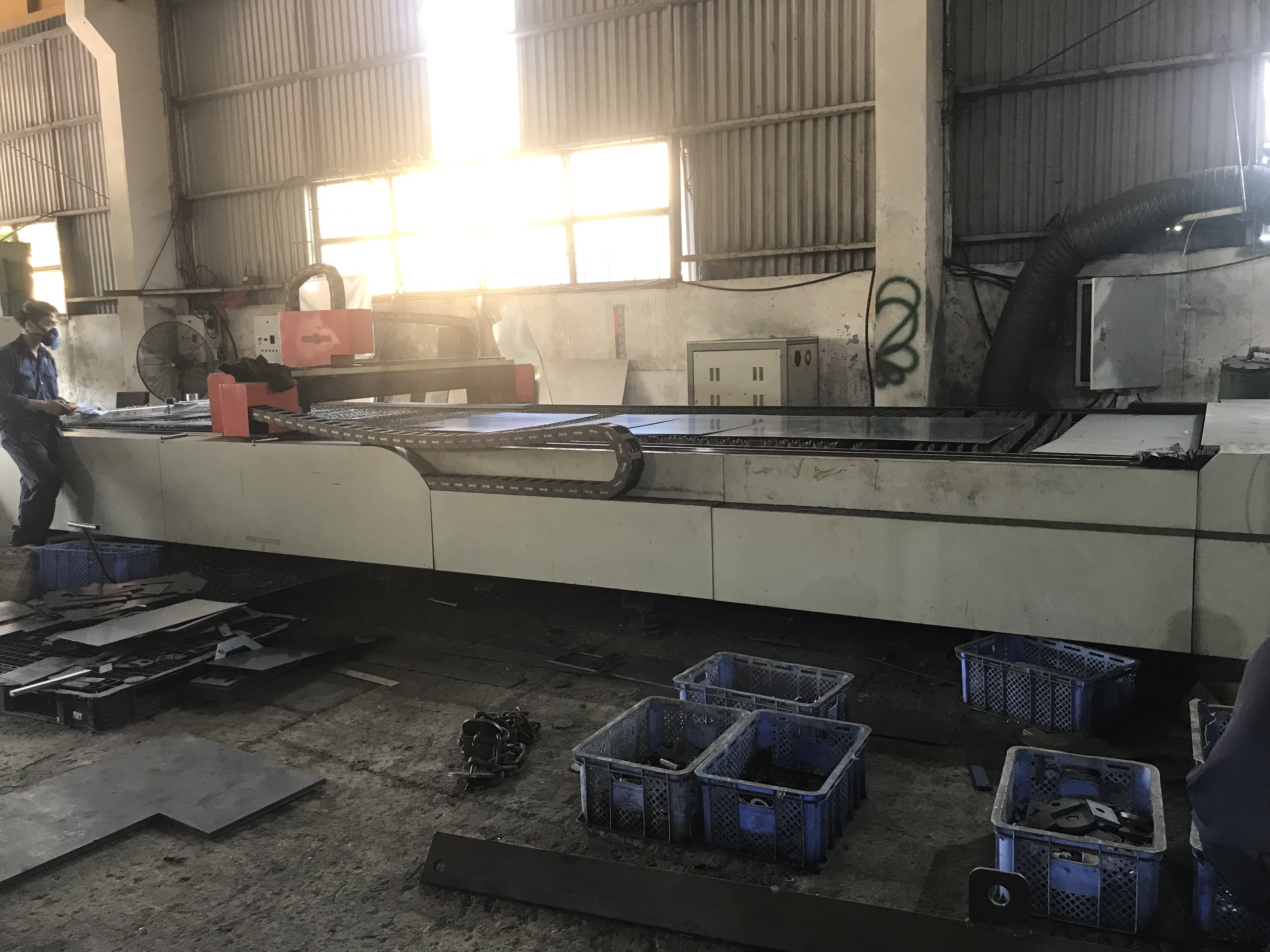
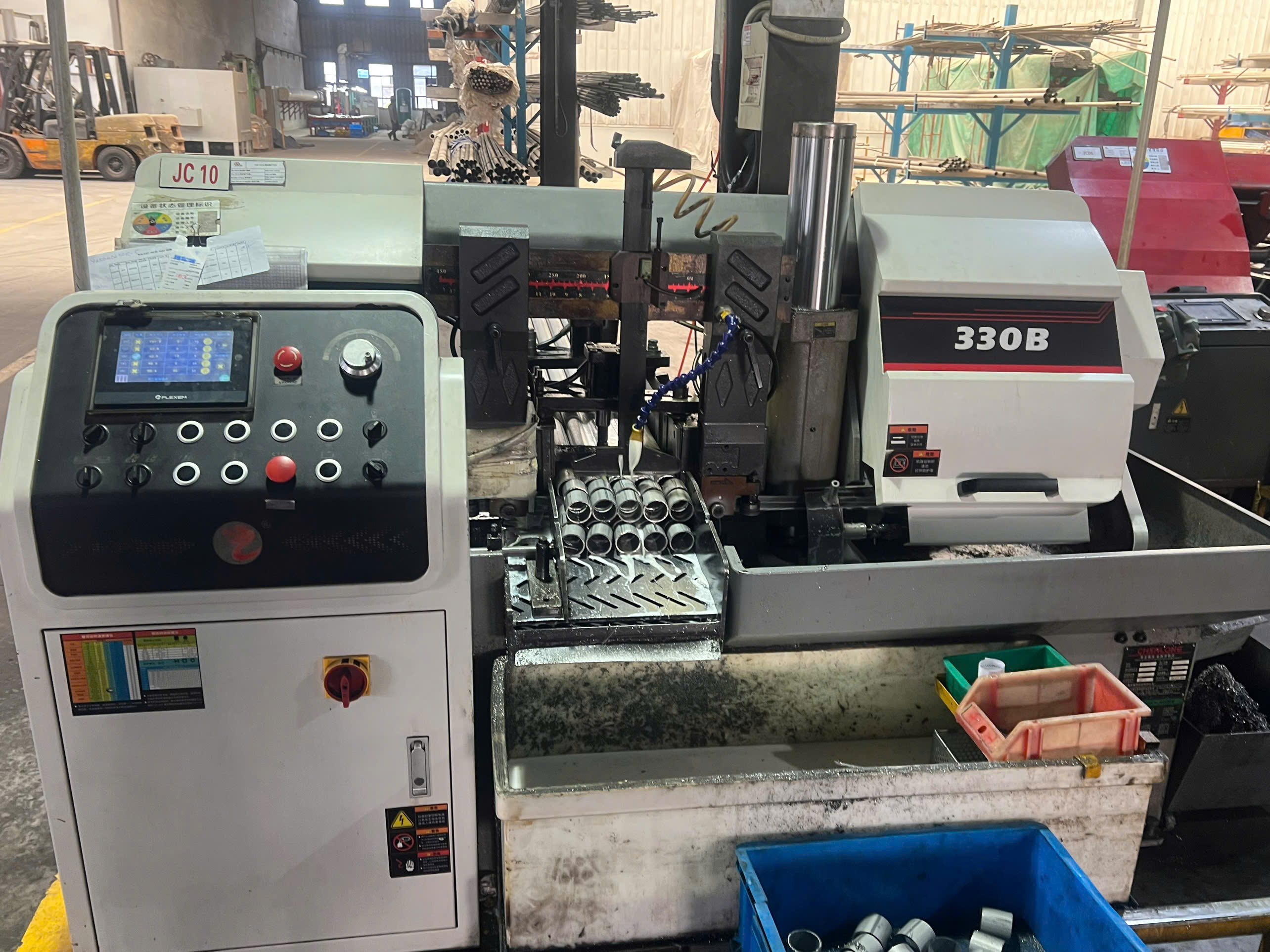
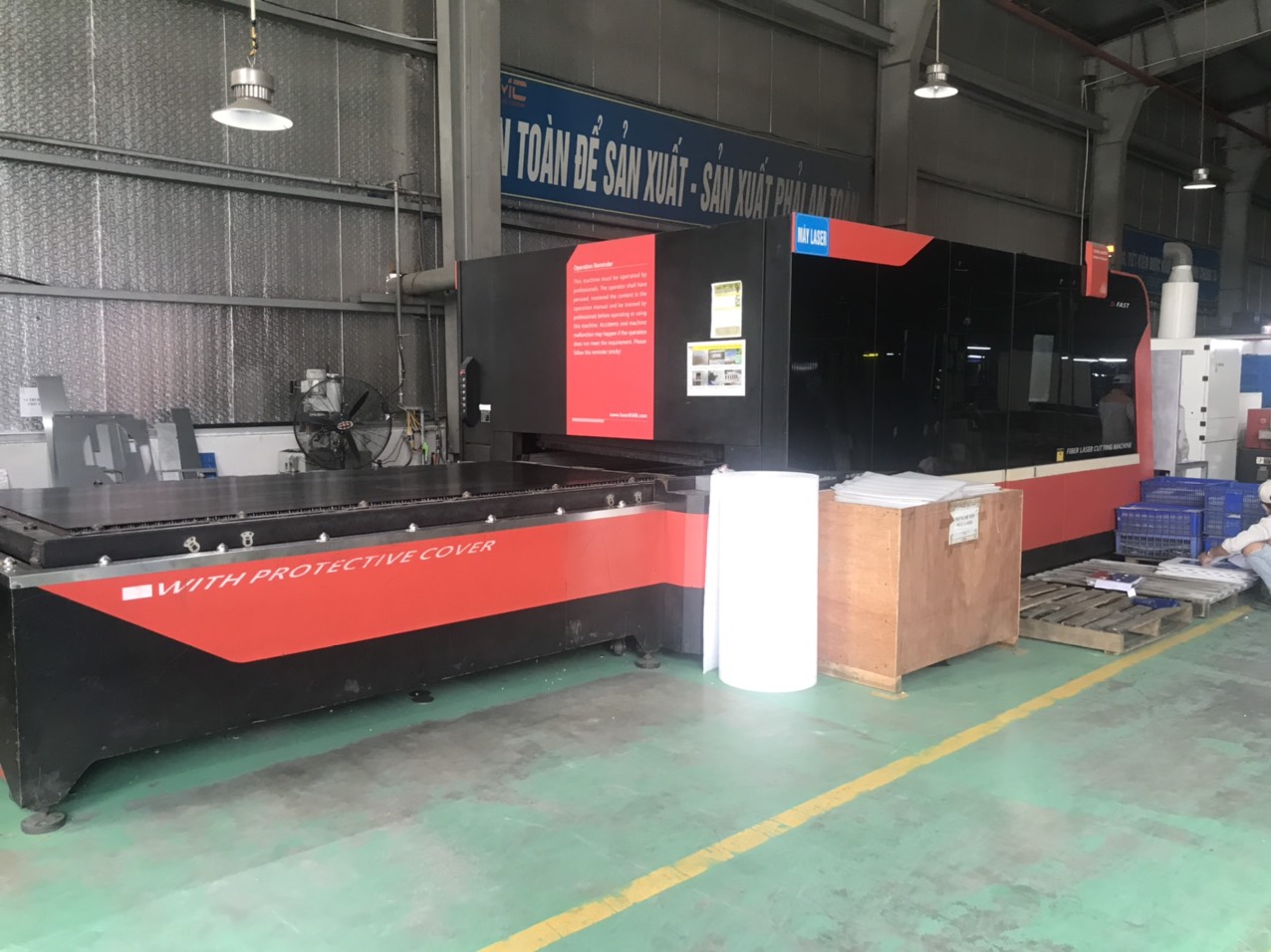
Energy projects demand precision manufacturing across multiple processes. When evaluating a supplier’s capabilities and qualifications, ask specifically about their equipment list and capacity:
- Laser cutting delivers high precision for sheet metal profiles, especially for complex cutout geometries like those in mounting brackets.
- Waterjet cutting handles thick alloys and heat-sensitive materials without thermal distortion — essential for duplex stainless steel and other corrosion-resistant alloys.
- CNC press brakes with multi-axis back gauges achieve the tight bend tolerances that energy components require.
- Robotic welding ensures consistent, repeatable weld quality for production runs, while certified manual TIG and MIG welders handle complex one-off joints.
- In-house CAD/CAM capability means the fabricator can model your part in 3D, simulate the manufacturing sequence, and catch problems before cutting metal.
A critical point: if the fabricator subcontracts key processes like cutting, bending, or surface finishing, you lose control over quality and timelines. Components with tight tolerances — the kind that reduce failure rates by up to 30% in high-stress environments — require integrated, in-house process control from start to finish.
Material Specifications: Where Mistakes Get Expensive
Oil and gas environments are brutal. Offshore platforms face saltwater corrosion. Refineries deal with high-temperature hydrogen attack. Sour gas wells expose metal to hydrogen sulfide. The wrong alloy choice leads to catastrophic failure.
When we evaluate suppliers for material specification competence, we look for:
- Knowledge of common oil and gas alloys: 316L stainless steel, duplex 2205, Inconel 625, carbon steel with proper coatings.
- Incoming material verification using optical emission spectroscopy or XRF analyzers to confirm alloy composition matches the MTR.
- Understanding of heat treatment requirements and how welding affects the heat-affected zone of sensitive alloys.
If a fabricator cannot explain why duplex stainless steel requires a specific interpass temperature during welding, they are not ready for your energy project.
How can I assess if a fabrication partner in Vietnam has the project management capacity to meet my strict delivery schedules?
One of the first things our U.S. clients ask when they consider sourcing from Vietnam is: "Can they deliver on time?" It is a fair question. We have built a seven-person team in Vietnam specifically because proximity to the factory floor is the only reliable way to manage schedules, catch problems early, and keep production moving.
Assess a Vietnam fabrication partner's project management capacity by reviewing their on-time delivery rate for past energy projects, confirming they use formal production scheduling tools, verifying they have dedicated project coordinators, and checking whether they manage the full workflow in-house from RFQ review through final inspection and logistics.
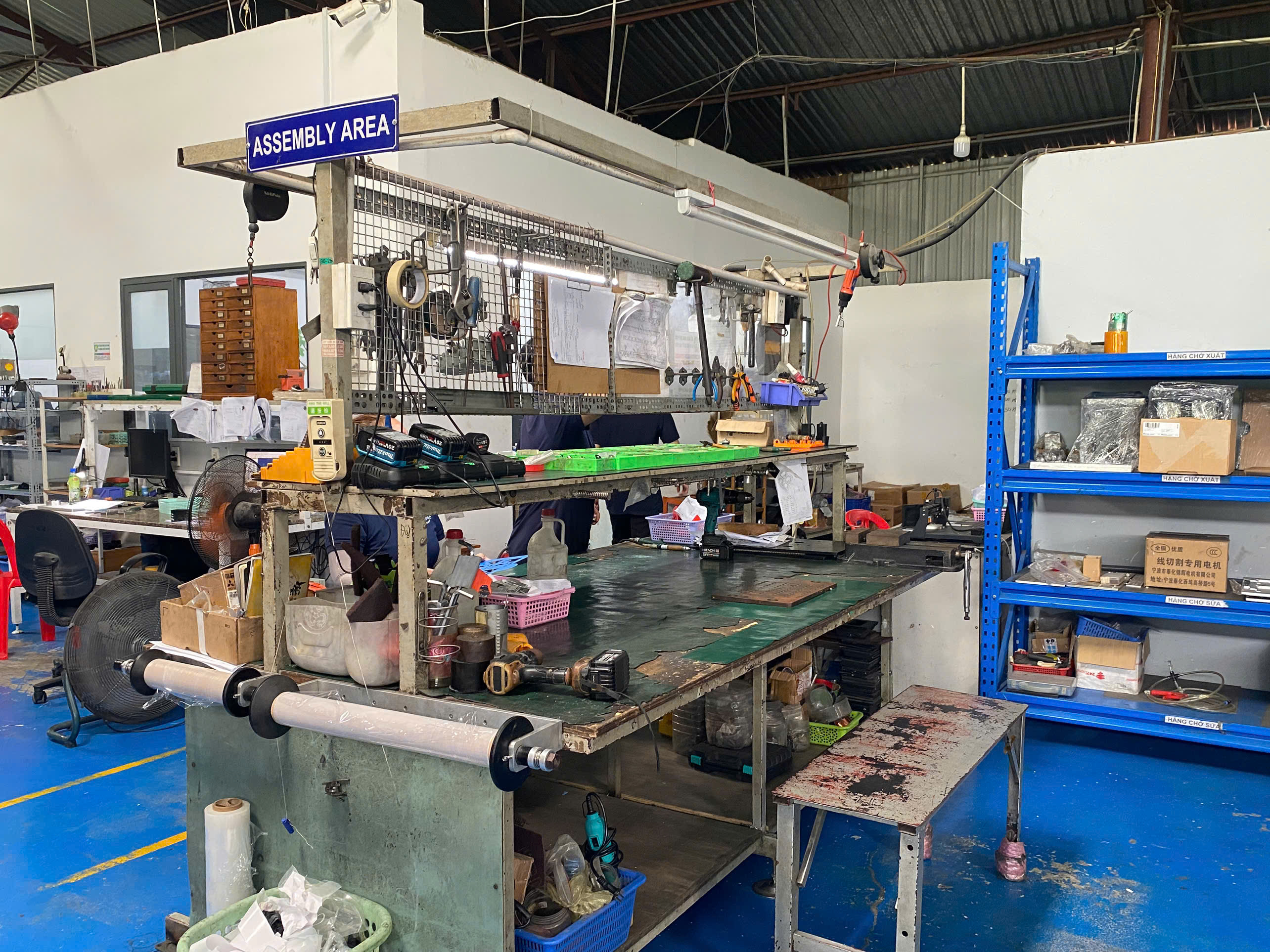
Delivery delays are the number one pain point our clients report from previous supplier relationships. In oil and gas, a late delivery does not just inconvenience the buyer — it can halt a plant shutdown schedule, delay a rig commissioning, or trigger contractual penalties worth far more than the parts themselves.
What Project Management Looks Like in Practice
Project management experience for oil and gas sheet metal work is not about having a Gantt chart on the wall. It is about a system that connects every step — from RFQ to delivery — with clear ownership and checkpoints.
Here is a practical framework for evaluating a Vietnam-based fabricator's project management maturity:
Step 1: RFQ Review Process. Ask how they handle incoming requests. A mature supplier has an engineering team that reviews drawings within 24–48 hours, identifies risks, and provides a detailed quote with lead time, material sourcing plan, and inspection milestones.
Step 2: Production Planning. Request to see their production scheduling system. Are they using ERP software? Or are they running on memory and whiteboards? For energy projects, you need visibility into material procurement timelines, machine loading, and WIP tracking.
Step 3: Communication Cadence. Establish how often they will provide status updates. Weekly photo reports with milestone tracking are a minimum. Our team in Vietnam provides real-time updates because we sit in the same time zone as the factories and can walk the floor.
Step 4: In-House vs. Outsourced Processes. Every outsourced process — whether surface finishing, heat treatment, or testing — adds schedule risk. Map the full process chain and identify where delays could occur.
Step 5: Contingency Planning. Ask what happens when something goes wrong. Do they have backup material suppliers? Can they add shifts? Have they dealt with machine breakdowns during critical production runs?
Supply Chain Resilience Matters
Post-pandemic, supply chain resilience has become a decisive factor. Fabricators who rely on a single steel supplier or a single subcontractor for NDT are fragile. We evaluate geographical diversification of suppliers, buffer stock policies for common alloys, and the fabricator's history of managing disruptions.
Energy projects often face tight deadlines that coincide with equipment shutdowns or seasonal weather windows. A fabrication partner who lacks the discipline to manage these constraints will cost you more than money — they will cost you credibility with your own customers.
Delivery Performance Metrics to Request
| Metric | What to Ask For | Red Flag |
|---|---|---|
| On-time delivery rate | Last 12 months, for oil & gas projects specifically | Below 90% or "we don't track this" |
| Average lead time accuracy | Quoted vs. actual lead time variance | Consistently delivers 2+ weeks late |
| Expedite capability | Can they compress timelines by 20–30%? | No flexibility, single-shift operation |
| Communication responsiveness | Average response time to emails/issues | More than 24 hours for critical issues |
| Root cause analysis | Do they issue corrective actions for late deliveries? | No formal process for addressing delays |
What criteria should I use to audit a supplier's ability to provide "right first time" results for my custom energy sector parts?
The most expensive word in custom manufacturing is "rework." When we first started helping U.S. buyers source from Asia, the pattern was predictable — suppliers would rush through production, skip interim inspections, and ship parts that failed incoming quality checks. The buyer would then face the awful choice between accepting marginal parts or waiting weeks for replacements. "Right first time" is not a slogan. It is a process discipline that either exists in a factory's DNA or it does not.
Audit a supplier's "right first time" capability by reviewing their first-pass yield data, inspecting their in-process quality gates, confirming they perform First Article Inspections with full dimensional reports, verifying material traceability at every stage, and assessing whether they conduct root cause analysis and corrective actions for any non-conformance.
Getting it right the first time on custom energy parts requires a system, not just skilled workers. Every link in the chain — from order entry to packing — must have a built-in check. Here is how we evaluate this capability when auditing suppliers for our clients.
The Quality Gates That Matter
A "quality gate" is a mandatory inspection point where production stops until the check is passed. For oil and gas sheet metal fabrication, the critical gates are:
-
Incoming Material Verification. Before any cutting begins, the raw material must be verified against the purchase order and the Mill Test Report. Spectroscopy or XRF confirms the alloy composition. This single step prevents the most common and costly error: wrong material.
-
First Piece Inspection. After the first part is cut and formed, it goes through a full dimensional check against the drawing. If the first piece is wrong, the entire run will be wrong. This is where piping system integrity and structural safety begin — at the very first part off the line.
-
In-Process Weld Inspection. Welds are inspected visually and, where specified, with non-destructive testing 9 methods — dye penetrant, magnetic particle, or ultrasonic. For pressure-containing components, radiographic testing may be required. These checks happen during production, not after.
-
Final Dimensional Inspection. Every finished part is measured against the drawing. CMM reports provide traceable, objective data. Hand tools like calipers, micrometers, and height gauges supplement the CMM for features that are difficult to probe.
-
Surface Finish and Coating Verification. Coating thickness, adhesion, and appearance are checked. For oil and gas parts requiring corrosion resistance, this step verifies that the powder coating, galvanizing, or other protective finish meets the specification.
What "Right First Time" Data Looks Like
When we audit a supplier, we ask for their first-pass yield (FPY) data. This is the percentage of parts that pass all inspections without rework or rejection. A competent oil and gas fabricator should demonstrate FPY above 95%. Anything below that signals systemic process issues.
We also review their non-conformance reports (NCRs). A factory that claims zero non-conformances is either lying or not inspecting properly. What matters is how they respond to problems. Do they issue formal corrective actions? Do they update their process to prevent recurrence? This closed-loop system is the backbone of continuous improvement.
Practical Audit Checklist
Here is a condensed checklist we use during supplier audits:
- Documented Inspection and Test Plan for each project
- Calibrated measuring equipment with current calibration certificates
- Trained inspectors with records of their qualifications
- Material traceability from MTR to finished part marking
- Weld procedure specifications matched to project requirements
- Corrective action system with evidence of closed-out NCRs
- Customer-specific requirements documented and communicated to the shop floor
A supplier who can walk you through each of these items with real examples — not just binder pages they dust off for audits — is a supplier who takes precision manufacturing seriously.
ESG and Cybersecurity: Emerging Audit Criteria
Beyond traditional quality, forward-thinking energy buyers now evaluate ESG commitments and cybersecurity protocols. Fabricators adopting low-VOC coatings, waste reduction programs, and energy-efficient equipment align with the sustainability goals of major oil and gas operators. On the cybersecurity front, protecting sensitive design specifications and intellectual property is critical — especially when drawings contain proprietary equipment configurations. Ask whether the supplier has data handling policies and secure file transfer protocols in place.
Conclusion
Evaluating oil and gas sheet metal fabrication expertise requires disciplined verification of certifications, technical capabilities, project management systems, and quality control processes — every step directly impacts the safety, compliance, and success of your energy project.
Frequently Asked Questions
Which Certifications Matter Most?
Not all certifications carry equal weight for oil and gas work. Here is a breakdown of the key credentials and what each one proves:
How do I verify that a sheet metal fabricator has the specific certifications and QC processes needed for my oil and gas components?
A client once sent us a rejection report from a previous supplier. The root cause? The fabricator held a general ISO certificate but had zero experience with pressure vessel fabrication requirements. Their welds looked fine visually, but they had never performed the radiographic inspection the spec demanded.
What steps should I take to evaluate a supplier's technical expertise in handling the complex drawings and material specs of my energy projects?
Last year, we received a set of drawings from a U.S. engineering firm for custom metal solutions — heavy-duty mounting brackets with multi-axis bends, irregular cutouts, and multiple mounting holes requiring positional tolerances within ±0.15 mm. The material spec called for a specific grade of duplex stainless steel 8 for corrosion resistance in an offshore environment. When we forwarded the package to three potential fabricators, only one came back with intelligent questions about the bend sequence and grain direction. The other two quoted without reading the notes. That difference tells you everything.
Footnotes
1. Overview of sheet metal fabrication applications in the oil and gas industry. ↩︎
2. Official information on the ISO 9001 quality management system standard. ↩︎
3. Official information on ASME Boiler and Pressure Vessel Code certification and stamps. ↩︎
4. Official information on the AWS D1.1 Structural Welding Code – Steel. ↩︎
5. Replaced with the official standards page of AMPP (formerly NACE International), an authoritative source for corrosion protection. ↩︎
6. Official information on standards developed by the American Petroleum Institute. ↩︎
7. Explains the purpose and content of a Mill Test Report for material traceability. ↩︎
8. Details the properties, fabrication, and applications of duplex stainless steel. ↩︎
9. Provides an overview of non-destructive testing methods and their importance. ↩︎
10. Provides a comprehensive overview of the First Article Inspection process. ↩︎