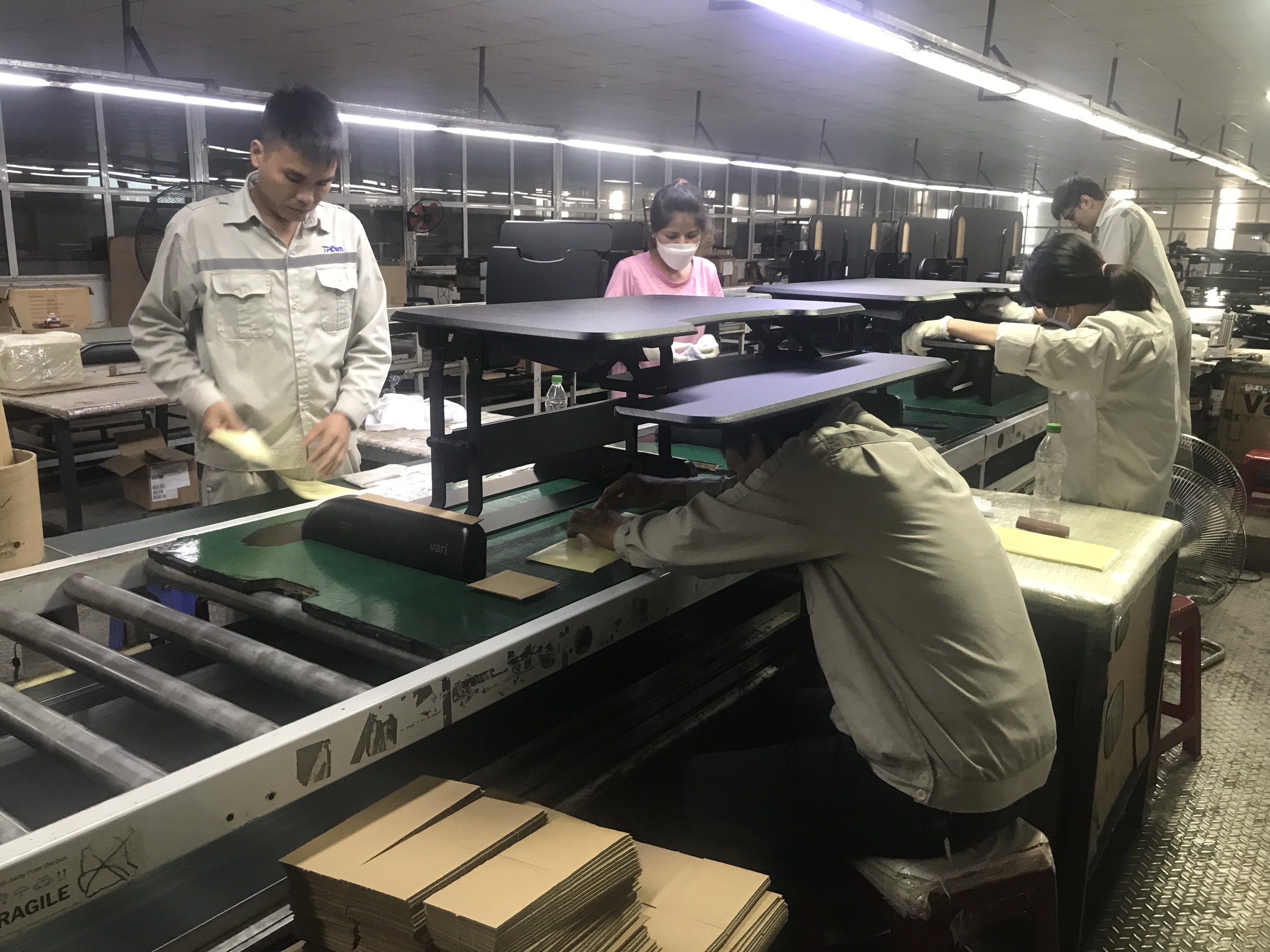

When our Vietnam office started vetting sheet metal suppliers across five provinces last year, every cluster looked promising on paper — but the differences on the ground were staggering, and choosing the wrong one cost buyers months.
To evaluate regional sheet metal fabrication clusters in Vietnam, compare each hub’s specialization, machinery, certifications, logistics access, and local material supply chains. Focus on Ho Chi Minh City, Binh Duong, Hanoi, Hai Phong, and Dong Nai — each offers distinct advantages for precision metal forming, cost efficiency, and export readiness.
This guide walks through the exact framework we use when helping U.S. clients source custom sheet metal parts from Vietnam PPAP-level evidence 1. Each section covers a critical dimension of cluster evaluation — from identifying specializations to stress-testing delivery timelines.
How do I identify which Vietnamese industrial clusters specialize in the high-precision sheet metal work I need?
A lesson we learned early in our Vietnam operations: not every industrial zone that advertises "sheet metal" can actually hold tight tolerances on complex brackets with multiple bends, cutouts, and weld joints like the ones we regularly source for U.S. buyers.
Vietnam's top sheet metal clusters each have distinct specializations. Ho Chi Minh City handles high-volume production; Binh Duong excels in precision electrical enclosures with advanced laser equipment; Hanoi focuses on automotive and aerospace; Hai Phong and Dong Nai serve export logistics. Match your part complexity and industry to the right cluster before shortlisting suppliers.
The Big Five Clusters at a Glance
The first step is to understand what each cluster actually does well Cat Lai Port 2. I've visited factories in all five regions, and the differences go beyond geography. They reflect years of foreign direct investment 3, workforce development, and equipment choices.
| Cluster | Core Specialization | Key Equipment Commonly Found | Primary Industries Served |
|---|---|---|---|
| Ho Chi Minh City 4 | High-volume sheet metal, general fabrication | CNC punch presses, hydraulic press brakes | Construction, consumer electronics, general industrial |
| Binh Duong 5 | Precision enclosures, control panels, EV components | TRUMPF laser welders, Bystronic fiber lasers, automated powder-coating lines | Electrical, energy, EV charging infrastructure |
| Hanoi | Automotive brackets, aerospace sub-assemblies | CNC machining centers, robotic welding cells | Automotive, aerospace, defense |
| Hai Phong | Export-oriented fabrication, structural steel | Amada turret punches, plasma cutting tables | Shipbuilding, heavy industry, steel structures |
| Dong Nai | Mid-volume custom parts, mixed metal assemblies | Fanuc-controlled bending machines, spot welders | Electronics, machinery, consumer products |
How to Match Your Part Requirements to a Cluster
Start with your part drawing. Look at three things: tolerance class, batch size, and secondary processes. If your bracket needs ±0.1 mm on bend dimensions and powder coating to a specific RAL color, Binh Duong's advanced facilities are a natural fit. If you need 50,000 stamped parts per month with basic zinc plating, Ho Chi Minh City's high-volume shops will be more cost-effective.
Our team in Vietnam typically runs a "cluster scan" before any factory audit. We identify three to five candidate suppliers within the best-fit cluster, then request sample parts and capability matrices. This narrows the field fast.
FDI and Technology Transfer Signals
Foreign direct investment is a reliable indicator of cluster maturity. Binh Duong and Dong Nai have attracted billions in FDI over the past decade, which means technology transfer has raised the bar. Factories in these zones are more likely to operate TRUMPF or Amada equipment rather than older Chinese-made alternatives. In Hanoi, FDI from Japanese and Korean automotive OEMs has built a skilled workforce trained on precision metal forming for safety-critical parts.
When you see a cluster with a high concentration of ISO 9001 certification 6 holders, that's another positive signal. It means the local ecosystem — from raw material suppliers to surface treatment shops — has been pulled up to international quality control standards.
What criteria should I use to assess the technical capabilities of suppliers within a specific Vietnam regional hub?
During a recent factory audit in Dong Nai, we found two suppliers on the same street — one running a five-year-old Amada fiber laser with full SPC records, the other using a manually operated press brake with no inspection documentation. The address tells you nothing; the criteria you apply tell you everything.
Assess Vietnam sheet metal suppliers on five criteria: equipment vintage and brand, dimensional inspection capability, certifications like ISO 9001, workforce skill level, and process documentation. Request PPAP-level evidence — control plans, capability studies, and first-article inspection reports — to separate capable suppliers from those that merely look modern.
A Practical Supplier Vetting Checklist
I've refined this checklist over dozens of supplier evaluations. It covers what matters most for mid-to-high quality custom parts.
| Criteria | What to Look For | Red Flags |
|---|---|---|
| Equipment | Branded CNC laser cutters (TRUMPF, Amada, Bystronic), CNC press brakes with angle measurement | Unnamed or very old machines, no preventive maintenance records |
| Inspection | CMM (coordinate measuring machine), calipers, height gauges, surface roughness testers | No dedicated QC area, reliance on visual inspection only |
| Certifications | ISO 9001:2015 at minimum; IATF 16949 for automotive | Expired certificates, no internal audit records |
| Workforce | Certified welders (AWS or equivalent), trained CNC operators | High turnover, no training log, operators unable to read drawings |
| Documentation | Control plans, PFMEA, PPAP packages, SPC charts | No traceability system, hand-written records only |
Going Beyond the Brochure
Many factories in Vietnam will send you a glossy capability deck. That's a starting point, not a verdict. When our team conducts factory audits, we ask to see three things that brochures never show:
- Scrap rate records. A well-run shop tracks scrap by part number and root cause. If they can't produce this data, their quality control Vietnam process is likely informal.
- Tool and die maintenance logs. For stamped or formed parts, die condition directly affects dimensional consistency. We look for scheduled maintenance intervals and replacement histories.
- Corrective action records. Every factory has quality escapes. The question is whether they have a system — like 8D or 5-Why — to prevent recurrence.
CNC Machining and Secondary Processes
Many sheet metal parts also need CNC machining for tight-tolerance holes or mating surfaces. Not all sheet metal shops have this in-house. In our experience, Binh Duong and Ho Chi Minh City clusters tend to have the highest density of shops that combine sheet metal fabrication 7 with CNC machining Vietnam capabilities under one roof. This matters because every time a part moves to a subcontractor, you add lead time and quality risk.
Secondary processes like powder coating, anodizing, silk screening, and hardware insertion should also be evaluated. Ask whether these are done in-house or outsourced. In-house is almost always better for quality consistency and schedule control.
Skilled Workforce Considerations
Vietnam has a young, trainable workforce, but the skilled labor gap is real at the advanced end. Welding complex brackets — like the mirrored mounting brackets with multiple precise folds and weld joints we regularly handle — requires experienced technicians, not just machine operators. Ask how long key technicians have been with the company. Stability matters more than headcount.
How will the logistics infrastructure of a regional cluster affect my door-to-door delivery timelines to the U.S.?
One trade-off we constantly weigh for our U.S. clients is this: a factory 20 km closer to a deep-water port can shave three to five days off a shipment, and that margin is the difference between meeting and missing a production window.
Logistics infrastructure varies sharply across Vietnam's clusters. Southern hubs like Ho Chi Minh City and Binh Duong offer the fastest sea freight to the U.S. West Coast at 18–22 days via Cat Lai Port. Northern hubs like Hai Phong add 2–3 transit days but may serve better for consolidated North Asian routing. Inland transport quality and port congestion are equally critical factors.
Transit Time Comparison by Cluster
Understanding door-to-door delivery means looking at three legs: factory to port, port to U.S. port, and U.S. port to your warehouse. Here's what we typically see.
| Cluster | Nearest Major Port | Factory-to-Port Transit | Sea Freight to U.S. West Coast | Total Door-to-Door Estimate |
|---|---|---|---|---|
| Ho Chi Minh City | Cat Lai / Tan Cang | 1–2 hours | 18–22 days | 25–32 days |
| Binh Duong | Cat Lai (via HCMC) | 2–4 hours | 18–22 days | 26–34 days |
| Dong Nai | Cat Lai (via HCMC) | 2–3 hours | 18–22 days | 26–33 days |
| Hanoi | Hai Phong Port | 2–3 hours | 20–25 days | 28–36 days |
| Hai Phong | Hai Phong Port | 0.5–1 hour | 20–25 days | 26–33 days |
These estimates assume full container load (FCL) ocean freight. Less-than-container-load (LCL) adds 5–10 days for consolidation.
Road and Highway Quality
Vietnam has invested heavily in expressways connecting its industrial zones to ports. The Ho Chi Minh City – Long Thanh – Dau Giay Expressway dramatically improved truck transit from Dong Nai and Binh Duong factories to Cat Lai. In the north, the Hanoi – Hai Phong Expressway cut a four-hour drive to under two hours.
Still, logistics challenges remain. Port congestion at Cat Lai during peak export season (September through December) can add one to two days to the factory-to-vessel window. We advise our clients to build at least a five-day buffer into their production schedules during Q4.
Air Freight as a Backup
For urgent orders or sample shipments, air freight is available from Tan Son Nhat (Ho Chi Minh City) and Noi Bai (Hanoi) airports. Transit to the U.S. is typically three to five days. The cost is significantly higher — roughly 5–8x ocean freight per kilogram — but for critical-path items like first-article samples or small replacement batches, it's invaluable. We've used this option multiple times to keep client production lines running while ocean shipments were in transit.
Trade Agreements and Tariff Advantages
Vietnam's membership in trade agreements 8 like the CPTPP and EVFTA, plus bilateral frameworks with the U.S., offers tariff advantages that improve landed cost compared to sourcing from countries facing higher import duties. While the U.S.–Vietnam trade relationship doesn't have a dedicated FTA, the overall tariff structure for fabricated metal parts remains competitive, especially relative to current China tariffs. This is a key driver behind supply chain diversification away from China.
Can I rely on the local material supply chains within these clusters to maintain my quality standards?
A buyer interaction last quarter brought this question into sharp focus. A U.S. client asked us to source a set of mirrored heavy-duty mounting brackets in SPCC cold-rolled steel — and the first supplier we visited in Dong Nai was buying raw material from three different mills with no incoming inspection. The finished parts had visible surface inconsistencies.
You can rely on Vietnam's local material supply chains if you enforce incoming material inspection, specify approved mill sources, and verify material test certificates (MTCs). Major clusters like Ho Chi Minh City and Binh Duong have access to domestic steel from Hoa Phat and Formosa Ha Tinh, plus imported stock from Japan and Korea. But the responsibility for quality control ultimately falls on your supplier vetting process.
Domestic vs. Imported Raw Materials
Vietnam's domestic steel production has grown rapidly. Hoa Phat Group 9 and Formosa Ha Tinh Steel are the two largest producers, offering hot-rolled and cold-rolled coils that meet JIS and ASTM standards. For standard carbon steel sheet metal parts, domestic supply is generally adequate and cost-effective.
However, for specialty materials — stainless steel 304/316, aluminum 5052/6061, or galvanized high-strength steel — most suppliers still import from Japan (Nippon Steel), Korea (POSCO), or Taiwan (China Steel). This adds lead time (typically two to four weeks for imported coil) and exposes the supply chain to raw material price volatility.
What to Specify in Your Purchase Order
To maintain quality standards, we always include the following material requirements in our purchase orders:
- Material grade and standard (e.g., SPCC per JIS G3141)
- Approved mill sources (e.g., Hoa Phat, POSCO, or equivalent)
- Material test certificate (MTC) required with each shipment
- Incoming inspection criteria (thickness tolerance, surface finish, chemical composition)
When a supplier can't produce an MTC on request, that's a disqualifying red flag. Our quality control Vietnam procedures require MTCs to be filed with every production lot and cross-referenced during final inspection.
Environmental and ESG Considerations
Stricter environmental regulations in Vietnam are reshaping the material supply chain. Suppliers using domestically produced steel from newer mills like Formosa Ha Tinh benefit from cleaner production processes. But some smaller service centers and stockholders still source from less-regulated mills. If your company has ESG reporting requirements, ask your supplier about the origin of their raw materials and whether the producing mill holds ISO 14001 environmental certification.
Green transformation in Vietnam's manufacturing sector is accelerating. More factories are adopting energy-efficient equipment and cleaner surface treatment processes. This aligns well with the sustainability goals many U.S. buyers now build into their sourcing policies.
Mitigating Material Supply Risk
Price volatility in steel and aluminum is a persistent challenge. We recommend two strategies:
- Lock pricing for 90-day windows. Negotiate material cost adjustments quarterly rather than per order.
- Maintain a safety stock of critical raw materials. Some of our suppliers in Binh Duong keep two to three months of coil stock on hand for their top customers, which buffers against supply disruptions.
The depth of the local supply chain ecosystem matters. In Ho Chi Minh City and Binh Duong, you'll find sub-suppliers for hardware (PEM inserts, rivets), fasteners, gaskets, and surface treatments within a 30-minute drive. This density reduces lead time and makes it easier to manage quality across the entire bill of materials.
Conclusion
Evaluating Vietnam's regional sheet metal fabrication clusters requires a disciplined, multi-dimensional approach — matching cluster specializations to your parts, auditing supplier capabilities on-site, stress-testing logistics timelines, and verifying material supply chains with documentation. For a deeper look at the end-to-end timeline from initial inquiry through delivery, see our guide on the sourcing process for Vietnam sheet metal fabrication. And if you're evaluating whether a supplier has genuine U.S. OEM experience, that verification step is equally critical before committing to a cluster.
Frequently Asked Questions
How do I identify which Vietnamese industrial clusters specialize in the high-precision sheet metal work I need?
A lesson we learned early in our Vietnam operations: not every industrial zone that advertises "sheet metal" can actually hold tight tolerances on complex brackets with multiple bends, cutouts, and weld joints like the ones we regularly source for U.S. buyers.
What criteria should I use to assess the technical capabilities of suppliers within a specific Vietnam regional hub?
During a recent factory audit in Dong Nai, we found two suppliers on the same street — one running a five-year-old Amada fiber laser with full SPC records, the other using a manually operated press brake with no inspection documentation. The address tells you nothing; the criteria you apply tell you everything.
How will the logistics infrastructure of a regional cluster affect my door-to-door delivery timelines to the U.S.?
One trade-off we constantly weigh for our U.S. clients is this: a factory 20 km closer to a deep-water port can shave three to five days off a shipment, and that margin is the difference between meeting and missing a production window.
Footnotes
1. Replaced HTTP 400 link with an authoritative explanation of the Production Part Approval Process (PPAP) from a quality management expert. ↩︎
2. Describes Cat Lai Port’s operations and its significance as a major container port. ↩︎
3. Defines foreign direct investment and its significance in economic development. ↩︎
4. Provides an overview of industrial parks and economic development in the city. ↩︎
5. Replaced HTTP 404 link with an authoritative overview of Binh Duong province from an investment promotion agency, relevant to FDI attraction. ↩︎
6. Explains the ISO 9001 standard and its importance for quality management systems. ↩︎
7. Explains the process and industries served by sheet metal fabrication. ↩︎
8. Outlines Vietnam’s various trade agreements and their economic impact. ↩︎
9. Introduces Hoa Phat Group as a leading industrial manufacturer in Vietnam. ↩︎