
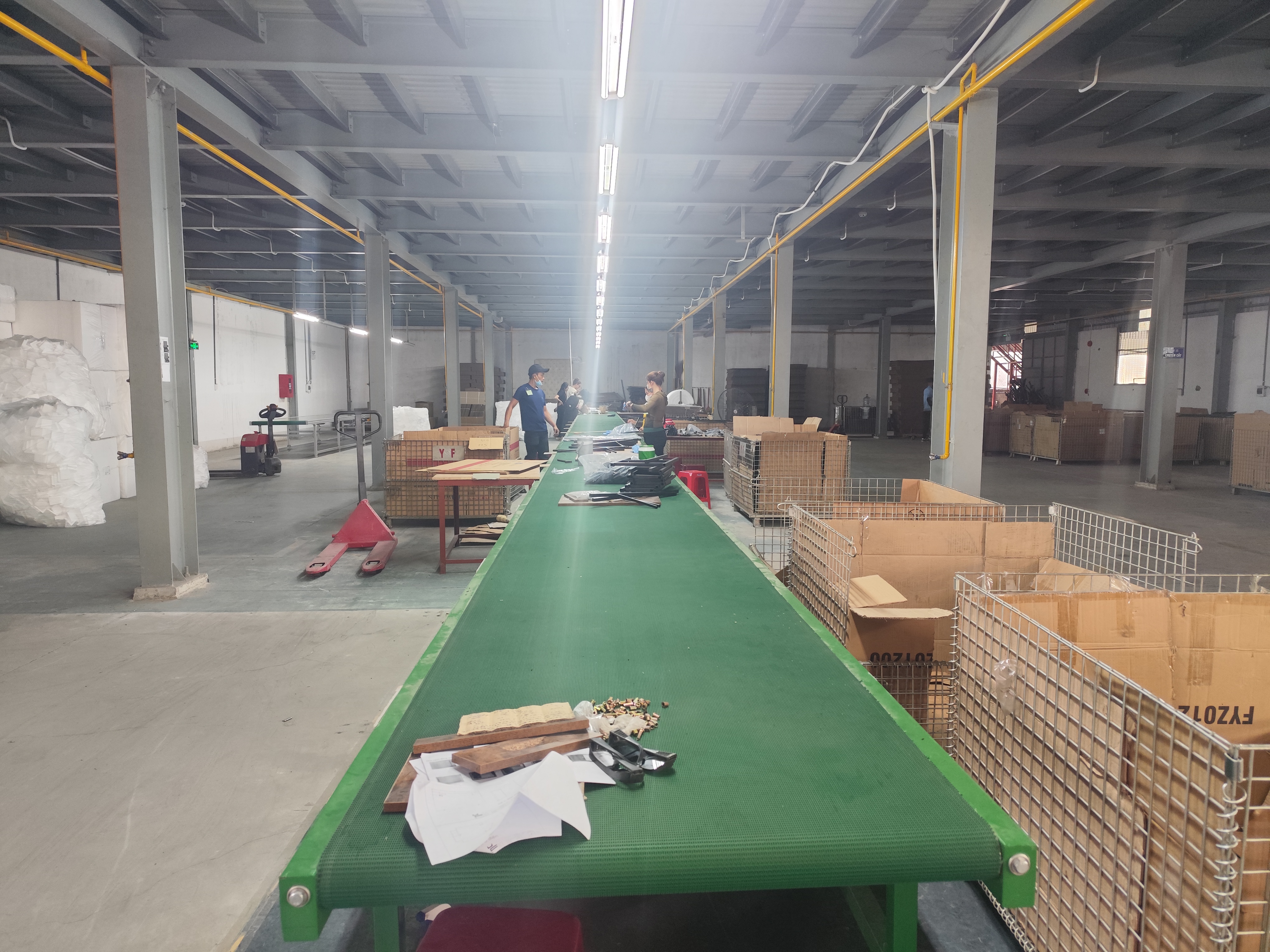
Evaluating sheet metal fabrication 1 capacity becomes critical when multiple OEM orders compete for the same production line, tooling, and workforce at your supplier’s facility.
To evaluate sheet metal fabrication capacity for multiple OEM orders and lead times, you must verify machine availability, production scheduling systems, scalable batch capabilities, material inventory depth, and quality control processes — then match these against your order volumes, part complexity, and delivery windows to identify gaps before they cause delays.
Every purchasing manager who sources custom sheet metal parts from Asia has felt the frustration of a missed delivery date ASME Y14.5 2. The problem grows when you run multiple projects through one supplier. Below, I break down the practical steps our team uses when auditing fabricators for OEM clients who cannot afford bottlenecks.
How can I verify if a sheet metal fabricator has the actual machine capacity to handle my multiple OEM projects simultaneously?
A few months ago, one of our U.S. clients discovered his Vietnamese supplier had only two CNC press brakes 3 — yet was quoting five concurrent OEM programs. The result was a six-week delay across every project.
To verify a fabricator's actual machine capacity, request a detailed equipment list with specifications, run-hour availability, and current utilization rates. Cross-reference this data against your combined order requirements for laser cutting, bending, welding, and finishing to confirm the shop floor can physically accommodate your projects without overloading any single work center.
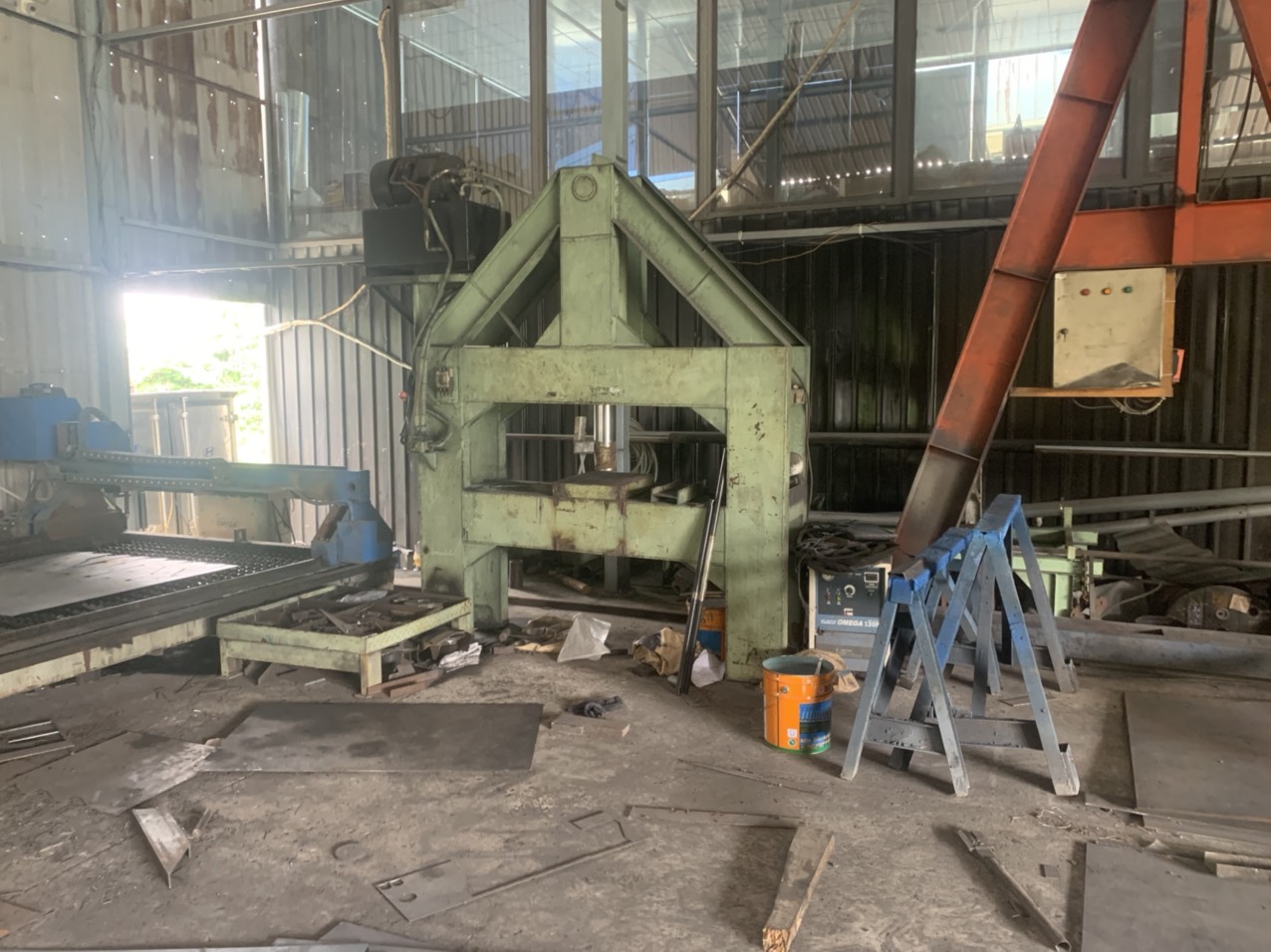
Start with an Equipment Audit
The first thing we do when evaluating a new fabricator for a client is request a complete machine list. This is not just a count of machines. We need the make, model, bed size, tonnage, cutting speed, and age of each unit. A ten-year-old fiber laser 4 runs differently from a new one. A 100-ton press brake handles different material thicknesses than a 250-ton unit. These details matter when you plan to run multiple part numbers with different geometries.
Calculate Available Machine Hours
Once you have the equipment list, calculate the available machine hours per week. A single laser cutter running two shifts, five days a week, gives you roughly 80 hours. Subtract planned maintenance, changeover time, and typical downtime. The result is your net available capacity. Now multiply that across all relevant machines.
| Machine Type | Typical Shifts/Day | Hours/Week (Gross) | Maintenance & Changeover Loss | Net Hours/Week |
|---|---|---|---|---|
| Fiber Laser Cutter | 2 | 80 | 10–15% | 68–72 |
| CNC Press Brake | 2 | 80 | 12–18% | 66–70 |
| CNC Punch Press | 2 | 80 | 10–15% | 68–72 |
| Robotic Welder | 2 | 80 | 8–12% | 70–74 |
| Manual Welding Station | 1–2 | 40–80 | 5–10% | 36–76 |
Match Capacity to Your Combined Demand
List every part number you plan to source. Estimate the machine time each part requires — laser cutting minutes, number of bends, welding time, finishing. Total these across your annual or quarterly demand. Then compare that total against the fabricator's net available hours.
If your combined projects consume more than 70–75% of a single machine type's capacity, you face a risk. Any spike in demand, machine breakdown, or rush order from another customer will push your jobs out. Our team in Vietnam flags this during supplier audits because it is one of the most common manufacturing bottlenecks we encounter. Understanding what supplier capacity metrics ensure on-time delivery is essential at this stage.
Capacity Tiers Matter
Not every fabricator serves every volume tier. High-mix, low-volume specialists handle batches of 10–50 pieces efficiently. High-volume shops struggle with setup economics below 500–1,000 pieces. A fabricator comfortable with prototype runs of 1–10 units, low-volume batches of 10–100, and mid-volume runs of 100–5,000 gives you consistency across your product lifecycle. Switching fabricators between prototype and production introduces quality and timeline risks we always try to help clients avoid.
How do I assess a supplier's ability to maintain consistent lead times and avoid delays for my high-volume orders?
When I review a potential fabricator's on-time delivery performance, I ask for their last twelve months of shipping records — not a sales pitch. Numbers tell the truth.
Assess a supplier's lead time consistency by reviewing historical on-time delivery rates, analyzing their production scheduling system, confirming whether they use finite capacity planning, and verifying that repeat parts with approved programs and proven tooling ship on established timelines rather than being re-quoted as first articles every cycle.

Understand What Drives Lead Times
Lead times in sheet metal fabrication are not a single number. They depend on part complexity, finishing requirements, material availability, and whether the job is a first article or a repeat run. A first article requires programming, fixture setup, first-piece inspection, and approval. A repeat run with an approved program and proven tooling ships much faster. Learning how to set realistic sheet metal fabrication lead times for OEM production helps you establish proper expectations from the start.
Our project management team in Singapore always maps out these variables before committing to delivery dates with U.S. clients. We find that many delays stem from suppliers who quote a generic lead time without accounting for these factors.
Demand Forecasting and Production Scheduling
A fabricator who uses a robust ERP system 6 with finite capacity planning can show you exactly where your job sits in the queue. Finite capacity planning 7 matches each job to available machines, labor, and materials — and flags conflicts before they become missed shipments. Ask the supplier to walk you through their scheduling dashboard.
| Lead Time Factor | Impact on Timeline | How to Verify |
|---|---|---|
| First article vs. repeat run | First articles take 2–4x longer | Ask if programs and tooling exist for your parts |
| Material availability | Out-of-stock material adds 1–3 weeks | Request current inventory list for your specified alloys/gauges |
| Finishing (powder coat, plating) | Adds 3–7 business days | Confirm if finishing is in-house or outsourced |
| Part complexity (number of bends, welds) | High complexity extends cycle time | Review process routing sheets |
| Current shop load | Overloaded shops push new jobs back | Ask for current utilization percentage |
Red Flags to Watch For
Frequent expedites signal planning problems. If the fabricator routinely promises expedited delivery but charges rush fees, their production scheduling is likely reactive, not proactive. Reserve expedited services for genuine emergencies.
Also watch for suppliers who lack demand forecasting capabilities. If your order pattern is predictable — say, 500 brackets every month — a capable supplier should pre-position material and reserve machine time. This kind of resource allocation separates professional job shop management from shops that run chaotically.
In-house workflows also matter for supply chain optimization. A fabricator who handles cutting, bending, welding, hardware insertion, and finishing under one roof eliminates the handoffs that cause delays. Every time a part leaves the building for an outside process, you add transit time, queue time, and a new quality risk.
What technical benchmarks should I use to ensure my custom sheet metal parts meet strict drawing requirements without frequent rework?
One lesson we learned early in our custom parts business: a supplier can have great machines and still produce out-of-spec parts if their quality system is weak.
To ensure custom sheet metal parts meet strict drawing requirements, establish clear technical benchmarks including dimensional tolerances per ISO 2768 or ASME Y14.5, surface finish standards, weld quality criteria per AWS D1.1 or equivalent, and a mandatory First Article Inspection Report (FAIR) process — then require documented process control plans and in-process checks at each critical operation.

Define Your Tolerances Clearly
Design for manufacturability starts with your drawing. If you specify ±0.1 mm on every dimension, you will pay more and wait longer — and most of those tight tolerances may not be functionally necessary. Our engineering team works with clients to identify which dimensions are critical and which can follow general tolerance standards. This conversation alone can cut rework rates dramatically.
Key Technical Benchmarks
Here is a practical framework we use during supplier evaluation:
| Benchmark Category | What to Specify | Typical Standard |
|---|---|---|
| Dimensional tolerance (general) | Non-critical features | ISO 2768 8-m (medium) |
| Dimensional tolerance (critical) | Mating surfaces, hole positions | ±0.05 mm to ±0.1 mm per drawing |
| Bend angle tolerance | All bends | ±0.5° to ±1° |
| Hole position tolerance | Mounting holes, alignment holes | ±0.1 mm |
| Surface finish | Visible surfaces, functional surfaces | Ra 1.6–3.2 µm or per coating spec |
| Weld quality | Structural welds | AWS D1.1 9 or ISO 5817 Class B/C |
| Hardware insertion (PEM) | Pull-out and torque-out | Per PEM engineering specs |
| Flatness | Large panels, base plates | ≤0.5 mm per 300 mm |
The PPAP and First Article Process
For our OEM clients, we implement a Production Part Approval Process. This includes a First Article Inspection Report where the supplier measures every dimension on the drawing and documents the results. We review this report before approving mass production. This approach catches problems at the source — before 500 parts ship with the same defect.
Process Control During Production
A one-time first article is not enough. The fabricator needs in-process checks. For example, after laser cutting, an operator should verify hole positions and overall blank dimensions on a sampling basis. After bending, check angles and formed dimensions. After welding, inspect for distortion, porosity, and weld bead profile. This is what we mean by production throughput with quality built in, not inspected in after the fact.
When we audit fabricators in Vietnam or other Asian countries, we look for whether the shop has written work instructions at each station, calibrated measuring tools, and a clear nonconformance procedure. These are the supplier evaluation criteria that separate shops delivering "right first time" results from those requiring constant rework.
How can I audit a supplier's production schedule and material inventory to ensure they can meet my long-term delivery dates?
During a recent factory visit in Vietnam, I asked to see the supplier's production schedule board. They pointed to a whiteboard with handwritten notes. That told me everything I needed to know about their inventory control and planning capability.
To audit a supplier's production schedule and material inventory, request access to their ERP or scheduling system, review current job queues and machine loading charts, inspect raw material stock levels for your specified alloys and gauges, and confirm they maintain safety stock or blanket purchase agreements with steel distributors to prevent material shortages from disrupting your delivery dates.

What a Production Schedule Audit Looks Like
A proper audit goes beyond asking "Can you deliver on time?" You need to see the data. Our team requests the following during every supplier audit:
- Current job queue: What orders are on the floor right now? How many are ahead of yours?
- Machine loading chart: Which machines are booked, and for how long?
- Labor availability: How many operators per shift? Any upcoming holidays or workforce issues?
- Subcontractor dependencies: Which processes go outside, and what are those lead times?
A fabricator using enterprise-level ERP tracking can generate these reports in minutes. A fabricator using spreadsheets or whiteboards cannot give you reliable data.
Material Inventory Deep Dive
Material shortages are one of the top causes of delivery delays. Steel, aluminum, and stainless steel prices and availability fluctuate. A fabricator serving multiple OEM clients should maintain safety stock for common gauges and alloys. Ask to see their current raw material inventory. Then compare it to your bill of materials. For a deeper look at this topic, learn how to evaluate supplier warehousing and inventory for lead times when sourcing sheet metal.
For long-term programs, we recommend negotiating blanket purchase agreements. The fabricator commits to holding a certain quantity of your material on hand at all times. This is a basic but powerful form of supply chain optimization that many buyers overlook.
Building a Long-Term Delivery Framework
For clients with recurring orders, we set up a rolling forecast system. The client shares a 3–6 month demand forecast. We pass this to the fabricator so they can plan material purchases and reserve machine time. This kind of demand forecasting turns reactive production into proactive planning.
Consider also whether the fabricator has experience with volume consolidation. Combining multiple small releases into larger production runs spreads setup costs and improves production scheduling efficiency. If you order five different brackets monthly, running them all in one production window reduces changeovers and keeps the line flowing.
Material Standardization Saves Time and Money
One overlooked strategy is material standardization. If you use the same gauge and alloy across multiple part numbers, the fabricator can buy in bulk and keep stock on hand. This reduces lead times and lowers per-piece cost. Our engineering team often reviews client drawings across product families to identify standardization opportunities that improve both pricing and on-time delivery performance.
Conclusion
Evaluating sheet metal fabrication capacity for multiple OEM orders requires verifying machines, schedules, quality systems, and material inventory — not just accepting promises. Audit the data, match it to your demand, and build proactive planning into every supplier relationship.
Frequently Asked Questions
How can I verify if a sheet metal fabricator has the actual machine capacity to handle my multiple OEM projects simultaneously?
A few months ago, one of our U.S. clients discovered his Vietnamese supplier had only two CNC press brakes 3 — yet was quoting five concurrent OEM programs. The result was a six-week delay across every project.
How do I assess a supplier's ability to maintain consistent lead times and avoid delays for my high-volume orders?
When I review a potential fabricator's on-time delivery performance, I ask for their last twelve months of shipping records — not a sales pitch. Numbers tell the truth.
What technical benchmarks should I use to ensure my custom sheet metal parts meet strict drawing requirements without frequent rework?
One lesson we learned early in our custom parts business: a supplier can have great machines and still produce out-of-spec parts if their quality system is weak.
Footnotes
1. Found an authoritative and accessible URL defining sheet metal fabrication. ↩︎
2. Official ASME page describing the Y14.5 standard for geometric dimensioning and tolerancing. ↩︎
3. Details the manufacturing process and components of CNC press brakes. ↩︎
4. Explains how fiber lasers work and their applications in manufacturing. ↩︎
5. Defines Original Equipment Manufacturer (OEM) and its role in manufacturing. ↩︎
6. Describes what a manufacturing ERP system is and its benefits. ↩︎
7. Explains finite capacity planning and its importance in production scheduling. ↩︎
8. Provides a guide to the ISO 2768 standard for general tolerances. ↩︎
9. Official AWS page for the Structural Welding Code – Steel standard. ↩︎