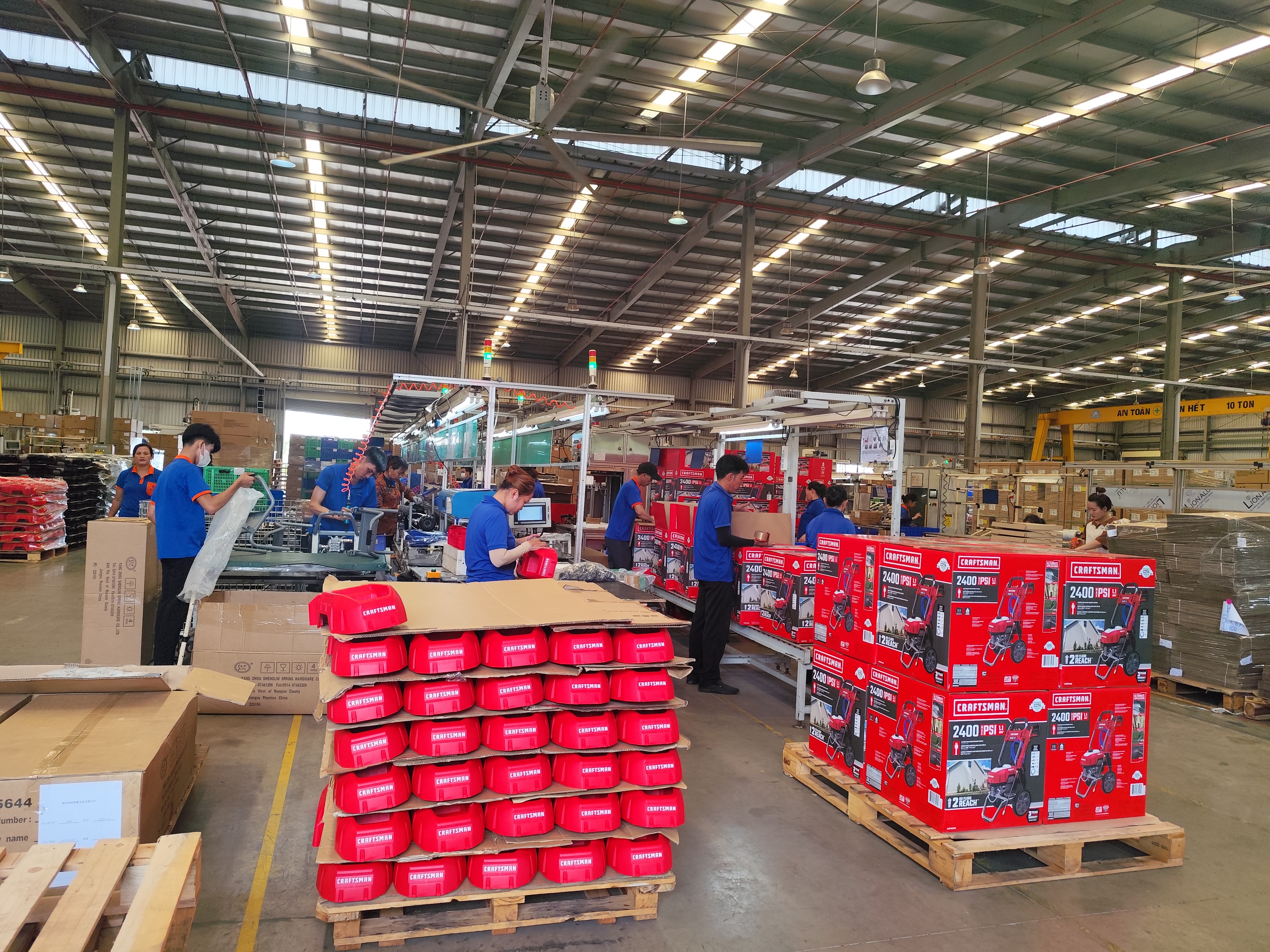

Evaluating sheet metal fabrication suppliers gets complicated fast — especially when your project calls for titanium fabrication 1, nickel alloys, or other advanced materials that punish sloppy processes.
To evaluate sheet metal fabrication suppliers for advanced materials, verify their certifications (ISO 9001, AS9100D), inspect specialized machinery in person, assess design for manufacturability expertise, audit quality control processes, confirm scalable capacity, and check references from buyers in your industry before committing to any production order.
The sections below break this evaluation into four practical questions. Each one reflects hard lessons from years of managing supplier relationships across Vietnam and other Asian markets on behalf of U.S. engineering firms.
How can I verify if a supplier has the specialized machinery needed for my advanced sheet metal alloys?
A buyer once sent us a drawing for a radar housing made from Inconel 625 2 — and the first two factories we visited didn't even own a fiber laser 3 rated for that thickness. Equipment gaps hide in plain sight.
Verify specialized machinery by requesting a detailed equipment list with brand, model, rated capacity, and maintenance logs. Then confirm claims through a physical or video audit of the production floor, checking CNC laser cutters, multi-axis press brakes, and welding stations suited for your specific alloy and tolerance range.

Why an Equipment List Is Not Enough
Any supplier can email you a PDF listing ten machines. The real question is whether those machines are operational, properly maintained, and configured for your material. When our Vietnam team audits a potential partner, we look at three things beyond the list: tooling wear, operator skill certificates, and recent job samples in the same alloy family.
For advanced materials like titanium, Inconel, or Hastelloy, you need advanced manufacturing equipment with specific capabilities. A standard CO₂ laser won't cut titanium cleanly. You need a fiber laser with nitrogen-assist gas capability. A generic MIG welder won't produce X-ray-quality welds on nickel alloys. You need TIG or pulsed-arc welding with inert gas shielding.
Key Machinery to Verify by Process
| Process | Required Equipment | Why It Matters for Advanced Alloys |
|---|---|---|
| Cutting | Fiber laser (4 kW+), waterjet | Clean edges on titanium and Inconel; minimizes heat-affected zone |
| Bending | CNC press brake 4 with multi-axis back gauge | Maintains tight bend tolerances on spring-back-prone alloys |
| Welding | TIG/pulsed MIG with purge capability | Prevents oxidation and porosity in nickel alloys and stainless |
| Machining | CNC milling (3-axis minimum) | Post-fabrication hole patterns and surface finishing |
| Inspection | CMM, optical comparator, surface profilometer | Validates dimensional accuracy on complex geometries |
In-House vs. Outsourced Processes
Vertical integration matters more than most buyers realize. If a supplier cuts in-house but outsources bending and welding, you lose traceability. Every handoff between factories introduces risk: wrong heat lot, mishandled parts, undocumented rework. Manufacturing equipment investment for a fully capable shop runs between $500K and $5M or more. That investment signals commitment.
When we source for clients who need aerospace fabrication quality, we rank suppliers higher if they can handle cutting, forming, welding, finishing, and inspection under one roof. Fragmented supply chains look cheaper on a per-part quote. They rarely stay cheaper once you count coordination overhead, rework, and delays.
What a Factory Audit Should Cover
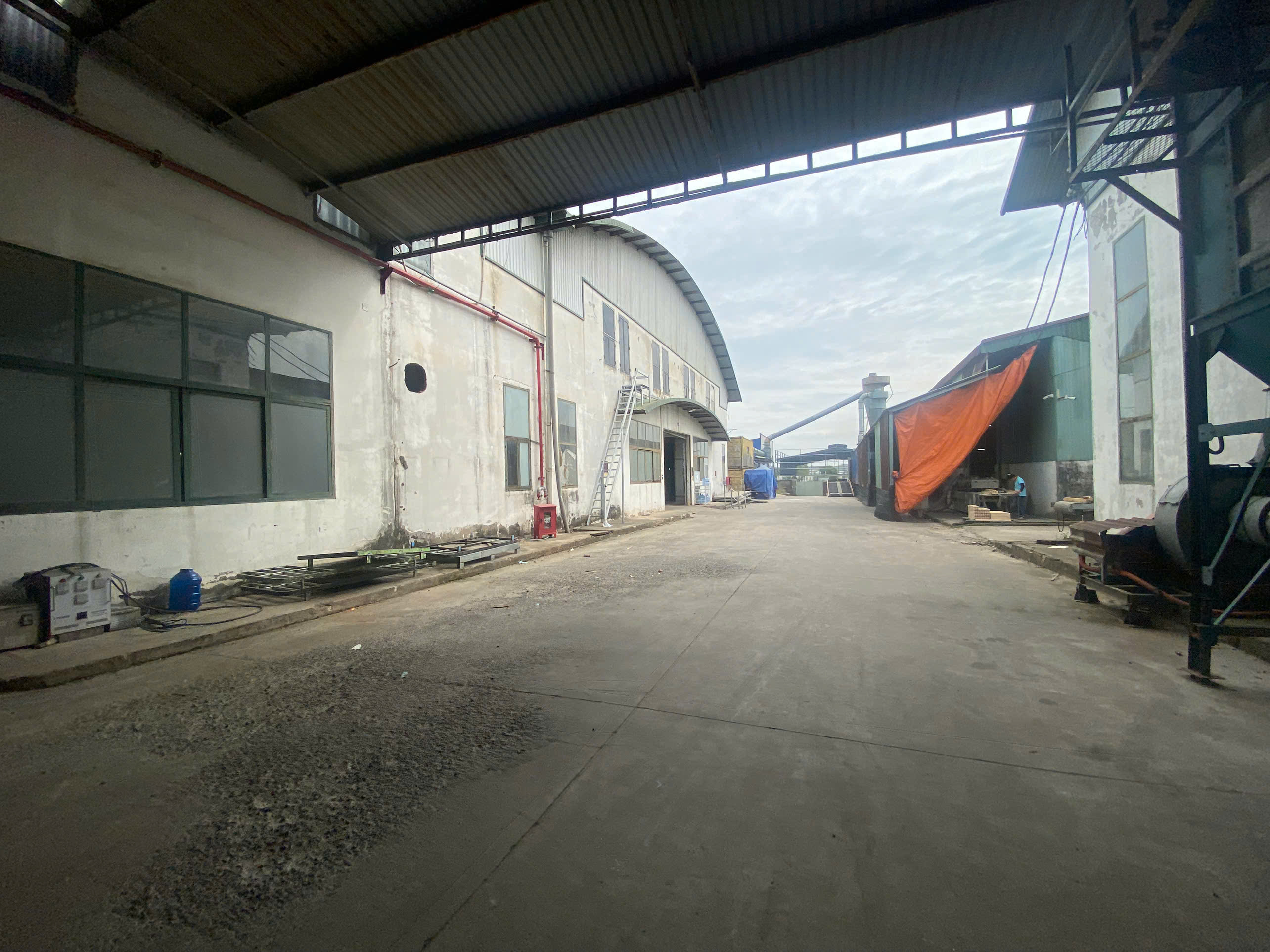
Walk the floor. Check spindle hours on CNC machines. Ask operators — not managers — how they handle material changeovers. Look at the scrap bin; it tells you how much waste the shop generates. If they claim to work with titanium but the scrap bin is all mild steel, ask harder questions. For a deeper dive into what to look for during facility visits, see our guide on how to evaluate supplier production environments when sourcing sheet metal fabrication.
What quality control benchmarks should I look for to ensure my custom parts meet strict tolerances?
One of the most painful lessons in our early projects was assuming that a supplier's ISO 9001 certification 5 meant every part would ship in spec. It doesn't. Certification is a system — not a guarantee.
Look for ISO 9001 certification as a baseline, then demand First Article Inspection (FAI) reports, in-process SPC data, CMM measurement records, non-destructive testing where applicable, documented defect rates below 1%, and on-time delivery scores above 95% — all verified through sample reports before you place a production order.

Certifications: Your First Filter
Certifications tell you whether a supplier has built a quality management system 6. They do not tell you whether the system works well on your specific part. Still, they are the fastest way to eliminate unqualified candidates.
| Certification | Industry Focus | What It Proves |
|---|---|---|
| ISO 9001:2015 | General manufacturing | Documented QMS with continuous improvement |
| AS9100D | Aerospace | Risk-based thinking, configuration management, traceability |
| IATF 16949 | Automotive | PPAP capability, FMEA discipline, statistical process control |
| NADCAP | Aerospace/Defense | Special process accreditation (welding, heat treat, NDT) |
| ISO 13485 | Medical devices | Design controls, biocompatibility documentation |
If your parts go into defense or aerospace assemblies, material certifications and full traceability from mill to finished part are non-negotiable. Ask for sample Material Test Reports (MTRs) and confirm the supplier can tie each part back to a specific heat lot.
Beyond the Certificate: Measuring Real Performance
Certificates hang on the wall. Performance lives in the data. We ask every potential supplier for three metrics before we recommend them to a client:
- Defect rate (PPM) — Parts per million defective. For mid-to-high quality requirements, target below 5,000 PPM. For aerospace fabrication, target below 500 PPM.
- On-time delivery rate — Measured against confirmed ship dates, not original request dates. Look for 95% or higher.
- First-pass yield — The percentage of parts that pass inspection without rework. This reveals true process capability.
Inspection Equipment That Matters
A shop with only calipers and tape measures cannot verify tight tolerances. For parts with ±0.05 mm requirements, you need coordinate measuring machines (CMM). For weld integrity on pressure-bearing components, you need non-destructive testing — radiographic, ultrasonic, or dye penetrant inspection. We always verify that calibration records are current. Out-of-calibration gauges are worse than no gauges at all, because they give false confidence.
The PPAP Approach
For clients who need repeatable quality across production runs, we implement Production Part Approval Process 7 (PPAP) with our suppliers. This includes control plans, process flow diagrams, measurement system analysis, and capability studies. It adds time upfront. It prevents surprises in volume production.
How do I assess a supplier's ability to manage my complex engineering requirements without communication gaps?
Last year, a client's bracket design had a critical GD&T callout — a flatness tolerance of 0.1 mm across a 300 mm span on a powder-coated steel bracket. The first supplier we trialed missed it entirely because their sales team never passed the drawing notes to the shop floor.
Assess a supplier's engineering communication by reviewing their DFM feedback quality during quoting, confirming they have English-speaking engineers (not just salespeople), requesting examples of past Engineering Change Order (ECO) management, and testing their responsiveness with a technical question before committing to any order.
Design for Manufacturability Is the Litmus Test
The single fastest way to judge supplier technical expertise is to submit a moderately complex drawing and evaluate their engineering support during the DFM response. A competent fabricator will come back with specific, actionable feedback: "This bend radius is too tight for 2 mm Inconel — we recommend 3 mm minimum to avoid cracking." A weak supplier will simply quote the drawing as-is and let problems surface during production.
Design for manufacturability 9 (DFM) review should be standard in quoting. When our engineering team in China reviews drawings before sending them to Vietnamese suppliers, we catch issues that would otherwise become expensive rework. Common DFM problems in sheet metal include:
- Bend reliefs missing near cut features
- Hole-to-edge distances too small for the material thickness
- Incompatible bend sequences that require re-fixturing
- Tolerances tighter than the process can naturally hold
Communication Structure Matters More Than Language Fluency
Perfect English doesn't fix a broken communication chain. What matters is structure. Does the supplier have a single project contact who owns your order from quote to shipment? Do they use a shared document system or project tracker? Can they provide weekly status updates without being chased?
| Communication Factor | Strong Supplier | Weak Supplier |
|---|---|---|
| DFM feedback turnaround | 24–48 hours with marked-up drawings | No feedback, or vague comments after a week |
| ECO handling | Formal revision control, impact assessment | Verbal confirmation only, no documentation |
| Project ownership | Dedicated engineer or PM assigned | Rotating sales contacts |
| Drawing interpretation | GD&T-literate engineers review specs | Sales team forwards drawings without review |
| Issue escalation | Structured CAPA process | Problems hidden until shipment |
How We Bridge the Gap
Our role in the supply chain exists precisely because of this communication problem. When we manage a project for a U.S. client, our bilingual engineers in Vietnam and China translate not just language but intent. We sit between the buyer's engineering team and the supplier's shop floor. We verify that every drawing note, every revision, and every special requirement lands in the hands of the person who actually makes the part.
This is especially critical for advanced materials. A note that says "stress relieve after forming" is meaningless if the shop floor operator doesn't understand why it matters for titanium or what temperature profile to use. Supplier technical expertise means the people touching your parts understand the metallurgy, not just the geometry.
Testing Responsiveness Before You Commit
Before awarding a production order, send a technical question by email. Something specific: "What is your recommended inside bend radius for 1.5 mm 304L stainless at 90 degrees?" Time the response. Evaluate the quality. If the answer comes back in four hours with a clear recommendation and a brief explanation, you have a partner. If it takes five days and the answer is "we can do it," keep looking.
How do I evaluate the reliability of a sheet metal supplier located in Vietnam or other Asian markets?
Three years ago, when we opened our Vietnam office, one of the first things we learned was that a factory's physical appearance can be deceiving. A clean lobby doesn't mean clean processes. A messy shop floor doesn't always mean bad parts.
Evaluate Asian supplier reliability by conducting on-site audits (or hiring a local third-party), verifying export track records with references from Western buyers, reviewing shipping and customs documentation quality, confirming lead time reliability through trial orders, and assessing financial stability to ensure long-term partnership viability.
Why Vietnam Is Gaining Traction
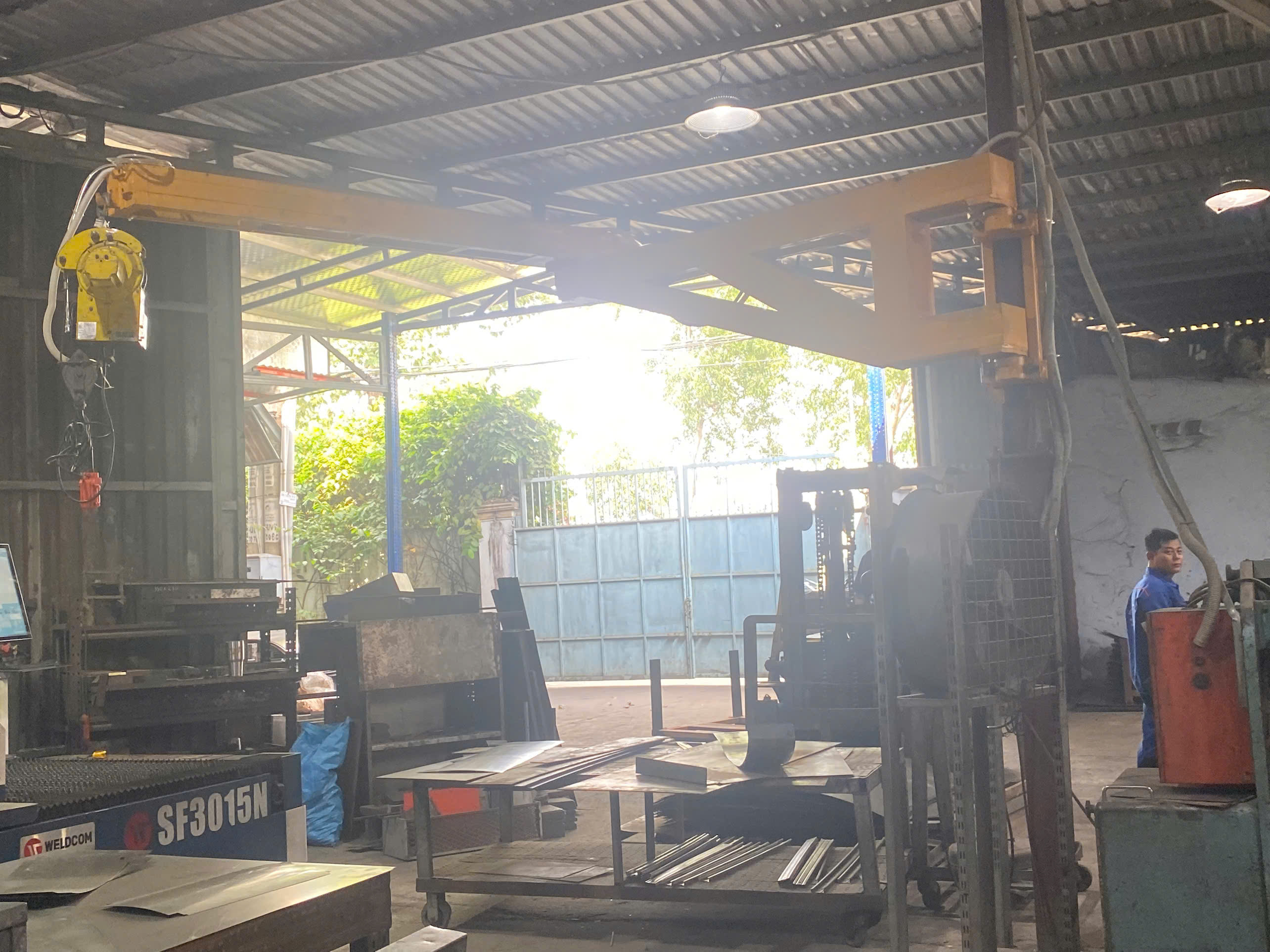
The shift toward sourcing outside of China has accelerated. Vietnam, in particular, has attracted significant investment in sheet metal fabrication capacity. Our team there sees new CNC equipment arriving at factories monthly. But capability is uneven. Some Vietnamese shops deliver ISO-quality parts with full traceability. Others struggle with basic dimensional control.
The cost-effectiveness of Vietnamese suppliers is real — often 15–25% below comparable Chinese shops for similar quality tiers. But cost means nothing if parts arrive late or out of spec.
A Step-by-Step Evaluation Framework
Here is the framework we use when qualifying a new supplier in Vietnam or elsewhere in Asia. It works for sheet metal, machined parts, and assemblies. For a more comprehensive approach, you can also learn how to build a supplier evaluation system for sourcing sheet metal fabrication.
- Certifications check — ISO 9001 at minimum. AS9100D or IATF 16949 if your application demands it.
- Equipment audit — Match their machine list against your process requirements. Visit in person or via live video.
- DFM test — Submit a real drawing and evaluate their technical response.
- Quality system review — Request sample FAI reports, control plans, and inspection records from recent jobs.
- Trial order — Start with a small batch. Measure every part. Compare actual vs. quoted lead time.
- Reference calls — Ask for 3–5 contacts who buy similar parts. Ask about delivery, communication, and problem resolution.
- Financial stability — Request business registration documents, bank references, or credit reports where available.
- IP protection — Review their data handling practices, NDA willingness, and facility access controls.
Lead Time Reliability: The Hidden Risk
Late delivery is the number one pain point we hear from U.S. purchasing managers sourcing from Asia. Lead time reliability depends on several factors: raw material availability, production scheduling discipline, and logistics coordination.
For advanced materials like Inconel or titanium plate, lead times can stretch because the material itself has long procurement cycles. A good supplier will flag this during quoting and offer to hold safety stock or pre-order material once a forecast is in hand.
We track on-time delivery for every supplier in our network. If a factory drops below 90% on-time over a rolling six-month period, we escalate or replace them. Our clients — many of whom run just-in-time operations — cannot absorb repeated delays.
Digital Integration and Traceability
The industry is moving toward digital manufacturing platforms that offer instant quoting, automated DFM analysis, and real-time production monitoring. Some platforms claim lead times as short as three business days with no minimum order quantities. These can work well for simple parts in standard materials.
For complex projects with advanced alloys, tight tolerances, and multi-step processes, a human-managed supply chain still wins. The key is combining digital tools (ERP integration, shared dashboards, digital drawing management) with experienced project managers who understand both the engineering and the culture.
Sustainability and Long-Term Thinking
More buyers now ask about sustainability practices — responsible sourcing, energy efficiency, recyclability of scrap material. While this is still emerging in Southeast Asian markets, leading suppliers are investing in waste reduction, solar panels, and documented environmental management systems. If lifecycle assessment (LCA) data matters for your product, ask early. Not every supplier can provide it yet, but the best ones are building that capability.
Conclusion
Evaluating sheet metal fabrication suppliers for advanced materials demands structured diligence — verify equipment, audit quality systems, test communication, and validate reliability through trial orders before scaling production.
Frequently Asked Questions
How can I verify if a supplier has the specialized machinery needed for my advanced sheet metal alloys?
A buyer once sent us a drawing for a radar housing made from Inconel 625 2 — and the first two factories we visited didn't even own a fiber laser 3 rated for that thickness. Equipment gaps hide in plain sight.
What quality control benchmarks should I look for to ensure my custom parts meet strict tolerances?
One of the most painful lessons in our early projects was assuming that a supplier's ISO 9001 certification 5 meant every part would ship in spec. It doesn't. Certification is a system — not a guarantee.
How do I assess a supplier's ability to manage my complex engineering requirements without communication gaps?
Last year, a client's bracket design had a critical GD&T callout — a flatness tolerance of 0.1 mm across a 300 mm span on a powder-coated steel bracket. The first supplier we trialed missed it entirely because their sales team never passed the drawing notes to the shop floor.
Footnotes
1. Explains the complex processes involved in titanium fabrication. ↩︎
2. Provides detailed information on the properties and applications of Inconel 625. ↩︎
3. Authoritative and comprehensive overview of fiber laser technology. ↩︎
4. Describes the operation, setup, and importance of CNC press brakes. ↩︎
5. Official information on ISO 9001 certification and its purpose. ↩︎
6. Defines a quality management system and its role in achieving quality objectives. ↩︎
7. Provides the industry standard for the Production Part Approval Process (PPAP). ↩︎
8. Explains the process and importance of First Article Inspection in manufacturing. ↩︎
9. Outlines the principles and benefits of Design for Manufacturability (DFM). ↩︎