
Finding the right partner to evaluate sheet metal fabrication suppliers for low-volume custom work is harder than most purchasing managers expect First Article Inspection (FAI) reports 1. I learned this the hard way when a client’s mounting brackets — similar to the precision-bent, multi-hole components we regularly source — arrived with every bend angle off by two degrees. The supplier had great pricing. They had ISO certificates on their website. But they had zero experience with short runs, and it showed in every part CMMs 2. The problem isn’t a shortage of fabricators; it’s that most shops are built for volume. When you need 50 pieces instead of 5,000, you’re fighting their entire business model.
To evaluate sheet metal fabrication suppliers for custom low-volume orders, verify their quality management system, confirm in-house capabilities for critical processes, assess tolerance precision, check MOQ flexibility, compare total program cost rather than piece price alone, and involve your engineering team in final selection.
This article breaks down the exact criteria, questions, and red flags I use when screening fabricators for clients who need small-batch sheet metal parts sourced from Southeast Asia and beyond. Let’s walk through each area step by step.
How can I verify that a sheet metal supplier has the right quality control for my low-volume custom parts?
A lesson we learned early in our Vietnam office: a supplier's quality certificate on the wall means nothing if the shop floor tells a different story. Verification requires digging deeper than documents.
Verify quality control by requesting recent ISO 9001 or AS9100 audit reports, asking for sample First Article Inspection (FAI) reports, confirming in-house inspection equipment like CMMs, and checking whether their quality management system is actively followed — not just documented on paper.

Why Certification Recency Matters
Many fabricators hold ISO 9001 certificates 3. But a certificate issued three years ago with no surveillance audit records is a warning sign. I always ask for the most recent audit report, not just the certificate itself. Active quality management system 4s require annual reviews and continuous improvement logs. If a supplier cannot produce these, their certification may be cosmetic.
In-Process vs. Post-Manufacturing Checks
For low-volume custom parts, post-manufacturing inspection alone is not enough. By the time you catch a defect at final inspection, you may have scrapped the entire batch. Effective suppliers run in-process checks at critical stages — after laser cutting, after bending, after welding. When our team audits suppliers, we look for documented inspection points at each process step.
Here is what I look for in a quality system audit:
| Quality Control Element | What to Ask For | Red Flag |
|---|---|---|
| ISO 9001 / AS9100 certificate | Current certificate with valid dates and registrar name | Expired or no surveillance audit records |
| First Article Inspection (FAI) | Sample FAI report from a recent job | Supplier says "we don't do FAI for small orders" |
| In-process inspection records | Documented checkpoints at cutting, bending, welding | No written inspection plan per part number |
| Measuring equipment | CMM, calipers, height gauges, surface roughness testers | Reliance on visual inspection only |
| Non-conformance tracking | NCR log with corrective actions | No system for tracking or resolving defects |
| Material traceability | Mill certificates matched to incoming material | Cannot provide material certificates on request |
The Site Visit Question
I know many U.S. buyers cannot easily visit a factory in Vietnam or elsewhere in Southeast Asia. That is exactly why we maintain local teams — our 7-person office in Vietnam conducts supplier audits on behalf of clients. If you cannot visit yourself, insist that someone qualified inspects the shop floor. Photos of equipment are not enough. You need to see whether gauges are calibrated, whether work instructions are posted at stations, and whether operators actually follow them. Certifications and compliance documents are the starting point, not the finish line. For a deeper dive into what to look for, see our guide on how to evaluate sheet metal fabrication supplier capabilities and qualifications.
What technical questions should I ask to ensure the fabricator understands my complex drawing requirements?
One of our clients once sent drawings with GD&T callouts 5, specific weld symbols, and tight bend tolerances to three different fabricators. Two quoted without a single clarification question. The third came back with five technical questions within 48 hours. Guess which one delivered conforming parts?
Ask about their standard tolerances for dimensions and bends, whether they perform DFM analysis before quoting, how they interpret GD&T callouts, what bend radii their tooling supports, and whether they have experience with your specific material grade and thickness. A fabricator who asks you questions is often better than one who doesn’t.

The Questions That Reveal True Capability
Design for manufacturability feedback 6 is the single best indicator that a fabricator understands your drawings. When we send RFQs on behalf of clients, we track which suppliers respond with DFM suggestions. A shop that flags a tight bend radius near a hole, or suggests moving a feature to avoid tooling interference, demonstrates real process knowledge.
Here are the technical questions I recommend asking during your RFQ:
| Question to Ask | What a Good Answer Sounds Like | What a Bad Answer Sounds Like |
|---|---|---|
| What are your standard dimensional tolerances? | "±0.25 mm on cut dimensions, ±1° on bends per ISO 2768 7" | "We can hold whatever you need" (no specifics) |
| Do you provide DFM feedback before production? | "Yes, we review every drawing and flag manufacturability concerns" | "We just follow the drawing" |
| What materials and thicknesses do you run regularly? | Specific list of materials with thickness ranges | Vague answer or "we can do anything" |
| How do you handle GD&T callouts? | "Our QC team is trained in GD&T interpretation and we inspect to those datums" | Confusion about what GD&T means |
| What is your minimum bend radius by material? | Specific values tied to tooling and material grade | No clear answer |
| Can you provide a process plan before we approve production? | "Yes, we issue a process routing for review" | "We'll figure it out when we start" |
Tolerance Capability and Special Processes
Standard sheet metal tolerances sit around ±0.5 mm on dimensions and ±1° on bend angles. For tighter specs, special processes may be required — CNC machining after forming, precision fixturing during welding, or post-weld stress relief. I always ask whether the supplier has handled similar tolerance requirements before. If they haven't, they are learning on your parts, and that is a risk.
Material selection also matters more than many buyers realize. A fabricator experienced with mild steel may struggle with stainless steel springback or aluminum cracking at tight bends. The angular mounting brackets with complex folds and multiple bend sequences that we regularly source demand fabricators who understand how material properties affect final dimensions. Ask for examples of similar parts they have produced.
In-House vs. Subcontracted Processes
For critical steps like welding, surface finishing, or heat treatment, I want to know whether the work stays in-house or goes to a subcontractor. Subcontracting is not inherently bad, but it introduces variables. When a fabricator sends parts out for powder coating or sandblasting and something goes wrong, accountability gets murky. Our project management approach tracks every subcontracted step and requires the primary supplier to maintain quality ownership.
How do I assess if a supplier is truly committed to prioritizing my small-batch orders over larger production runs?
A buyer I work with in the Midwest once waited nine weeks for 30 brackets from a fabricator that had quoted three weeks. When he called, he learned his job kept getting bumped for a 10,000-piece order. This is the hidden risk of choosing production-focused shops for low-volume work.
Assess small-batch commitment by checking the supplier’s minimum order quantity policies, asking what percentage of their revenue comes from low-volume orders, confirming dedicated capacity or scheduling buffers for short runs, and verifying that their quoting process does not penalize small quantities with inflated setup charges.
Prototype-Friendly vs. Production-Only Shops
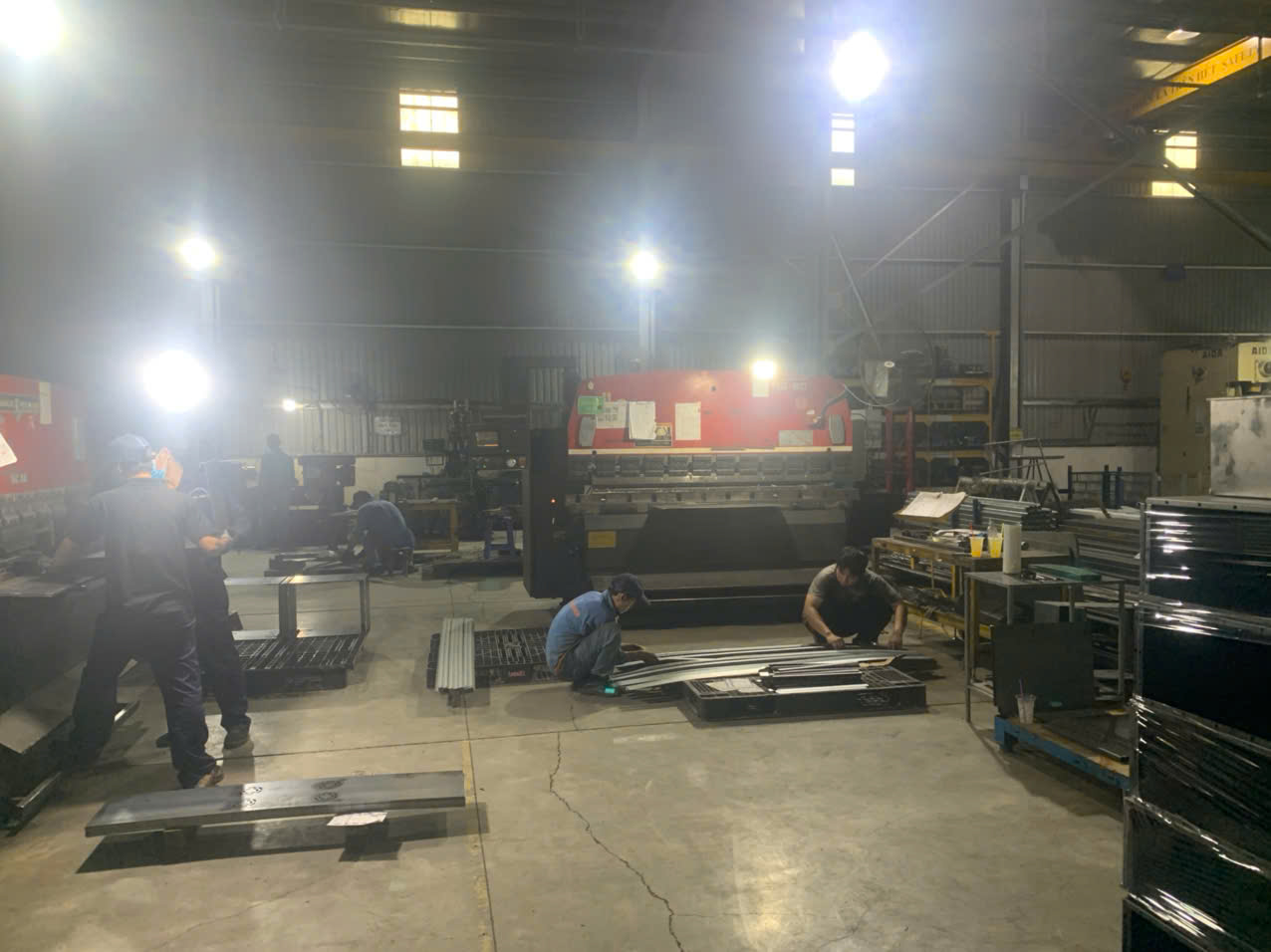
Not every fabricator is set up for your project stage. A prototype-friendly shop keeps programming and setup lean, runs flexible tooling, and quotes single quantities without hesitation. A production-only shop optimizes for long runs and will either decline your small order or quote a premium that makes the project uneconomical.
Here is how to tell the difference:
| Characteristic | Prototype-Friendly Shop | Production-Only Shop |
|---|---|---|
| Minimum order quantity | 1–10 pieces, or no MOQ | 100–500 piece minimums |
| Setup cost approach | Absorbed into piece price or minimal NRE | High setup charges amortized over volume |
| Lead time for 25 pieces | 3–7 days for simple parts, 1–2 weeks with finishing | 3–6 weeks (queued behind larger jobs) |
| Revision handling | Expects and accommodates design changes | Charges change fees, resists mid-run revisions |
| Quoting speed | 24–48 hours | 1–2 weeks |
| Revenue mix | Significant portion from short runs | 90%+ from production volumes |
The Capacity and Buffer Question
I ask every potential supplier: "What is your current capacity utilization?" A shop running at 95% capacity has no room for your urgent order. A shop at 70–80% has buffer for disruptions and expedites. For low-volume work, that buffer is critical because your order will never be the biggest job on the floor.
Lead time expectations vary by complexity. Simple flat parts with no finishing might ship in 3–5 days. Parts with multiple bends, welding, and powder coating — like the gunmetal grey brackets with sandblasted finish that we source — realistically need 1–3 weeks. If a supplier quotes faster than these benchmarks, ask how. Prototyping services that promise speed need to back it up with dedicated scheduling, not just optimistic estimates. Understanding how to evaluate sheet metal fabrication MOQs for low-volume OEM sourcing can help you separate genuinely flexible suppliers from those that will deprioritize your orders.
Cost-Effectiveness in Small Batches
Pricing transparency matters enormously for batch production in small quantities. I always request multi-quantity pricing: quote me 10, 25, 50, and 100 pieces. This reveals how the supplier structures their costs. Watch for these line items:
- Setup / programming fees: Should be reasonable and clearly stated
- Finishing costs: Powder coating, anodizing, or plating should be itemized
- Shipping: Door-to-door or FOB? Domestic or international freight included?
- Expedite premiums: A 10–20% premium for rush orders is standard; anything higher deserves scrutiny
The goal isn't finding the cheapest piece price. It's understanding total program cost and risk. A part that costs $2 more per piece but arrives on time, in spec, with full traceability, saves you far more than the premium.
Can I secure open account payment terms when sourcing low-volume sheet metal fabrication from Southeast Asia?
This is one of the most frequent questions I hear from U.S. purchasing managers, and it's one where our approach differs from most sourcing agents. Payment terms directly affect cash flow, and for companies running lean, wiring 100% upfront to an overseas supplier is a real barrier.
Yes, open account payment terms like Net 30 to Net 60 are achievable when sourcing from Southeast Asia, but typically only through established intermediaries or trading partners with creditworthy track records, local presence, and the financial infrastructure to extend credit on behalf of the factory.
Why Factories Rarely Offer Credit Directly
Most sheet metal fabrication shops in Vietnam, Thailand, or Malaysia operate on thin margins. They cannot afford to extend Net 60 terms to a foreign buyer they've never met. The standard payment structure for direct factory orders is typically 50% deposit, 50% before shipment — or sometimes 30/70. This protects the factory but strains the buyer's cash flow, especially on recurring low-volume orders.
How We Bridge the Gap
Because DEWIN is headquartered in Singapore with established financial relationships, we can offer open account terms — typically Net 30 to Net 60 — to qualified U.S. clients. We pay the factory on their terms and extend credit to the buyer. This is one of the key advantages of working through a supply chain partner rather than going direct. It's not just about cost-effectiveness; it's about making the commercial terms workable for both sides.
Domestic vs. Overseas: A Decision Framework
Payment terms are just one factor in the domestic vs. overseas decision. Here is how I frame the trade-offs for clients considering sourcing sheet metal fabrication for the first time:
| Factor | Domestic (U.S.) Supplier | Overseas (Southeast Asia) via Partner |
|---|---|---|
| Piece price | Higher (baseline) | 30–50% lower |
| Lead time | 1–3 weeks | 3–6 weeks (including shipping) |
| Communication | Same time zone, same language | Managed by local team (English-speaking) |
| Payment terms | Net 30 standard | Net 30–60 through intermediary like DEWIN |
| Quality oversight | Easier to visit | Requires local audit team or partner |
| IP protection | Stronger legal framework | Requires NDA enforcement and trusted partner |
| Supplier track record verification | Easier via references | Requires on-ground due diligence |
For urgent prototypes where speed is the primary constraint, domestic often wins. For recurring low-volume production where cost matters and you have a 4–6 week planning horizon, Southeast Asia offers compelling value — especially when your supply chain partner handles project management, PPAP documentation 8, process control, and final inspection before shipment.
The Total Program Risk Perspective
I encourage every buyer to move beyond piece price comparisons. The real question is: what is my total landed cost, including quality risk, rework probability, communication overhead, and payment terms? A supplier that costs 15% more but delivers right-first-time parts with open account terms and proactive communication may be the lower-risk, lower-total-cost option.
Involve your engineering and operations teams in the final supplier selection — not just procurement. Engineers catch technical gaps that purchasing managers might miss. Operations teams understand the downstream impact of late or non-conforming parts. The best supplier evaluations I've participated in bring all three perspectives to the table.
Conclusion
Evaluating sheet metal fabrication suppliers for low-volume custom orders demands more than comparing quotes. Verify quality systems on the shop floor, ask the technical questions that reveal true capability, confirm small-batch commitment, and structure commercial terms that support your cash flow. Focus on total program risk, bring engineering into the decision, and partner with teams who carry process knowledge from prototype through production.
Frequently Asked Questions
How can I verify that a sheet metal supplier has the right quality control for my low-volume custom parts?
A lesson we learned early in our Vietnam office: a supplier's quality certificate on the wall means nothing if the shop floor tells a different story. Verification requires digging deeper than documents.
What technical questions should I ask to ensure the fabricator understands my complex drawing requirements?
One of our clients once sent drawings with GD&T callouts 5 , specific weld symbols, and tight bend tolerances to three different fabricators. Two quoted without a single clarification question. The third came back with five technical questions within 48 hours. Guess which one delivered conforming parts?
How do I assess if a supplier is truly committed to prioritizing my small-batch orders over larger production runs?
A buyer I work with in the Midwest once waited nine weeks for 30 brackets from a fabricator that had quoted three weeks. When he called, he learned his job kept getting bumped for a 10,000-piece order. This is the hidden risk of choosing production-focused shops for low-volume work.
Footnotes
1. Explains the purpose and components of a First Article Inspection. ↩︎
2. Describes Coordinate Measuring Machines and their use in quality control. ↩︎
3. Official information on the ISO 9001 quality management standard. ↩︎
4. Provides a comprehensive definition and overview of quality management systems. ↩︎
5. Official standard for Geometric Dimensioning and Tolerancing in engineering drawings. ↩︎
6. Explains the concept of Design for Manufacturability and its benefits. ↩︎
7. Official information on the ISO 2768 standard for general tolerances. ↩︎
8. Official resource for the Production Part Approval Process (PPAP) in the automotive industry. ↩︎
9. Replaced HTTP 403 with an authoritative .gov source explaining ‘open account payment terms’ in international trade. ↩︎