
I learned this lesson the hard way: a client shipped 2,000 custom brackets to the US only to discover every single bend angle was off by two degrees — the supplier had skipped a basic first-article check. The rework cost more than the original order. That experience drove me to build a rigorous framework for evaluating sheet metal suppliers, one I now apply every time we source complex structural components from factories across Vietnam and broader Asia.
To evaluate sheet metal suppliers for complex custom structural parts, verify their in-house fabrication capabilities, confirm relevant industry certifications, assess design for manufacturability support, review their quality control systems and PPAP readiness, and calculate total cost of ownership rather than chasing the lowest unit price.
This article walks you through the exact criteria I use when qualifying a new sheet metal supplier — from engineering expertise to payment flexibility. Each section tackles a real concern that purchasing managers raise with us every week.
How do I assess if a supplier has the engineering expertise to handle my complex structural designs?
A few months ago, a buyer sent us a drawing for a pair of mirrored mounting brackets — the kind with sharp multi-axis bends, irregular cutouts, and tight dimensional tolerances on every mounting hole. Two of the three candidate factories we contacted couldn't even read the GD&T callouts correctly. That experience reminded me why engineering expertise is the first filter, not the last.
Assess a supplier's engineering expertise by reviewing their DFM feedback quality, checking if they own advanced CNC and laser equipment, asking for similar project case studies, and running a paid prototype trial before committing to production volumes.
Start with Their DFM Response
The fastest way to gauge engineering depth is to send a moderately complex drawing and request a design for manufacturability review. A capable supplier will come back with specific, actionable feedback — not generic comments. They should flag issues like bend relief requirements 1, grain direction concerns, minimum flange lengths, and whether the part can be formed from a single sheet or needs welding.
When our team in Vietnam evaluates a new factory, we deliberately include a tricky feature in the test drawing — say, an internal bend radius smaller than the material thickness. A good supplier catches it. A weak one quotes it without comment, which tells us everything.
Verify Equipment and Technology
Complex structural parts demand specific machines. Here is what I look for on a factory walk-through:
| Equipment | Why It Matters for Complex Parts |
|---|---|
| Fiber laser cutter | Clean cuts on thick and thin gauge, tight contour tolerances |
| CNC press brake (multi-axis) | Accurate bend angles on compound forms |
| TIG / MIG welding stations | Structural joint integrity with minimal distortion |
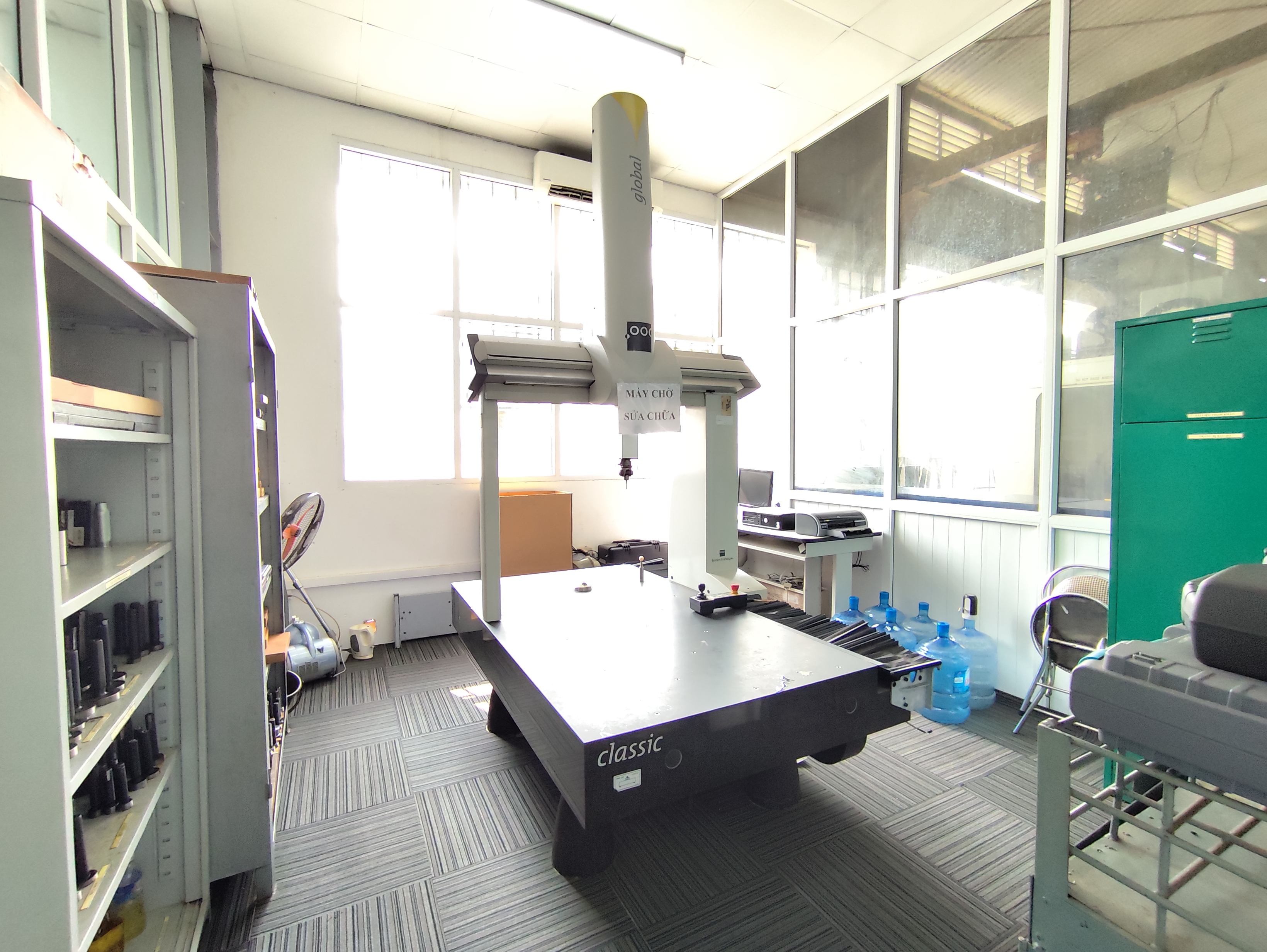
| CMM (Coordinate Measuring Machine) 2 | Dimensional verification against GD&T |
| Deburring and surface finishing line | Consistent edge quality and coating adhesion |
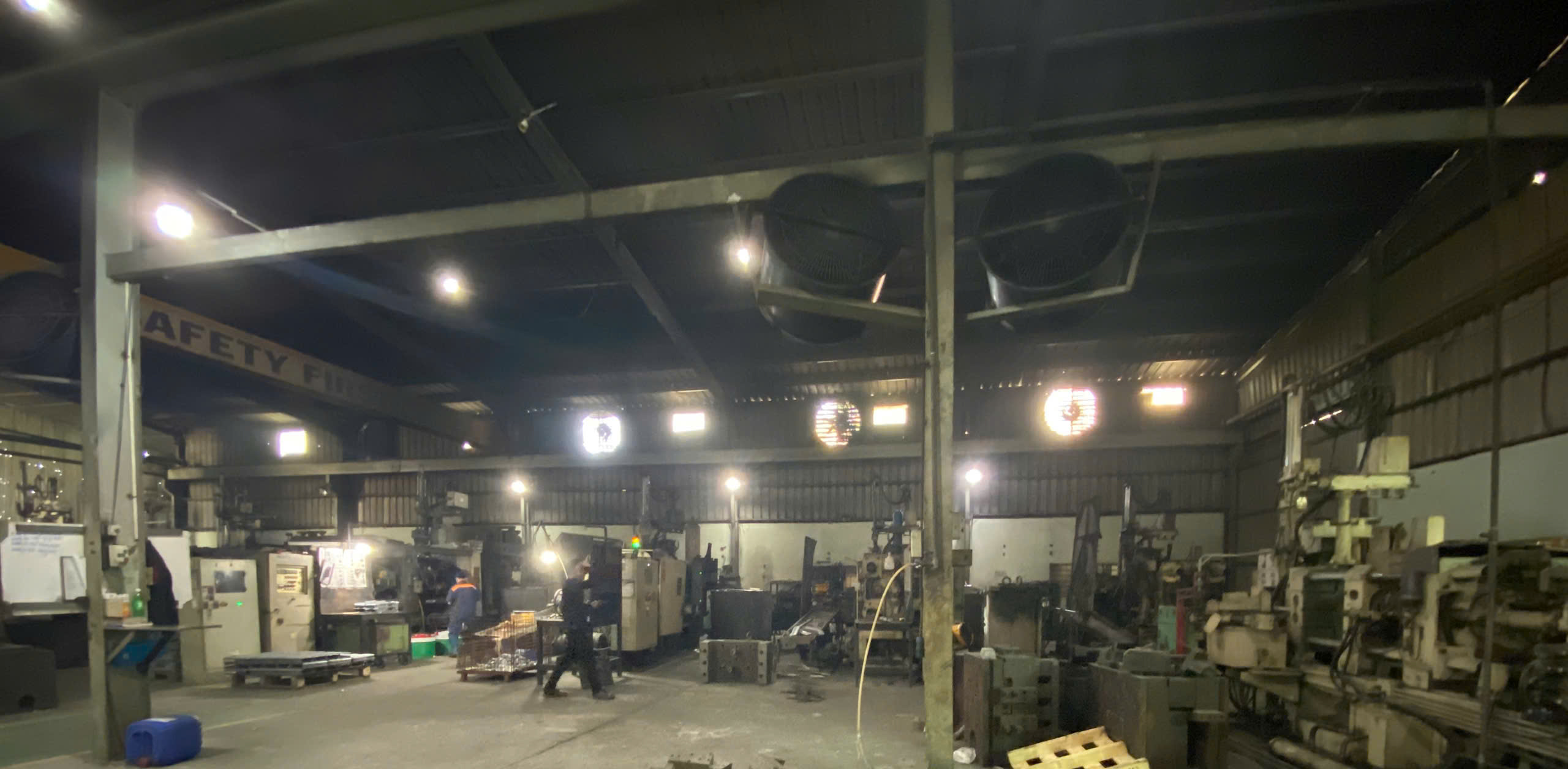
If a supplier outsources laser cutting or welding, that adds lead time and a quality handoff risk. I always prefer factories that keep critical processes in-house.
Ask for Relevant Case Studies and Customer References
Experience with similar complexity matters more than total years in business. I ask for photos, inspection reports, or even reject-rate data from past projects involving multi-bend structural brackets, heavy-gauge housings, or parts with weld-and-machine sequences. Customer references from buyers in similar industries — automotive, industrial equipment, or construction — add confidence.
Run a Paid Prototype Trial
Nothing replaces a real test. Before we place a production order on behalf of a US client, we commission a small prototype batch — usually five to ten pieces. We measure every critical dimension, inspect weld penetration, and test fit against mating components. This prototyping services step costs a fraction of a failed production run and reveals the supplier's true capability under real conditions.
A supplier who resists a paid trial or delivers prototypes with obvious deviations is unlikely to improve at volume. Move on.
What quality control and PPAP processes should I expect to ensure my parts are right the first time?
One phrase I hear from nearly every US purchasing manager we work with: "I need it right the first time." Greg, a long-time client, once told me he spent more time managing supplier rework than managing his own customers. That is a systemic problem, and the root cause is almost always weak quality control systems 3 at the supplier level.
Expect suppliers to follow a formal PPAP process — including control plans, process flow diagrams, measurement system analysis, and first-article inspection reports — backed by ISO 9001 certification at minimum, with documented in-process and final inspection checkpoints.
What PPAP Really Means for Sheet Metal
PPAP — Production Part Approval Process 4 — originated in automotive but applies to any custom structural part where consistency matters. It is not paperwork for paperwork's sake. It is a structured way to prove that the supplier's process can repeatedly produce parts within specification.
Here are the PPAP elements I consider essential for sheet metal structural parts:
| PPAP Element | Purpose |
|---|---|
| Process Flow Diagram | Maps every step from raw material to shipping |
| Control Plan | Defines what gets checked, how often, and by whom |
| PFMEA (Process Failure Mode and Effects Analysis) | Identifies risk points before production starts |
| Dimensional Results (FAI) | First-article inspection proving parts meet drawing specs |
| Material Certification | Confirms alloy, temper, and thickness — ensures material traceability |
| MSA (Measurement System Analysis) | Validates that gauges and instruments are reliable |
| Appearance Approval | Confirms surface finish, color, and cosmetic standards |
When we manage a project for a client, our quality team in Vietnam or China reviews every element before we approve the supplier to move from trial to production. This supplier qualification process takes time upfront but prevents the cycle of rework and returns that erodes margins.
In-Process vs. Final Inspection
A common mistake is relying only on final inspection. By then, it is too late — you have a pile of finished parts and no way to fix a systemic issue without scrapping or reworking the lot.
I insist on in-process checkpoints. For a complex bracket, that might mean:
- Checking blank dimensions after laser cutting
- Verifying bend angles after each forming operation
- Inspecting weld joints before surface treatment
- Measuring critical hole positions on a CMM before packing
Our inspectors use a risk assessment approach: features with tight tolerances or high functional impact get checked more frequently. Features with generous tolerances get sampled.
Industry Certifications as a Baseline
ISO 9001 is the minimum. For aerospace structural parts, AS9100 5 is expected. For automotive, IATF 16949. These certifications do not guarantee perfection, but they confirm that the supplier has a documented quality management system 6 and submits to external audits. I treat them as a baseline filter — not a substitute for our own audits and inspections.
Why should I consider diversifying my sheet metal supply chain to Vietnam for better risk management?
Last year, a tariff adjustment on Chinese-origin steel components caught several of our clients off guard. Orders that were already in production suddenly carried an extra 25% duty. The clients who had already qualified a backup source in Vietnam pivoted within weeks. The ones who hadn't scrambled for months.
Diversifying your sheet metal supply chain to Vietnam reduces tariff exposure, shortens lead time management risks from single-country dependence, and gives you a qualified alternative source — which strengthens your negotiating position and protects delivery schedules during trade disruptions.
The Case for a China-Plus-One Strategy
Most US buyers I work with still source heavily from China. That makes sense — China has deep fabrication capabilities, mature supply chains, and competitive pricing. But concentrating 100% of supply in one country is a single point of failure. Trade policy shifts, port congestion, or regional lockdowns can halt your entire pipeline.
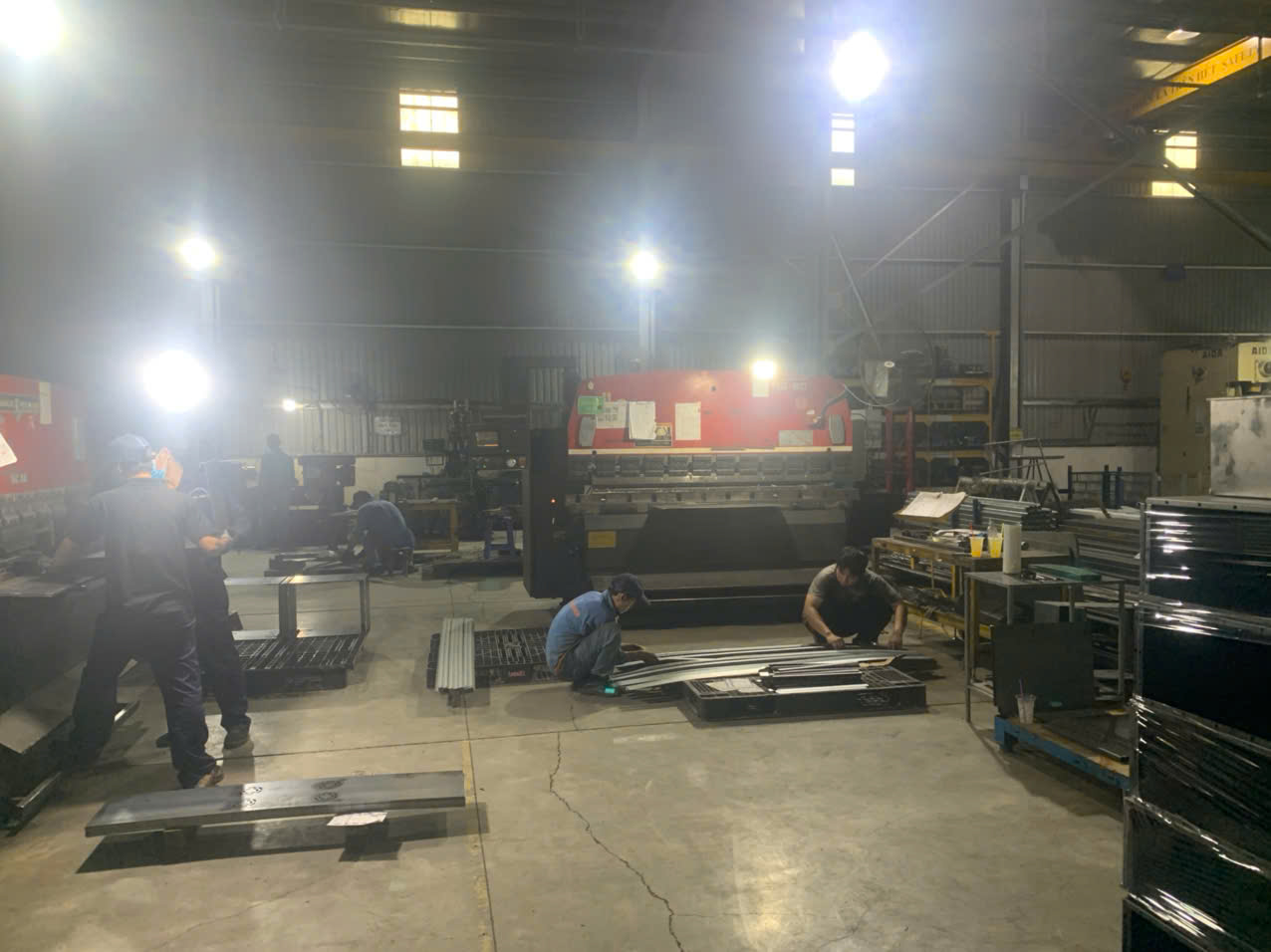
Vietnam has emerged as the leading "plus one" destination for sheet metal and custom parts. Our office in Ho Chi Minh City works directly with Vietnamese factories that now operate CNC press brakes 7, fiber lasers, and robotic welding cells comparable to mid-tier Chinese shops.
Comparing Vietnam and China for Sheet Metal Structural Parts
| Factor | China | Vietnam |
|---|---|---|
| Fabrication maturity | Very high — decades of experience | Growing fast — strong in mid-complexity |
| Tariff exposure (US imports) | High — subject to Section 301 duties | Low — benefits from USFTA negotiations |
| Labor cost | Rising steadily | Still competitive |
| Lead time to US West Coast | 18–25 days by sea | 20–28 days by sea |
| English communication | Variable | Improving, especially in industrial zones |
| Supplier density | Extremely high | Moderate but expanding |
| Our local team presence | 21 employees | 7 employees |
How We Help Clients Diversify
Diversification does not mean dropping your existing Chinese supplier overnight. It means qualifying a second source in parallel. Here is the process we follow:
- Identify candidate factories in Vietnam with relevant equipment and certifications.
- Conduct a supplier audit — our local team visits the facility, reviews quality systems, and checks capacity.
- Run a pilot project — we place a small order for the same part currently sourced from China and compare quality, lead time, and communication.
- Build a dual-source plan — allocate volume based on risk tolerance, tariff impact, and delivery requirements.
This approach turns supply chain risk into a manageable variable rather than an unpredictable crisis.
Beyond Tariffs: Other Risk Factors
Risk assessment for your supply chain should also consider intellectual property protection, logistics reliability, and currency fluctuation. Vietnam's legal framework for IP is less mature than China's, but for standard structural components — brackets, housings, frames — the risk is manageable. We mitigate it by controlling drawings centrally and limiting each supplier's visibility into the full assembly.
How can I secure flexible payment terms to manage my cash flow when ordering custom structural components?
A conversation I had with a purchasing manager last quarter stuck with me. He said: "I know the Vietnamese supplier is better, but I can't prepay 50% on a $120,000 order and wait 60 days for delivery. My CFO won't approve it." Cash flow constraints kill good sourcing decisions every day.
Secure flexible payment terms by working with suppliers or supply chain partners who offer open account terms — typically net 60 or net 90 days — so you receive and inspect parts before payment is due, reducing both financial risk and cash flow pressure on custom structural orders.
Why Payment Terms Matter More Than Unit Price
I have seen buyers choose a supplier with a 5% lower unit price but 50% prepayment terms. When you factor in the cost of capital, the prepayment risk, and the lost leverage if parts arrive defective, that "cheaper" supplier often costs more. Total cost of ownership 8 includes financing cost.
Our approach at DEWIN is to offer qualified US clients open account terms 9 — net 60 or net 90 — because we understand the cash cycle of a sourcing business. You order custom parts, wait for production and shipping, receive goods, inspect them, and only then invoice your end customer. Paying your supplier before you even ship to your customer creates a cash gap that compounds with every order.
Common Payment Structures Compared
| Payment Structure | Cash Flow Impact | Risk to Buyer | Typical Use Case |
|---|---|---|---|
| 100% prepayment | Severe — all cash out before delivery | High — no leverage if quality fails | Small orders, new/unverified suppliers |
| 50% deposit + 50% before shipment | Moderate — large outlay before receipt | Medium — partial leverage | Standard factory-direct orders |
| 30/70 (deposit/balance on delivery) | Better — majority paid after receipt | Lower — inspection before final payment | Established supplier relationships |
| Net 60 open account | Minimal — pay after receipt and inspection | Low — full inspection before payment | Trusted partners, supply chain intermediaries |
| Net 90 open account | Optimal — aligns with buyer's own receivables | Very low | Long-term partnerships with credit-worthy buyers |
How to Qualify for Open Account Terms
Not every supplier or intermediary offers credit. Here is what we typically evaluate before extending open account terms to a client:
- Order history — Have we completed successful projects together?
- Company creditworthiness — Basic due diligence on the buyer's financial stability.
- Order volume and regularity — Consistent ordering patterns reduce our risk.
- Communication responsiveness — Clients who communicate proactively are lower risk partners.
If you are a purchasing manager at a US sourcing company, ask your potential suppliers directly: "Do you offer net 60 or net 90 terms?" If the answer is no, ask whether a supply chain partner like DEWIN can sit between you and the factory to bridge that gap. We handle the factory payment on our end and extend credit to you — so you pay only after parts arrive and pass inspection.
Aligning Payment with Quality Gates
One structure I recommend is tying payment milestones to quality gates. For example, final payment releases only after the first-article inspection report is approved. This protects the buyer and motivates the supplier to get it right the first time. It turns payment terms from a pure financial instrument into a quality incentive.
Conclusion
Evaluating sheet metal suppliers for complex custom structural parts comes down to engineering depth, quality discipline, supply chain resilience, and financial flexibility. Get these four pillars right, and you build a sourcing partnership that delivers reliable parts — right the first time, every time. For a broader perspective on choosing the right sheet metal fabrication service provider, consider how these criteria fit into your overall sourcing strategy.
Frequently Asked Questions
How do I assess if a supplier has the engineering expertise to handle my complex structural designs?
A few months ago, a buyer sent us a drawing for a pair of mirrored mounting brackets — the kind with sharp multi-axis bends, irregular cutouts, and tight dimensional tolerances on every mounting hole. Two of the three candidate factories we contacted couldn't even read the GD&T callouts correctly. That experience reminded me why engineering expertise is the first filter, not the last.
What quality control and PPAP processes should I expect to ensure my parts are right the first time?
One phrase I hear from nearly every US purchasing manager we work with: "I need it right the first time." Greg, a long-time client, once told me he spent more time managing supplier rework than managing his own customers. That is a systemic problem, and the root cause is almost always weak quality control systems 3 at the supplier level.
Why should I consider diversifying my sheet metal supply chain to Vietnam for better risk management?
Last year, a tariff adjustment on Chinese-origin steel components caught several of our clients off guard. Orders that were already in production suddenly carried an extra 25% duty. The clients who had already qualified a backup source in Vietnam pivoted within weeks. The ones who hadn't scrambled for months.
Footnotes
1. Provides technical details on sheet metal design for manufacturing. ↩︎
2. Explains a crucial quality inspection tool in manufacturing. ↩︎
3. Defines the fundamental processes for ensuring product quality. ↩︎
4. Explains a critical automotive quality management standard. ↩︎
5. Provides information on a specific quality standard for aerospace. ↩︎
6. Defines the framework for managing quality processes. ↩︎
7. Describes a key piece of equipment in sheet metal fabrication. ↩︎
8. Wikipedia provides a comprehensive and accessible definition of Total Cost of Ownership. ↩︎
9. Explains a common payment method in international trade. ↩︎