

Choosing the wrong supplier for large-scale welded structural assemblies can cost you months of delays and thousands in rework — I’ve seen it happen to clients we later helped recover.
To evaluate sheet metal suppliers for large-scale welded structural assemblies, verify their welding certifications, inspect their equipment and floor capacity, assess their project management rigor, review their quality control processes, and confirm logistics reliability — prioritizing total cost of ownership over piece price.
This article walks through the critical checkpoints our team uses when auditing fabrication partners across Asia ISO 9001 quality management system 1. Each section targets a specific risk area that purchasing managers face when sourcing complex welded structures.
How do I verify that a supplier's welding certifications and QC processes meet my structural integrity standards?
A few years back, one of our U.S. clients received a batch of welded brackets where the fillet welds failed under load testing — the root cause traced back to uncertified welders using incorrect filler metals first-article inspection 2.
Verify a supplier's welding certifications by requesting AWS D1.1 or equivalent compliance documents, reviewing welder qualification records, confirming non-destructive testing capabilities, and auditing their ISO 9001 quality management system with documented inspection protocols for every production stage.
Why Welding Certifications Matter for Structural Work
Structural welded assemblies carry loads. A weld that looks good on the surface can hide porosity, lack of fusion, or incomplete penetration. These defects only show up under stress — or during a proper inspection. That is why welding certifications exist.
When we audit suppliers in Vietnam or other Asian countries, the first document we request is their welding procedure specification 3 (WPS). This tells us the exact process, filler metal, shielding gas, preheat temperature, and travel speed the shop uses. Without a WPS, the shop is guessing.
Next, we check welder qualification records 4 (WQR). Each welder should be tested and certified for the specific joint types and positions your project requires. A welder certified for flat-position MIG on mild steel is not automatically qualified for overhead TIG on stainless.
Key Certifications to Request
| Certification / Standard | What It Covers | Why It Matters |
|---|---|---|
| AWS D1.1 5 | Structural steel welding | Industry baseline for load-bearing welds |
| AWS D1.2 | Structural aluminum welding | Required for 6061 or 5052 aluminum assemblies |
| ISO 3834 | Quality requirements for fusion welding | Covers process control, not just welder skill |
| ISO 9001 | Quality management system | Ensures documented procedures and continuous improvement |
| AS9100D | Aerospace quality management | Required if assemblies serve aerospace applications |
Inspection Methods You Should Confirm
A supplier audit checklist for welding quality should include their non-destructive testing capabilities 6. Visual inspection alone is not enough for structural work. Ask whether they perform ultrasonic testing (UT), radiographic testing (RT), or magnetic particle inspection (MPI). Each method catches different defect types.
Material traceability 7 is another critical piece. Every plate, tube, and filler rod should trace back to a mill certification (MTR). When we manage production for clients, we require MTRs before any cutting begins. This prevents mix-ups — for example, a 304 stainless plate accidentally swapped with 303, which has very different weldability.
Also confirm whether the supplier performs post-weld heat treatment 8 (PWHT) or stress relieving. For large assemblies with thick sections and many weld joints, residual stress can cause distortion or cracking weeks after fabrication. A supplier that offers in-house stress relieving demonstrates a deeper understanding of structural welding.
Scrap and Rework Rates Tell the Real Story
Ask the supplier for their scrap and rework rates on welded assemblies. A shop that claims zero defects is either lying or not inspecting thoroughly. A well-run shop will have data showing a low but honest rework rate — and more importantly, corrective actions tied to each incident.
How can I tell if a supplier has the specialized equipment and floor space required for my large-scale welded assemblies?
During a recent supplier audit in Vietnam, we walked into a shop that quoted competitively on a 2-meter-long welded steel frame — only to find their largest press brake maxed out at 1.2 meters.
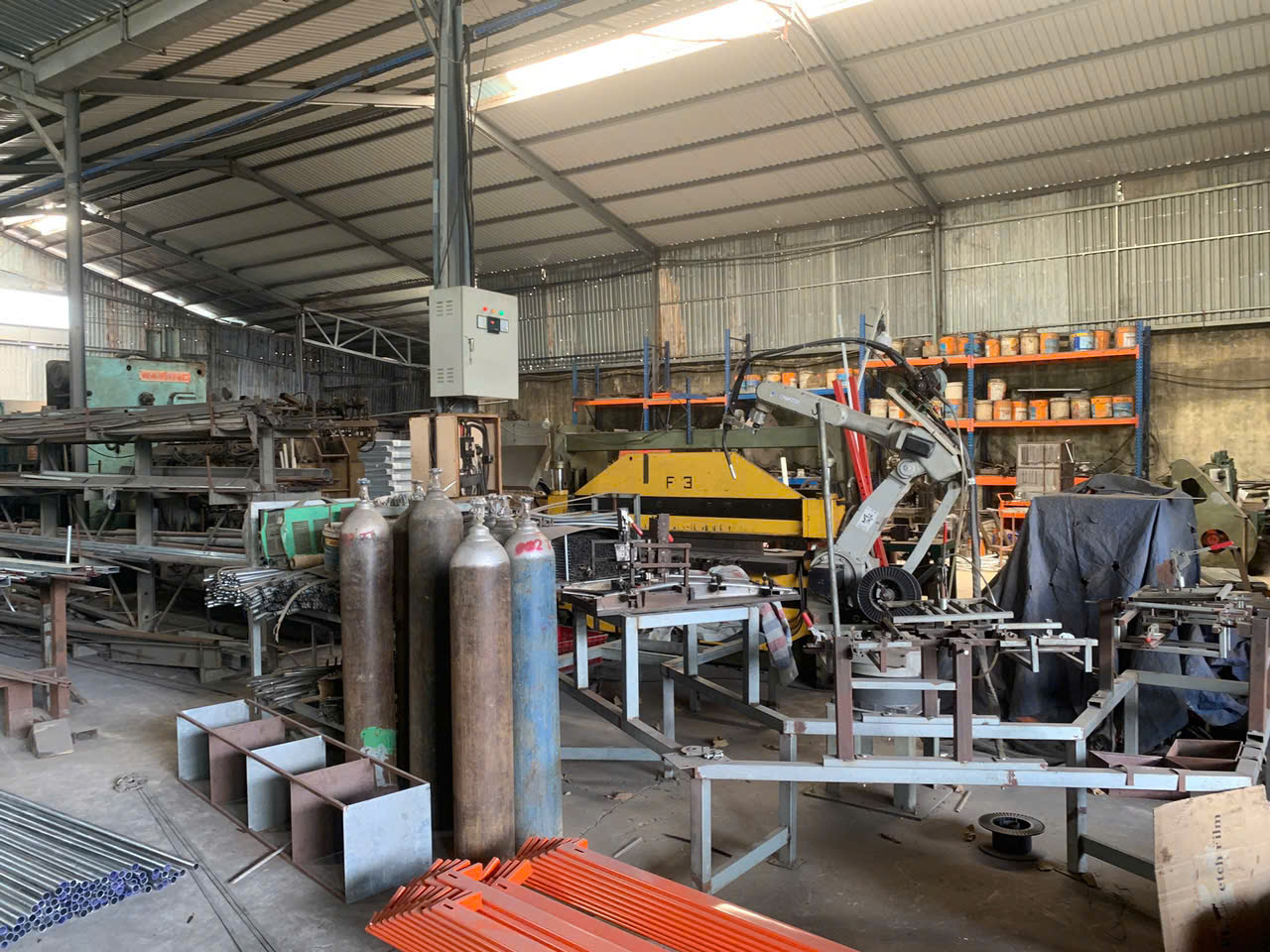
Assess a supplier's fabrication capabilities by physically inspecting or virtually touring their facility, reviewing their equipment list for high-capacity press brakes, laser cutters, and robotic welders, confirming adequate floor space and overhead crane capacity, and verifying their workforce experience with assemblies of similar size and complexity.

Equipment That Large-Scale Work Demands
Large welded structural assemblies are not the same as small stamped brackets. They require machines with longer bed lengths, higher tonnage, and wider throat depths. They also require fixtures, positioners, and cranes that most small shops simply do not have.
Here is a practical breakdown of the equipment to look for:
| Equipment | Minimum Spec for Large Assemblies | What to Verify |
|---|---|---|
| CNC Press Brake 9 | 200+ ton, 3m+ bed length | Maximum bending length and tonnage rating |
| Laser / Plasma Cutter | 1.5m × 3m cutting bed minimum | Material thickness capacity and cutting accuracy |
| Robotic Welding Cell | Multi-axis with rotary positioner | Reach envelope and repeatability specs |
| Overhead Crane | 5-ton+ capacity | Confirms ability to handle heavy sub-assemblies |
| Welding Positioner | 2-ton+ rotary table | Enables consistent welds on large weldments |
| CMM or Laser Scanner | Adequate measurement volume | Confirms dimensional accuracy verification on large parts |
Floor Space and Material Flow
Production capacity is not just about machines. A shop needs enough floor space to stage raw materials, fixture assemblies during tack welding, perform full welding, and hold finished goods before shipping. Crowded shops lead to damage, mix-ups, and safety hazards.
When we conduct facility assessments, we look at the flow from raw material storage through cutting, bending, welding, finishing, inspection, and packing. A well-organized shop has a logical, linear flow. A disorganized shop has forklifts crisscrossing the floor and parts stacked in aisles. Learning how to evaluate supplier production environments can help you systematically assess these factors.
Workforce Experience Counts as Much as Machines
A robotic welder is only as good as the programmer and the fixture designer behind it. Ask how many years the shop's lead welders and fabrication supervisors have worked on structural assemblies. Request photos or case studies of past projects with similar size and complexity.
Also consider whether the supplier can scale production without sacrificing quality. If your order doubles next quarter, can they add a second shift or bring on qualified welders? A shop running at 95% capacity today will struggle to absorb your growth tomorrow.
Surface finish requirements for large assemblies — sandblasting, powder coating, or painting — also demand dedicated floor space and spray booths. Confirm these capabilities are in-house or through a reliable subcontractor nearby.
How can I assess a supplier's project management skills to ensure my complex drawings are followed without errors?
The most expensive mistake I've seen in this business was not a welding defect — it was a supplier who misread a GD&T callout on a 15-page drawing and fabricated 200 units before anyone caught it.
Assess a supplier's project management skills by reviewing their design-for-manufacturability feedback process, confirming they perform structured drawing reviews before production, checking their use of inspection checklists tied to critical dimensions, and evaluating their communication responsiveness and quote turnaround speed.

Why Drawing Errors Are So Costly on Large Assemblies
A missed tolerance on a small stamped part might cost you a few hundred dollars in scrap. A missed tolerance on a 1.5-meter welded frame costs you thousands — plus weeks of lead time. The stakes are higher with large-scale welded structural assemblies because rework is often impossible. You cannot un-weld and re-bend a complex assembly.
This is why we treat drawing review as a formal production gate. Before any material is cut, our engineering team in China reviews every drawing page, flags ambiguities, and issues a design for manufacturability report back to the client. This report might suggest relaxing a non-critical tolerance from ±0.1mm to ±0.3mm — saving cost without affecting function. Or it might flag a weld joint that will be inaccessible once the assembly is tacked together.
What a Strong DFM Process Looks Like
A supplier with real project management discipline will do the following before quoting:
- Conduct a full drawing review — identify every critical dimension, surface finish requirement, and weld callout.
- Issue a DFM report — suggest changes to improve manufacturability, reduce cost, or prevent distortion.
- Clarify ambiguities in writing — not by phone, not verbally, but in a documented format the client can approve.
- Create a production control plan — listing each operation, the responsible person, the inspection method, and the accept/reject criteria.
- Perform a first-article inspection (FAI) — measuring every dimension on the first unit and comparing results to the drawing before running production.
Tolerance Realism Saves Money
Many engineers default to tight tolerances across an entire drawing. But tightened tolerances carry exponential cost increases. A supplier who blindly accepts every tolerance without questioning is either padding their quote or planning to ignore some of them. Understanding how to evaluate supplier capabilities using technical specifications can help you distinguish between suppliers who genuinely understand your requirements and those who simply accept them without question.
| Tolerance Level | Typical Cost Impact | When to Use |
|---|---|---|
| ±0.5mm or looser | Baseline cost | Non-functional surfaces, rough fits |
| ±0.2mm to ±0.3mm | 10–20% premium | Mating surfaces, alignment features |
| ±0.1mm or tighter | 30–60% premium | Bearing seats, precision interfaces |
| GD&T with datum references | Varies widely | Functional assemblies requiring true position control |
A good supplier will have this conversation with you proactively. They will ask which tolerances are critical and which can be relaxed. This is a sign of design for manufacturability thinking — and it separates manufacturing partners from order-takers.
Communication as a Project Management Tool
Lead time reliability depends heavily on communication. When our team manages a project, we send weekly status updates with photos from the production floor. If a problem arises — a material delay, a dimensional deviation — we report it the same day with a proposed corrective action.
Ask potential suppliers how they handle change orders. What happens when you revise a drawing mid-production? Do they have a formal change management process, or do revisions get lost in email chains?
How do I evaluate the logistics capabilities of an Asian supplier to ensure my large structural parts arrive on time?
Last year, a client needed a set of heavy welded steel frames shipped from Vietnam to Houston. The frames were ready on time — but the supplier had never shipped anything over 2.4 meters and did not realize the parts required flat-rack containers instead of standard 40-foot boxes.
Evaluate an Asian supplier's logistics capabilities by confirming their experience with oversized and heavy cargo, reviewing their freight forwarder relationships, checking their packaging standards for damage prevention during ocean transit, and verifying their track record of on-time delivery with references from existing export customers.
Shipping Large Assemblies Is Not the Same as Shipping Small Parts
Standard sheet metal parts ship in cartons on pallets inside a container. Large welded structural assemblies present a completely different challenge. They may require custom crating, fumigation-treated wood, anti-corrosion VCI wrapping, and special loading equipment at the port.
When we handle door-to-door logistics for U.S. clients, we plan the packaging and shipping method during the quoting stage — not after production. This prevents surprises. A part that does not fit in a standard container adds $2,000–$5,000 in flat-rack or open-top surcharges, plus potential port delays.
Key Logistics Factors to Evaluate
Here is what to check when assessing an Asian supplier's logistics readiness for large structural parts:
- Packaging design: Do they use custom wooden crates with internal bracing? Or do they wrap parts in stretch film and hope for the best?
- Corrosion protection: Ocean transit takes 25–40 days. Bare steel will rust without VCI paper or oil coating.
- Container selection: Standard 20-foot, 40-foot, flat-rack, or open-top — the supplier should know which your parts require.
- Freight forwarder relationship: Do they work with experienced forwarders who handle oversized cargo?
- Export documentation: Commercial invoice, packing list, bill of lading, certificate of origin, and any required inspection certificates.
- Lead time buffer: A reliable supplier builds 5–7 days of buffer between production completion and vessel booking to absorb minor delays.
Tracking and Accountability
Ask the supplier how they track shipments. Do they provide container tracking numbers? Do they notify you of estimated arrival dates? When we manage shipments, we share booking confirmations, vessel schedules, and tracking links so clients always know where their parts are.
On-time delivery is not just about the factory finishing on time. It is about the entire chain — production, inspection, packing, trucking to port, customs clearance, vessel booking, and last-mile delivery. A supplier that controls only the first step and leaves the rest to chance is a risk.
Payment Terms and Cash Flow
Many Asian suppliers require 30% deposit and 70% before shipment. This puts cash flow pressure on the buyer. Our model offers open account payment terms — typically net 60 or net 90 — for qualified clients. This aligns the supplier's incentive with on-time, defect-free delivery, because payment follows receipt and acceptance.
Conclusion
Evaluating sheet metal suppliers for large-scale welded structural assemblies requires checking certifications, equipment, project management, and logistics — then choosing a partner focused on total cost of ownership, not just price.
Frequently Asked Questions
How do I verify that a supplier's welding certifications and QC processes meet my structural integrity standards?
A few years back, one of our U.S. clients received a batch of welded brackets where the fillet welds failed under load testing — the root cause traced back to uncertified welders using incorrect filler metals first-article inspection 2 .
How can I tell if a supplier has the specialized equipment and floor space required for my large-scale welded assemblies?
During a recent supplier audit in Vietnam, we walked into a shop that quoted competitively on a 2-meter-long welded steel frame — only to find their largest press brake maxed out at 1.2 meters.
How can I assess a supplier's project management skills to ensure my complex drawings are followed without errors?
The most expensive mistake I've seen in this business was not a welding defect — it was a supplier who misread a GD&T callout on a 15-page drawing and fabricated 200 units before anyone caught it.
Footnotes
1. Official International Organization for Standardization page. ↩︎
2. Detailed explanation of First Article Inspection (FAI) process. ↩︎
3. Comprehensive overview of Welding Procedure Specification (WPS). ↩︎
4. Official guide on welder performance qualification from AWS. ↩︎
5. Official standard page from the American Welding Society. ↩︎
6. Provides a comprehensive overview of NDT techniques and purpose. ↩︎
7. Explains the concept and importance of material traceability in manufacturing. ↩︎
8. Provides a clear definition and purpose of post-weld heat treatment. ↩︎
9. Wikipedia definition and overview of press brakes, including CNC types. ↩︎