Evaluating special alloy sheet metal 1 fabrication suppliers for energy projects is a challenge I face with nearly every new client engagement — the stakes are high, the tolerances are tight, and one wrong supplier choice can cascade into months of delays and costly rework across an entire supply chain.
To evaluate special alloy sheet metal fabrication suppliers for energy projects, verify their material certifications, audit their fabrication capabilities for complex alloys, confirm PPAP and timeline management processes, and assess their financial terms and logistics infrastructure to ensure consistent, on-time delivery of high-performance components.
The energy sector — whether oil and gas, solar, wind, or geothermal — demands components that survive extreme heat, corrosive environments, and relentless mechanical stress supply chain management 2. Choosing the right fabrication partner is not just a procurement decision; it is a risk management decision. This guide walks you through the critical evaluation criteria, drawn from real project experience managing supply chains across Southeast Asia for U.S.-based buyers.
How do I verify if a supplier has the specialized QC processes and certifications required for my high-performance alloy components?
A few months ago, one of our U.S. clients received a batch of nickel alloy brackets from a new supplier — every single piece failed incoming inspection because the welds had micro-cracks invisible to the naked eye, and the supplier had no non-destructive testing 3 capability in-house.
Verify a supplier's QC processes by requesting documented quality control systems (ISO 9001, AS9100), reviewing their welding procedures and operator certifications, confirming non-destructive testing capabilities, and auditing their incoming material inspection records for full traceability from mill to finished part.
Why Material Certifications Matter More Than You Think
In energy projects, you cannot simply trust that the raw material is what the supplier claims it is. When we audit fabricators in Vietnam or other Southeast Asian countries, the first thing our team checks is whether the supplier maintains mill test reports for every alloy lot. These reports confirm chemical composition, mechanical properties, and heat treatment history. Without them, you have no proof the material meets the corrosion resistance or high-temperature performance your design requires.
For special alloys like Inconel, Hastelloy, or duplex stainless steels, the wrong grade can lead to catastrophic failure in oil and gas industry applications. We have seen suppliers substitute a lower-grade stainless steel for a specified nickel alloy, simply because they did not have the incoming inspection process to catch the difference.
Certifications to Request and What They Actually Cover
Not all certifications are equal. Here is a breakdown of the most relevant ones for energy project fabrication:
| Certification | What It Covers | Why It Matters for Energy Projects |
|---|---|---|
| ISO 9001 4:2015 | General quality management system | Baseline requirement; ensures documented processes exist |
| AS9100 5 | Aerospace-grade quality management | Indicates higher process rigor; relevant for critical energy components |
| ISO 3834 6 | Welding quality requirements | Confirms welding procedures are validated and controlled |
| AWS D1.1 / D1.6 7 | Structural and stainless steel welding | Ensures welders are qualified for the specific alloy and joint type |
| NADCAP 8 | Special process accreditation (welding, NDT, heat treat) | Gold standard for process control in high-performance applications |
Auditing the QC Process on the Ground
Requesting certificates is step one. Step two is verifying that the quality control systems described on paper actually function on the shop floor. When our Vietnam-based team conducts supplier audits, we look at several things:
- Incoming material inspection records. Does the supplier check every lot against the mill cert? Do they have a spectrometer or XRF gun to verify alloy composition?
- In-process inspection checkpoints. Are there documented hold points for critical dimensions after bending, welding, or machining?
- Welding procedure specifications (WPS). Does the supplier have qualified WPS documents for each alloy and joint configuration? Are the welders certified to those procedures?
- Non-destructive testing. For high-performance alloy components, visual inspection alone is not enough. You need to confirm the supplier can perform or outsource dye penetrant, ultrasonic, or radiographic testing as required by your drawings.
- Final inspection and reporting. Does the supplier generate a First Article Inspection Report (FAIR) or a dimensional inspection report with actual measured values, not just pass/fail?
The gap between a supplier who has ISO 9001 on the wall and a supplier who truly lives by controlled processes is enormous. I have walked through factories where the certificate was current, but operators could not explain the inspection procedure for the part they were running.
What should I look for when auditing a Southeast Asian fabricator's ability to handle complex sheet metal drawings for energy projects?
The trickiest moment in any new project comes when we hand over a set of complex drawings to a fabricator for the first time — how they respond in the first 48 hours tells us almost everything about whether this partnership will succeed or fail.
When auditing a Southeast Asian fabricator, examine their engineering review capability, equipment precision for special alloys, operator skill with complex bends and tight tolerances, experience with energy-sector drawings, and their willingness to ask clarifying questions before cutting the first piece of metal.
Reading the Drawing Is Not Enough — Understanding It Is
Energy project drawings often include GD&T callouts, specific surface finish requirements, weld symbols with full penetration details, and notes about post-weld heat treatment. Many fabricators in Southeast Asia can cut and bend basic sheet metal with competence. But when the drawing specifies a compound bend in 3mm Inconel 625 with a ±0.1mm tolerance on the bend radius, the conversation changes entirely.
In our experience sourcing custom parts from Vietnam, the most reliable indicator of a fabricator's capability is their Design for Manufacturability 9 (DFM) feedback. A strong fabricator will review the drawing, flag potential issues (such as minimum bend radius for the specified alloy), and suggest alternatives before production begins. A weak fabricator will say "no problem" to everything and deliver parts that do not conform.
Equipment and Process Capabilities to Verify
Here is what we check during a factory audit for complex sheet metal fabrication:
| Capability | What to Look For | Red Flag |
|---|---|---|
| Laser cutting | Fiber laser with power suitable for alloy thickness; clean edge quality on test cuts | Old CO2 laser only; visible heat-affected zone on cut edges |
| CNC bending | Press brake with backgauge accuracy ≤ 0.05mm; tooling for alloy-specific bend radii | Manual brake only; no tooling inventory for special alloys |
| Welding | TIG/GTAW stations with pulse capability; argon back-purging setup for reactive alloys | MIG-only shop; no inert gas purging equipment |
| Inspection | CMM or portable arm; surface roughness tester; calibrated instruments with current certs | Calipers and tape measures only; no calibration records |
| Assembly | Fixture design capability; jig library for repeatable assembly | Parts assembled freehand with no fixtures |
Operator Skill and Project Experience
Advanced machines mean little without skilled operators. During audits, we ask to observe operators running a similar part. We look at how they handle the material, whether they follow a setup sheet, and how they measure in-process dimensions. For energy-sector components that require corrosion resistance and dimensional accuracy, operator technique during welding is especially critical — improper heat input on a nickel alloy can compromise the material's microstructure.
We also request a project history list. Has the fabricator produced parts for the oil and gas industry before? Have they worked with high-temperature and pressure resistant applications? A fabricator with relevant project experience will understand why certain tolerances and finishes matter, rather than treating them as arbitrary numbers on a drawing.
The DFM Conversation as a Litmus Test
One of the most practical tests we use is simple. We send the fabricator a complex drawing and ask them to provide DFM feedback within a set timeframe. The quality of their response — the specific questions they ask, the alternatives they suggest, the tolerances they flag — reveals more about their true fabrication capabilities than any brochure or sales presentation. If a supplier cannot engage in a substantive engineering conversation about your drawing, they are unlikely to deliver the part correctly the first time.
How can I ensure my offshore partner will manage the PPAP and production timeline to avoid delays in my supply chain?
Last year, a client's production line nearly shut down because their Asian supplier missed a delivery window by three weeks — the root cause was not a manufacturing problem, but a complete absence of milestone tracking between the PPAP approval and the start of mass production.
Ensure your offshore partner manages PPAP and timelines by requiring a detailed production schedule with milestone checkpoints, mandating PPAP submission before mass production begins, establishing weekly progress reporting, and building buffer time into your supply chain for first-run orders with any new fabrication supplier.

What PPAP Means in the Context of Custom Alloy Parts
PPAP — Production Part Approval Process 10 — is a structured method to confirm that a supplier's manufacturing process can consistently produce parts that meet all drawing and specification requirements. In energy projects, where a single non-conforming bracket or housing can compromise an entire assembly, PPAP is not optional. It is the checkpoint between prototype and production.
At DEWIN, our standard workflow requires the fabricator to submit a complete PPAP package before we authorize mass production. This package typically includes:
- Dimensional inspection results on sample parts
- Material certifications and test reports
- Process flow diagrams
- Control plans
- Measurement system analysis (if applicable)
- Appearance approval (surface finish, coating)
We review every element. If any dimension is out of tolerance or any material cert is missing, production does not start. This "right first time" philosophy saves weeks of rework and avoids the cascading delays that destroy supply chain stability.
Building a Realistic Production Timeline
One of the most common mistakes buyers make is accepting a supplier's quoted lead time at face value without breaking it down into phases. Here is the timeline structure we use for a typical special alloy sheet metal project:
| Phase | Activities | Typical Duration | Key Milestone |
|---|---|---|---|
| Engineering Review | Drawing review, DFM feedback, clarification | 3–5 days | DFM report issued |
| Material Procurement | Alloy sourcing, mill cert verification | 10–21 days | Material received and inspected |
| Tooling & Setup | Fixture fabrication, machine programming, trial runs | 5–10 days | First article produced |
| PPAP Submission | Sample inspection, documentation package | 5–7 days | PPAP approved by buyer |
| Mass Production | Full production run with in-process inspection | 10–20 days | Production complete |
| Final Inspection & Packing | 100% or AQL inspection, export packing | 3–5 days | Shipment released |
| Logistics | Sea freight, customs, last-mile delivery | 20–35 days | Delivered to buyer's dock |
Total lead time from order to delivery can range from 8 to 14 weeks, depending on alloy availability and order complexity. The biggest variable is material procurement — specialty nickel alloys can have lead times of 6 weeks or more from the mill.
Weekly Reporting and Escalation Protocols
For lead time management, we set up weekly status calls or written reports with the fabricator. Each report covers what was completed, what is on schedule, and what is at risk. If a delay is identified, we escalate immediately and adjust the downstream schedule. This proactive approach has prevented more delivery failures than any contract penalty clause we have ever written.
We also build buffer time into the first production run with any new supplier. Even with PPAP approval, the first mass production batch often surfaces minor issues — a fixture that drifts after 200 cycles, a weld parameter that needs fine-tuning for the production environment. Expecting perfection from day one with a new offshore partner is unrealistic. Planning for a controlled ramp-up is practical.
How do I evaluate whether a custom parts supplier can offer the credit terms and logistics support I need for large-scale energy contracts?
When we first started working with mid-size U.S. sourcing companies, the number one concern they raised — even before quality — was cash flow: "Can you offer 60-day terms? Because my customer does not pay me for 90 days, and I cannot float the inventory."
Evaluate a supplier's credit terms by reviewing their financial stability, asking for trade references, confirming their willingness to offer 60–90 day open account terms, and assessing their logistics infrastructure — including freight forwarding partnerships, export documentation capability, and door-to-door delivery options for large-scale energy contracts.
Why Credit Terms Matter for Energy Supply Chains
Large-scale energy contracts often involve long project timelines, phased deliveries, and significant capital tied up in inventory. If your fabrication supplier requires 100% payment before shipment, your working capital is locked up for months before you can invoice your own customer. This mismatch creates real financial strain, especially for sourcing companies and distributors who operate on thin margins.
Our approach at DEWIN is to offer open account payment terms — typically Net 60 or Net 90 — to qualified clients. We can do this because our Singapore headquarters provides financial stability and our business model is designed around long-term partnerships, not one-off transactions. But not every supplier in Asia can offer this. Many smaller fabricators operate on tight cash flow and need upfront payment to fund raw material purchases.
How to Assess a Supplier's Financial and Logistics Capability
Here is a practical framework for evaluating whether a supplier can support large-scale energy contracts:
| Evaluation Criteria | What to Ask | Why It Matters |
|---|---|---|
| Financial stability | Request company registration, bank references, annual revenue range | Ensures supplier can sustain open account terms without cash flow risk |
| Credit terms offered | Confirm willingness for Net 60/90; ask about credit limit process | Directly impacts your working capital and ability to bid on larger contracts |
| Trade references | Request 2–3 existing client references with similar contract sizes | Validates that the supplier has successfully managed similar financial arrangements |
| Freight management | Ask about freight forwarding partnerships, Incoterms flexibility | Determines whether the supplier can handle FOB, CIF, or DDP shipments |
| Export documentation | Confirm capability for commercial invoices, packing lists, certificates of origin, mill certs | Incomplete documentation causes customs delays and additional costs |
| Insurance coverage | Ask about cargo insurance, product liability, and professional indemnity | Protects your business in case of transit damage or product failure |
| Door-to-door logistics | Evaluate whether supplier manages or coordinates full logistics chain | Reduces your administrative burden and improves delivery predictability |
The Hidden Value of a Supply Chain Partner vs. a Pure Fabricator
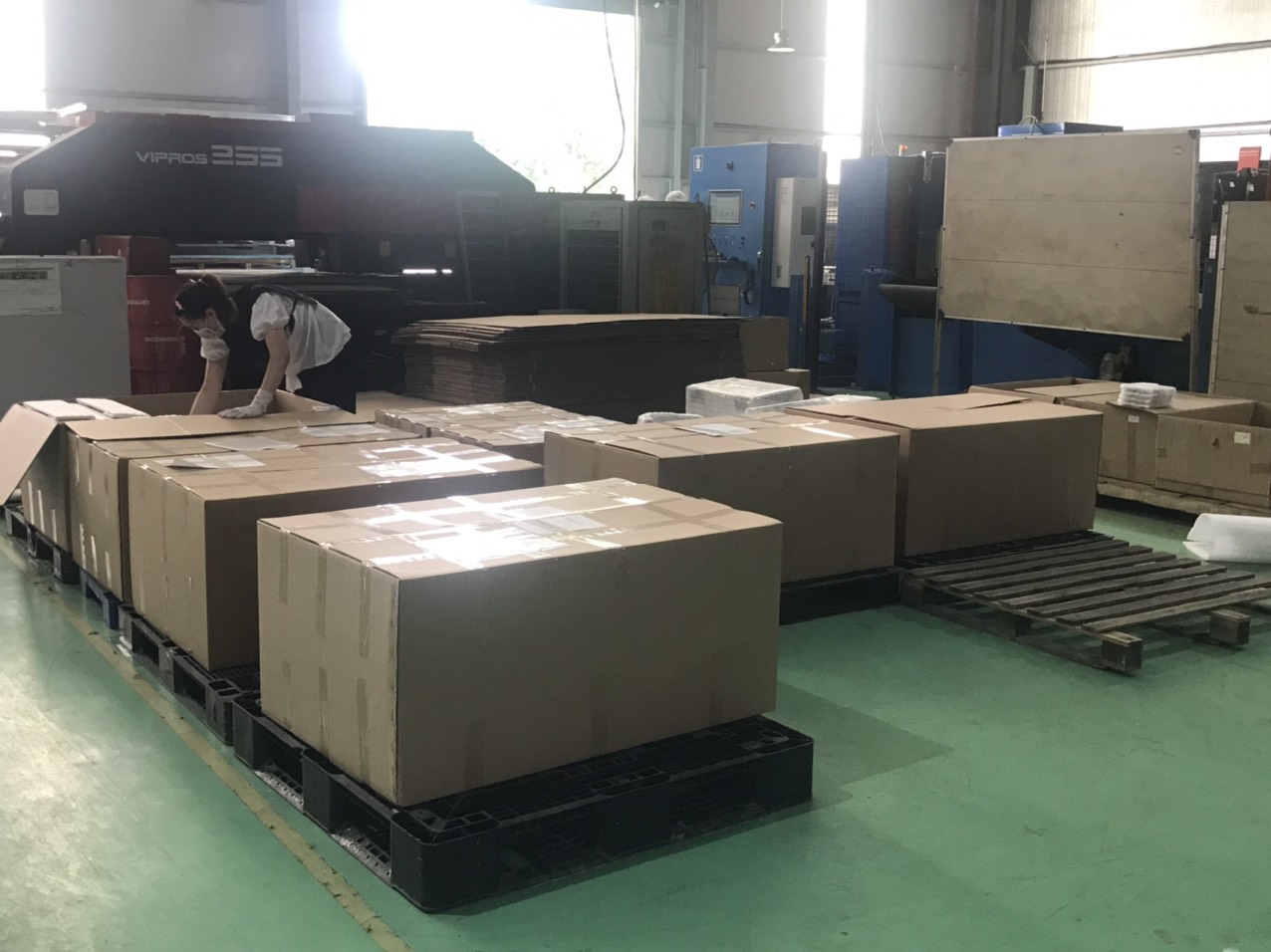
There is a meaningful difference between a fabricator who simply makes parts and a supply chain partner who manages the entire flow from production to your receiving dock. A pure fabricator hands you a box at their factory gate. A supply chain partner handles export packing, freight booking, customs documentation, and delivery tracking. For energy projects with multiple shipments, phased deliveries, and strict installation schedules, this end-to-end logistics support can be the difference between a project that runs on time and one that stalls.
Our team in Vietnam coordinates directly with freight forwarders, manages export documentation, and provides real-time shipment tracking to our U.S. clients. This means the purchasing manager gets a single point of contact for production status, quality reports, and delivery updates — rather than juggling calls between a factory, a freight broker, and a customs agent.
Negotiating Terms That Work for Both Sides
Credit terms are a negotiation, not a demand. Suppliers who offer Net 60 or Net 90 are taking on financial risk. In return, they expect commitment — consistent order volumes, clear payment history, and open communication. The best supplier relationships I have seen are those where both sides understand the trade-off: the buyer gets cash flow relief, and the supplier gets a predictable, long-term revenue stream. Starting with a smaller credit limit and increasing it over time as trust builds is a practical approach that works well for both parties. To formalize this process, consider how to build a supplier evaluation system that accounts for financial capability alongside quality and delivery performance.
Conclusion
Evaluating special alloy sheet metal fabrication suppliers for energy projects requires a disciplined, multi-dimensional approach — verifying certifications, auditing capabilities, managing PPAP timelines, and confirming financial and logistics readiness to protect your supply chain.
Frequently Asked Questions
How do I verify if a supplier has the specialized QC processes and certifications required for my high-performance alloy components?
A few months ago, one of our U.S. clients received a batch of nickel alloy brackets from a new supplier — every single piece failed incoming inspection because the welds had micro-cracks invisible to the naked eye, and the supplier had no non-destructive testing 3 capability in-house.
What should I look for when auditing a Southeast Asian fabricator's ability to handle complex sheet metal drawings for energy projects?
The trickiest moment in any new project comes when we hand over a set of complex drawings to a fabricator for the first time — how they respond in the first 48 hours tells us almost everything about whether this partnership will succeed or fail.
How can I ensure my offshore partner will manage the PPAP and production timeline to avoid delays in my supply chain?
Last year, a client's production line nearly shut down because their Asian supplier missed a delivery window by three weeks — the root cause was not a manufacturing problem, but a complete absence of milestone tracking between the PPAP approval and the start of mass production.
Footnotes
1. Replaced with the official website of Special Metals, a premier producer of nickel and cobalt alloys, which are relevant to ‘special alloy sheet metal’ in the context of energy projects. ↩︎
2. Defines supply chain management and its critical role in business operations. ↩︎
3. Explains various non-destructive testing methods and their applications. ↩︎
4. Official source for the ISO 9001 standard for quality management systems. ↩︎
5. Official source for the AS9100 standard for aerospace quality management systems. ↩︎
6. Provides information on ISO 3834 standard for welding quality requirements. ↩︎
7. Official source for American Welding Society (AWS) standards, including D1.1 and D1.6. ↩︎
8. Official site for Nadcap accreditation, a global standard for critical processes. ↩︎
9. Defines Design for Manufacturability (DFM) and its principles for efficient production. ↩︎
10. Replaced with a detailed explanation of the Production Part Approval Process (PPAP) from Quality-One, a reputable source for quality management. ↩︎