
Evaluating supplier flexibility for order volume fluctuations in welding parts is a problem I see buyers struggle with every quarter production capacity utilization 1. One month they need 500 custom brackets, the next month 2,000 — and their supplier freezes. The agitation is real: missed deadlines, quality drift, and angry end-customers documented welding procedures 2. Through our supply chain services 3 across Vietnam and wider Asia, we have built a repeatable system to solve this.
To evaluate supplier flexibility for order volume fluctuations when sourcing welding parts, assess production capacity utilization, lead time variance, workforce cross-training, contractual quantity-adjustment clauses, and the supplier’s track record of scaling output without sacrificing weld quality or delivery timelines.
This guide walks through practical steps, metrics, and contractual tools you can use right away quality management system 4. Each section targets a specific challenge purchasing managers face when demand is unpredictable.
How do I evaluate if a welding supplier can scale production quickly when my order volume spikes?
A lesson we learned early while coordinating fabrication runs in Vietnam: the supplier who quotes the best price is rarely the one who can double output in two weeks. I once watched a bracket order sit idle for eleven days because the shop had no reserve welding capacity — every MIG station was occupied.
Evaluate scalability by reviewing equipment utilization rates, workforce depth, raw material sourcing lead times, and whether the supplier maintains buffer capacity or secondary shift capability — ideally keeping utilization below 85 percent to absorb volume spikes without disrupting existing orders.

Start with Capacity Utilization
The single most revealing number is current utilization rate. A shop running at 95 percent has almost no room to grow. A shop at 70–80 percent can absorb a spike. During our supplier audits, we walk the floor and count active stations versus idle ones. We check shift schedules. A facility that runs only one shift has a built-in expansion lever — they can add a second shift.
Map the Equipment Landscape
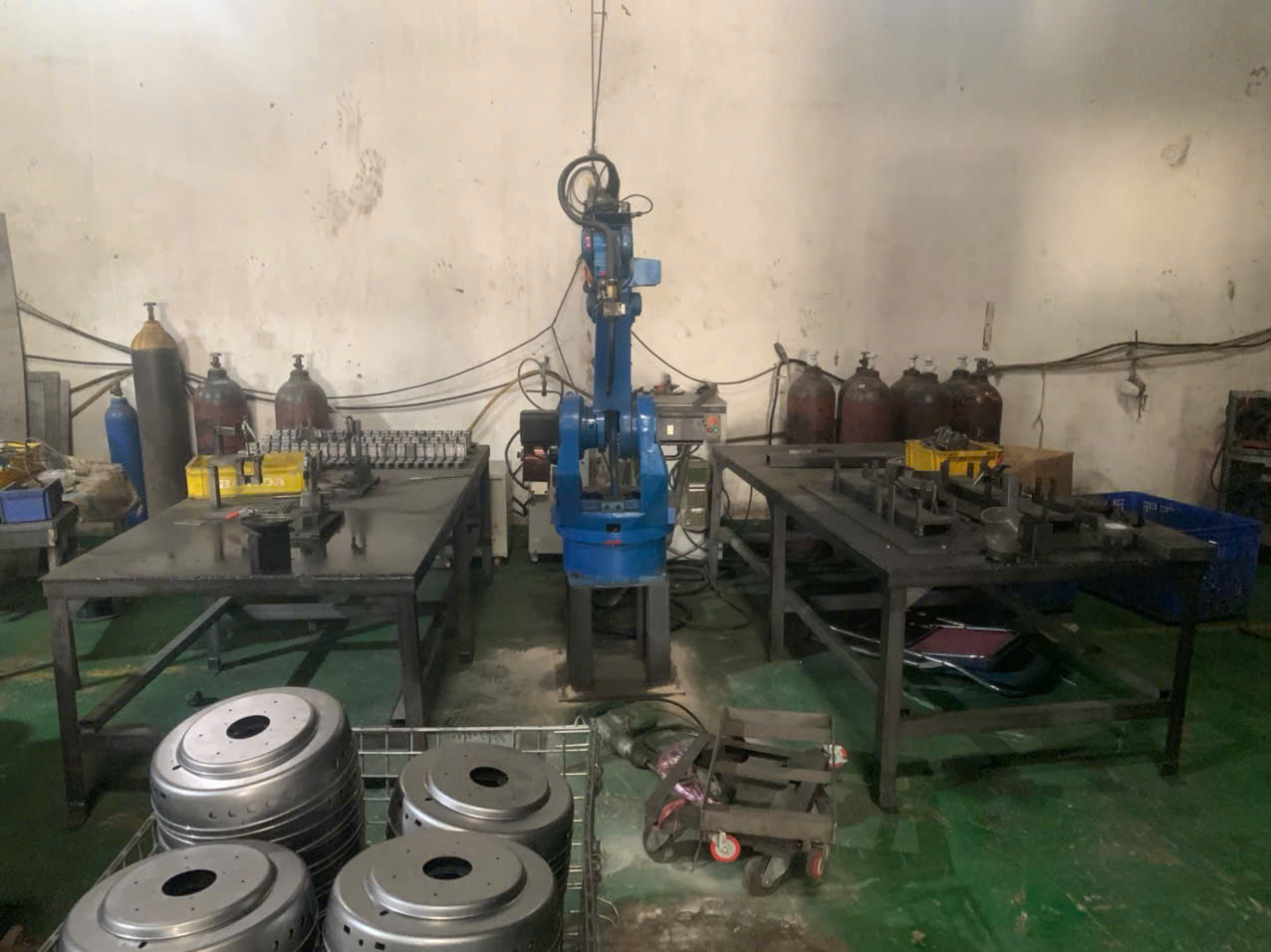
Not all welding equipment is equal. Robotic welding cells 5 can ramp faster than manual stations because programming a new batch size is a software change, not a hiring decision. Ask the supplier for an equipment list and note the ratio of automated to manual stations.
| Scalability Factor | What to Ask | Green Flag | Red Flag |
|---|---|---|---|
| Utilization rate | "What percentage of your welding capacity is currently committed?" | Below 80% | Above 90% |
| Shift structure | "How many shifts do you run, and can you add one?" | 1–2 shifts with option for 3rd | Already on 3 shifts |
| Equipment type | "What share of your welding is robotic vs. manual?" | ≥ 40% robotic | 100% manual on complex parts |
| Workforce reserve | "Do you have access to trained welders on short notice?" | Cross-trained pool or temp agency | Fixed headcount, no bench |
| Raw material buffer | "Do you stock standard steel and aluminum profiles?" | Yes, 2–4 weeks of common stock | All bought to order |
Assess Supplier Performance Metrics Over Time
Ask for on-time delivery data from the past 12 months. Look for months where volume jumped. Did delivery dates slip? By how many days? A supplier who maintained 95 percent on-time delivery even during a 30 percent volume increase is demonstrating real capacity planning. One who dropped to 70 percent is a risk.
Check the Sub-Supplier Network
Welding parts like the heavy-duty brackets and multi-level frames we handle often require raw material from steel or aluminum mills. If the supplier relies on a single mill with a six-week lead time, scaling is bottlenecked upstream. We always verify whether the supplier has at least two qualified material sources. This is a basic risk mitigation strategy 6 that many buyers overlook.
The Role of Demand Forecasting
Share your forecast — even a rough one. A good supplier will use it to pre-position material and reserve capacity. A great supplier will challenge your numbers and suggest a staggered ordering plan. During our co-development projects, we encourage buyers to share rolling 90-day forecasts. This gives our partner factories time to adjust without panic.
Will my custom welding quality stay consistent if I suddenly increase my batch sizes?
One trade-off I weigh constantly is speed versus precision. When a U.S. buyer needed 3× the usual volume of galvanized steel mounting brackets — similar to the L-shaped mounts and U-channels we regularly source — the factory pulled in temporary welders. The weld bead appearance shifted. Some joints lacked full penetration. We caught it in final inspection, but the rework cost everyone time.
Quality consistency during batch increases depends on the supplier's documented welding procedures (WPS), operator qualification records, in-process inspection frequency, and whether they scale by adding certified welders rather than untrained labor — all verified through a robust quality management system.

Why Batch Size Changes Threaten Quality
Larger batches introduce subtle variables. Fixtures wear faster. Welding gas flow rates drift if regulators are not checked. Heat input changes when operators rush. For custom welding parts with precision-drilled mounting holes, visible weld beads, and reinforced gussets, even small deviations can cause fit-up problems at the customer's assembly line.
The Quality Control Checkpoints That Matter
We insist on a layered inspection approach. Here is the framework we use during PPAP and ongoing production:
| Inspection Stage | What to Verify | Frequency at Normal Volume | Frequency at Increased Volume |
|---|---|---|---|
| Incoming material | Mill certs, thickness, surface condition | Per lot | Per lot (no change) |
| First article inspection | Dimensions, weld penetration, hole alignment | First 3 pieces | First 5 pieces |
| In-process weld check | Visual weld bead, spatter, undercut | Every 20th piece | Every 10th piece |
| Dimensional audit | Go/no-go gauges, CMM if required | Every 50th piece | Every 25th piece |
| Final inspection | Full drawing check, cosmetic, packaging | AQL per batch | Tightened AQL |
The key insight: when volume goes up, inspection frequency must go up proportionally. A supplier who keeps the same sampling plan at 2× volume is gambling with your quality.
Welding Procedure Specifications (WPS)
Ask the supplier for their WPS documents. These specify wire type, shielding gas, voltage, travel speed, and preheat requirements. A qualified supplier will have these locked down. When they scale, they replicate the same parameters on every station. If they lack formal WPS documents, quality drift is almost guaranteed when batch sizes change.
Operator Qualification and Cross-Training
Cross-trained welders are the backbone of flexible quality. A shop where every welder is certified to the same standard can move people between lines without introducing variation. We evaluate this during supplier audits by reviewing welder qualification records and watching operators work on different product types. Workforce flexibility directly supports supply chain resilience 7.
Process Control as a Leading Indicator
Statistical process control 8 (SPC) charts on critical dimensions — hole positions, overall frame length, bracket angles — tell you whether a process is drifting before parts go out of spec. We ask suppliers to share SPC data during ramp-ups. If they do not collect it, we help them set it up as part of our supplier development program. This is not optional for mid-to-high quality custom parts.
What steps can I take to ensure on-time delivery when my demand for welding parts fluctuates?
A buyer we work with in the Midwest once told me: "Late parts cost me ten times the part price in downtime." That sentence changed how we structure lead time management across every welding project. Delivery is not just logistics — it is the entire chain from raw material to the customer's dock.
Ensure on-time delivery during demand fluctuations by implementing rolling forecasts shared with your supplier, negotiating contractual agreements with pre-defined lead time tiers for different volumes, maintaining safety stock on long-lead raw materials, and using a dynamic segmentation model refreshed every 15 to 20 days.
The Cutoff Time Framework
This is a practical tool every purchasing manager should use. The concept is simple:
Cutoff Time = Customer Lead Time − Manufacturing and Shipping Days
If your customer expects parts in 30 days, and it takes 22 days to manufacture and ship, your cutoff time is 8 days. If your supplier's actual raw material lead time exceeds 8 days, you must pre-stock that material. Otherwise, you can buy to order.
We recalculate this every 15–20 days. Supplier lead times shift due to market conditions, tariffs, and seasonal demand. Static planning fails because it assumes yesterday's lead times apply tomorrow. Dynamic segmentation — refreshing your buy-to-stock versus buy-to-order decisions regularly — is a core part of inventory optimization.
Staggered Ordering for Multi-Component Welding Kits
Complex welding assemblies like the multi-level geometric frames we source often contain five to ten unique components. Each has a different lead time. Ordering all components at once means the longest lead-time part dictates the entire delivery date.
Instead, stagger your orders:
- Identify each component's individual lead time.
- Calculate backward from the assembly start date.
- Release purchase orders so all parts arrive within the same week.
- Prioritize high-cost items for buy-to-order; stock low-cost fasteners and brackets.
This approach reduces inventory holding costs while maintaining supply chain visibility.
Contractual Levers for Delivery Protection
Negotiate delivery terms that account for volume variability. Quantity flexibility (QF) contracts 9 allow you to adjust order quantities within a pre-agreed band — typically plus or minus 5–10 percent of the base order. Some suppliers will accept wider bands for a small premium.
| Contract Clause | Purpose | Typical Terms |
|---|---|---|
| Quantity flexibility band | Allows volume adjustment after order placement | ±5–10% of base quantity |
| Expedite fee schedule | Pre-agreed cost for rush orders | 10–20% surcharge |
| Lead time guarantee | Penalty or credit for late delivery | 1–2% per week late |
| Safety stock agreement | Supplier holds raw material buffer | 2–4 weeks of key materials |
| Forecast sharing requirement | Buyer commits to rolling 90-day forecast | Updated monthly |
These contractual agreements create a shared framework. Both sides know the rules before a spike happens. This eliminates the frantic phone calls and finger-pointing that plague unstructured vendor relationships.
Regional Sourcing and Nearshoring
Lead times shrink when suppliers are closer to your end market — or at least closer to reliable logistics corridors. Our Vietnam office gives us a Southeast Asian manufacturing base with competitive freight routes to the U.S. West Coast. For buyers who previously sourced welding parts from a single region, dual-region models (for example, Vietnam plus another ASEAN country) provide a built-in delivery hedge. This is a practical application of supply chain resilience through geographic diversification.
How do I test a supplier's responsiveness to my urgent changes in order quantity?
During a recent project involving heavy-duty base plates with reinforced gussets and precision-drilled holes, our buyer changed the quantity from 800 to 1,400 pieces — four days after the order was confirmed. The factory's reaction told us everything. They responded within six hours with a revised timeline, adjusted material procurement, and confirmed the new delivery date. That response time became a benchmark for every future supplier evaluation.
Test a supplier's responsiveness by issuing a small trial order, then requesting a change within 48 hours — observe their communication speed, revised lead time accuracy, and willingness to provide options rather than excuses, which reveals their true capacity planning and operational agility.

Design a Deliberate Trial
Do not wait for a crisis to discover whether your supplier can pivot. Create a controlled test. Place a moderate order for a standard welding part — say, a batch of L-shaped mounts or flat base plates. Then, within two business days, request one of the following changes:
- Increase quantity by 25 percent.
- Move the delivery date forward by one week.
- Add a minor design revision (extra hole, different finish).
Track how the supplier handles each scenario. Measure response time in hours, not days. Note whether they offer alternatives or simply say "not possible."
What Good Responsiveness Looks Like
A responsive supplier does several things:
- Acknowledges the change quickly. Within 4–8 hours, not 3 days.
- Provides a realistic revised schedule. Not a promise they cannot keep.
- Explains the impact. They tell you what shifts: cost, lead time, or both.
- Offers options. Partial shipment now, remainder next week. Or airfreight at an agreed surcharge.
This behavior reflects strong vendor relationship management. The supplier treats your business as a partnership, not a transaction.
Scoring Supplier Responsiveness
We use a simple scoring matrix during our supplier selection criteria evaluations:
| Responsiveness Metric | Weight | Score 1 (Poor) | Score 3 (Average) | Score 5 (Excellent) |
|---|---|---|---|---|
| Initial acknowledgment time | 20% | > 48 hours | 12–48 hours | < 8 hours |
| Revised timeline accuracy | 25% | Missed by > 5 days | Missed by 1–3 days | Met or beat |
| Communication quality | 20% | Vague, incomplete | Adequate details | Proactive, clear options |
| Cost transparency | 15% | No breakdown given | Partial breakdown | Full cost impact shared |
| Follow-through on commitment | 20% | Frequent missed promises | Mostly reliable | Consistently delivers |
A supplier scoring above 4.0 on a weighted average is a strong candidate for long-term partnership. Below 2.5, and you should consider alternatives or invest in supplier development.
Integrate Real-Time Data Sharing
The most advanced approach is connecting your demand planning system with the supplier's production tracking. This does not require expensive software. Even a shared spreadsheet updated weekly can provide supply chain visibility into current production status, material availability, and upcoming capacity windows. When both sides see the same data, urgent changes become adjustments rather than emergencies. This kind of integration supports better demand forecasting 10 and reduces the friction of last-minute order changes.
The Cost of Flexibility Is an Investment
Some buyers hesitate to pay a premium for flexible suppliers. But consider the alternative: a rigid supplier who delivers late, forces you to hold excess inventory, or ships non-conforming parts during a rushed ramp-up. The flexibility premium — whether it comes as slightly higher unit costs, safety stock agreements, or expedite fees — is an investment in your own supply chain reliability. Modern supply chain thinking has shifted from pure efficiency to optionality: the ability to pivot fast is worth more than the lowest unit cost, especially in high-mix, low-volume welding work.
Conclusion
Evaluating supplier flexibility for welding parts requires measuring capacity, testing responsiveness, protecting quality during ramp-ups, and building contractual safeguards. Treat flexibility as a funded investment — not a wish — and your supply chain will absorb volume swings without breaking.
Frequently Asked Questions
How do I evaluate if a welding supplier can scale production quickly when my order volume spikes?
A lesson we learned early while coordinating fabrication runs in Vietnam: the supplier who quotes the best price is rarely the one who can double output in two weeks. I once watched a bracket order sit idle for eleven days because the shop had no reserve welding capacity — every MIG station was occupied.
Will my custom welding quality stay consistent if I suddenly increase my batch sizes?
One trade-off I weigh constantly is speed versus precision. When a U.S. buyer needed 3× the usual volume of galvanized steel mounting brackets — similar to the L-shaped mounts and U-channels we regularly source — the factory pulled in temporary welders. The weld bead appearance shifted. Some joints lacked full penetration. We caught it in final inspection, but the rework cost everyone time.
What steps can I take to ensure on-time delivery when my demand for welding parts fluctuates?
A buyer we work with in the Midwest once told me: "Late parts cost me ten times the part price in downtime." That sentence changed how we structure lead time management across every welding project. Delivery is not just logistics — it is the entire chain from raw material to the customer's dock.
Footnotes
1. Explains the definition and importance of capacity utilization in manufacturing operations. ↩︎
2. Covers the critical role of formal welding procedure specifications in ensuring weld quality. ↩︎
3. Replaced with an authoritative source on supply chain management from ASCM (Association for Supply Chain Management). ↩︎
4. Provides an introduction to quality management systems and their benefits for organizations. ↩︎
5. Offers information on robotic welding cells and their role in improving production efficiency. ↩︎
6. Details various strategies for identifying, assessing, and reducing risks in business operations. ↩︎
7. Explains the concept of supply chain resilience and its importance in managing disruptions. ↩︎
8. Introduces statistical process control as a method for monitoring and improving manufacturing quality. ↩︎
9. Discusses quantity flexibility contracts as a method for coordinating supply chain flows. ↩︎
10. Explains the process and importance of predicting future customer demand in supply chains. ↩︎