

Evaluating a supplier’s high-speed stamping line capacity nearly cost one of our clients an entire launch. The supplier quoted impressive press speeds, then missed three delivery windows. Our audit team in Vietnam found the real bottleneck fast.
To evaluate a supplier’s high-speed stamping line capacity, verify press tonnage and speed against your part specs, demand OEE and real production run data, confirm in-line quality control at full speed, and audit their die maintenance program—never rely on nameplate machine ratings alone.
Press speed is not the same as usable output. In this guide, I will walk through the four areas we check on every stamping audit, plus the exact questions to ask.
What Should I Look for in a Supplier's Stamping Press Tonnage and Speed Ratings?
During a supplier audit near Hanoi last year, our team compared two shops quoting the same stamped mounting bracket. One listed 800 SPM presses. The other listed 400 SPM. The slower shop won—and here is why.
Look for press tonnage that matches your part's material thickness and geometry with a safety margin, bed size that fits the progressive die, and realistic strokes-per-minute ratings for your specific part—then confirm whether the presses are servo or mechanical, since servo presses offer flexible stroke profiles.

Tonnage and speed are the starting point, not the finish line. A press rated at 800 strokes per minute 1 means very little if the die, feed line, or material cannot support that pace. When we screen stamping suppliers for our U.S. clients, we always map the machine list against the actual part first.
Match the Press to the Part, Not the Brochure
Start with your part's requirements. A small zigzag bracket in 1.5 mm galvanized steel needs a very different setup than a thick stainless clip with tight burr limits. Ask the supplier to show the tonnage calculation for your part. A press running near its tonnage limit wears faster and produces less consistent parts. We like to see at least 20–30% tonnage headroom.
Servo vs. Mechanical Presses
Press type matters more than most buyers realize. Here is how we compare them during audits:
| Factor | Mechanical Press | Servo Press |
|---|---|---|
| Stroke profile | Fixed, set by flywheel | Programmable, adjustable per part |
| Speed on complex parts | Often must slow the whole cycle | Slows only the forming portion |
| Changeover flexibility | Moderate | High |
| Energy use | Constant | Lower on partial strokes |
| Best fit | Long runs, simple geometry | High-mix, tight-tolerance parts |
The Feed Line Caps Real Speed
The uncoiler, straightener, and servo feeder 2 must synchronize with the press. On multiple audits, we have watched a fast press throttled to half speed because the feeder could not hold pitch accuracy on thin coil. Always ask about maximum coil width, thickness range, and feed accuracy at full speed. If the supplier cannot answer for your material grade, that is a warning sign.
How Can I Verify a Supplier's Actual Production Capacity Versus Their Claimed Capabilities?
One trade-off I weigh on every sourcing project is audit cost versus supply risk. For stamped parts headed to U.S. production lines, we almost always choose the on-site visit—because claimed capacity and real capacity rarely match.
Verify actual capacity by requesting OEE data, recent production logs for similar parts, and current capacity utilization figures, then conduct an on-site or live virtual audit to watch the line run at full speed. Cross-check supplier claims against customer references and sample run results.

Self-reported capacity is a sales number. Evidence is what protects your delivery schedule. Our Vietnam office runs audits for exactly this reason, and we have developed a simple hierarchy of proof over the years.
The Evidence Hierarchy We Use
- Machine list review. Useful for initial screening only. It tells you what could be possible, not what is happening.
- Production records. Ask for parts-per-shift data on a similar part number, including scrap. Recent logs beat any brochure.
- OEE data. Availability × performance × quality. Even a rough OEE number 3 reveals how honest the supplier is about downtime.
- Live observation. Watch a full-speed run, a coil change, and ideally a die changeover. Timing these yourself removes all guesswork.
- Customer references. Ask for references with similar volume and tolerance requirements.
Check Utilization, Not Just Capability
A capable supplier with no open press hours is still a bad fit. Ask directly: what is your current backlog versus available press hours? We have seen suppliers quote aggressive lead times while running above 90% utilization. Any hiccup then cascades into delays. We prefer suppliers holding utilization between 70% and 85%, with a clear surge plan for demand spikes of 20–50%.
Watch for Qualification-Trial Tricks
Some shops demonstrate capacity during slow qualification runs. The parts look great at 200 SPM. At full production speed, burrs grow and dimensions drift. Always request quality data captured specifically during full-speed runs. If the supplier hesitates, treat their capacity claim as unproven.
What Quality Control Processes Should I Confirm Before Trusting a High-Speed Stamping Supplier?
A buyer once emailed me a photo of a container full of brackets with oversized slots—every single carton non-conforming. His previous supplier had skipped in-process checks entirely. That project is why our team now treats QC systems as a capacity metric, not a separate topic.
Confirm in-die sensors and misfeed detection, statistical process control with documented Cp/Cpk, defined first-article and in-process inspection frequencies, full-speed scrap-rate data, and certifications like ISO 9001 or IATF 16949. Quality at speed—not peak speed—defines a supplier's true capacity.

Speed without quality is just fast scrap production. A line making marginal parts at 700 SPM has lower true capacity than a stable line at 450 SPM. When we run PPAP 4 and process control for clients, these are the systems we verify.
The QC Layers That Matter at High Speed
| QC Layer | What to Confirm | Why It Matters at Speed |
|---|---|---|
| In-die sensing | Misfeed, slug detection, part-out sensors | Stops the press before a die crash or a run of bad parts |
| Coil monitoring | Thickness and camber checks on incoming material | Material variation shifts dimensions at high SPM |
| SPC | Control charts, Cp/Cpk on critical dimensions | Detects drift during long runs before parts go out of spec |
| Inspection frequency | First article, hourly checks, last-off checks | Drift accumulates fast when thousands of parts run per hour |
| Vision inspection | Camera systems on burrs, holes, bend angles | Human sampling cannot keep pace with high-speed output |
| Final inspection | AQL sampling plan, documented reports | Your last defense before parts ship |
Quality Drift Is the Silent Capacity Killer
Ask the supplier a simple question: how does quality change from hour one to hour eight of a run? Tool heating, lubrication breakdown, and progressive wear all cause drift. A supplier who tracks first-pass yield 5 across the full shift understands their real capacity. A supplier who only shows you first-article reports does not.
Certifications Are the Floor, Not the Ceiling
ISO 9001 6 or IATF 16949 tells you a system exists on paper. Our audits check whether operators actually follow it. Look at inspection records on the floor. Check whether the last-recorded measurement matches the time on the clock. Small details reveal whether the QC culture is real.
How Do I Assess a Supplier's Tooling and Die Maintenance Practices for Long-Term Reliability?
Early in my career, I underestimated die maintenance—until a client's bracket program stopped for three weeks because a supplier's only progressive die 7 cracked with no spare sections on hand. That lesson shaped how we vet tooling programs on every project since.
Assess die maintenance by reviewing preventive maintenance schedules tied to stroke counts, spare-parts inventories for wear components, documented die-life tracking, in-house toolroom capability, and backup tooling strategies. Confirm who owns the die and who controls repair decisions before awarding the program.
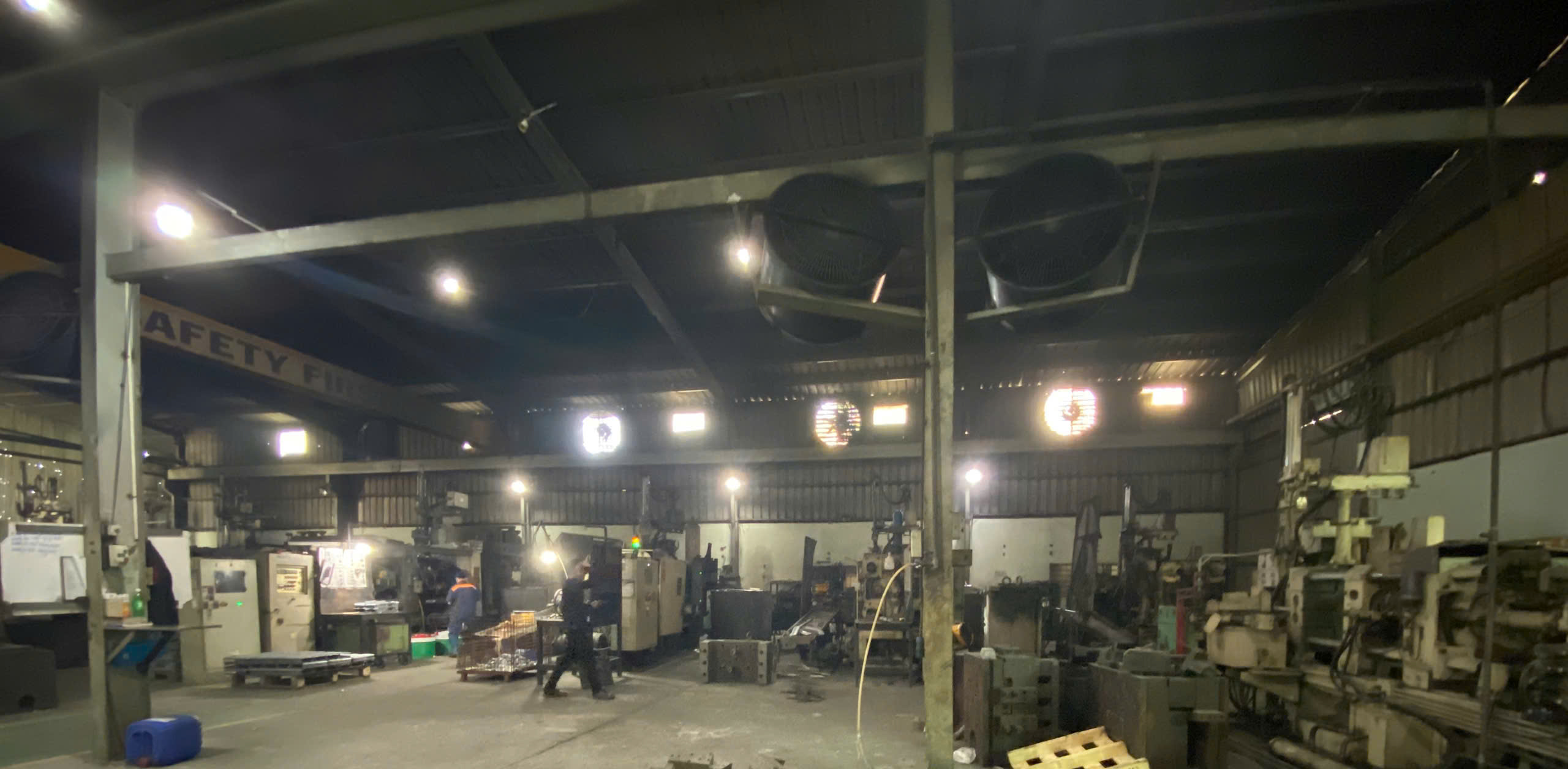
In high-speed stamping, the die is usually the true constraint—not the press. A well-maintained progressive die runs millions of strokes predictably. A neglected one fails without warning and takes your supply chain down with it.
Questions That Expose the Real Maintenance Culture
When our engineers walk a toolroom, we ask:
- Is maintenance scheduled by stroke count, or only after failures?
- Do you keep spare punches, inserts, and springs for critical dies?
- How do you track cumulative strokes and remaining die life?
- Can you sharpen and repair dies in-house, or do you outsource?
- Do you monitor die condition with sensors or tonnage signatures?
A shop that grinds punches on a fixed stroke interval, logs every repair, and stocks wear parts will keep your line supplied. A shop that "fixes it when it breaks" will eventually miss a shipment.
Die Ownership and Backup Strategy
Clarify die ownership in the contract. If your company pays for the tooling, you should own it, and the agreement should allow transfer if the relationship ends. For high-volume or critical programs, we also discuss backup options with clients:
| Strategy | Cost | Risk Reduction | When It Makes Sense |
|---|---|---|---|
| Single die, spare inserts | Low | Moderate | Stable demand, proven supplier |
| Duplicate die sections | Medium | High | Long die-repair lead times |
| Full backup die | High | Very high | Critical parts, no alternate source |
| Dual-supplier tooling | Highest | Highest | Automotive or safety-critical programs |
Watch the Toolroom, Not Just the Press Floor
A clean, organized toolroom with skilled toolmakers on staff signals long-term reliability. An empty bench and outsourced repairs signal future downtime. On our audits, the toolroom often tells us more about sustainable capacity than the press list ever does.
Conclusion
Rated press speed is a sales pitch; proven output is a supply chain. Evaluate the press, the evidence, the quality system, and the die maintenance—then award your program with confidence.
Frequently Asked Questions
What Should I Look for in a Supplier's Stamping Press Tonnage and Speed Ratings?
During a supplier audit near Hanoi last year, our team compared two shops quoting the same stamped mounting bracket. One listed 800 SPM presses. The other listed 400 SPM. The slower shop won—and here is why.
How Can I Verify a Supplier's Actual Production Capacity Versus Their Claimed Capabilities?
One trade-off I weigh on every sourcing project is audit cost versus supply risk. For stamped parts headed to U.S. production lines, we almost always choose the on-site visit—because claimed capacity and real capacity rarely match.
What Quality Control Processes Should I Confirm Before Trusting a High-Speed Stamping Supplier?
A buyer once emailed me a photo of a container full of brackets with oversized slots—every single carton non-conforming. His previous supplier had skipped in-process checks entirely. That project is why our team now treats QC systems as a capacity metric, not a separate topic.
Footnotes
1. Clarifies stamping speed terminology for readers unfamiliar with press rating units. ↩︎
2. Explains servo motor technology underlying the feed-line equipment described. ↩︎
3. Explains the OEE metric buyers use to verify true supplier production performance. ↩︎
4. AIAG defines PPAP, the process control system referenced for supplier verification. ↩︎
5. Background definition of the quality metric used to judge stamping line performance. ↩︎
6. Links to official ISO standard referenced as a quality management certification benchmark. ↩︎
7. Background reference on metal stamping tooling relevant to die maintenance discussion. ↩︎