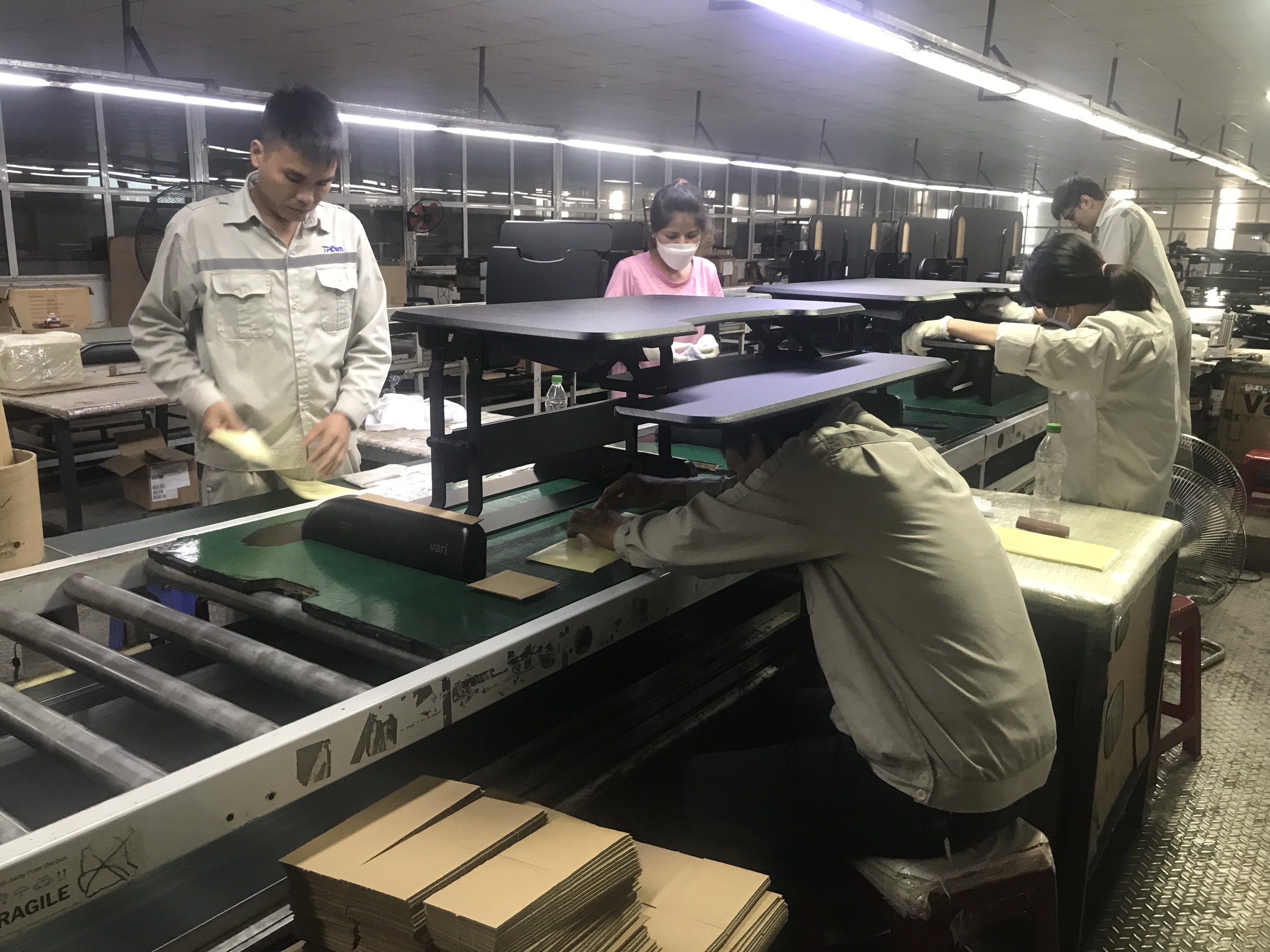

Every week, our team reviews supplier qualification files — and the number one red flag we catch? Gaps in raw material sourcing reliability for stamping parts.
To evaluate supplier raw material sourcing reliability for stamping parts, verify their material certifications, audit traceability from coil to finished part, confirm contingency plans for supply disruptions, and validate material test reports through independent checks. Reliable sourcing prevents defects, delays, and costly rework.
The sections below break down each step in detail. I will share what our team looks for during supplier audits, the documentation we demand, and the specific questions that separate a dependable stamping partner from one that will cause you headaches down the road.
How do I verify that my stamping parts supplier is using certified raw materials?
A lesson we learned early in our supplier audit work: a mill certificate sitting in a filing cabinet means nothing if nobody checks whether it matches the coil on the press.
Verify certified raw materials by requesting original mill test certificates linked to each production lot, confirming ISO 9001 or IATF 16949 certification from a recognized third-party body, and cross-checking material grades and mechanical properties against your engineering specifications before production begins.

Why Certifications Matter More Than Promises
When we evaluate a stamping supplier on behalf of our U.S. clients, the first document we request is the quality management system certificate 1. ISO 9001 2 is the baseline for general manufacturing. For automotive stamping, IATF 16949 3 is non-negotiable — and it must come from a third-party certification body, not a self-declaration.
But a certificate on the wall is only the starting point. During on-site supplier audits in Vietnam and across Asia, our team digs deeper. We ask to see the incoming quality control process. How does the supplier inspect raw material when it arrives? Do they verify the grade, thickness, and mechanical properties 4 against the material test certificate? Or do they just unload the coil and start running?
What to Request from Your Supplier
Here is a practical checklist of documents and actions that confirm certified material usage:
| Document / Action | What It Proves | Red Flag If Missing |
|---|---|---|
| Original Mill Test Certificate 5 (MTC) | Material grade, chemical composition, mechanical properties | Supplier cannot trace material origin |
| ISO 9001 or IATF 16949 Certificate | Third-party validated quality management system | No external quality oversight |
| Incoming Raw Material Inspection Records | Supplier verifies material before use | Material accepted without checks |
| Material Grade Cross-Reference to Drawing | Correct material used for the specific part | Risk of wrong material in production |
| Coil or Sheet Lot Number Tracking | Traceability from raw stock to finished part | No ability to isolate defective batches |
Beyond the Paper Trail
I always tell our clients: do not just read the certificates. Ask the supplier to walk you through a real example. Pick a finished stamping part off the shelf. Ask them to show you the lot number. Then ask them to pull the corresponding mill test certificate. If they can do this in minutes, their system works. If it takes hours — or they cannot do it at all — you have a problem.
We also verify that the supplier is not substituting materials. This is more common than people think, especially when a specific steel grade is in short supply. A supplier under cost pressure might swap in a cheaper grade without telling you. The result? Stamping part defects — cracks, inconsistent hardness, or dimensional drift — that only show up after your customer installs the part.
Raw material inspection at the incoming stage is your first line of defense. A good supplier measures thickness, hardness, and surface condition on every incoming coil or sheet lot. They record the results and compare them to the purchase order specification. This is not optional. It is the foundation of any reliable supplier qualification process.
What steps should I take to audit my supplier's material traceability and documentation?
One of our engineers in Vietnam once traced a dimensional issue on a bracket back to a single coil of steel — but only because the supplier's lot control system 6 actually worked. Without it, we would have scrapped the entire shipment.
Audit material traceability by reviewing the supplier’s lot control system, verifying that each finished part links back to a specific raw material coil or sheet lot, checking that material test certificates match production records, and confirming that non-conforming material control procedures are documented and followed.

The Traceability Chain: Coil to Finished Part
Material traceability 7 is not a buzzword. It is the ability to pick up any stamping part and trace it back through every production step to the exact raw material batch. This matters because if a defect appears in the field, you need to know which parts are affected. Without traceability, you face a full recall instead of a targeted containment.
When our audit team visits a stamping facility, we follow the material from the warehouse to the press to the shipping dock. At each stage, we check: is the lot number carried forward? Can the operator tell us which coil is currently running? Are the records digital or handwritten — and either way, are they legible and complete?
A Step-by-Step Audit Approach
Here is the process we use during a second-party supplier audit:
-
Start at receiving. Review the last five incoming material receipts. Each should have a purchase order, a delivery note, and a mill test certificate. The material grade on the certificate must match the purchase order.
-
Move to storage. Check how raw material is identified on the rack or floor. Look for lot number labels. Ask what happens if two different coils of the same grade are stored next to each other — how does the operator know which is which?
-
Observe the press area. When a coil is loaded onto the press, does the operator record the lot number on the production run sheet? Is there a system — paper or digital — that links the coil lot to the parts produced during that run?
-
Check finished goods. Pull a box of finished parts. Can the supplier trace those parts back to the coil lot? How long does it take?
-
Review non-conforming material procedures. What happens when incoming material fails inspection? Is it quarantined? Is there a documented disposition process? Who approves the decision to reject, return, or use with deviation?
Key Traceability Documents to Review During an Audit
| Document | Purpose | What to Look For |
|---|---|---|
| Incoming Inspection Report | Confirms raw material meets spec | Thickness, hardness, surface quality recorded |
| Production Run Sheet / Traveler | Links coil lot to parts produced | Lot number, quantity, operator, date |
| First Article Inspection (FAI) Report 8 | Validates initial parts meet drawing | Dimensional data, material confirmation |
| Non-Conforming Material Report (NCMR) | Documents rejected material handling | Disposition, root cause, corrective action |
| SCAR (Supplier Corrective Action Request) | Tracks supplier response to quality issues | Timeliness, depth of root cause analysis |
Why Documentation Quality Reveals Supplier Maturity
I have reviewed hundreds of supplier audit files. The quality of documentation tells you more about a supplier than their sales pitch ever will. A mature supplier has clean, consistent records. An immature one has gaps, missing signatures, and vague entries like "OK" instead of actual measurement values.
Supplier performance evaluation should include a review of past SCAR responses. How a supplier handles the first problem — speed of acknowledgment, quality of root cause analysis, and effectiveness of corrective action — predicts how the entire relationship will go. If they minimize or deflect, expect more problems later.
In-process inspections are another critical audit area. Final inspection alone only catches defects after they have already been produced. A supplier with in-process checks at key stages — after blanking, after forming, after any secondary operation — can catch and correct issues before an entire batch is compromised. This is especially important for longer production runs and for overseas production where shipping non-conforming parts is extremely expensive and slow to resolve.
How can I ensure my supplier has a stable material supply chain to prevent production delays?
A client once asked us to expedite a stamping order, only to discover their existing supplier had no backup plan for a steel grade that suddenly became unavailable. Production stopped for six weeks.
Ensure supply chain stability by confirming your supplier has established relationships with multiple material sources, maintains safety stock for critical grades, has documented contingency plans for shortages or disruptions, and provides realistic lead times that account for material procurement cycles.

Why Material Supply Chain Risk Management Is Your Problem Too
Many buyers assume that raw material sourcing is entirely the supplier's responsibility. Technically, it is. Practically, when your supplier cannot get steel, your production line stops too. Supply chain risk management 9 is a shared concern.
During supplier qualification, we ask pointed questions about material sourcing strategy. Where does the supplier buy their steel? Do they have one source or several? What happens if their primary mill has a production issue or a price spike? Do they carry safety stock, or do they order just-in-time for every job?
Single Source vs. Dual Source: The Trade-Off
The ideal scenario is dual sourcing — having at least two qualified material suppliers for every critical grade. This reduces the risk of a single-point failure. But in practice, dual sourcing is difficult, especially in automotive stamping where strict traceability requirements mean every material source must be separately qualified and approved.
| Sourcing Strategy | Advantage | Disadvantage |
|---|---|---|
| Single Source | Simpler qualification, consistent quality | High risk if supplier fails or material is unavailable |
| Dual Source | Risk mitigation, competitive pricing | More complex qualification, traceability challenges |
| Safety Stock | Buffer against short-term disruptions | Ties up capital, requires warehouse space |
| Spot Market (Emergency) | Immediate availability | Higher cost, uncertain quality, limited traceability |
Questions to Ask Your Supplier About Supply Chain Stability
Here are the specific questions our team asks during audits:
- Who are your primary raw material suppliers? Can you share their names and locations?
- Do you have a secondary material source qualified for the same grades?
- What is your typical lead time for material procurement?
- Do you maintain safety stock for commonly used grades? If so, how many weeks of coverage?
- What is your contingency plan if your primary steel supplier has a production outage?
- Have you experienced a material shortage in the past two years? How did you handle it?
- Can you handle urgent orders or volume changes without sacrificing quality?
The Hidden Cost of Spot Market Sourcing
When a supplier runs out of material and turns to the spot market, three things typically happen: the price goes up, the lead time becomes unpredictable, and the material quality may not match the original specification. Spot market steel often comes without full traceability. This is a significant risk for any part with critical mechanical properties or dimensional requirements.
Our approach at DEWIN is to evaluate a supplier's material sourcing depth before we recommend them to a client. We look for established mill relationships, documented reorder points, and evidence that the supplier has navigated disruptions without passing the cost or delay onto their customers. Flexibility in sourcing is not just about having options — it is about having qualified options that do not compromise quality.
Geographic location also plays a role. A supplier in Vietnam sourcing steel from regional mills may have shorter lead times and lower logistics risk than one dependent on a single distant source. We factor logistics capability into every supplier performance evaluation because on-time delivery depends as much on material availability as it does on press capacity.
How do I validate the material test reports provided by my overseas stamping partner?
We once received a set of material test certificates from a supplier that looked perfect — too perfect. Every single value was identical across five different coils. That was the moment we knew something was wrong.
Validate overseas material test reports by cross-referencing reported values against specification limits, checking for suspiciously uniform data across lots, requesting original mill certificates rather than supplier-generated summaries, and commissioning independent third-party material testing on sample parts when stakes are high.

Understanding What a Material Test Certificate Actually Tells You
A material test certificate — also called a mill test report or certificate of analysis — reports the chemical composition 10 and mechanical properties of a specific heat or lot of steel. It typically includes tensile strength, yield strength, elongation, hardness, and chemical element percentages.
But not all certificates are created equal. There are different types, and the distinction matters.
Types of Material Certificates
| Certificate Type | Description | Reliability Level |
|---|---|---|
| EN 10204 Type 2.1 | Supplier declaration of conformity, no test data | Low |
| EN 10204 Type 2.2 | Supplier statement with test data from internal testing | Medium |
| EN 10204 Type 3.1 | Mill test report with specific test data from the producing mill | High |
| EN 10204 Type 3.2 | Mill test report verified by an independent inspector | Highest |
For stamping parts with critical requirements, we always request Type 3.1 certificates at minimum. Type 2.1 or 2.2 certificates are essentially the supplier or mill saying "trust us" — which is not sufficient for parts going into safety-critical applications.
Red Flags in Material Test Reports
Over the years, our quality team has developed a keen eye for spotting problems in material documentation. Here are the warning signs we watch for:
- Identical values across multiple lots. Real steel production has natural variation. If five coils show the exact same tensile strength to the decimal, the data may be fabricated or copied.
- Values sitting exactly on specification limits. If the reported yield strength is precisely at the minimum required value with no margin, be skeptical. Real test results almost always have some margin above or below nominal.
- Missing or generic lot numbers. Every certificate should reference a specific heat number and lot number. Vague identifiers suggest the certificate may not correspond to the actual material used.
- Certificates generated by the stamping supplier, not the mill. The most reliable certificates come directly from the steel mill. If the stamping supplier is issuing their own certificates, ask why and request the original mill documentation.
- No testing standard referenced. A valid certificate should state the testing standard used (e.g., ASTM A370 for tensile testing, ASTM E18 for Rockwell hardness).
When to Commission Independent Testing
For high-value or safety-critical stamping parts, we recommend that buyers commission independent third-party testing. This means taking sample parts or raw material specimens from production and sending them to an accredited laboratory. The lab tests the material independently and provides a report you can compare against the supplier's certificate.
This is not about distrust. It is about verification. Our clients in the U.S. appreciate this step because it gives them concrete data they can show their own customers. It also sends a clear signal to the supplier that quality is being monitored — which, in our experience, tends to improve supplier behavior over time.
We also use this process during the PPAP (Production Part Approval Process) phase. Part of PPAP is confirming that the material meets specification, and independent testing is the gold standard for that confirmation. It closes the loop on non-conforming material control by ensuring that what the supplier claims is what you actually receive.
Communication plays a big role here too. Overseas production introduces communication gaps that can lead to misunderstandings about material requirements. We bridge this gap for our clients by reviewing all material documentation in detail, asking clarifying questions in the supplier's language, and flagging inconsistencies before parts ship. This proactive approach prevents the costly cycle of receiving non-conforming parts, filing complaints, waiting for replacements, and absorbing schedule delays. You can learn more about how to verify authenticity and validity of supplier certifications to strengthen this verification process.
Conclusion
Evaluating supplier raw material sourcing reliability for stamping parts requires systematic verification of certifications, traceability, supply chain stability, and material test reports. Look beyond price — focus on quality systems, documentation integrity, and a supplier's willingness to be transparent.
Frequently Asked Questions
How do I verify that my stamping parts supplier is using certified raw materials?
A lesson we learned early in our supplier audit work: a mill certificate sitting in a filing cabinet means nothing if nobody checks whether it matches the coil on the press.
What steps should I take to audit my supplier's material traceability and documentation?
One of our engineers in Vietnam once traced a dimensional issue on a bracket back to a single coil of steel — but only because the supplier's lot control system 6 actually worked. Without it, we would have scrapped the entire shipment.
How can I ensure my supplier has a stable material supply chain to prevent production delays?
A client once asked us to expedite a stamping order, only to discover their existing supplier had no backup plan for a steel grade that suddenly became unavailable. Production stopped for six weeks.
Footnotes
1. Explains accreditation for quality management system certification. ↩︎
2. Official standard for quality management systems. ↩︎
3. Official site for the automotive quality management system standard. ↩︎
4. Explains how materials respond to forces and their importance. ↩︎
5. Wikipedia entry defining mill test reports and their importance. ↩︎
6. Explains lot control for tracking products in a warehouse. ↩︎
7. Defines and explains the importance of traceability in manufacturing. ↩︎
8. Explains the purpose and importance of FAI reports. ↩︎
9. Defines and explains the importance of supply chain risk management. ↩︎
10. Wikipedia entry explaining the chemical makeup of steel. ↩︎