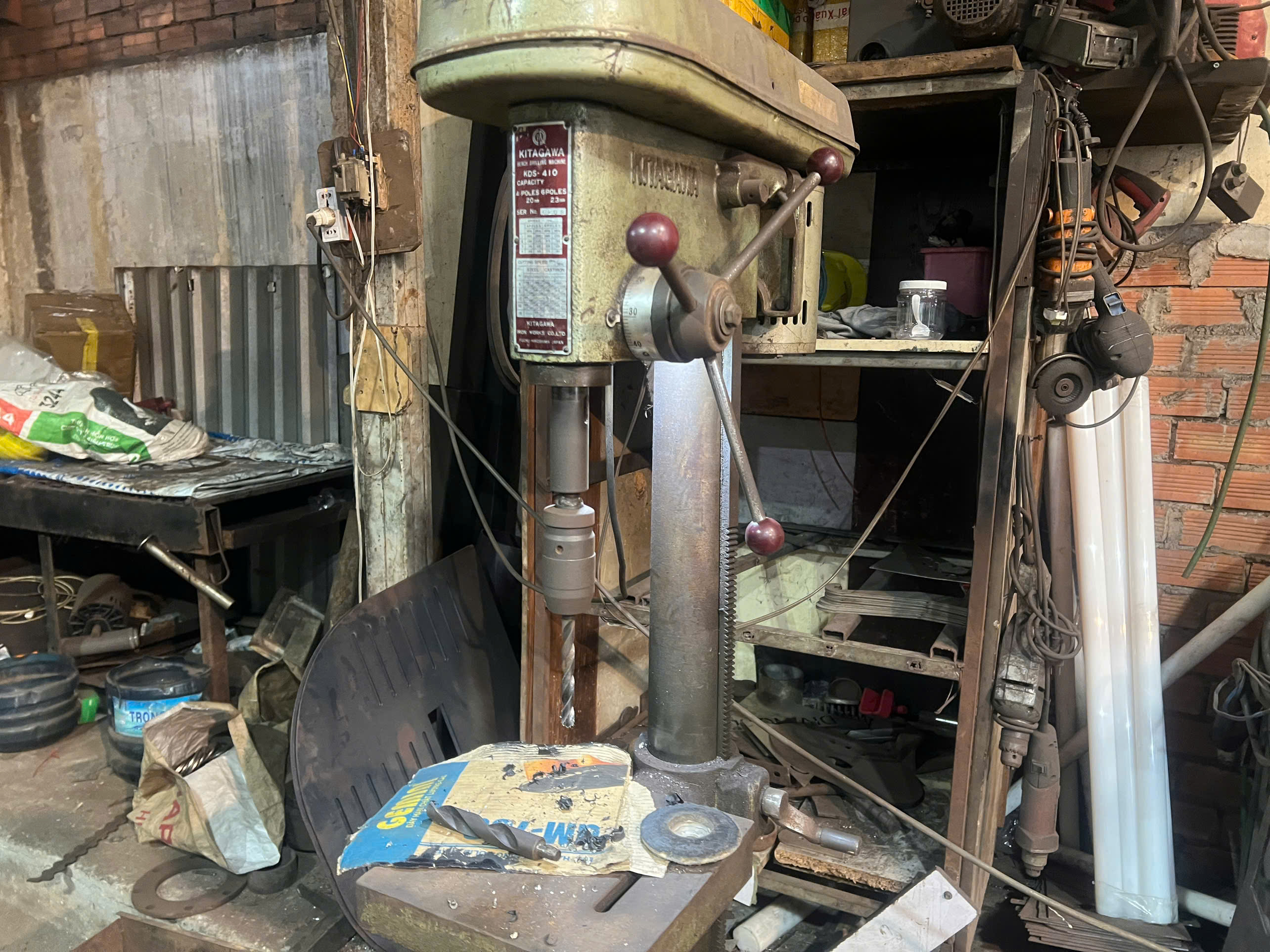

When a client’s production line stops because stamped brackets arrive late, the real cost goes far beyond the parts themselves — it’s the cost of silence, lost trust, and cascading delays across the entire supply chain.
To evaluate a supplier’s responsiveness for urgent stamping parts orders, assess their physical press capacity, in-house tooling availability, communication response time, on-time delivery rate history for expedited runs, and their willingness to provide real-time production updates — not just their speed in answering emails.
I’ve managed sourcing projects across Vietnam, China, and other Asian manufacturing hubs for years galvanized sheet metal 1. Through our supply chain work supporting U.S. buyers, I’ve learned that a supplier who replies fast but lacks surge capacity is more dangerous than one who replies slowly but delivers on time. This article breaks down the operational, technical, and behavioral signals you need to watch when evaluating stamping suppliers for emergency orders.
What Response Time Should I Expect When I Request an Urgent Stamping Quote?
A few months ago, one of our U.S. clients needed a revised quote for zinc-plated mounting brackets within 24 hours — the kind of angular, multi-planar stamped parts with slotted holes and right-angle bends that require precise tooling setup. The supplier took five days. The project slipped by two weeks.
For urgent stamping quotes, expect a qualified supplier to acknowledge your RFQ within 2–4 hours during business hours and deliver a detailed quote within 24–48 hours. Any supplier consistently exceeding 48 hours for emergency quotes likely lacks the production capacity assessment processes needed for rush work.

Breaking Down Quote Turnaround Into Measurable Steps
Response time is not a single number. It's a chain of internal steps, and each link can break. When our team audits a stamping supplier's quoting process, we look at each phase separately.
| Quote Phase | Expected Timeframe (Urgent) | What It Reveals |
|---|---|---|
| Initial acknowledgment | Within 2–4 hours | Basic communication discipline |
| Feasibility review | Within 8–12 hours | Engineering readiness and tooling knowledge |
| Material availability check | Within 12–24 hours | Raw material safety stock levels |
| Formal quote delivery | Within 24–48 hours | Overall organizational agility |
| Clarification follow-up | Same day as buyer's question | Proactive engagement culture |
A supplier who can complete a formal feasibility review quickly — analyzing press capacity, material handling requirements, and quality system alignment — signals genuine readiness. This review is where they check if their press tonnage 2 and bed size can handle the geometry of your part. For example, those Z-shaped spring clamps with curved gripping lips require specific die clearances. A supplier who skips this step and just quotes a price is guessing.
Why Acknowledgment Speed Alone Is Misleading
I've seen suppliers reply to emails within minutes but take a week to produce an actual quote. The communication response time for the initial email is meaningless if the engineering team behind them is overloaded. What matters is the full cycle — from your request landing in their inbox to a quote you can actually act on.
Track this over multiple interactions. One fast reply could be luck. Consistent sub-24-hour quote delivery over several requests shows a real system. Our approach when onboarding a new stamping vendor is to send three separate RFQs over two weeks and measure each response independently. If the average drifts above 48 hours, we flag it.
The Material Factor
Lead time reduction on urgent orders often depends on whether the supplier stocks common stamping alloys. For standard cold-rolled steel 3 or galvanized sheet metal — the kind used for those brushed-silver mounting brackets — a well-prepared supplier maintains safety stock. If they need to order material for every job, your "urgent" order is already behind before it starts.
How Can I Tell If a Supplier Will Communicate Proactively During a Rush Order?
During a recent expedited manufacturing services project for stamped steel clips, our Vietnam office coordinated with a supplier who went silent for three days mid-production. No updates, no warnings. When we finally reached them, the die had cracked and they were waiting for a replacement — but never told us.
A supplier who communicates proactively during rush orders will provide unsolicited status updates at agreed intervals, flag problems before deadlines pass, ask clarifying questions upfront, and offer commit-date revisions early rather than missing delivery silently. Test this behavior before committing large orders.

The Behavioral Test: Small Order, Big Insight
Before we place a major stamping order through any new supplier, our team runs what I call the "urgency test." We send a small, non-critical request with a tight deadline and observe three things:
- Do they ask questions? A supplier who accepts complex drawing requirements without any clarification is not thinking deeply. Those stamped brackets with precision-punched circular and slotted holes have tolerances that demand questions.
- Do they provide updates without being asked? If you have to chase them for status on a small order, imagine what happens during a full production run.
- Do they warn you about potential issues? A proactive supplier tells you the slotted hole dimension is borderline before production, not after 10,000 parts are stamped.
Measuring Proactive Communication With a Scorecard
We track vendor scorecard metrics for communication across every project. Here's a simplified version of the communication section:
| Metric | Target | How to Measure |
|---|---|---|
| Unsolicited status updates | At least 1 per production milestone | Count updates received without a prompt |
| Problem notification lead time | ≥24 hours before deadline impact | Time between supplier's alert and the affected deadline |
| Clarification questions asked | ≥2 per new drawing/revision | Count substantive engineering questions during quoting |
| Commit-date update rate | Revisions sent ≥48 hours before original date | Percentage of date changes communicated proactively |
| Response to buyer inquiries | Within 4 business hours | Average measured over 10+ interactions |
Digital Transparency Matters
Supply chain agility today increasingly depends on digital tools. Some advanced stamping suppliers offer customer portals or ERP integration 4 where you can see live machine-level status. While this is more common among larger operations, even a small shop that shares daily photos or a simple spreadsheet tracker is demonstrating proactive intent.
I've found that suppliers willing to share their scheduling board — even informally — tend to be the ones who deliver. They're not hiding anything. When we conduct supplier audits in Vietnam and China, one of our standard checks is whether the shop floor has a visible production schedule. If the foreman can point to your order on the board and tell you where it stands, that's a strong signal.
The commit-date update rate is especially telling. Suppliers who revise delivery dates before the original deadline passes show they're monitoring progress and planning ahead. Those who only communicate after missing a date are reactive, and reactive suppliers will cost you during a real emergency.
Which Red Flags Signal a Stamping Supplier Won't Keep Up With My Urgent Deadlines?
One lesson we learned the hard way: a supplier quoted a 10-day turnaround for a batch of galvanized stamped mounting clips, but their only progressive die for that part geometry was stored off-site at a third-party tooling shop. Retrieving, inspecting, and setting up that die consumed four days before a single part was stamped.
Red flags include tooling stored off-site, no documented press maintenance schedule, inability to name specific press tonnage for your part, vague answers about scheduling conflicts, a history of last-minute delivery date changes, and zero questions asked about your drawing requirements — all signal the supplier lacks capacity for urgent deadlines.

Tooling Location and Condition
The single biggest risk factor for urgent stamping orders is tooling logistics. If a supplier's progressive dies 5 and transfer dies are not stored on-site, organized, and maintained, every urgent order starts with a retrieval delay. During our facility audits, we physically inspect the tool room. We look for labeled racks, maintenance logs, and whether the die you'll need is accessible within hours — not days.
In-house tooling capability also means the supplier can make quick modifications. If your stamped bracket design has a last-minute revision — say, a hole position shifts by 2mm — a supplier with in-house tool and die maintenance can adjust the die that day. A supplier who relies on an external shop adds a week or more.
The Complete Red Flag Checklist
Here are the warning signs I watch for, organized by category:
Operational Red Flags:
- Tooling stored at external facilities
- No documented press uptime or maintenance records
- No dedicated surge capacity or emergency production slots
- Single-shift operation with no overtime policy
Communication Red Flags:
- No questions asked about complex drawings
- Vague or evasive answers about current production load
- Promises of "24-hour turnaround" without explaining how they'll schedule it
- History of last-minute commit-date changes
Technical Red Flags:
- Cannot specify press tonnage, bed size, or stroke depth for your part
- No quality management system certification (IATF 16949 6 for automotive, ISO 9001 7 minimum for others)
- No in-house metrology or inspection equipment
- Reliance on manual processes for parts requiring tight tolerances
The Aspiration vs. Operation Gap
Many suppliers will tell you what you want to hear. "Yes, we can do urgent orders." "No problem, we'll prioritize your job." These are aspirational claims. What you need are operational answers.
Ask them: "If I place this order today, which press will you run it on? What's currently scheduled on that press? How will you shift that work?" If they can answer these questions specifically, they have real scheduling flexibility. If they give you generalities, they're hoping — not planning.
The on-time delivery rate for expedited orders is a distinct metric from their general OTD. A supplier might hit 95% OTD on standard lead-time orders but drop to 70% on rush jobs. Always ask for expedited-specific delivery data. Aim for 92% or higher.
What Questions Should I Ask to Confirm a Supplier's Capacity for Emergency Stamping Runs?
When our China office was qualifying a new stamping supplier last year, the supplier's sales team was polished and responsive. But when we visited the factory, we found only two presses — both running at full capacity on existing orders. There was zero room for an emergency run. The right questions, asked early, would have saved us the trip.
Ask suppliers to specify their available press tonnage and count, current utilization rate, in-house tooling turnaround time, workforce cross-training depth, raw material stock levels for your alloys, and their documented process for inserting emergency orders into existing production schedules. Demand specifics, not promises.

The Essential Question List
Below is the structured set of questions our team uses during supplier qualification for urgent stamping capability. These go beyond standard vendor questionnaires and target the operational realities of expedited manufacturing services.
| Category | Question to Ask | What a Good Answer Looks Like |
|---|---|---|
| Press capacity | How many presses do you have, and what tonnage range? | Specific numbers (e.g., "6 presses, 60T to 400T") |
| Utilization | What is your current average press utilization rate? | 70–85% (leaves room for surge) |
| Scheduling | How do you insert an emergency order into your production queue? | Defined process (e.g., "we reserve 15% capacity for rush jobs") |
| Tooling | Is tooling stored on-site? How quickly can you set up a die? | On-site, organized, setup within 2–4 hours |
| Tooling turnaround time | If a die needs repair, how long does it take? | In-house repair within 24 hours for minor issues |
| Material | Do you stock common alloys (CRS, galvanized steel, stainless)? | Yes, with >95% stock availability for standard gauges |
| Workforce | Are operators cross-trained across press types? | Cross-training matrix available; at least 2 operators per press type |
| Maintenance | Do you have documented press maintenance schedules? | Preventive maintenance logs, ideally with IoT-driven predictive data |
| Quality | What is your first-pass yield on stamped parts? | ≥95% first-pass yield |
| Logistics | What expedited freight options do you have? | Relationships with 24/7 carriers; proximity to logistics hubs |
Capacity Versus Utilization
A supplier with ten presses running at 98% utilization has less surge capacity than one with five presses at 75% utilization. This is why production capacity assessment must include utilization data, not just equipment lists. When we review a potential stamping partner, we ask for their last three months of utilization reports. If they can't provide them, it tells us they're not tracking it — which is itself a red flag.
Servo Press Capability and Advanced Materials
For complex geometries — like those multi-planar brackets with angular bent flanges and precision-punched holes — servo press technology matters. Servo presses offer programmable slide motion 8, which allows better control over forming Advanced High-Strength Steel (AHSS) 9 and other demanding materials. If your urgent order involves complex parts or high-performance alloys, confirm whether the supplier has servo press capability. A conventional mechanical press may not handle the geometry, and the supplier may discover this mid-run, causing delays.
Predictive Maintenance as a Reliability Indicator
A press breakdown during your urgent run is the worst-case scenario. Suppliers investing in IoT-driven predictive maintenance 10 on their presses can quantify and reduce this risk. During facility audits, we look for sensors on press motors, real-time monitoring dashboards, and maintenance logs that show trend-based interventions — not just reactive repairs after a failure.
Ask the supplier: "When was the last unplanned press downtime, and what caused it?" Their answer reveals both their maintenance discipline and their honesty. A supplier who claims zero downtime is not being truthful. A supplier who says "we had a hydraulic issue three months ago, identified it through vibration monitoring, and resolved it in four hours" is showing you a mature operation.
Just-in-Time Delivery and Logistics Readiness
The final piece of the emergency capacity puzzle is logistics. A supplier can stamp your parts on time but still miss your deadline if they lack expedited shipping options. Confirm their proximity to major logistics hubs and whether they have established relationships with carriers who offer 24/7 pickup. For our projects shipping from Vietnam or China to the U.S., we coordinate door-to-door logistics management — but even so, the supplier's ability to get packed goods to the freight forwarder within hours, not days, is critical for just-in-time delivery.
Conclusion
Evaluating a supplier's responsiveness for urgent stamping parts orders demands more than checking email speed — it requires auditing their physical capacity, tooling readiness, communication habits, and logistics infrastructure to protect your production schedule.
Frequently Asked Questions
What Response Time Should I Expect When I Request an Urgent Stamping Quote?
A few months ago, one of our U.S. clients needed a revised quote for zinc-plated mounting brackets within 24 hours — the kind of angular, multi-planar stamped parts with slotted holes and right-angle bends that require precise tooling setup. The supplier took five days. The project slipped by two weeks.
How Can I Tell If a Supplier Will Communicate Proactively During a Rush Order?
During a recent expedited manufacturing services project for stamped steel clips, our Vietnam office coordinated with a supplier who went silent for three days mid-production. No updates, no warnings. When we finally reached them, the die had cracked and they were waiting for a replacement — but never told us.
Which Red Flags Signal a Stamping Supplier Won't Keep Up With My Urgent Deadlines?
One lesson we learned the hard way: a supplier quoted a 10-day turnaround for a batch of galvanized stamped mounting clips, but their only progressive die for that part geometry was stored off-site at a third-party tooling shop. Retrieving, inspecting, and setting up that die consumed four days before a single part was stamped.
Footnotes
1. Background concept on galvanization process for the sheet metal alloy mentioned. ↩︎
2. Technical overview of stamping press mechanics and force capacity from a reliable encyclopedia. ↩︎
3. Comprehensive explanation of the cold-rolling process and its effects on metal properties. ↩︎
4. Background concept explaining enterprise resource planning systems used for production visibility. ↩︎
5. Background reference on metal stamping tooling concepts including progressive die operation. ↩︎
6. Authoritative Wikipedia entry for the international automotive quality management standard. ↩︎
7. Official ISO standard reference for quality management systems mentioned as baseline certification. ↩︎
8. Precision Metalforming Association is the authoritative industry body for servo press technology. ↩︎
9. Authoritative materials science reference explaining AHSS properties relevant to stamping forming. ↩︎
10. IEEE is the leading authority on IoT and predictive maintenance technology standards. ↩︎