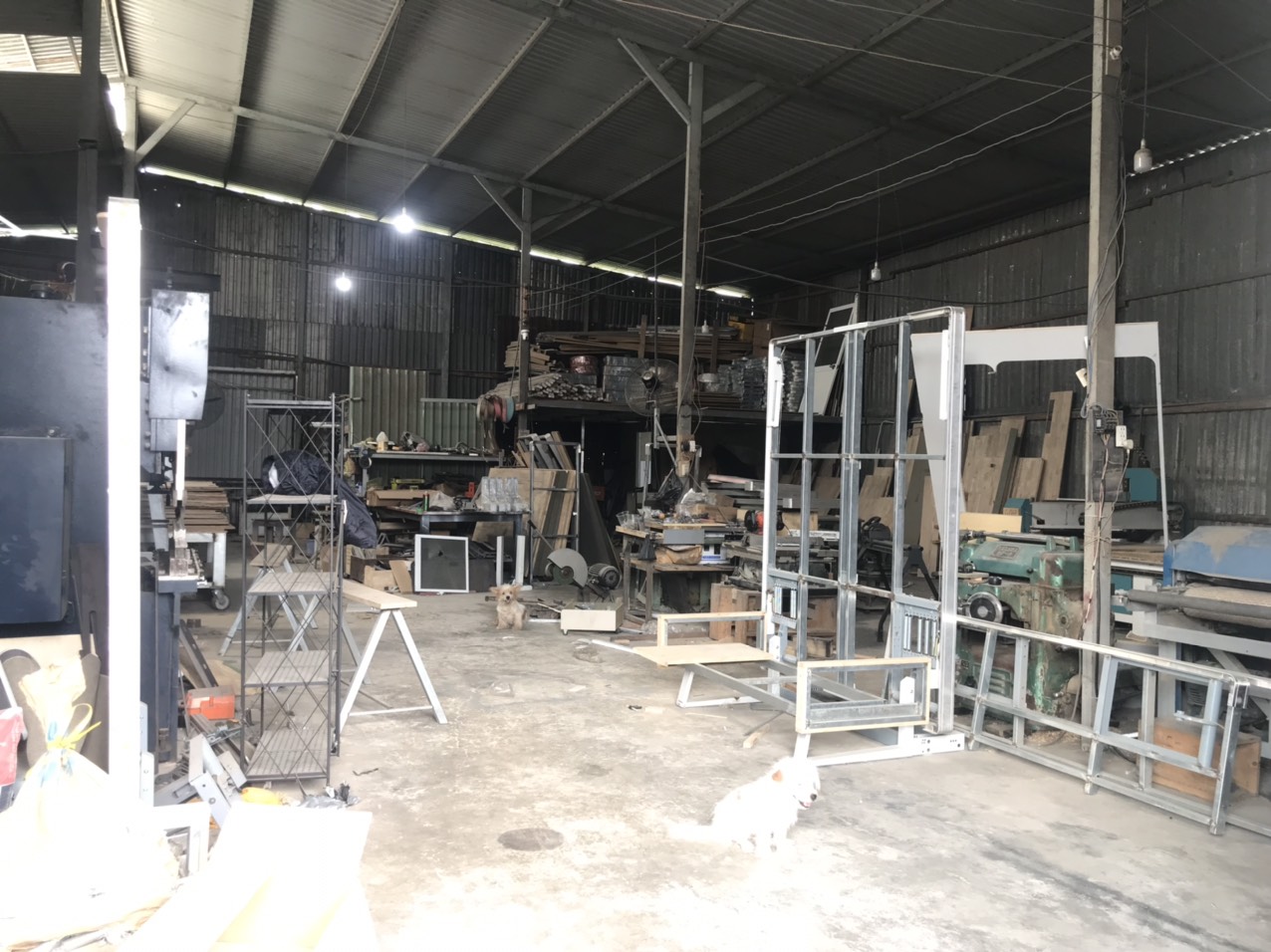

Evaluating supplier sustainability and carbon footprint for stamping parts became urgent when one of our U.S. clients asked us to provide Scope 3 emissions data for every bracket we sourced from Asia — and we had almost nothing to show them.
To evaluate supplier sustainability and carbon footprint for stamping parts, measure energy consumption per production hour, material yield and metal scrap recycling rate, verify ISO 14001 certification and third-party ESG performance metrics, and apply a tiered risk-segmentation framework that balances environmental goals with cost and quality.
This guide walks through the exact metrics, verification steps, certifications, and sourcing strategies we use at DEWIN when auditing stamping suppliers 1 across Vietnam, China, Taiwan, and India. Each section gives you actionable tools you can apply immediately.
What Key Metrics Should I Use to Measure a Stamping Supplier's Carbon Footprint?
A lesson we learned early in our supply chain work 2: not all carbon metrics are equal for stamping. When we audit a press shop in Vietnam, we focus on the metrics that actually move the needle — energy intensity per press cycle and how much raw steel ends up as scrap versus finished parts.
The key metrics for measuring a stamping supplier’s carbon footprint include energy consumption per production hour, material utilization rate, scrap recovery efficiency, Scope 1 and Scope 2 greenhouse gas emissions, and press-to-part tonnage optimization — all validated through a Life Cycle Assessment framework.

Why Stamping Has a Unique Carbon Profile
Metal stamping is different from casting or machining. The carbon footprint is dominated by two factors: the electricity that powers hydraulic or mechanical presses 3 and the material that gets punched out and discarded as scrap. In our experience sourcing custom brackets and mounting clips for U.S. buyers, we have seen material utilization rates range from 60% to 85% depending on how well the supplier optimizes their strip layout. That 25-point gap translates directly into carbon cost — because every kilogram of wasted steel carries the embedded carbon from mining, smelting, and transport.
The Core KPIs You Should Track
Here is a practical table of the metrics we require from every stamping supplier during our audit process:
| Metric | What It Measures | Target Benchmark |
|---|---|---|
| Energy consumption per production hour | Electricity used by presses, conveyors, and auxiliary systems | Below 150 kWh per ton of output |
| Material utilization rate | Percentage of raw coil that becomes finished parts | Above 75% |
| Scrap recovery rate | Percentage of scrap metal collected and recycled | Above 95% |
| Scope 1 4 emissions | Direct emissions from on-site fuel combustion | Tracked quarterly with reduction targets |
| Scope 2 emissions | Indirect emissions from purchased electricity | Declining trend year-over-year |
| Press-to-part tonnage ratio | Match between press capacity and part requirements | No more than 30% oversized |
| Lubricant consumption | Volume of stamping oils and coolants used per batch | Adoption of Minimum Quantity Lubrication preferred |
The Emergy-Based Assessment Approach
One method we have started applying — especially for complex multi-step stamping projects — is the emergy-based assessment. In plain English, emergy converts every input (steel coil, electricity, water, lubricant, labor time) into a single unit of environmental cost. This lets you compare two suppliers on a single sustainability index, even if one uses sustainability indices 5 more energy but less material, and the other does the opposite.
We find this approach especially useful when a client sends us drawings for precision mounting brackets with multiple bends and punched holes. The strip layout efficiency on those parts varies wildly between suppliers. One factory in Vietnam achieved an 82% utilization rate on a Z-shaped spring clamp by re-nesting the blank layout — while a competing quote from another shop assumed a standard layout at only 68%. That 14-point difference meant roughly 14% more raw steel consumed per part, along with all the upstream carbon it carries.
Scope 3 and Supply Chain Transparency
Your Scope 3 emissions reporting depends on the accuracy of data your stamping suppliers provide. We always ask suppliers to break out their Scope 1 (direct fuel) and Scope 2 (purchased electricity) numbers separately. Without that split, you cannot feed accurate data into the Greenhouse Gas Protocol framework.
Real-time IoT monitoring of energy consumption at the individual press level is still rare in Southeast Asian stamping shops, but we are seeing early adoption among the more progressive suppliers we work with. When a supplier can show us a dashboard of kilowatt-hours per press per shift, we know their data is credible.
How Can I Verify My Supplier's Sustainability Claims Before Signing a Contract?
A buyer we work with in the Midwest once told us: "Every supplier says they're green. I need proof before I sign." That single conversation reshaped how our team approaches pre-contract supplier verification across Asia.
Verify a supplier’s sustainability claims by requesting documented Scope 1 and Scope 2 emissions data, conducting on-site audits of scrap recovery and energy systems, cross-checking certifications with issuing bodies, and using structured ESG questionnaires scored against objective thresholds before any contract is signed.

The Problem with Self-Reported Data
Self-assessments are a starting point, not a finish line. In our experience managing supplier audits in China and Vietnam, roughly three out of ten suppliers overstate their recycling rates or underreport waste volumes when filling out sustainability questionnaires. This is not always intentional — sometimes the data simply does not exist because the shop has never tracked it.
That is why our process always pairs the questionnaire with a physical verification step. We send our local team — seven people in Vietnam, twenty-one in China — to walk the factory floor, inspect scrap bins, check electricity meters, and review waste disposal contracts with licensed recyclers.
A Tiered Verification Framework
Not every supplier needs the same level of scrutiny. We use a risk-segmentation model that prioritizes deep-dive audits for high-impact suppliers:
| Supplier Tier | Criteria | Verification Depth |
|---|---|---|
| Tier 1 — Strategic | Annual spend above $200K, sole-source, or critical component | Full ESG assessment, on-site audit, continuous monitoring, document validation |
| Tier 2 — Operational | Moderate spend, multiple available sources | Standard ESG questionnaire, targeted desktop review, spot-check visits |
| Tier 3 — Low Impact | Low spend, commodity items, easily replaceable | Basic compliance validation, self-disclosure only |
This framework keeps your audit budget focused where it matters most. For stamping parts like precision mounting brackets or spring clamps that are critical to an assembly, we always recommend Tier 1 treatment.
What to Look for During an On-Site Visit
When our team visits a stamping facility, we check specific things that questionnaires cannot capture:
- Scrap segregation — Is the scrap metal separated by alloy type? Mixed scrap gets lower recycling value and higher carbon cost.
- Energy metering — Does the factory have sub-meters on individual presses, or only a single main meter? Individual metering indicates genuine tracking.
- Lubricant management — Is the supplier using Minimum Quantity Lubrication or flooding parts with conventional oil? MQL reduces both chemical waste and disposal footprint.
- Material traceability — Can the supplier trace a coil of steel back to its mill certificate? This matters especially if you are specifying low-carbon "Green Steel" material batches.
- Waste contracts — Ask to see the contract with their licensed scrap buyer. No contract usually means no reliable recycling.
Cross-Checking Certifications
We always verify certifications directly with the issuing body. An ISO 14001 certificate should list the specific scope and site covered. We have encountered cases where a supplier holds a valid certificate for one facility but routes production through an uncertified sister plant. Checking the certificate number against the registrar's online database takes five minutes and can save months of trouble.
An EcoVadis sustainability rating 6 is another useful benchmark — it provides a third-party score that covers environment, labor, ethics, and procurement. We encourage clients to request the supplier's scorecard as part of the pre-qualification process.
Which Certifications Should I Require to Confirm Environmentally Responsible Manufacturing?
During a recent project co-development cycle for a set of galvanized mounting brackets, our engineering team had to determine exactly which certifications were non-negotiable versus nice-to-have. The answer depends on your industry, your end customer's requirements, and the regulatory environment in your market.
At a minimum, require ISO 14001 for environmental management and ISO 9001 for quality; for advanced sustainability assurance, add ISO 50001 for energy management, request an EcoVadis sustainability rating, and verify compliance with REACH or RoHS if the parts enter regulated markets.

The Baseline: ISO 14001 and ISO 9001
ISO 14001 is the global standard for environmental management systems. It requires the supplier to identify environmental aspects 7 of their operations, set improvement targets, and undergo regular external audits. For stamping, this covers energy use, emissions, scrap management, and chemical handling.
ISO 9001 is about quality management 8, but it intersects with sustainability in an important way. A supplier with strong quality controls produces fewer defective parts, which means less rework, less wasted material, and lower energy consumption per good part. In our PPAP and process control work, we consistently see that suppliers who take quality seriously also tend to manage waste better.
Beyond the Basics: Energy and Sustainability Ratings
| Certification / Rating | What It Covers | Why It Matters for Stamping |
|---|---|---|
| ISO 14001 | Environmental management system | Proves structured approach to emissions, waste, and resource use |
| ISO 9001 | Quality management system | Reduces rework and material waste through process discipline |
| ISO 50001 | Energy management system | Drives continuous improvement in energy efficiency — critical for press-intensive operations |
| EcoVadis Rating | Holistic ESG performance across environment, labor, ethics, procurement | Provides a comparable third-party score; increasingly required by OEMs |
| IATF 16949 | Automotive quality management | Required if stamped parts enter automotive supply chains |
| RoHS / REACH Compliance | Restriction of hazardous substances | Mandatory for parts entering EU markets; ensures material safety |
Certifications Are Not Enough on Their Own
Here is a trade-off we weigh constantly: a certificate proves that a management system exists, but it does not prove daily performance. We have audited suppliers holding ISO 14001 who still dumped lubricant waste improperly. Conversely, we have worked with smaller stamping shops in Vietnam that lacked formal certification but ran exceptionally clean operations with near-zero landfill waste.
The takeaway is that certifications should be a gate — a minimum requirement to enter the conversation. But they must be paired with continuous monitoring and periodic on-site verification. A decarbonization strategy written into a policy manual is meaningless unless the shop floor reflects it.
Industry-Specific Requirements
If your stamped brackets or clips end up in automotive assemblies, IATF 16949 is likely automotive quality standards 9 mandatory. If they go into electronics enclosures sold in Europe, RoHS and REACH apply. We always map the final application before setting certification requirements — because over-specifying certifications adds cost without adding value, while under-specifying creates regulatory risk.
For clients focused on Scope 3 emissions reporting, we also recommend asking whether the supplier can provide a cradle-to-gate Life Cycle Assessment for the specific part. This goes beyond certifications into actual environmental performance data.
How Do I Balance Sustainability Goals with Cost and Quality When Sourcing Stamping Parts?
One of the hardest conversations we have with purchasing managers happens when the most sustainable supplier is not the cheapest one. A client sourcing Z-shaped spring clamps asked us last year: "Can I get green and affordable?" The honest answer is yes — but it requires a different way of calculating cost.
Balance sustainability with cost and quality by calculating total cost of ownership — including scrap waste, rework rates, logistics carbon, and regulatory risk — rather than unit price alone, then integrate measurable sustainability commitments into contracts with tiered performance incentives.

Why Unit Price Is Misleading
When we compare stamping quotes from different Asian suppliers, the unit price tells only part of the story. A supplier quoting $0.12 per bracket with a 65% material utilization rate may actually cost more than a supplier quoting $0.14 with an 82% utilization rate — because the first supplier uses more steel per part, generates more scrap, and likely has higher embedded carbon that your company must report under Scope 3.
We built a simple total cost model that our sourcing team uses:
| Cost Element | Low-Sustainability Supplier | High-Sustainability Supplier |
|---|---|---|
| Unit price | $0.12 | $0.14 |
| Material waste cost (embedded in price) | Higher raw material consumption | Lower due to optimized strip layout |
| Rework / rejection rate | 3–5% typical | Below 1% with strong QC |
| Scrap carbon liability | High — poor recovery | Low — closed-loop recycling |
| Logistics carbon | Standard shipping | May use consolidated or optimized routing |
| Regulatory risk premium | Exposure to future carbon taxes | Lower exposure, audit-ready |
| Effective total cost | Often higher | Often lower over 12+ months |
Integrating Sustainability into Contracts
Moving sustainability from a vague preference to a contractual obligation is where real change happens. In our contract manufacturing agreements, we include specific clauses:
- Measurable targets: The supplier commits to a defined metal scrap recycling rate (e.g., above 95%) and energy reduction goals.
- Reporting cadence: Quarterly reports on energy consumption, scrap volumes, and waste disposal.
- Audit rights: We retain the right to conduct unannounced on-site sustainability audits.
- Performance incentives: Suppliers who exceed targets may receive longer contract terms or priority on new projects.
The Role of Industry 4.0 and Automation
Suppliers investing in predictive maintenance 10, automated press monitoring, and IoT-based energy tracking often deliver better sustainability outcomes without sacrificing quality or cost. When a press runs at optimal tonnage for each part — rather than using an oversized machine — it consumes less energy per cycle. Predictive maintenance reduces unplanned downtime, which avoids the carbon cost of restarting and re-calibrating production lines.
We have seen this firsthand in a Vietnamese supplier we work with who installed real-time power monitoring on their progressive die presses. Their energy per ton dropped by roughly 12% in the first six months, and their part-to-part consistency improved because the system flagged when press parameters drifted.
Geographic Sourcing and Carbon Trade-Offs
Where you source also matters for your overall supply chain transparency and carbon profile. Sourcing from a country with a cleaner electricity grid reduces Scope 2 emissions for the supplier — and your Scope 3 by extension. Vietnam's grid, for example, has a growing share of hydroelectric and renewable capacity compared to some other manufacturing hubs. We factor grid carbon intensity into our supplier evaluations when helping clients choose between factories in different countries.
The key insight is that sustainability, cost, and quality are not always in conflict. The suppliers who invest in efficient tooling, strong quality systems, and modern energy management tend to deliver on all three dimensions. The cheapest quote often hides the highest total cost.
Conclusion
Evaluating supplier sustainability and carbon footprint for stamping parts is not optional anymore — it is a competitive advantage. Use the metrics, verification steps, certification requirements, and total-cost frameworks in this guide to build a greener, stronger supply chain. For a deeper look at how to evaluate environmental compliance and sustainability when sourcing stamping parts, explore our dedicated guide. You may also find it valuable to understand how to evaluate supplier scrap and yield rates when sourcing stamping parts from Vietnam, and how to evaluate ESG performance when sourcing sheet metal fabrication.
Frequently Asked Questions
What Key Metrics Should I Use to Measure a Stamping Supplier's Carbon Footprint?
A lesson we learned early in our supply chain work 2 : not all carbon metrics are equal for stamping. When we audit a press shop in Vietnam, we focus on the metrics that actually move the needle — energy intensity per press cycle and how much raw steel ends up as scrap versus finished parts.
How Can I Verify My Supplier's Sustainability Claims Before Signing a Contract?
A buyer we work with in the Midwest once told us: "Every supplier says they're green. I need proof before I sign." That single conversation reshaped how our team approaches pre-contract supplier verification across Asia.
Which Certifications Should I Require to Confirm Environmentally Responsible Manufacturing?
During a recent project co-development cycle for a set of galvanized mounting brackets, our engineering team had to determine exactly which certifications were non-negotiable versus nice-to-have. The answer depends on your industry, your end customer's requirements, and the regulatory environment in your market.
Footnotes
1. Stamping is a manufacturing process used to convert flat metal sheets into specific shapes. ↩︎
2. Supply chain management involves the flow of goods and services from raw materials to final products. ↩︎
3. Authoritative Wikipedia entry providing a technical overview of mechanical and machine presses. ↩︎
4. Scope 1 emissions are direct greenhouse gas emissions from sources owned or controlled by a company. ↩︎
5. Corrected Wikipedia URL for the standard reference on sustainability measurement and indexing. ↩︎
6. EcoVadis provides evidence-based sustainability ratings for companies across global supply chains. ↩︎
7. Environmental aspects are elements of an organization’s activities that can interact with the environment. ↩︎
8. Quality management ensures that an organization, product, or service is consistent and meets requirements. ↩︎
9. Authoritative Wikipedia page for IATF 16949, the primary standard for automotive assemblies and parts. ↩︎
10. Predictive maintenance uses data analysis to detect anomalies and potential equipment failures before they occur. ↩︎