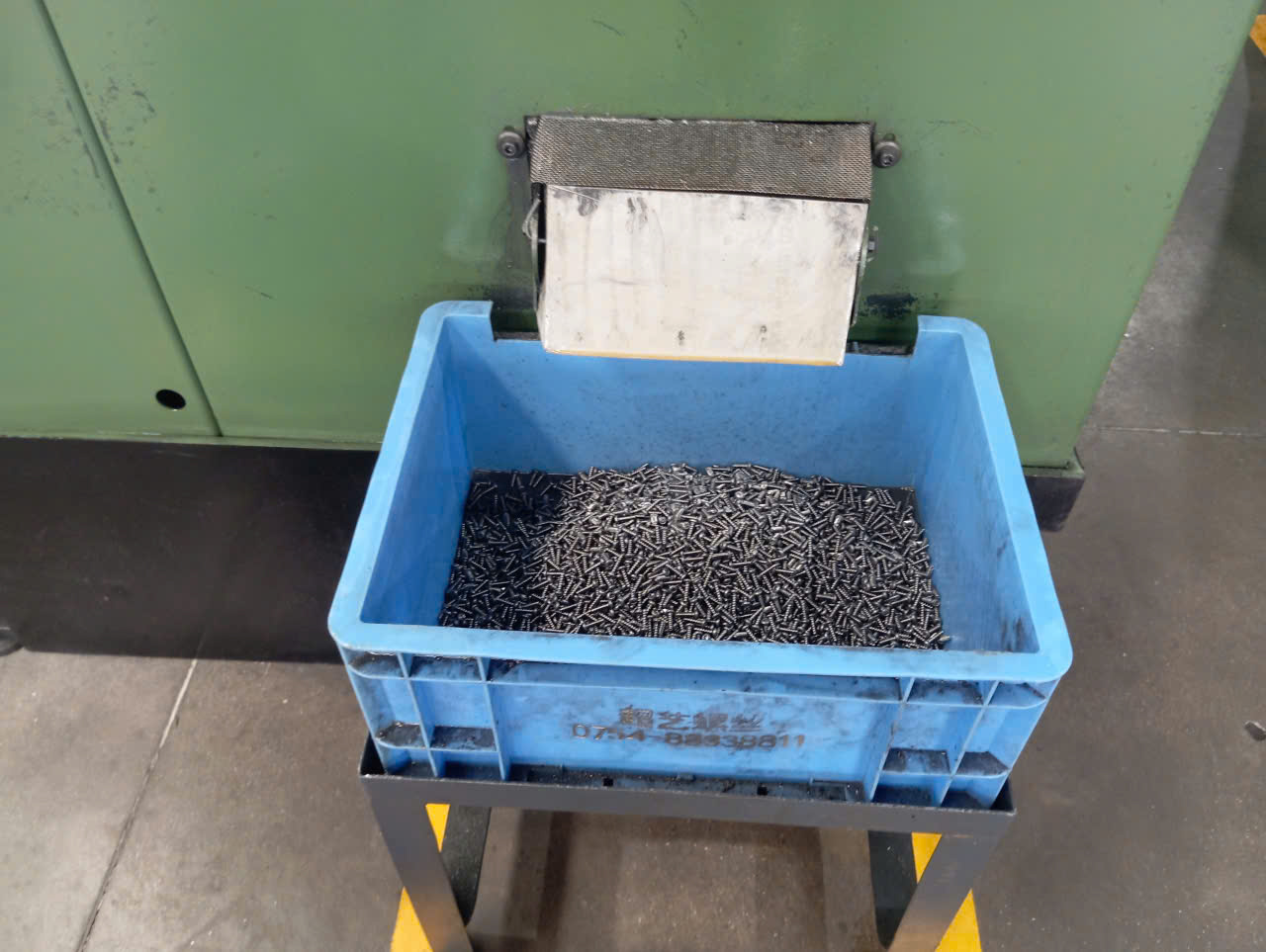

Last quarter, a client in Ohio sent us a stamping part quote from a Vietnamese supplier — $0.48 per piece. He was thrilled. Then we ran the full total landed cost model 1, and the real number came back at $0.91. His excitement turned to concern, and that concern is exactly why this guide exists.
To evaluate total landed cost when sourcing stamping parts from Vietnam, you must calculate beyond the unit price — adding tooling amortization, ocean freight rates, import duties and taxes, customs brokerage fees, quality inspection services, insurance, packaging, and inventory carrying costs. The FOB price often represents only 40–55% of the true landed cost.
In this article, I will break down every cost layer you need to model before placing your next purchase order. We will cover hidden costs, tariff math, logistics comparisons, and the quality-related expenses that most buyers overlook until it is too late.
How do I calculate all the hidden costs beyond the unit price when sourcing stamping parts from Vietnam?
A few months ago, our Vietnam office helped a U.S. buyer audit three stamping suppliers near Hai Phong. The unit prices looked almost identical. But once we layered in tooling and mold costs, inland haulage charges, sampling rounds, and packaging specs, the gap between the cheapest and most expensive supplier widened to 28%.
Beyond the unit price, you must calculate tooling amortization over program life, packaging costs, inland transport to port, ocean freight, insurance, customs brokerage fees, import duties and taxes, quality inspection services, inventory carrying cost, and a 5% buffer for miscellaneous charges like testing and certification.

The Master TLC Formula for Stamping Parts
Here is the formula our team uses on every stamping project:
TLC = Product Cost + Tooling/Fixed Costs + Packaging + Shipping + Insurance + Duties + Taxes + Brokerage + Inspection + Inventory Carrying Cost
Each variable needs its own line item. You cannot estimate. You must get quotes for every layer. For a detailed walkthrough of how to calculate total landed cost for stamping parts from Vietnam, we have published a step-by-step guide.
Why Tooling Dominates Early Spend
Stamping is tooling-driven. Unlike CNC machining, where the machine does most of the work, stamping relies on a die that must be designed, cut, hardened, and tested. Progressive dies 2 can cost $5,000 to $50,000 depending on complexity. That cost is paid upfront, and the piece price only becomes competitive when volume amortizes the tooling.
Here is a simple amortization example:
| Die Cost | Annual Volume | Years in Program | Amortized Cost Per Part |
|---|---|---|---|
| $8,000 | 10,000 | 3 | $0.27 |
| $8,000 | 50,000 | 3 | $0.053 |
| $8,000 | 100,000 | 3 | $0.027 |
| $20,000 | 10,000 | 3 | $0.67 |
| $20,000 | 100,000 | 3 | $0.067 |
The lesson is clear. At low volumes, tooling cost per part can exceed the piece price itself. You must evaluate die cost over the full program life — not a single purchase order.
The Costs Most Buyers Forget
When we onboard a new project, we walk clients through a checklist of commonly missed costs:
- Supplier development: Time and travel to vet, audit, and qualify a new supplier.
- Sampling rounds: Most stamping projects need two to three sample iterations before approval. Each round has material, labor, and shipping costs.
- Packaging engineering: Heavy stamped parts need custom packaging to prevent damage. Corrugate, foam inserts, and dunnage add up.
- Inventory carrying cost: Calculate this based on lead time and your cost of capital 3. A 60-day ocean transit plus 30-day buffer ties up significant working capital.
- Currency exchange rate fluctuations: The Vietnamese Dong has been relatively stable, but even a 2–3% swing on a large PO can impact margins.
We recommend adding a 5% buffer to the FOB price for miscellaneous charges — testing fees, re-inspection, documentation corrections, and minor specification changes. This buffer consistently proves accurate across our projects.
Ownership Clauses Matter
One critical detail: your contract must explicitly state that die ownership belongs to the buyer. If a supplier fails or you need to switch factories, you need the legal right to move your tooling. We have seen cases where buyers lost access to $30,000 worth of dies because the contract was silent on ownership. Tooling lead time typically runs 4–8 weeks, and that timeline must be built into your program schedule.
What tariffs and duties should I factor in when importing stamping parts from Vietnam to the U.S.?
One trade-off we weigh constantly with our clients is whether the tariff math alone justifies moving production from China to Vietnam. The short answer, for stamping parts heading to the U.S., is almost always yes — and the numbers are not even close.
When importing stamping parts from Vietnam to the U.S., you must factor in the applicable Most Favored Nation (MFN) duty rate based on the HS code (typically Chapter 72 or 73 for steel parts), the absence of Section 301 tariffs that apply to Chinese goods at 25%, and potential benefits from Vietnam's EVFTA tariff preferences if re-exporting to Europe.

Section 301: The Primary Driver
The single biggest reason Vietnam's total landed cost beats China for U.S.-bound stamping parts is Section 301 4. Chinese-origin stamped metal parts face a 25% additional tariff on top of the standard MFN duty rate. Vietnamese-origin parts do not carry this surcharge.
Here is what that looks like on a real order:
| Cost Element | China Origin | Vietnam Origin |
|---|---|---|
| Unit Price (FOB) | $0.45 | $0.50 |
| Standard MFN Duty (e.g., 3.4%) | $0.015 | $0.017 |
| Section 301 Tariff (25%) | $0.1125 | $0.00 |
| Total Duty Per Part | $0.128 | $0.017 |
| Landed Unit Cost (Duty Only) | $0.578 | $0.517 |
Even though the Vietnamese unit price is $0.05 higher, the tariff savings of $0.111 per part result in a lower landed cost. Multiply this across 500,000 parts per year, and you save $55,500 annually — just on duties.
Getting the HS Code Right
The exact duty rate depends on the Harmonized System 5 (HS) code assigned to your part. Stamped steel brackets, mounting plates, and structural hardware typically fall under Chapter 73 (articles of iron or steel). Aluminum stampings fall under Chapter 76. The classification determines your duty percentage.
I strongly recommend working with a licensed customs broker to classify your parts before you finalize sourcing. Misclassification can trigger post-clearance audits (PCA). Vietnamese customs authorities can conduct retroactive audits up to five years after import. The U.S. side carries similar risks. Budget for this contingency.
Certificate of Origin Requirements
To claim Vietnam origin, you need a valid Certificate of Origin 6 (CO). This is not a formality — it is a legal document that proves the goods were substantially transformed in Vietnam. If your Vietnamese supplier imports raw steel coils from China, stamps the part, and exports it, the part is Vietnamese origin. But the documentation must be airtight. We help clients prepare CO paperwork through our local team to avoid delays at U.S. customs.
EVFTA and CPTPP for European Buyers
If you also export to Europe, Vietnam's Free Trade Agreement network is a bonus. The EVFTA eliminates or reduces tariffs on many metal products entering the EU. The CPTPP offers similar benefits for other member countries. Rules of Origin 7 documentation must be strictly compliant — the FTA benefit is not automatic. You must prove that sufficient value was added in Vietnam.
Carbon Border and ESG Considerations
An emerging cost layer is the Carbon Border Adjustment Mechanism 8 (CBAM). For steel-based stamping parts entering Europe, you will increasingly need to document the carbon intensity of the raw material and manufacturing process. This is not yet a direct tariff for U.S. imports, but ESG-compliant supply chains are becoming a buyer requirement. The administrative overhead of tracking and reporting carbon data is a real cost that should be included in your TLC model.
How can I compare shipping and logistics costs when sourcing stamping parts from Vietnam versus China?
During a recent project, a buyer asked our logistics team to run a side-by-side freight comparison for a container of stamped steel brackets — one scenario from Shenzhen, China, and one from Hai Phong, Vietnam, both heading to Long Beach, California. The results surprised him, but not us.
To compare shipping costs, calculate the full logistics chain: inland haulage charges from the factory to the port, ocean freight rates for a standard 40-foot container, marine insurance, port handling fees, and last-mile delivery. Vietnam's transit times are 2–5 days longer than southern China, but the total freight cost difference is often under 10%, while lead time variability must be modeled with a stress scenario.

Breaking Down the Logistics Chain
Logistics cost is not one number. It is a chain of charges, and each link varies by origin, destination, and season.
| Logistics Cost Element | Vietnam (Hai Phong to Long Beach) | China (Shenzhen to Long Beach) |
|---|---|---|
| Inland Trucking to Port | $150–$350 | $100–$250 |
| Ocean Freight (40ft HQ) | $2,800–$4,500 | $2,500–$4,000 |
| Transit Time (Days) | 22–28 | 18–24 |
| Marine Insurance (0.3% of cargo value) | ~$120 | ~$120 |
| Port Handling & THC | $200–$350 | $200–$300 |
| Customs Clearance (U.S.) | $150–$250 | $150–$250 |
| Last-Mile Delivery (Port to Warehouse) | $300–$600 | $300–$600 |
| Estimated Total Freight | $3,720–$6,170 | $3,350–$5,520 |
The difference is roughly $400–$650 per container. On a container holding 20,000 stamped brackets, that is about $0.02–$0.03 per part. This is negligible compared to the $0.11 per-part tariff savings.
The Incoterms Factor
Your Incoterms 2020 9 agreement determines who pays for what. Under FOB (Free On Board), the supplier covers costs to the port in Vietnam. Under CIF (Cost, Insurance, Freight), the supplier includes ocean freight and insurance. Under DDP (Delivered Duty Paid), the supplier covers everything to your door.
We typically recommend FOB for stamping parts. It gives the buyer more control over the freight forwarder, insurance coverage, and customs broker selection. When a supplier quotes DDP, the freight and duty estimates are often padded with margin. Selecting the right logistics partner is critical — here is our guide on how to choose reliable freight forwarders for sourcing stamping parts from Vietnam.
Industrial Cluster Logistics Optimization
Where your supplier is located within Vietnam matters significantly. Factories in industrial zones near Hai Phong (northern Vietnam) or near Ho Chi Minh City and Vung Tau (southern Vietnam) benefit from shorter inland trucking distances and established port infrastructure. Suppliers in more remote provinces may offer lower unit prices, but the inland haulage charges eat into the savings.
The best scenario is sourcing from "one-stop" industrial parks where stamping, plating, and heat treatment are co-located. This eliminates multiple inland transport legs between sub-tier suppliers. We have seen cases where moving parts between three separate facilities for stamping, deburring, and surface treatment added $0.04–$0.06 per part just in local trucking.
Seasonal Energy and Weather Risks
One factor unique to Vietnam is the seasonal energy grid situation. During peak summer months, Vietnam's northern industrial provinces sometimes face power instability. Factories may need to run backup generators, which adds operational cost and can cause production delays. These delays directly impact lead time variability, which in turn increases your inventory carrying cost. We always build a two-week buffer into project timelines for shipments originating from northern Vietnam between May and August.
Stress Scenario Modeling
Best practice requires modeling at least two scenarios: a base case and a stress case. The stress case assumes a two-week shipment delay. If your inventory carrying cost is 8% annually and your shipment value is $80,000, a two-week delay costs approximately $308 in working capital. That sounds small, but across twelve shipments per year with frequent delays, it compounds. If freight plus inventory costs exceed 15–20% of the unit price, the sourcing decision needs to be reviewed at the category strategy level.
What quality control and rework costs should I include in my total landed cost calculation for Vietnam-sourced stamping parts?
A lesson we learned early in our Vietnam operations is that quality costs are the most unpredictable line item in any TLC model. On one project — a deep-drawn steel housing — the first production run had a 6% defect rate due to a die alignment issue. The rework, re-inspection, and airfreight for replacement parts cost more than the original tooling.
Include first-article inspection fees, in-process quality audits, pre-shipment third-party inspection costs, material testing (hardness, thickness, coating adhesion), rework labor, scrap rates, and the cost of airfreighting replacement parts if defective goods reach your warehouse. For Vietnam-sourced stamping parts, budget 3–8% of FOB value for total quality-related costs.

The Quality Cost Breakdown
Quality costs fall into two categories: prevention costs and failure costs. Prevention is cheaper. Always.
Prevention costs include supplier audits, first-article inspections (FAI), PPAP documentation, in-process monitoring, and pre-shipment inspection. Failure costs include scrap, rework, sorting, airfreight for replacements, production line downtime at the customer's facility, and warranty claims.
Here is how these costs typically break down for a stamping project:
| Quality Cost Category | Typical Range (% of FOB) | Notes |
|---|---|---|
| Supplier Audit (Initial) | 1–2% (one-time) | Travel, time, audit report |
| First-Article Inspection | 0.5–1% | Dimensional, material, cosmetic checks |
| PPAP Documentation | 0.5–1% | Control plans, capability studies |
| Pre-Shipment Inspection (per shipment) | 0.5–1.5% | Third-party inspector fee |
| Material Lab Testing | 0.3–0.5% | Hardness, tensile, coating thickness |
| Rework (if defects found) | 2–5% | Labor, re-inspection, repackaging |
| Scrap Allowance | 1–3% | Built into piece price or separate |
| Airfreight for Replacements | 5–15% of affected batch | Triggered by field failures |
The first five items are prevention. The last three are failure. Our entire quality process — from PPAP through final inspection — is designed to keep those failure costs at zero.
Equipment-Level Vetting
Supplier capability varies widely in Vietnam. We have visited factories with modern Komatsu servo presses and Mitsubishi wire-cut EDM machines sitting next to shops running 30-year-old mechanical presses with no coil-feeding automation. The equipment directly affects dimensional consistency, burr control, and surface finish.
When we vet a stamping supplier, we look at the press list, tonnage range, coil-feeding systems, and whether they have an in-house toolroom. A supplier without an in-house toolroom outsources die maintenance and repair, which adds lead time and quality risk. If the die needs adjustment after a trial run, an outsourced toolroom can add two weeks to the timeline.
The "Right First Time" Principle
Our clients — especially purchasing managers sourcing custom parts — consistently tell us their biggest pain point is suppliers who do not get it right the first time. Every rework cycle costs money: labor, material, shipping, and time. More importantly, it costs trust.
We run a structured process: engineering review of the drawing, DFM feedback, prototype approval, PPAP submission, pilot run, and then mass production with statistical process control 10. Each gate catches problems before they become expensive. The cost of this process is real — it is built into our service — but it is a fraction of what a single failed shipment would cost.
Geographic Diversification for Risk
If more than 70% of your stamping volume comes from one factory or one region in Vietnam, you carry concentration risk. A factory fire, a local power outage, or a supplier financial problem can halt your supply. We recommend qualifying a secondary supplier in a different industrial zone. The qualification cost is a one-time investment that functions as supply chain risk management insurance.
Conclusion
Evaluating total landed cost for stamping parts from Vietnam requires discipline. Model every cost layer — tooling, freight, duties, quality, and risk. The unit price is the starting point, not the answer. Build your TLC model, stress-test it, and update it with every shipment.
Frequently Asked Questions
How do I calculate all the hidden costs beyond the unit price when sourcing stamping parts from Vietnam?
A few months ago, our Vietnam office helped a U.S. buyer audit three stamping suppliers near Hai Phong. The unit prices looked almost identical. But once we layered in tooling and mold costs, inland haulage charges, sampling rounds, and packaging specs, the gap between the cheapest and most expensive supplier widened to 28%.
What tariffs and duties should I factor in when importing stamping parts from Vietnam to the U.S.?
One trade-off we weigh constantly with our clients is whether the tariff math alone justifies moving production from China to Vietnam. The short answer, for stamping parts heading to the U.S., is almost always yes — and the numbers are not even close.
How can I compare shipping and logistics costs when sourcing stamping parts from Vietnam versus China?
During a recent project, a buyer asked our logistics team to run a side-by-side freight comparison for a container of stamped steel brackets — one scenario from Shenzhen, China, and one from Hai Phong, Vietnam, both heading to Long Beach, California. The results surprised him, but not us.
Footnotes
1. Provides a comprehensive definition and components of total landed cost in international trade. ↩︎
2. Technical explanation of progressive die stamping processes and tooling complexity. ↩︎
3. Authoritative Wikipedia entry providing a comprehensive overview of the cost of capital. ↩︎
4. Official USTR landing page for Section 301 trade investigations and enforcement actions. ↩︎
5. Official U.S. Census Bureau guide to the Harmonized System for trade classification. ↩︎
6. U.S. Customs and Border Protection guidance on legal origin documentation for imports. ↩︎
7. World Trade Organization overview of international rules of origin for trade agreements. ↩︎
8. Official European Commission page explaining the CBAM regulation for carbon-intensive imports. ↩︎
9. Official International Chamber of Commerce page for global trade terms and responsibilities. ↩︎
10. Authoritative Wikipedia entry defining statistical process control and its application in manufacturing. ↩︎