
Last year, one of our U.S. clients nearly missed a holiday launch because their Vietnam supplier ran out of capacity in October — a problem we could have caught months earlier with a proper factory audit.
To evaluate Vietnam sheet metal fabrication capacity for peak season, start audits 3–4 months before the September–November export window. Verify equipment range, workforce depth, raw material pipelines, quality certifications, and volume flexibility. Confirm lead times, MOQ thresholds, and contingency plans before committing orders.
This guide breaks down each step. I will walk through the factory audit process, quality control requirements, material shortage strategies, and what to expect from a sourcing partner on project management and credit terms ISO 9001:2015 certification 1. Every section draws on what our teams in Vietnam and Singapore handle daily for custom sheet metal programs.
How do I audit a Vietnam sheet metal factory's actual production capacity before my peak season starts?
A buyer we work with in the Midwest once told me he lost three weeks because his supplier quoted capacity they did not actually have — their laser cutter was down for maintenance the entire month of October First Article Inspection (FAI) 2.
Audit a Vietnam sheet metal factory by inspecting CNC equipment condition, verifying workforce size and shift schedules, reviewing recent production logs, and confirming MOQ ranges. Visit during pre-peak months — May through July — to see real throughput before order volumes surge by 20–30%.
When to Start the Audit
The peak export season for Vietnam sheet metal fabrication runs from September through November. Factories face 20–30% higher order volumes during this window AQL sampling standards 3. That means your evaluation, capacity audits, and contract negotiations need to happen by May–June. If you wait until August, you will compete for capacity slots that are already booked PPAP documentation 4. Lead times in Vietnam typically run 1–2 weeks longer than China. During peak season, expect an additional 2–4 weeks on top of that CNC laser cutting 5. To understand how to plan lead times for Vietnam sheet metal fabrication to avoid stockouts, start mapping your timeline well before the surge begins.
What to Inspect on the Factory Floor
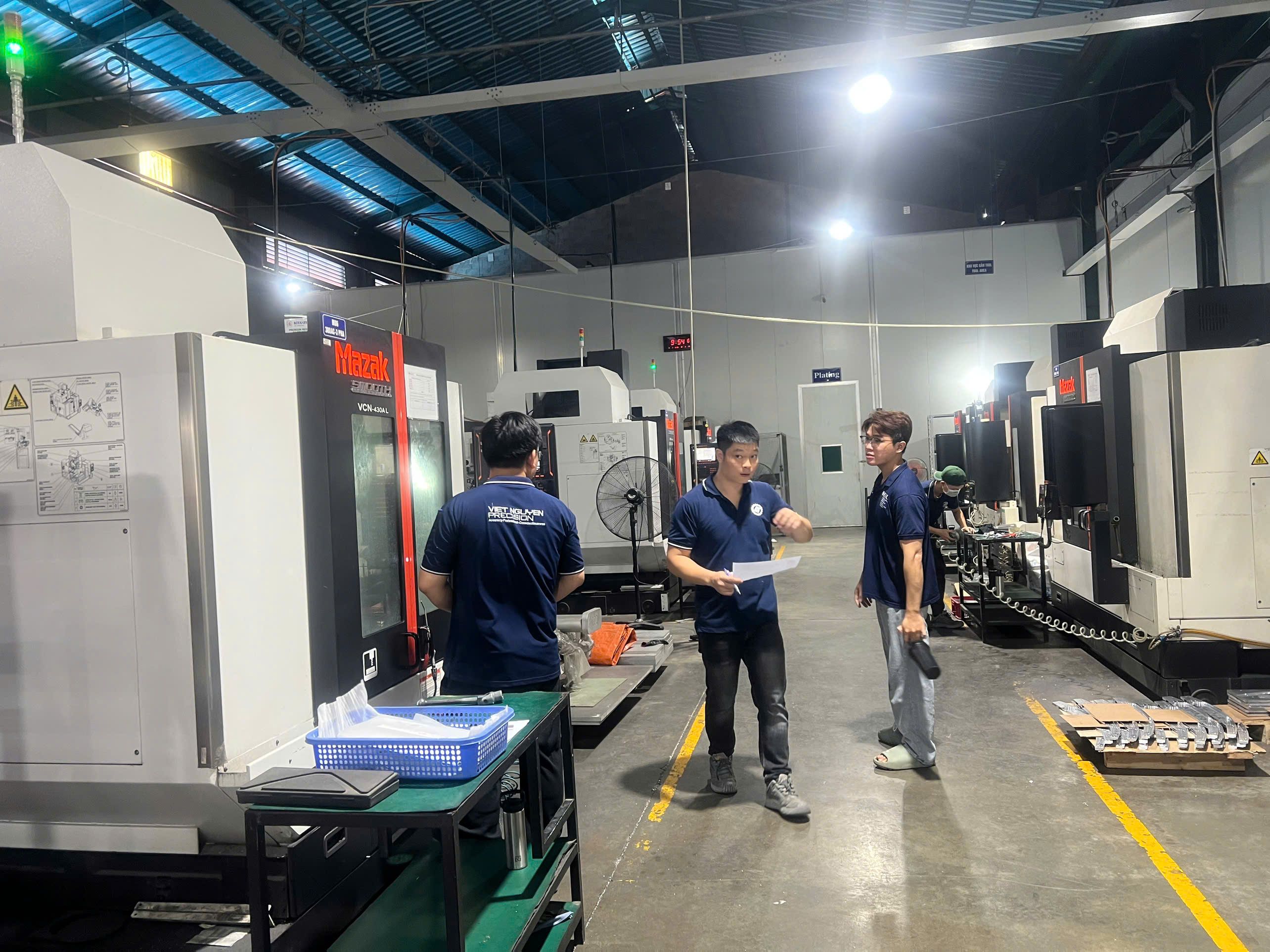
Our Vietnam office runs supplier audits regularly. Here is the checklist we use for sheet metal fabrication specifically:
- CNC laser cutting: Confirm the machine brand, wattage, and maximum sheet size open account credit terms 6. Ask when the last maintenance cycle was completed.
- Folding/bending: Verify press brake capacity 7 — can they handle folds up to 3 meters? Older machines lose accuracy on long bends.
- Welding stations: Count the number of active stations. Ask about welder certifications (AWS or equivalent).
- Secondary machining: Tapping, countersinking, and reaming for critical holes require separate equipment. Not every sheet metal shop has it.
- Surface finishing: Powder coating, sandblasting, anodizing — confirm whether these are in-house or subcontracted.
Regional Strengths in Vietnam
Not every region in Vietnam has equal depth in sheet metal work. The table below summarizes where to focus your search:
| Region | Sheet Metal Depth | Key Strengths | Typical MOQ Range |
|---|---|---|---|
| Hai Phong | High | Heavy fabrication, welding, pressing | 1,000–10,000+ units |
| Binh Duong | High | CNC machining, mid-volume programs | 1,000–5,000 units |
| Ho Chi Minh City | Medium | Assembly, electromechanical integration | 500–5,000 units |
| Hanoi | Medium | Plastics/assembly focus, some sheet metal | 1,000–5,000 units |
| Dong Nai / Ba Ria-Vung Tau | Medium-High | Industrial park infrastructure, heavy steel | 2,000–10,000+ units |
Factories in Hai Phong and Binh Duong have real depth in sheet metal. If your project involves complex brackets, housings, or multi-bend components like the mounting brackets we regularly source — with mirrored geometries, multiple pre-drilled holes, and weld joints — these regions are where you will find proven capability. You can also learn how to evaluate Vietnam industrial park infrastructure for sheet metal fabrication sourcing to make a more informed regional decision.
Volume Flexibility Check
Vietnam excels in mid-volume, high-mix programs. Standard MOQs sit between 1,000 and 5,000 units. However, the manufacturing boom has pushed MOQs and lead times upward. Low-volume orders under 1,000 units may face higher per-unit costs or outright rejection during peak season. Ask the factory directly: can they scale to 10,000+ units? Can they handle prototype runs of 50–100 pieces for qualification? Get these answers in writing before you sign anything.
Also verify quotation turnaround time. A responsive factory returns quotes within 24–48 hours. If it takes a week to get a price, that signals capacity or staffing issues that will only get worse in September.
What quality control processes should I require to prevent defects during high-volume production runs?
The most expensive lesson I have seen a buyer learn is this: a 2% defect rate on 100 prototypes is manageable, but a 2% defect rate on 10,000 pieces means 200 rejected parts, rework costs, and a missed ship date.
Require First Article Inspection (FAI), in-process dimensional checks at each forming stage, final inspection per AQL sampling standards, and full PPAP documentation. Insist on ISO 9001:2015 certification and demand access to real-time inspection data — not just a certificate on the wall.
Tolerances That Matter for Sheet Metal
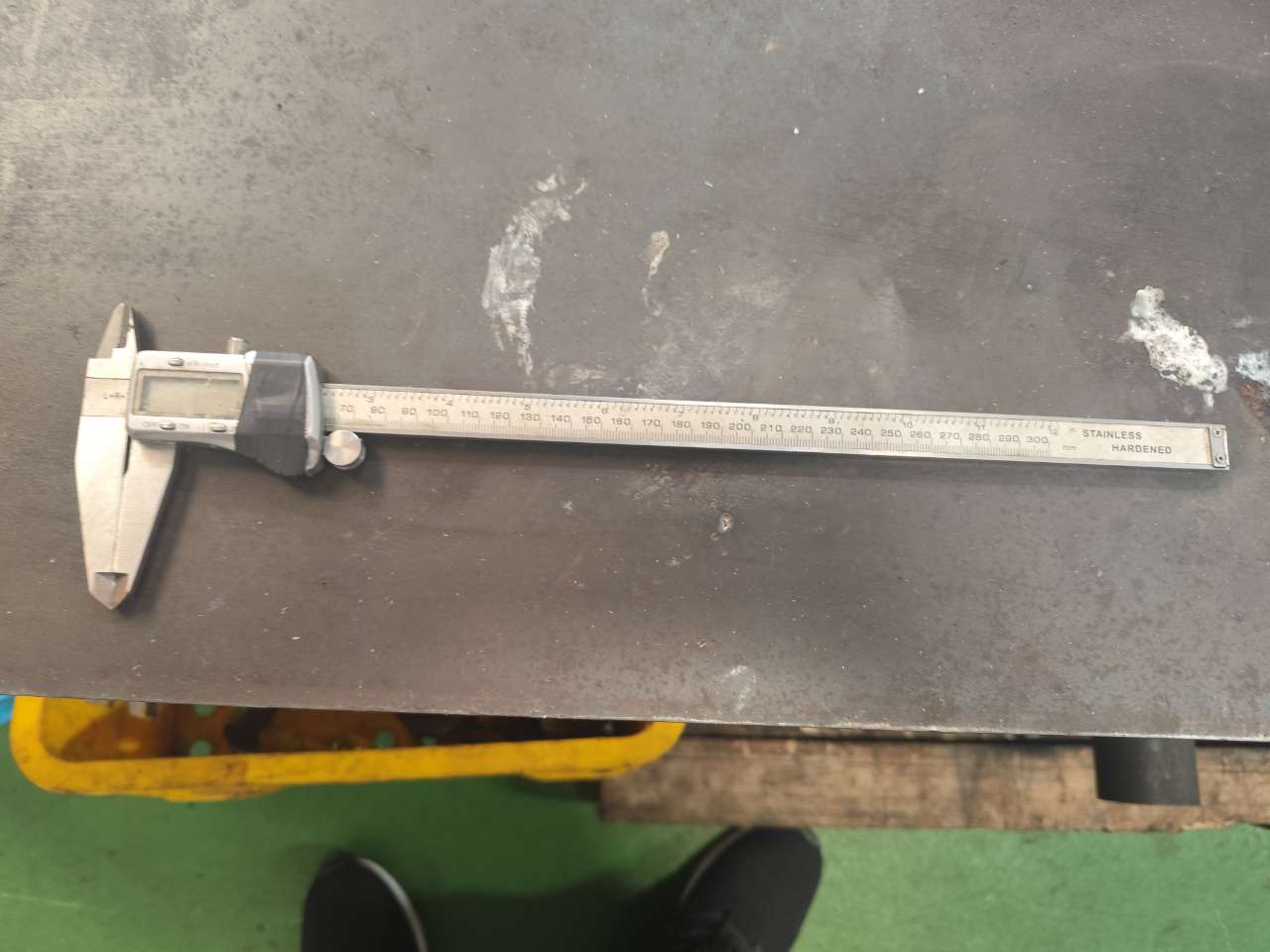
When we review drawings for custom sheet metal parts — brackets, enclosures, mounting plates — the tolerances drive the entire quality plan. Here are the standard achievable tolerances for Vietnam fabrication without premium operations:
| Feature | Standard Tolerance | Notes |
|---|---|---|
| Hole-to-hole (same flat face) | ±0.015" (±0.38mm) | Achievable on CNC punch or laser |
| Across-bend feature | ±0.030" (±0.76mm) | Each bend adds tolerance stack |
| Wall thickness consistency | 1mm–3mm typical | Must be uniform; avoid gradual transitions |
| Bend angle | ±1° | Air bending standard; coining for tighter |
| Cut edge straightness | ±0.010"/ft | Laser cutting preferred over plasma |
Tighter tolerances than these require coining instead of air bending or secondary machining for critical holes. Make sure your drawing callouts match what the factory can actually hold. I have seen buyers specify ±0.005" on a bent feature — that is not realistic without post-bend machining, and it doubles the cost.
Building a Quality Gate System
For high-volume peak season runs, a single final inspection is not enough. We structure quality control in stages:
- Incoming material inspection: Verify material certificates, thickness, and grade before any cutting begins.
- First Article Inspection (FAI): Measure the first 3–5 pieces against the drawing. Approve before the run continues.
- In-process checks: Dimensional verification after each major forming operation — cutting, bending, welding. This catches drift early.
- Final inspection: AQL-based sampling. For critical components, we use AQL 1.0 Level II as the minimum standard.
- PPAP package: Control plans, process flow diagrams, measurement system analysis, and capability studies. This is non-negotiable for our U.S. clients.
Material Selection and Defect Prevention
The choice of material directly impacts defect rates during high-volume runs. Each material behaves differently under bending and welding:
- Aluminum: Lightweight and corrosion-resistant, but prone to cracking on tight bends if the grain direction is wrong. Specify bend radius relative to thickness.
- Steel (mild/carbon): Strong and affordable. Consistent forming behavior. Best for brackets and structural components.
- Stainless steel: Durable in harsh environments. Springs back more during bending — the factory needs to compensate. Weld discoloration requires post-weld finishing.
Uniform wall thickness between 1mm and 3mm is the sweet spot. Avoid excessively thick sections adjacent to thin ones — this causes warping and sink marks that are nearly impossible to fix after the fact. Getting the design right before production starts is the fastest path to supply chain resilience 8.
How can I ensure my Vietnam supplier manages raw material shortages to avoid delays in my custom orders?
During a project last year, our team in Vietnam discovered that a supplier's stainless steel stock was sourced entirely from one Chinese mill. When that mill raised prices and cut allocations in October, our client's order stalled for three weeks.
Ensure your Vietnam supplier maintains dual-source agreements for critical materials, holds 2–4 weeks of buffer stock before peak season, and provides weekly inventory visibility. Verify their raw material sourcing strategy in writing — single-source dependency on China is a documented risk for specialty metals.
The China Dependency Problem
Vietnam's sheet metal supply chain relies heavily on China for specialty components, advanced alloys, and certain steel grades. Over 500 metal fabricators operate in Vietnam, but many source 60–80% of their raw materials from Chinese mills. This creates a concentration risk. During peak season, Chinese domestic demand rises simultaneously, which can cause material shortages or price spikes that hit Vietnamese fabricators hard.
The practical solution is supplier diversification at the material level. Ask your fabricator these specific questions:
- Where do you source your steel, aluminum, and stainless steel coils?
- Do you have more than one qualified supplier for each grade?
- What is your current stock level, and what is your reorder lead time?
- Have you experienced any material shortages in the past 12 months?
Building Buffer Inventory
For peak season orders, we advise clients to negotiate material pre-purchase agreements. This means the factory buys and holds 2–4 weeks of raw material inventory 9 before production starts. The client may need to fund this upfront or accept a deposit structure, but it eliminates the single biggest cause of production bottlenecks during September–November.
Demand forecasting plays a role here too. If you know your peak season volumes by May, share that forecast with your supplier. Factories that receive early demand signals can lock in material pricing and availability before the market tightens. Factories that learn about your order in August are already behind.
Power Supply and Infrastructure Risks
Beyond materials, consider power supply reliability and localized disruptions. Vietnam's industrial parks in Binh Duong and Dong Nai generally have stable power, but typhoon season overlaps with peak manufacturing months. Ask your fabricator about backup generators and their contingency plans for weather-related shutdowns. A factory without a documented business continuity plan is a factory that will miss your deadline when conditions change.
| Risk Factor | Mitigation Strategy | Owner |
|---|---|---|
| Single-source raw material | Dual-source agreements; verify second supplier | Factory + Buyer |
| Peak season price spikes | Pre-purchase material 3 months ahead | Buyer funds; factory executes |
| Typhoon / flooding disruption | Backup generators; split orders across regions | Factory + Sourcing partner |
| Skilled labor availability drop | Confirm workforce retention plan; overtime capacity | Factory |
| Port congestion (HCMC / Hai Phong) | Book freight early; consider alternate ports | Logistics partner |
This table is not theoretical. Every one of these risks has caused delays for real orders we have managed. The difference between a smooth peak season and a crisis is whether you addressed these items in June or scrambled in October.
Will my Vietnam sourcing partner provide the project management and credit terms I need for large seasonal shipments?
One of the hardest conversations I have with new clients is about payment terms. They are used to 60–90 day open account terms from their domestic suppliers. Then they learn that most Vietnam factories demand 30% deposit and balance before shipment — and the deal almost falls apart.
A qualified Vietnam sourcing partner bridges this gap by offering 60–90 day open account credit terms, assigning dedicated English-speaking project managers, and handling end-to-end logistics from factory floor to your U.S. warehouse. This structure reduces your cash flow risk and ensures professional oversight of every production milestone.
Why Direct Factory Relationships Fall Short for Peak Season
Buying directly from a Vietnam factory works for simple, repeat orders. But peak season custom sheet metal programs — with multiple SKUs, tight tolerances, and hard delivery dates — require a layer of project management that most factories do not provide. Factories are good at making parts. They are not always good at proactive communication, revision management, or coordinating logistics during the busiest months of the year.
Our role at DEWIN is to fill that gap. We assign project managers who work directly from your CAD files and technical drawings. They run the PPAP process, manage revision cycles, conduct in-process inspections, and coordinate door-to-door logistics. When a factory misses an internal deadline, we catch it in real time — not when the container fails to show up at port.
Credit Terms That Protect Your Cash Flow
Manufacturing costs in Vietnam are competitive. Labor runs approximately $280/month compared to $4,000/month in the U.S. The Vietnamese government offers a 4-year corporate tax exemption plus a 50% reduction for 9 years for qualifying foreign projects. These savings are real. But they do not help your cash flow if you are required to pay everything upfront.
We offer open account terms — typically net 60 to net 90 days — to qualified U.S. clients. This means you receive goods, inspect them, and pay after delivery. We absorb the working capital risk. For large seasonal shipments where you might be placing $200K–$500K in orders across multiple SKUs, this structure makes or breaks the program's financial viability.
The Cost-Benefit Picture
Here is a simplified comparison of total landed cost for a mid-volume sheet metal bracket program (5,000 units, mild steel, powder coated). For a deeper dive into how these numbers compare, see how to compare cost-effectiveness when sourcing Vietnam vs. China sheet metal fabrication:
| Cost Component | China (Direct) | Vietnam (Direct) | Vietnam (via DEWIN) |
|---|---|---|---|
| Unit fabrication cost | $3.20 | $3.50 | $3.70 |
| Tooling / setup | $800 | $900 | $900 |
| Quality management | Buyer's cost | Buyer's cost | Included |
| Shipping (FOB to U.S. port) | $0.40/unit | $0.45/unit | $0.45/unit |
| Tariff exposure | 25% (Section 301) | 0–5% | 0–5% |
| Payment terms | 30% T/T + balance | 30% T/T + balance | Net 60–90 OA |
| Project management | None | None | Dedicated PM included |
The per-unit cost from Vietnam through a sourcing partner is marginally higher. But when you factor in tariff savings, credit terms, and included project management, the total program cost is often lower — and the risk of production bottlenecks or quality failures drops significantly.
What to Expect from a Sourcing Partner
Not every sourcing company offers the same level of service. Here is what to require:
- Local team in Vietnam: Not a remote broker. We have 7 employees on the ground who visit factories weekly.
- PPAP and process control: Full documentation package for every production run.
- Final inspection: Independent inspection before shipment, with reports shared before containers are sealed.
- Door-to-door logistics: Freight booking, customs documentation, and delivery management.
- Responsive communication: Your project manager should respond within 24 hours. During peak season, same-day response is the standard.
The global sheet metal fabrication market 10 is valued at $19.65 billion in 2025 and growing at 3.8% annually. Vietnam is capturing an increasing share of this market, driven by infrastructure investment, competitive manufacturing costs, and strategic location near ASEAN shipping routes. But capturing that value for your specific program requires more than finding a cheap factory. It requires structured project management, enforceable quality systems, and financial terms that work for your business.
Conclusion
Evaluating Vietnam sheet metal fabrication capacity for peak season is a structured process — start audits by May, verify equipment and materials, enforce quality gates, and partner with a team that provides project management, credit terms, and local presence.
Frequently Asked Questions
How do I audit a Vietnam sheet metal factory's actual production capacity before my peak season starts?
A buyer we work with in the Midwest once told me he lost three weeks because his supplier quoted capacity they did not actually have — their laser cutter was down for maintenance the entire month of October First Article Inspection (FAI) 2 .
What quality control processes should I require to prevent defects during high-volume production runs?
The most expensive lesson I have seen a buyer learn is this: a 2% defect rate on 100 prototypes is manageable, but a 2% defect rate on 10,000 pieces means 200 rejected parts, rework costs, and a missed ship date.
How can I ensure my Vietnam supplier manages raw material shortages to avoid delays in my custom orders?
During a project last year, our team in Vietnam discovered that a supplier's stainless steel stock was sourced entirely from one Chinese mill. When that mill raised prices and cut allocations in October, our client's order stalled for three weeks.
Footnotes
1. Official standard for quality management systems, ensuring consistent product/service delivery. ↩︎
2. Replaced HTTP unknown with a working and comprehensive Wikipedia page on First Article Inspection. ↩︎
3. Replaced HTTP 404 with the correct, working Wikipedia page for Acceptance Quality Limit (AQL). ↩︎
4. Details the requirements and levels of Production Part Approval Process (PPAP) documentation. ↩︎
5. Replaced HTTP 404 with an authoritative explanation of laser cutting, including CNC aspects, from TWI Global. ↩︎
6. Replaced HTTP 404 with an authoritative source on export payment methods, including open account terms, from the International Trade Administration (.gov). ↩︎
7. Details how press brake capacity is determined and its importance in metal fabrication. ↩︎
8. Replaced HTTP 403 with a comprehensive and authoritative explanation of supply chain resilience from IBM. ↩︎
9. Replaced HTTP 403 with a clear and concise definition of raw material inventory from AccountingTools. ↩︎
10. Replaced HTTP 403 with a relevant industry overview and trends for the global sheet metal fabrication market. ↩︎