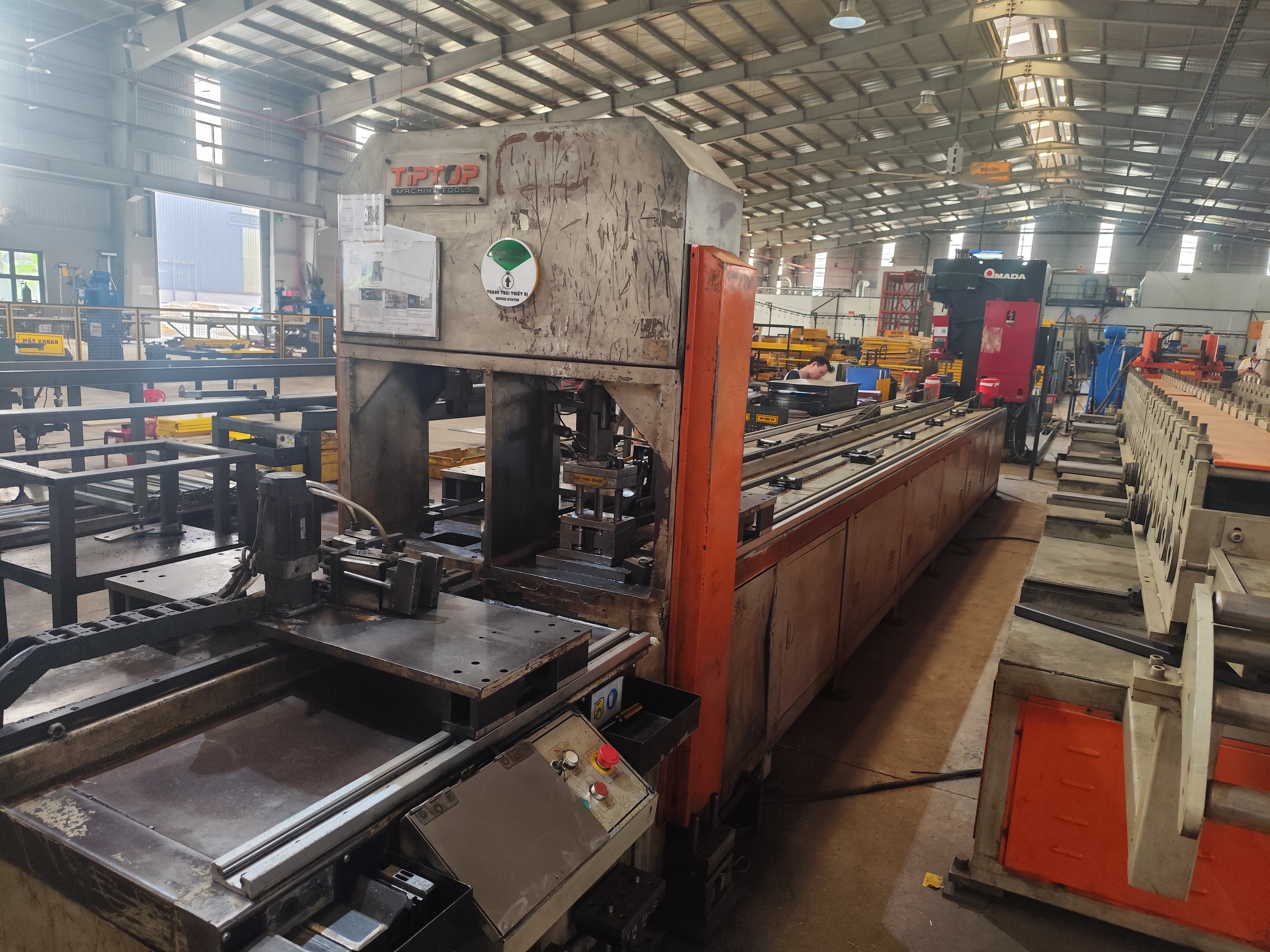

A single overlooked drawing requirement once cost one of our U.S. clients three weeks of rework and a missed product launch — all because the supplier’s press operators had never been trained on critical tolerances.
To evaluate a Vietnam stamping parts supplier’s employee training and certification system, verify active IATF 16949 or ISO 9001 certifications, request ERP-integrated training records, confirm a tiered curriculum covering safety, quality, and technical skills, and audit operator skill matrix documentation against actual production roles.
The rest of this article breaks down exactly what to look for, what to ask, and what red flags to watch for when you audit a stamping supplier’s workforce readiness in Vietnam.
How do I verify that a Vietnam stamping supplier's operators are properly certified for precision work?
Last year, our Vietnam office audited a stamping facility in Hai Phong where every machine had a laminated operator card posted — but when we checked dates, half the certifications had expired six months earlier.
Verify operator certification by cross-referencing each worker's technical certification records with the specific machines and processes they operate daily, checking for active IATF 16949-compliant skill matrix documentation, valid safety licenses, and evidence of periodic re-certification at defined intervals.

Start With the Skill Matrix
A skill matrix is a living document. It maps every operator to the tasks they are qualified to perform. When we conduct supplier audits 1 on behalf of our clients, the skill matrix is the first document we ask for. It should list each worker by name, their certified competencies, and the date of their last evaluation.
If the supplier cannot produce this document within minutes, that is a red flag. A mature quality management system requires it to be updated and accessible at all times.
What Certifications Matter Most?
Not all certifications carry equal weight. For precision stamping 2, you want to see evidence of specific technical qualifications — not just general factory safety cards.
| Certification Type | What It Covers | Why It Matters |
|---|---|---|
| IATF 16949 Operator Qualification | Process-specific skills tied to automotive quality | Mandatory for automotive stamping; ensures operator competence is formally verified |
| Forklift / Crane License | Equipment-specific safety operation | Required by Vietnamese labor law; indicates production safety compliance |
| CNC / Press Brake Certification | Machine-specific operation and setup | Confirms the operator can handle precision tooling and die expertise tasks |
| SPC (Statistical Process Control) | Data-driven quality monitoring | Shows the operator can interpret control charts and catch drift before defects occur |
| LOTO (Lock-Out Tag-Out) | Machine safety during maintenance | Prevents injury and production interruption; often 100% government-subsidized |
Cross-Check Certificates Against Actual Roles
During our audits, we physically walk the production floor 3 and match the person at each press to the name on the skill matrix. We check if the operator running the 200-ton hydraulic press actually holds the certification for that machine. Paper compliance means nothing if it does not match reality.
We also look at the re-certification cycle 4. Best-practice suppliers re-certify operators annually. Some do it every six months for critical processes. If re-certification dates are missing or inconsistent, the training system is not being maintained.
Vietnam's National Certification Layer
Beyond international standards, Vietnam has its own regulatory framework. Circular No. 55 requires technical safety and environmental protection certification, including Conformity of Production 5 (COP) evaluation. This indirectly validates that production processes — and the operators running them — are stable and controlled. Ask your supplier if they hold active COP status for the specific facility you are sourcing from.
What training records should I request to confirm my supplier follows strict quality control processes?
One of our U.S. purchasing manager clients once told me, "I don't care how good their machines are — if they can't show me how they train the person pushing the button, I'm walking away."
Request ERP-integrated individual training files, annual departmental training plans, pre-service onboarding records, on-the-job training logs with supervisor sign-offs, and competency evaluation results — all tied to specific Standard Operating Procedures and quality control milestones.

The Shift From Paper to ERP
In our experience sourcing custom parts across Asia, the best suppliers have moved training records into their ERP system 6. This means every employee has a digital profile that tracks completed courses, test scores, re-certification dates, and supervisor evaluations. When training data lives in spreadsheets or paper binders, it is easy to fabricate and hard to verify. ERP integration makes records auditable and time-stamped.
Ask the supplier directly: "Is your training data in the ERP?" If they hesitate, dig deeper.
The Three-Tier Training Curriculum
A well-structured supplier builds training around three tiers. Each tier serves a different purpose and timeline.
| Tier | Focus Area | Typical Duration | Examples |
|---|---|---|---|
| Tier 1: Safety & Compliance | Immediate risk reduction | 1–2 weeks | LOTO procedures, PPE use, fire response, forklift license |
| Tier 2: Quality & Productivity | Short-term ROI | 2–8 weeks | SPC, 5S methodology, Lean manufacturing, Six Sigma methodology basics |
| Tier 3: Technical Skills | Medium-term capability | 3–6 months | CNC programming, CAD/CAM interpretation, die setup, tooling maintenance |
When we review a supplier's training records, we look for evidence of all three tiers. A supplier that only does Tier 1 (safety) but skips Tier 2 and Tier 3 will struggle with precision work. That gap shows up as non-conforming parts, missed tolerances, and rework.
What Specific Documents to Request
Here is a practical list of what to ask for during your next supplier evaluation:
- Annual training plan — broken down by department, with target dates and assigned trainers.
- Individual training records — each worker's file showing completed modules, test results, and next scheduled training.
- On-the-job training logs — signed by both the trainee and the supervising trainer, with dates and specific skills covered.
- Pre-service onboarding checklist — for new hires, showing the structured path from orientation to independent operation.
- Competency evaluation forms — documented proof that the worker passed a hands-on assessment, not just a written quiz.
Why This Matters for "Right First Time"
Our clients in the United States care deeply about getting it right the first time. Rework is expensive. Returns are worse. When a supplier's on-the-job training programs are well-documented and consistently executed, the defect rate drops. The link is direct: trained workers read drawings correctly, set up dies accurately, and catch problems early. Strict quality control starts with strict training — not just strict inspection at the end of the line.
How can I tell if a supplier's staff truly understand critical drawing requirements before production starts?
During a recent project for a U.S. client producing structural mounting brackets — the kind with tight-tolerance hole positions and powder-coated finishes — we discovered that the supplier's workers had never been walked through the GD&T callouts on the drawing before the first production run started.
Confirm staff understand drawing requirements by verifying the supplier conducts formal pre-production drawing reviews with floor operators, uses translated Standard Operating Procedures at each workstation, and tests operator comprehension through sample part inspections before full-run approval.

The Drawing Review Meeting
The best suppliers hold a structured drawing review 7 before any new production run. This is not a casual glance at the print. It is a sit-down meeting where engineers walk operators through every critical dimension, tolerance, surface finish requirement, and material specification. Our team in Vietnam often participates in these meetings on behalf of our clients to ensure nothing is missed.
What to look for during or after this meeting:
- Meeting minutes with attendees listed by name and role.
- Marked-up drawings showing which dimensions are critical and which are reference-only.
- Translated work instructions — if the drawing is in English, operators need Vietnamese-language Standard Operating Procedures posted at their workstations.
The "Technical English" Factor
English proficiency among Vietnamese technical staff has been improving rapidly. However, for precision stamping, "good enough" English is not enough. Drawing annotations, GD&T symbols 8, and material callouts must be understood exactly. We have seen errors caused by simple mistranslations — for example, confusing "chamfer" with "radius," or misreading a surface roughness value.
Evaluate whether the supplier invests in Technical English training for project managers and quality inspectors. This is different from general English classes. It focuses on engineering vocabulary, drawing conventions, and specification interpretation.
How PPAP Proves Comprehension
A PPAP (Production Part Approval Process 9) Level 3 submission is one of the strongest indicators that a supplier's team understands the drawing. It requires the supplier to produce sample parts, measure them against every specification, and submit a dimensional report, material certifications, process flow diagrams, and control plans.
| PPAP Element | What It Proves About Training |
|---|---|
| Dimensional Results | Operators can set up tooling to hit every tolerance on the drawing |
| Process Flow Diagram | The team has mapped every step and understands sequence-dependent quality risks |
| Control Plan | Engineers have identified critical characteristics and assigned monitoring methods |
| Appearance Approval Report | Staff understand surface finish and cosmetic requirements (e.g., powder coat quality) |
| MSA (Measurement System Analysis) | Inspectors are trained to use CMMs and gauges correctly and consistently |
When we manage PPAP submissions for our clients, we use the process as a live test of the supplier's training effectiveness. If errors show up in the PPAP samples, the training system has a gap.
The Cascade Model in Practice
Strong suppliers use a "train the trainer" cascade model. Senior engineers or expatriate technical advisors train team leads. Team leads then train floor operators. This approach scales well and preserves institutional knowledge even when individual workers leave.
Ask the supplier: "Who trained your die setters? How was that knowledge transferred?" If the answer is vague, the training system may be informal and fragile.
Which certification standards should I look for to reduce the risk of delivery delays and rework?
A lesson we learned early in our Vietnam sourcing operations: a supplier can have fast lead times and competitive pricing, but if the workforce is not certified to the right standards, delays from rework will wipe out every cost advantage.
To reduce delivery delays and rework, prioritize suppliers holding active IATF 16949 for automotive stamping, ISO 9001 for general quality management, and ISO 14001 for environmental compliance, while also confirming Vietnam-specific COP certification and government-subsidized training utilization under Decree 80 or Decree 182.

The Non-Negotiable Certifications
Not every certification is equally important. Here is how we rank them when evaluating Vietnamese supplier capabilities for our clients:
| Standard | Scope | Training Mandate | Risk Reduction Impact |
|---|---|---|---|
| IATF 16949:2016 | Automotive quality | Requires documented operator competency, training plans, and continuous improvement | Highest — directly prevents defects and supply chain volatility |
| ISO 9001:2015 | General quality management | Mandates standardized workforce training programs and documented procedures | High — baseline for any serious supplier |
| ISO 14001:2015 | Environmental management | Requires training on waste management, energy efficiency, and green manufacturing | Medium — increasingly important for ESG-conscious buyers |
| VR/COP (Circular 55) | Vietnam regulatory | Validates production process stability, indirectly confirming operator training | Medium — proves local regulatory compliance |
Why IATF 16949 Standards Are the Gold Standard
IATF 16949 goes further than ISO 9001 in one critical way: it explicitly mandates that human resource quality be detailed in process layout, design, and monitoring. This means the supplier cannot just have a training plan on paper. They must prove that training directly connects to process capability and product quality.
When we audit suppliers for automotive stamping projects, we verify that the IATF 16949 certificate covers the specific facility — not just the corporate headquarters. We have seen cases where a parent company holds the certificate, but the actual production site operates under a different (uncertified) entity. This is a common trap.
Leveraging Vietnam's Government Subsidies
Vietnam's government actively supports workforce development in manufacturing. Two key mechanisms are worth understanding:
- Decree 80 — supports SME training plans, potentially covering a significant portion of training costs if the supplier submits a qualifying plan.
- Decree 182 — targets high-tech manufacturing, including advanced CNC and automation skills.
When a supplier utilizes these subsidies, it signals two things: they are proactive about skills development, and they have the administrative maturity to navigate government programs. We ask suppliers directly whether they use these programs. A "yes" tells us they are investing in their people strategically.
Industry 4.0 Readiness
The stamping industry is evolving. Suppliers that train workers on PLC programming, collaborative robot (cobot) operation, and digital twin simulations are positioning themselves for the future. While not every project requires Industry 4.0 capabilities today, a supplier that invests in automation readiness training is less likely to fall behind as production demands increase.
We have started including questions about cobot literacy and augmented reality training tools in our audit checklists. These are early indicators of a supplier that takes workforce development seriously — not just for today's orders, but for long-term partnership.
The "System Over Skill" Reality
There is a persistent myth that Vietnamese workers cannot handle precision stamping because they lack the decades of experience found in China or Japan. Our direct experience tells a different story. With a comprehensive three-to-six-month onboarding program, expatriate technical support during startup, and partnerships with vocational training centers, Vietnamese workers adapt quickly. The quality depends on the management system and the training infrastructure — not the nationality of the operator.
Vietnam offers a young, tech-literate workforce with a strong foundation in STEM education. When paired with a robust training system, this workforce delivers consistent, high-quality results. We have seen it firsthand across dozens of stamping and fabrication projects managed from our Vietnam office.
Conclusion
Evaluating a Vietnam stamping parts supplier's training system comes down to verifiable records, active certifications, and on-site evidence that operators truly understand your drawings and quality requirements.
Frequently Asked Questions
What Certifications Matter Most?
Not all certifications carry equal weight. For precision stamping 2 , you want to see evidence of specific technical qualifications — not just general factory safety cards.
How do I verify that a Vietnam stamping supplier's operators are properly certified for precision work?
Last year, our Vietnam office audited a stamping facility in Hai Phong where every machine had a laminated operator card posted — but when we checked dates, half the certifications had expired six months earlier.
What training records should I request to confirm my supplier follows strict quality control processes?
One of our U.S. purchasing manager clients once told me, "I don't care how good their machines are — if they can't show me how they train the person pushing the button, I'm walking away."
Footnotes
1. Official ISO page for quality management standards used during professional supplier audits. ↩︎
2. Technical background on the metalworking process and precision requirements discussed in the article. ↩︎
3. Authoritative Wikipedia entry defining the manufacturing shop floor and production environment. ↩︎
4. Industry leader resource explaining the importance of maintaining professional certifications through regular cycles. ↩︎
5. Authoritative UNECE guide on ensuring manufacturing processes consistently meet regulatory and safety standards. ↩︎
6. Leading technology provider’s explanation of ERP systems used for managing manufacturing training records. ↩︎
7. Technical overview of the formal review process used to verify engineering requirements before production. ↩︎
8. Engineering standard for communicating tolerances and dimensions through standardized symbols on drawings. ↩︎
9. Comprehensive Wikipedia overview of the industry-standard quality assurance process for production parts. ↩︎