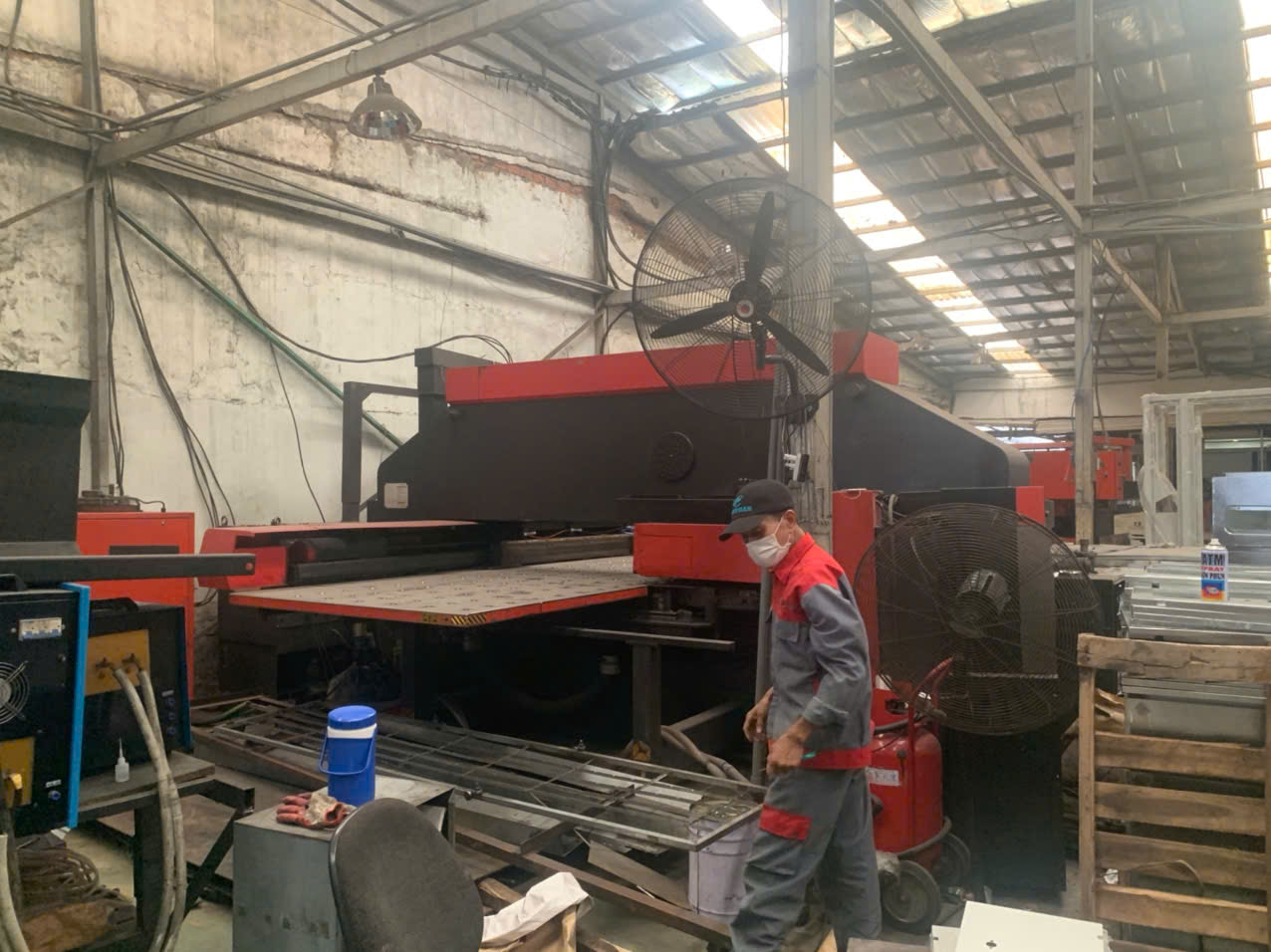

Evaluating a Vietnam stamping parts supplier’s flexibility for seasonal demand is something our Vietnam team does weekly, because one missed peak season can wipe out a European buyer’s entire year.
Evaluate a Vietnam stamping parts supplier’s flexibility by verifying press utilization below 75%, in-house toolroom capability, documented peak-season ramps of 30–50%, buffer inventory programs, backup capacity, and contract terms that allow volume swings without penalties or rigid annual commitments.
That is the short answer. Now let me break it down into the four questions that matter most, based on the audits we run on the ground in Vietnam.
What Questions Should I Ask About Capacity Scaling Before Peak Season Orders Arrive?
During a factory audit in Dong Nai last year, our team found a stamping plant quoting "spare capacity" that was actually running at 92% utilization. That gap is exactly why I always start with capacity questions.
Ask for average press utilization rates, maximum sustainable monthly output versus rated capacity, multi-shift labor capability, quick-change tooling practices, and raw material safety stock policies. A genuinely flexible supplier runs below 70–75% utilization and can prove it with production records.

The core mistake buyers make is confusing "nameplate capacity 1" with "peak-season capacity." A supplier can list twenty presses in a brochure. But if half of those presses are committed to long-term automotive programs, your seasonal bracket order will sit in a queue. When we audit stamping suppliers for our European and U.S. clients, we look at actual production schedules, not equipment lists.
The Five Capacity Questions That Reveal the Truth
Here is the question set we use in supplier audits, and what each answer tells you:
| Question to Ask | What a Good Answer Looks Like | Red Flag |
|---|---|---|
| What is your average press utilization? | Below 70–75%, shown with production logs | "We always have room" with no data |
| What is your maximum sustainable monthly output for my part? | A specific figure with quality control 2s explained | Only the rated machine capacity |
| Can you run two or three shifts during peaks? | Yes, with trained backup labor pools in the industrial zone | Reliance on untrained temporary hires |
| How fast is your die changeover? | Documented SMED practice, changeovers under an hour | Changeovers taking half a day |
| What coil stock do you hold? | Safety stock agreements with regional mills | Material bought only against firm orders |
Labor flexibility matters as much as machines. Vietnam’s industrial zones, especially Binh Duong and Dong Nai 3, have deep pools of trained contract workers. A supplier connected to those pools can add a shift within weeks. A supplier without those connections cannot, no matter how many presses sit idle.
Also probe automation. Robotic press lines and coil-feeding automation let output scale without a matching increase in skilled labor. For simple stamped brackets and clips, this is often the difference between a two-week ramp and a two-month ramp.
How Can I Verify a Vietnam Supplier's Track Record with Fluctuating European Demand?
A purchasing manager from a European hardware distributor once told me his supplier "promised flexibility" for a Q4 restocking surge, then delivered six weeks late. When our team dug in, that supplier had never actually served a seasonal export program before.
Verify the track record by requesting documented evidence of past 30–50% volume swings handled for EU clients, comparing Q3–Q4 on-time delivery rates against annual averages, checking client portfolio diversity across industries, and speaking directly with reference customers who buy seasonally.

Claims are cheap. Records are not. Any supplier can say they handle seasonal peaks. Very few can show you shipment data proving it. In our sourcing work, we ask for three specific types of evidence, and the reaction to that request tells us a lot on its own.
Three Types of Evidence Worth Requesting
First, ask for anonymized shipment records from a prior peak. You want to see monthly output rising 30–50%, then falling back, with lead times holding steady. If lead times stretched during the peak, ask what changed since then.
Second, compare their on-time delivery rate during Q3–Q4 against their full-year average. European pre-holiday and year-end restocking cycles hit exactly then. A supplier whose OTD drops ten points in Q4 has a structural problem, not a one-off issue.
Third, look at their customer mix. This is underrated. A supplier serving automotive, appliances, and furniture hardware has staggered seasonal cycles across clients. That lets them reallocate press time toward your peak. A supplier dependent on one industry peaks with everyone at once.
Reference Calls That Actually Work
When we call references for clients, we skip the generic questions. We ask: "In your busiest month, did lead time change? Did defect rates change? Did they warn you early about problems?" Defect rates during ramps matter most. Flexibility that sacrifices tolerances is not flexibility. It is deferred rework, and rework is the most expensive way to hit a delivery date. Our Vietnam office also checks whether the supplier has real EU export experience: documentation, packing standards, and coordination with forwarders for ocean schedules that align with seasonal windows.
Which Contract Terms Should I Negotiate to Protect Against Seasonal Delivery Delays?
One trade-off I weigh constantly for our clients is pricing versus commitment. Suppliers offer better unit prices for fixed annual volumes, but rigid commitments destroy the very flexibility a seasonal buyer needs. The contract has to resolve that tension in writing.
Negotiate flexible volume bands instead of fixed annual commitments, written die ownership and maintenance responsibility, defined tooling lead times, buffer stock or vendor-managed inventory clauses, peak-season capacity reservations, delay penalties, and payment terms that match your seasonal cash flow.

A handshake understanding about "flexibility" evaporates the moment the supplier's presses get busy. In our contract manufacturing work, we push seven terms into every seasonal supply agreement. Here is how they map to the risks they cover:
| Contract Term | Risk It Protects Against | Practical Benchmark |
|---|---|---|
| Volume flexibility bands | Penalties for ordering above or below forecast | ±30% swing without price or penalty changes |
| Die ownership clause | Being held hostage if you switch suppliers | Buyer owns dies; stated in writing with asset tags |
| Die maintenance responsibility | Worn tooling causing defects mid-peak | Supplier maintains in-house; maintenance log shared |
| Tooling lead time commitment | Slow reaction to design or volume changes | 4–8 weeks for new dies, stated in the contract |
| Buffer stock / VMI clause | Ocean freight and customs amplifying delays | Finished-goods buffer built before peak months |
| Capacity reservation | Your orders queued behind other clients | Reserved press hours for defined peak windows |
| Payment terms | Cash flow strain during inventory build | Open account or 60–90 day terms where possible |
Why Die Ownership Deserves Its Own Paragraph
For stamped parts like brackets, clips, and mounting hardware, the die is the bottleneck. Tooling lead time typically runs four to eight weeks. If ownership is unclear, or the toolroom is subcontracted, you cannot move fast when the seasonal pattern shifts. Write down who owns the die, who maintains it, and who pays for refurbishment. We have seen European buyers lose an entire season because a die dispute froze production.
Payment terms matter too. Building buffer stock ahead of a peak ties up cash on both sides. This is one reason we offer open account terms to our own clients; a supplier or partner willing to carry some financial load through uneven demand is signaling real financial stability, which is itself a flexibility requirement.
How Do I Assess a Supplier's Backup Resources for Handling Sudden Volume Spikes?
The hardest lesson from our years running supplier audits across Vietnam is this: single points of failure hide until the exact moment you need surge capacity. A press breaks. A coil shipment stalls at port. Backup resources decide what happens next.
Assess backup resources by mapping the supplier's secondary facilities or qualified subcontractor network, raw material safety stock and mill agreements, finished-goods buffer programs, toolroom redundancy, and digital planning maturity such as ERP or MES systems that flag demand shifts early.

Backup capacity comes in layers. Evaluate each layer separately, because a supplier strong in one can be weak in another.
Layer One: Overflow Production Capacity
Some Vietnam suppliers market a "network" of factories. This can be genuine multi-site flexibility, or it can be a loosely coordinated broker model with no quality control across sites. The difference matters enormously. Ask these questions:
- Are the backup facilities owned, contractually bound, or just known contacts?
- Has your part number ever actually run at the backup site?
- Who performs first-article inspection 4 when production shifts sites?
- Are the dies transferable, and how long does transfer take?
A true network shares quality systems, inspection standards, and planning tools. A broker model shares none of those. Our local team in Vietnam visits both the primary and claimed backup sites before we approve a supplier for a seasonal program, because paper claims and physical reality often diverge.
Layer Two: Material and Inventory Buffers
Steel and aluminum coil 5 availability constrains stamping output more often than press time does. Check whether the supplier holds coil safety stock 6 and whether they have supply agreements with local or regional mills. Imported specialty coatings or grades deserve extra scrutiny, since import delays stack on top of your own ocean transit to Europe.
Layer Three: Digital Early Warning
The most flexible suppliers we work with integrate ERP or MES data 7 with client forecasts. That maturity turns a sudden spike into a planned ramp. If a supplier still plans production on spreadsheets updated weekly, their reaction time will always lag your demand curve. The comparison below summarizes what maturity looks like:
| Capability | Low Maturity | High Maturity |
|---|---|---|
| Demand visibility | Reacts to purchase orders only | Consumes rolling EU forecasts |
| Capacity planning | Manual, weekly spreadsheets | ERP/MES with real-time load views |
| Spike response time | 4–8 weeks | 1–2 weeks with early warning |
| Buffer strategy | None, or ad hoc | Structured safety stock by SKU |
Conclusion
Seasonal demand punishes unproven suppliers. Verify utilization, track records, contract terms, and backup layers before the peak. Prove ramp capability early, and your European season runs on schedule.
Frequently Asked Questions
What Questions Should I Ask About Capacity Scaling Before Peak Season Orders Arrive?
During a factory audit in Dong Nai last year, our team found a stamping plant quoting "spare capacity" that was actually running at 92% utilization. That gap is exactly why I always start with capacity questions.
How Can I Verify a Vietnam Supplier's Track Record with Fluctuating European Demand?
A purchasing manager from a European hardware distributor once told me his supplier "promised flexibility" for a Q4 restocking surge, then delivered six weeks late. When our team dug in, that supplier had never actually served a seasonal export program before.
Which Contract Terms Should I Negotiate to Protect Against Seasonal Delivery Delays?
One trade-off I weigh constantly for our clients is pricing versus commitment. Suppliers offer better unit prices for fixed annual volumes, but rigid commitments destroy the very flexibility a seasonal buyer needs. The contract has to resolve that tension in writing.
Footnotes
1. Defines nameplate capacity, clarifying why brochure equipment lists overstate real seasonal output. ↩︎
2. ISO 9001 defines the quality management systems suppliers need across multi-site production networks. ↩︎
3. Background on Vietnam’s key industrial provinces referenced as sources of contract labor pools. ↩︎
4. ISO standards govern first-article inspection practices used to validate stamped parts before full production runs. ↩︎
5. ASTM International sets material standards for steel and aluminum coil used in stamping production. ↩︎
6. Explains the safety stock concept behind buffer inventory strategies suppliers use to absorb demand spikes. ↩︎
7. IEEE covers industrial data systems like ERP and MES that improve manufacturing demand responsiveness. ↩︎