
I learned the hard way that picking a Vietnam stamping supplier based on a website alone leads to missed deliveries, rejected parts, and painful rework cycles.
To evaluate a Vietnam stamping supplier’s track record with US OEM brands, verify IATF 16949 compliance, request shipment data to US ports, audit press and die capabilities on-site, confirm PPAP and APQP experience, check client references directly, and assess financial stability before placing any order.
The sections below break this process into clear, actionable steps IATF 16949 compliance 1. Each one targets a specific dimension of supplier evaluation — from client references and past performance verification to certifications, audit records, and quality-delivery alignment. Let’s walk through them one at a time.
What Should I Look for in a Vietnam Stamping Supplier's US Client References?
One trade-show conversation in Ho Chi Minh City changed how our team approaches reference checks entirely — a supplier claimed five US automotive clients but could not name a single part number or program when pressed for details.
Look for named US OEM programs, specific part families supplied, verified shipment volumes and frequency, years of continuous supply, and direct contact information for the buyer's quality or purchasing representative at each reference account.

Why Surface-Level References Fail
Many Vietnam stamping suppliers list logos on their websites. Logos are not references. A real reference means the supplier can connect you with a living, breathing purchasing manager or quality engineer at the US OEM who will confirm performance. When our Vietnam office runs client reference verification, we ask the supplier for at least three US-based contacts. Then we call or email those contacts directly. If the supplier hesitates, that tells us something important.
What to Ask the Reference
The questions matter more than the answers. Here is what we typically cover:
| Question | Why It Matters |
|---|---|
| How long have you sourced stamped parts from this supplier? | Longevity signals stability and consistent quality |
| What is their on-time delivery rate over the past 12 months? | Delivery history reveals operational discipline |
| Have you experienced any major quality escapes? | Reveals whether the supplier's quality management system actually works |
| Do they handle PPAP submissions independently? | Shows engineering maturity and US OEM process familiarity |
| How responsive are they to engineering changes? | Tests agile communication and co-development capability |
| Would you increase volume with them? | The ultimate trust signal |
Shipment Data as a Proxy for Real Relationships
According to trade data platforms like Volza, you can analyze a supplier's export shipment frequency and volume by destination country. A supplier that ships stamped components to the US weekly or biweekly, with stable or growing volumes over two or more years, has a verifiable track record. Sporadic, low-volume shipments to the US suggest a trial relationship, not a proven one.
Stable Volumes Tell the Real Story
In our experience coordinating supply chain transparency for US clients, the most reliable indicator is volume stability. A supplier that ramps from pilot to full production and then maintains consistent monthly shipments has passed the hardest test — keeping a US OEM satisfied over time. Documented customer approvals paired with stable production volumes form the backbone of any credible track record.
How Can I Verify a Supplier's Past Performance With American OEM Brands?
A lesson we absorbed early in our Vietnam operations: trust but verify. Every supplier says they serve American brands. Fewer can prove it with documentation.
Verify past performance by requesting PPAP records for US-destined parts, analyzing export shipment data through trade databases, conducting a structured factory audit scoring press capability and inspection systems, and confirming customer qualification milestones from pilot through volume production.

The Evidence Ladder
Think of verification as climbing a ladder. Each rung adds confidence. Surface claims sit at the bottom. Hard documentation sits at the top.
| Evidence Level | What It Includes | Confidence Rating |
|---|---|---|
| Level 1: Supplier Claims | Website logos, verbal references, brochures | Low |
| Level 2: Trade Data | Export shipment records to US ports, frequency, volume trends | Medium |
| Level 3: Factory Audit | 50-point audit covering presses, dies, inspection, finance | Medium-High |
| Level 4: Customer Approvals | Signed PPAP packages, customer scorecards, documented qualifications | High |
| Level 5: Continuous Volume | Stable or growing shipments over 12+ months with the same OEM | Highest |
Using Structured Audits for Pre-Order Intelligence
According to the Dewin Vietnam audit framework, a 50-point audit scores stamping factories across press capability, die quality, inspection systems, and financial stability. This gives you real factory intelligence — the actual press list, die shop capability, inspection instruments, and financial health — before you commit a single dollar. Our team in Vietnam conducts these audits as a core part of the production capacity assessment we provide to US buyers.
The Customer Qualification Lifecycle
Vietnam stamping suppliers that serve US OEMs follow a structured qualification path. It starts with pilot runs using production tooling. Then comes formal customer approval, typically through a PPAP submission. Next is volume ramp-up, where the supplier proves process stability at higher quantities. Finally, continuous improvement kicks in — the supplier tracks metrics, responds to corrective actions, and maintains documented approvals.
If a supplier cannot walk you through this lifecycle with specific examples and dates, their OEM experience may be thinner than advertised.
Sourcing Channels That Reveal Real Track Records
Do not rely on Alibaba alone. According to sourcing experts at Portless, only 10 to 15 percent of Vietnamese factories are listed on Alibaba. The rest are found through trade shows in Vietnam, direct outreach via Zalo messaging, and on-the-ground sourcing partners. Visiting factories one week after a major trade show in Vietnam — when they are still set up to receive international visitors — is a proven tactic our team uses regularly. For a deeper look at how to leverage these channels, see our guide on how to screen stamping parts suppliers from Vietnam using online platforms and trade shows.
What Certifications and Audit Records Prove My Supplier's Reliability With US Clients?
When we onboard a new stamping factory in Vietnam for a US client, the certification conversation happens on day one — not because certifications guarantee quality, but because the absence of certifications guarantees problems at US Customs and on the OEM's incoming inspection dock.
ISO 9001 certification, IATF 16949 compliance for automotive, active PPAP and APQP records, SPC data, CMM and optical comparator inspection reports, UFLPA compliance documentation, and third-party audit scores from structured factory audit protocols prove a supplier's reliability with US clients.

Core Certifications and What They Signal
Not all certifications carry equal weight. Here is how to prioritize them for a Vietnam stamping supplier serving US OEMs:
| Certification / Standard | What It Proves | Who Requires It |
|---|---|---|
| ISO 9001 2 | Basic quality management system is in place | All industrial OEMs |
| IATF 16949 | Automotive-grade quality system with process controls | US automotive OEMs and Tier 1 suppliers |
| PPAP (Production Part Approval Process) | Parts meet all engineering and quality requirements before volume production | Automotive and many industrial OEMs |
| APQP (Advanced Product Quality Planning) | Structured product development process from design through launch | Automotive OEMs |
| FMEA (Failure Mode and Effects Analysis 3) | Systematic risk identification and mitigation during design and process | Automotive and aerospace OEMs |
| SPC (Statistical Process Control 4) | Ongoing process monitoring using data, not just inspection | Any OEM demanding precision metal fabrication |
How to Verify Certifications Are Real
A certificate hanging on a factory wall is not proof. We verify IATF 16949 and ISO 9001 certifications directly through the IAF CertSearch database. This confirms whether the specific Vietnam facility — not just the parent company — is covered and current. Expired or suspended certificates are more common than buyers expect.
Inspection Equipment Matters
Certifications describe systems. Equipment describes capability. When our audit team visits a stamping factory, we look for CMM (Coordinate Measuring Machines 5), optical comparators, pin gauges, hardness testers, and surface roughness instruments. A factory that stamps precision brackets with ±0.05mm tolerances but relies only on calipers and visual inspection is a red flag.
UFLPA and Material Traceability
US Customs and Border Protection 6 now enforces the Uyghur Forced Labor Prevention Act 7 aggressively. If your Vietnam stamping supplier sources raw steel or coil stock from China, they must provide material traceability documentation proving the material does not originate from the Xinjiang region. Our supply chain management process includes reviewing mill certificates, heat lot numbers, and origin declarations to protect our US clients from seizure risks at port.
Digital Maturity as a Reliability Indicator
Forward-looking US OEMs now ask for carbon footprint data and Life Cycle Assessment reports for Scope 3 emissions 8 compliance. A Vietnam supplier that can provide granular environmental data demonstrates digital maturity — which correlates strongly with overall operational discipline. This is still emerging, but it separates top-tier suppliers from the rest.
How Do I Confirm My Vietnam Stamping Partner Can Meet US OEM Quality and Delivery Standards?
A buyer we work with in the Midwest once told me his previous Vietnam supplier hit quality targets for the first three shipments, then drifted badly by month six. The root cause was workforce turnover — the skilled press operators who ran the pilot had moved on, and nobody documented the process parameters.
Confirm your Vietnam stamping partner's ability to meet US OEM standards by auditing their press fleet and tooling in person, reviewing documented process controls and SPC records, verifying export logistics experience to US ports, and assessing workforce retention rates and training programs to prevent quality drift.

Press Fleet and Tooling: The Foundation
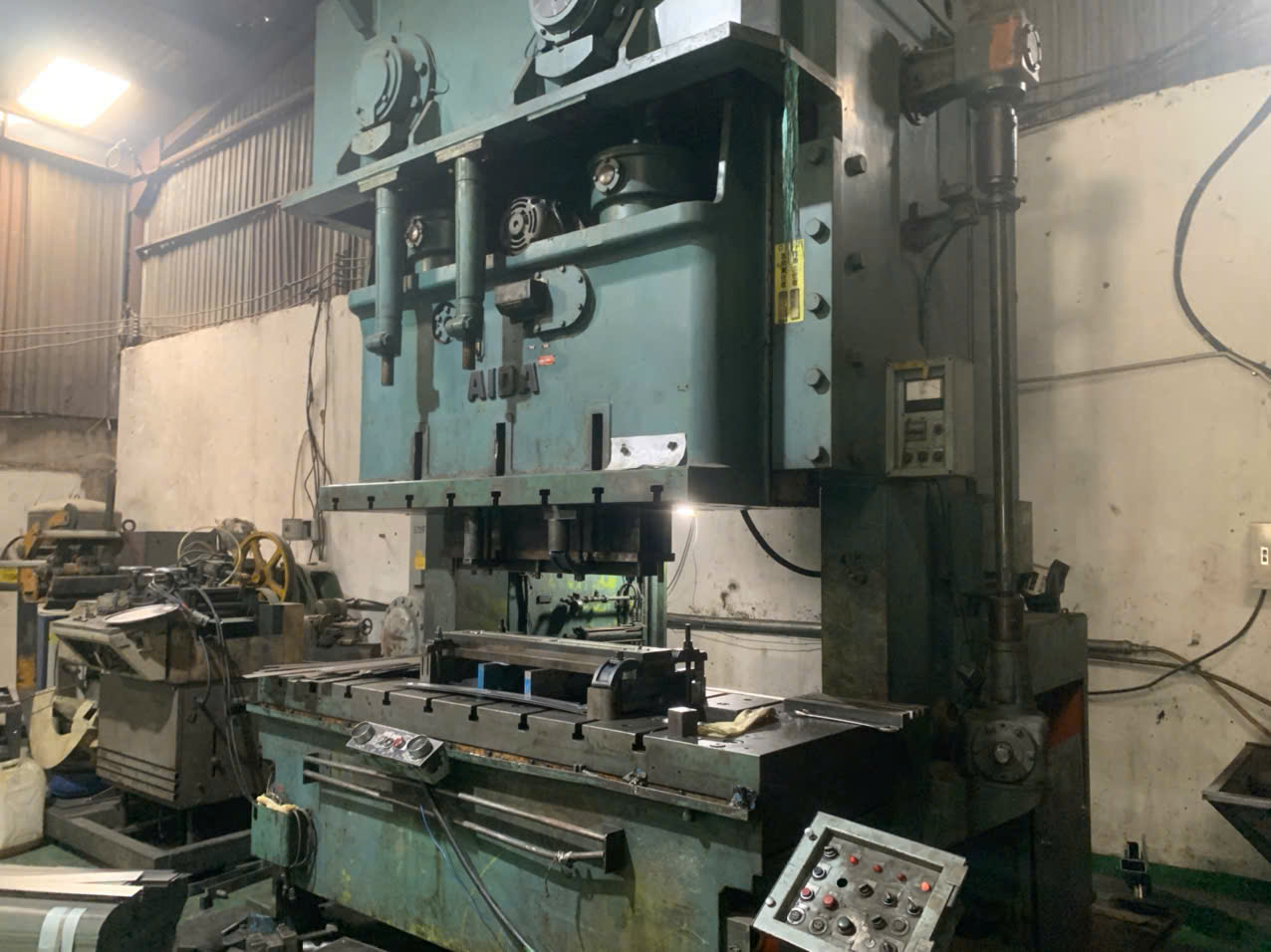
According to Automech MFG, US OEMs evaluate stamping suppliers based on press fleet tonnage capacity, in-house tool-and-die manufacturing capabilities, SPM (strokes per minute) ratings, coil handling systems, and press age and condition. A factory running 30-year-old mechanical presses without servo capability is not equipped for the tight tolerances US OEMs demand on parts like the precision mounting brackets and spring clamps we regularly source.
What to Look for in the Die Shop
In-house tool-and-die capability is a non-negotiable for serious US OEM work. We look for:
- EDM (Electrical Discharge Machining 9) and wire-cut machines for complex die profiles
- Tool steel grades appropriate for high-volume stamping (D2, SKD11, DC53)
- Die maintenance logs showing scheduled preventive maintenance, not just reactive repair
- Rapid prototyping capability for new part development
A supplier that outsources all tooling work introduces risk. Die revisions take longer. Communication gaps multiply. Quality suffers.
Export Logistics to the US
Stamping quality means nothing if parts arrive late or damaged. We assess a supplier's export logistics experience by reviewing their shipping history to major US ports — Los Angeles, Long Beach, Savannah, Houston, Newark. Transparent coordination with freight forwarders, proper export packaging for stamped metal parts (corrosion protection, dunnage, container loading plans), and agile project communication are all part of the evaluation.
According to Portless, buyers should expect roughly 30 days from purchase order to the start of production for component-heavy products, because raw materials often need to be sourced and shipped before manufacturing begins. Add ocean transit time and customs clearance, and total lead times from Vietnam to a US warehouse typically run 60 to 90 days. A supplier that quotes shorter timelines without a clear explanation may be overpromising.
Workforce Stability and Training
Vietnam's industrial labor turnover is a real risk. High turnover means new operators running complex progressive dies without adequate training. We check for documented training programs, operator certification records, and workforce retention rates during our factory audit protocols. A factory that invests in its people produces consistent parts. A factory with 30 percent annual turnover produces surprises.
Vietnam vs. Mexico: When Does Vietnam Win?
US OEMs sometimes weigh Vietnam against Mexico. Mexico offers USMCA 10 tariff-free access, shorter shipping times, and same time zone convenience. Vietnam wins on total cost of ownership, especially for buyers also serving EU and Asia-Pacific markets. Vietnam's trade agreement leverage, workforce scalability, and political stability make it the stronger strategic platform for export-focused precision metal fabrication operations.
Smart Factory Signals
AI-driven predictive maintenance on high-speed stamping dies is still uncommon in Vietnam, but the factories that have it demonstrate a superior level of operational reliability. ERP systems with real-time production tracking and English-speaking engineering support round out the communication infrastructure US OEMs expect.
A Practical Due-Diligence Protocol
Here is the step-by-step process our Vietnam team follows before recommending a stamping supplier to any US client:
- Initial screening: Review press list, die shop equipment, inspection instruments, and financial statements remotely.
- Trade data check: Analyze shipment records to US ports for frequency, volume, and consistency.
- Certification verification: Confirm ISO 9001 and IATF 16949 through IAF CertSearch.
- On-site audit: Conduct a structured 50-point audit covering presses, tooling, quality systems, raw material sourcing, and financial health.
- Reference calls: Contact at least three US-based clients directly.
- Pilot order: Place a controlled pilot run with full PPAP submission before committing to volume.
- Volume ramp-up: Monitor first three production lots with enhanced inspection before transitioning to standard AQL sampling.
The Relocation Reality
Many Chinese stamping factories have relocated to Vietnam. This expands the supplier base but requires careful verification. A relocated operation may bring experienced management and proven processes — or it may be a shell setup lacking genuine local integration. We distinguish between the two by checking local business registration, the proportion of Vietnamese versus expatriate management, local raw material sourcing pipelines, and compliance with Vietnamese labor regulations.
Track Record Scorecard
Use this scorecard to rate any Vietnam stamping supplier before committing:
| Evaluation Dimension | What to Score | Target |
|---|---|---|
| Quality Compliance | Active IATF 16949 or ISO 9001; PPAP capability; SPC data | Certified and current |
| Delivery History | On-time rate with existing US clients; shipment frequency | ≥95% on-time; weekly or biweekly shipments |
| Engineering Capability | In-house tool-and-die; EDM/wire-cut; press tonnage range | Full in-house capability; tonnage matching your parts |
| Export Logistics | Shipping history to US ports; packaging standards; communication | Documented US export experience; English-speaking team |
| Financial Stability | Balance sheet review; capital equipment investment trend | Positive trend; no red flags |
| Workforce Stability | Retention rate; documented training programs | ≤15% annual turnover; formal operator certification |
| Material Traceability | Mill certificates; UFLPA compliance documentation | Full traceability to origin |
Conclusion
Evaluating a Vietnam stamping supplier's track record with US OEM brands requires verified evidence — not claims. Use structured audits, direct reference calls, trade data, and the scorecard above to make confident sourcing decisions.
Frequently Asked Questions
Vietnam vs. Mexico: When Does Vietnam Win?
US OEMs sometimes weigh Vietnam against Mexico. Mexico offers USMCA 10 tariff-free access, shorter shipping times, and same time zone convenience. Vietnam wins on total cost of ownership, especially for buyers also serving EU and Asia-Pacific markets. Vietnam's trade agreement leverage, workforce scalability, and political stability make it the stronger strategic platform for export-focused precision metal fabrication operations.
What Should I Look for in a Vietnam Stamping Supplier's US Client References?
One trade-show conversation in Ho Chi Minh City changed how our team approaches reference checks entirely — a supplier claimed five US automotive clients but could not name a single part number or program when pressed for details.
How Can I Verify a Supplier's Past Performance With American OEM Brands?
A lesson we absorbed early in our Vietnam operations: trust but verify. Every supplier says they serve American brands. Fewer can prove it with documentation.
Footnotes
1. Official IATF site explains the automotive quality standard referenced throughout the article. ↩︎
2. Official ISO page defines the quality management standard cited as core certification. ↩︎
3. FDA resource explains the systematic risk assessment methodology cited in the certification table. ↩︎
4. Background concept for the ongoing process monitoring method referenced in the certifications table. ↩︎
5. Explains the precision inspection equipment referenced as a reliability indicator. ↩︎
6. Government trade authority enforcing import compliance mentioned regarding UFLPA enforcement. ↩︎
7. Background on the US law governing forced-labor material traceability compliance mentioned in article. ↩︎
8. EPA guidance defines the emissions reporting category mentioned for supplier digital maturity. ↩︎
9. Explains the die-shop manufacturing process referenced for tooling capability evaluation. ↩︎
10. Official USTR page on the trade agreement referenced when comparing Vietnam versus Mexico sourcing. ↩︎