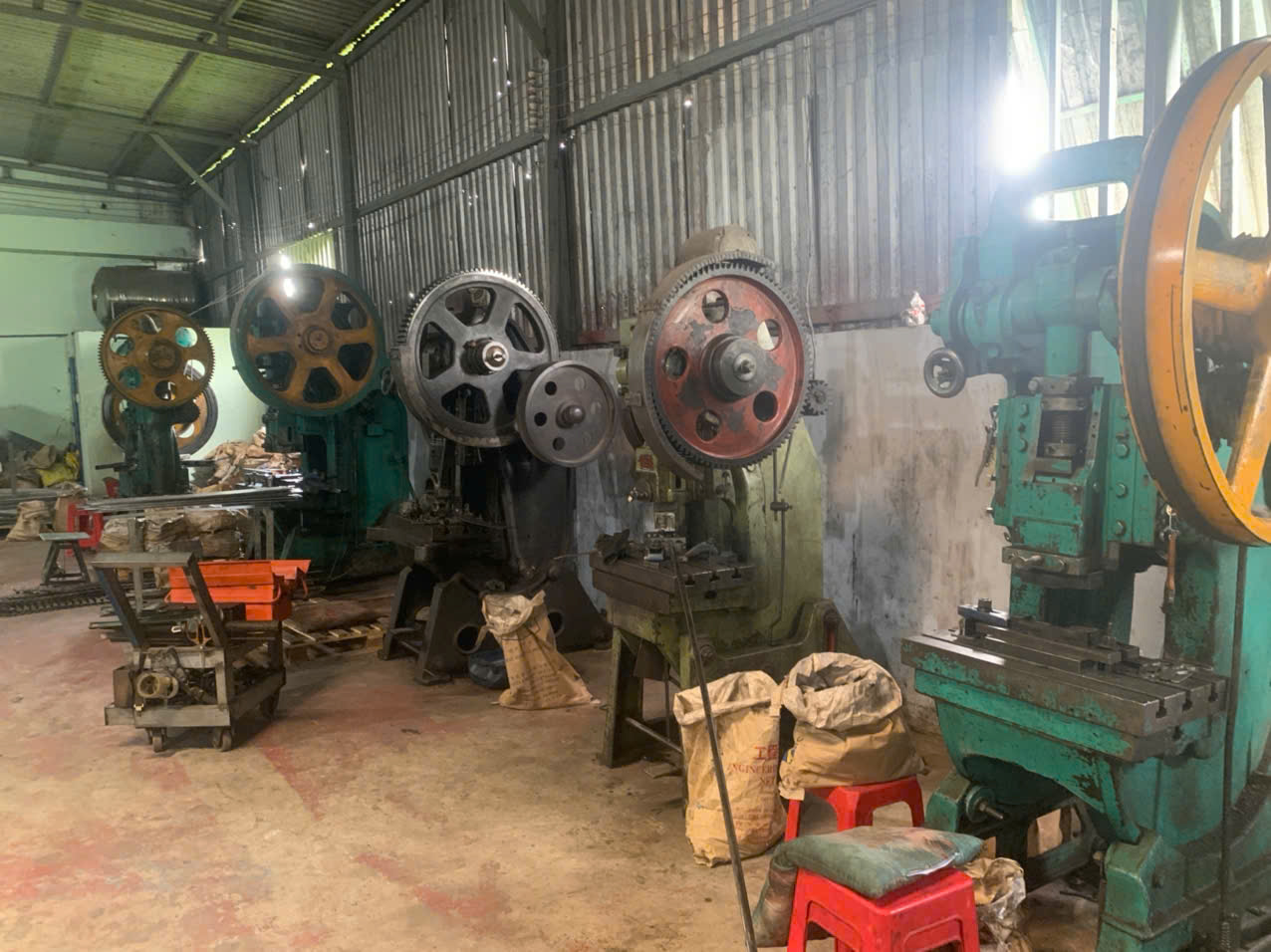

Last year, a U.S. client sent us a rejected batch of stamping brackets — the Vietnamese supplier had misread a tolerance callout on the technical drawing, and 2,000 parts ended up outside spec.
To evaluate a Vietnamese supplier’s English and technical documentation for stamping parts, audit their technical drawing accuracy, review PPAP and inspection reports for consistent terminology, verify material certification reports, and test whether shop-floor operators actually understand the English specifications they receive.
Documentation is not paperwork. It is your first line of quality control. Before any metal hits a die, the words and numbers on a supplier’s documents determine whether you get conforming parts or costly scrap ISO 2768 1. This article walks through exactly what to check, what to ask, and what red flags to watch for.
How can I tell if a Vietnamese stamping supplier truly understands my technical drawings?
A few months ago, our Vietnam office reviewed a supplier's sample parts that looked perfect visually — but three critical hole positions were off by 0.3 mm because the supplier confused positional GD&T 2 callouts with basic linear dimensions.
You can tell if a Vietnamese stamping supplier understands your technical drawings by requesting a marked-up drawing review, comparing their first article inspection data against your GD&T standards, and conducting a live technical interview with their engineering team to confirm comprehension of tolerances, material grades, and bend radii.

Why Drawing Comprehension Matters More Than You Think
A technical drawing is a contract. Every dimension, tolerance, and surface finish callout is a binding instruction DIN EN 10130 3. When a Vietnamese supplier misreads even one symbol, the entire production run is at risk. I have seen suppliers interpret a unilateral tolerance as bilateral, or miss a critical datum reference entirely.
The root problem is not intelligence or capability. It is exposure. Many Vietnamese stamping shops have strong fabrication skills but limited experience with ASME Y14.5 4 or ISO 2768 notation systems. Their engineers may have trained on different standards, or they may rely on general translators who lack manufacturing context.
The Marked-Up Drawing Test
One of the most effective methods we use is what I call the "marked-up drawing test." Before placing any order, send your technical drawing to the supplier and ask them to return it with their own annotations. Specifically, ask them to:
- Circle every critical dimension and explain the tolerance in their own words
- Identify the material grade and confirm they can source it
- Note the bend radii and confirm their tooling can achieve them
- List any dimensions they find unclear or ambiguous
If the supplier returns a clean, unannotated drawing with just "OK, we can do," that is a warning sign. A competent supplier will have questions. They will push back on tight tolerances. They will ask about secondary operations.
Key Drawing Elements to Verify
| Drawing Element | What to Check | Red Flag |
|---|---|---|
| Tolerances | Correct interpretation of GD&T symbols (ISO or ASME) | Supplier quotes without asking about tight tolerances |
| Material Grade | Specific grade (e.g., AISI 1010, SUS 304) vs. generic "steel" | BOM lists only "metal" or "stainless steel" without grade |
| Bend Radii | Minimum bend radius vs. material thickness ratio | No mention of springback compensation |
| Surface Finish | Ra value or finish specification (e.g., zinc plated, brushed) | Finish described only as "smooth" or "clean" |
| Hole Positions | True position vs. coordinate dimensions | Holes measured from wrong datum |
| Sheet Thickness | Specified gauge or mm with tolerance | Thickness not mentioned in process sheet |
Compare 2D and 3D Files
If you supply both 2D technical drawings and 3D CAD files, ask the supplier to confirm that their programming references match your 2D annotations. I have encountered cases where a supplier's CNC programming team used the 3D model directly but ignored updated tolerances that existed only on the revised 2D drawing. This mismatch between digital formats is a common source of dimensional errors in sheet metal fabrication standards.
Some advanced suppliers now use Model-Based Definition 5, embedding all metal stamping specifications directly into 3D models. If your supplier can work with MBD, it reduces the risk of 2D translation errors significantly. But most Vietnamese stamping shops still rely on 2D prints, so verifying cross-format consistency remains essential.
Conduct a Live Technical Interview
Do not rely solely on written communication. Schedule a video call with the supplier's engineering team — not just their sales staff. Ask them to walk you through the drawing on screen. Listen for correct use of terms like "die clearance," "springback," "tonnage," and "progressive die." If they consistently say "mold" when they mean "die," or "pressure" when they mean "press force," their technical English proficiency may be limited. This does not automatically disqualify them, but it tells you to invest more in documentation controls.
What documentation should I request to verify a supplier's English communication skills before placing an order?
When we onboard a new Vietnamese stamping supplier, the very first thing our team in Ho Chi Minh City does is request a documentation package — not to evaluate their pricing, but to evaluate their communication capability.
Request sample PPAP packages, first article inspection reports, process sheets, material certification reports, and a quotation with full technical specs. Review these documents for consistent English terminology, correct units, clear acceptance criteria, and absence of translation artifacts that distort meaning.

The Documentation Package Checklist
Before placing any order, request the following documents and evaluate each one for English clarity, technical depth, and internal consistency:
| Document | Purpose | English Quality Indicators |
|---|---|---|
| Quotation with Technical Specs | Confirms understanding of scope | Correct material grades, tolerances quoted back, clear unit notation |
| First Article Inspection Report | Demonstrates measurement capability | Proper dimension labels, consistent units (mm or inches, not mixed) |
| Process Sheet | Shows manufacturing plan | Press tonnage, SPM, lubrication, station count clearly described |
| Material Test Report (MTR) | Verifies material compliance | ASTM or DIN grades cited correctly, tensile/yield data present |
| Control Plan | Documents quality checkpoints | Inspection methods, frequencies, and reaction plans in clear English |
| PFMEA 6 | Identifies risk controls | Failure modes described in specific stamping language, not generic terms |
| Tooling Design Blueprint | Confirms die engineering capability | Die material (D2, A2), clearance values, guide pin specs included |
What "Good English" Actually Means in This Context
I want to be clear: you are not looking for perfect grammar. You are looking for unambiguous technical communication. A supplier who writes "the torelance of hole is ±0.05mm" has a spelling error but communicates clearly. A supplier who writes "the hole should be checked carefully" tells you nothing actionable.
Focus on these specific indicators:
- Consistent units: Does the supplier use mm throughout, or do they switch between mm and inches without conversion notes?
- Specific acceptance criteria: Do inspection reports state pass/fail limits, or just "OK"?
- Correct technical terms: Do they use "die clearance" or "gap between upper and lower"? Both may be understandable, but the latter suggests limited exposure to international stamping terminology.
- Photographic evidence: Do their reports include labeled photos, or only checkboxes?
Watch for Translation Artifacts
Translation artifacts are phrases that result from literal word-for-word translation from Vietnamese to English. They can distort meaning in dangerous ways. For example, "press force" might be translated as "pressure," which has a completely different engineering meaning. "Burr height" might become "edge roughness." These artifacts signal that the supplier's documentation is being produced by general translators, not by engineers with technical English proficiency.
If you detect significant translation artifacts, consider hiring a third-party technical translation reviewer with manufacturing context. General linguists often miss these nuances because they lack sheet metal fabrication experience. Understanding how to overcome time zone and language barriers with Vietnamese stamping parts suppliers can also help you establish clearer communication protocols from the start.
Version Control Is Part of Communication
Ask the supplier to show you their document control system. Can they demonstrate a revision history? Do they have a protocol for updating translations when the English source drawing changes? Our team requires suppliers to update Vietnamese-language process documents within seven days of an engineering change order. If a supplier cannot show version-controlled documents with approval stamps, their documentation system is not mature enough for production-grade stamping.
How do I identify red flags in a supplier's PPAP and inspection reports that signal poor English comprehension?
One lesson we learned the hard way: a supplier submitted a PPAP 8 package that looked polished — clean formatting, professional layout, all 18 elements seemingly present. But when our quality engineer dug into the Control Plan, every single inspection frequency said "100%" and every reaction plan said "inform customer." That is not a real Control Plan. That is a template someone filled in without understanding.
Red flags in PPAP and inspection reports include generic reaction plans, missing or inconsistent tolerance data, inspection results that exactly mirror the RFQ without process-specific notes, interchangeable use of unrelated terms like "die" and "mold," and absence of photographic evidence or measurement instrument identification.

The "Blind Compliance" Pattern
This is the single biggest red flag I encounter. When a supplier's documentation exactly mirrors your RFQ language — word for word — without adding any supplier-specific process notes, tooling details, or manufacturing constraints, it means they copied your requirements without processing them. A genuine PPAP submission from a competent stamping supplier should include:
- Their specific press model and tonnage
- Die material and expected cycle life
- Station-by-station process flow for progressive dies
- Measurement instruments with calibration dates
- Cp/Cpk values from initial process studies
If all you see is your own language reflected back at you, the supplier has not engaged with the technical content. They have performed a translation exercise, not an engineering review.
Specific Red Flags Checklist
Here are the patterns I look for when reviewing a Vietnamese supplier's PPAP and inspection documentation:
-
Interchangeable terminology: Using "die" and "mold" interchangeably, or "tolerance" and "accuracy" as synonyms. These terms have distinct meanings in stamping, and conflating them signals weak technical English proficiency.
-
Missing measurement method: The report says a dimension is "OK" but does not state whether it was measured with calipers, CMM, optical comparator, or go/no-go gauge.
-
No gage R&R or MSA data: If the supplier claims ISO 9001 9 compliance but cannot produce a Measurement System Analysis, their quality control documentation is incomplete Measurement System Analysis 10.
-
Inconsistent tolerance notation: Mixing formats like "±0.1," "0.1±," and "0.1 tolerance" within the same document.
-
Generic PFMEA: Failure modes listed as "defect" or "bad part" instead of specific stamping failures like "burr exceeding 0.1mm," "cracking at bend radius," or "short feed causing mislocation."
-
Photographs without annotations: Photos are included but not labeled with dimension callouts or defect indicators.
What a Good Report Looks Like vs. a Bad One
| Report Element | Good Example | Bad Example |
|---|---|---|
| Dimensional Result | "Hole diameter: 6.02mm (spec: 6.00 ±0.05mm) — PASS" | "Hole: OK" |
| Inspection Method | "Measured with Mitutoyo digital caliper, Cal. Date: 2024-11-15" | "Checked" |
| Reaction Plan | "Segregate lot, adjust die clearance, re-inspect 5 consecutive parts" | "Inform customer" |
| Failure Mode (PFMEA) | "Cracking at 90° bend due to insufficient inside radius" | "Part defect" |
| Process Parameter | "Press: 110-ton, 45 SPM, Fuchs lubricant DW-22" | "Machine press" |
Test Comprehension, Not Just Format
A well-formatted report can still hide poor comprehension. When I review a PPAP package, I pick three random dimensions from the first article report and ask the supplier's quality engineer to explain — verbally — how they measured each one and what they would do if the result were out of spec. This live check reveals whether the person who signed the report actually understands it, or whether it was generated by someone who filled in numbers without context.
For safety-critical stamping parts, we also require the supplier to submit photographic evidence at every inspection stage: pre-production, during production, and pre-shipment. Photos labeled with dimension callouts in English provide a visual cross-check that no amount of text can replace.
Can I trust a Vietnamese supplier's quotation and specs if their written English seems inconsistent?
A trade-off I weigh on nearly every new project: the supplier with the best price and fastest lead time often has the weakest English documentation. Walking away means losing a competitive option. Proceeding without controls means accepting risk.
Inconsistent English in a quotation does not automatically disqualify a Vietnamese supplier, but it does require additional verification steps: cross-reference quoted specs against your drawing, request a sample with dimensional report, conduct a technical interview, and consider engaging a third-party quality inspector with stamping expertise.

Separate Language Skill from Technical Skill
This distinction matters. Some of the most capable stamping shops I have visited in Bình Dương and Đồng Nai provinces have excellent tooling, modern presses, and skilled operators — but their English documentation is produced by administrative staff, not engineers. The result is technically weak documents from a technically strong factory.
The opposite also exists: suppliers with polished English presentations but shallow manufacturing depth. They outsource the actual stamping and cannot answer detailed questions about die design or press setup.
Your job is to determine which situation you are dealing with. Here is how.
The Quotation Cross-Check Process
When a quotation arrives with inconsistent English, do not reject it immediately. Instead, perform this cross-check:
- Extract every technical specification from the quotation: material grade, thickness, tolerances, surface treatment, quantity, and lead time.
- Compare each spec against your original drawing or RFQ.
- Flag discrepancies: Did the supplier quote "SUS304" when you specified "AISI 304"? That is a naming convention difference, not an error. Did they quote "±0.1mm" when your drawing says "±0.05mm"? That is a real discrepancy that needs clarification.
- Ask targeted follow-up questions: "Your quotation states material thickness as 1.2mm. Our drawing specifies 1.0mm ±0.05. Can you confirm which thickness you are quoting?"
When to Bring In Third-Party Support
There are clear triggers for engaging a third-party QC inspector or technical translator:
- First-time engagement with an unaudited supplier
- Safety-critical parts where dimensional errors cause assembly failure
- High-volume orders where the cost of rejection exceeds the cost of inspection
- Supplier's English is weak but their technical capability appears strong based on factory visit or sample quality
Our team in Vietnam conducts supplier audits that specifically include a documentation review. We check whether the supplier's quality team can read and interpret English drawings independently, whether their inspection reports use correct terminology, and whether their process sheets match what we observe on the production floor. Learning how to assess the credibility of a Vietnamese stamping parts supplier provides a broader framework for this evaluation process.
Dialect and Operator-Level Comprehension
One factor many buyers overlook is dialect alignment within Vietnam. Southern Vietnamese (spoken in HCMC, Bình Dương, Đồng Nai) and Northern Vietnamese (spoken in Hanoi, Bắc Ninh) differ enough that documentation written in one dialect may cause hesitation or errors for operators in the other region. If your supplier is in the south, confirm that their internal Vietnamese-language process documents use southern terminology.
We also recommend supplementing text-heavy documents with visual aids: labeled photographs, step-by-step assembly diagrams, and annotated die photos. Visuals reduce the linguistic burden on shop-floor operators and serve as the cheapest insurance against manufacturing communication barriers.
Regulatory Context: Vietnam's Evolving Documentation Rules
Vietnam is moving toward requiring Vietnamese-language technical dossiers for many imported industrial product lines. Decision No. 1278/QD-BCT mandates full Vietnamese dossiers for certain categories, ending the English-only era. While this primarily affects imports into Vietnam, it signals that Vietnamese suppliers are increasingly expected to maintain bilingual documentation systems. A supplier who can produce compliant Vietnamese dossiers alongside English PPAP packages demonstrates regulatory maturity and document control discipline — both strong indicators of a reliable partner.
If you are sourcing stamping parts from Vietnam for U.S. import, confirm that the supplier maintains a document control system linking English source documents to Vietnamese shop-floor instructions with clear revision tracking. This supplier audit checklist item alone can prevent a significant portion of quality escapes caused by outdated or mismatched documentation.
Conclusion
Evaluating a Vietnamese supplier's English and technical documentation is not a paperwork exercise — it is your first and most cost-effective quality gate. Audit their drawings, test their comprehension, verify their reports, and never skip the physical sample.
Frequently Asked Questions
How can I tell if a Vietnamese stamping supplier truly understands my technical drawings?
A few months ago, our Vietnam office reviewed a supplier's sample parts that looked perfect visually — but three critical hole positions were off by 0.3 mm because the supplier confused positional GD&T 2 callouts with basic linear dimensions.
What documentation should I request to verify a supplier's English communication skills before placing an order?
When we onboard a new Vietnamese stamping supplier, the very first thing our team in Ho Chi Minh City does is request a documentation package — not to evaluate their pricing, but to evaluate their communication capability.
How do I identify red flags in a supplier's PPAP and inspection reports that signal poor English comprehension?
One lesson we learned the hard way: a supplier submitted a PPAP 8 package that looked polished — clean formatting, professional layout, all 18 elements seemingly present. But when our quality engineer dug into the Control Plan, every single inspection frequency said "100%" and every reaction plan said "inform customer." That is not a real Control Plan. That is a template someone filled in without understanding.
Footnotes
1. Authoritative Wikipedia entry covering engineering tolerances and the ISO 2768 standard for manufacturing. ↩︎
2. Explains the geometric dimensioning and tolerancing standard referenced in drawing comprehension checks. ↩︎
3. Official German standards body reference for the cold-rolled steel standard mentioned in material certification. ↩︎
4. Official standard body reference for the dimensioning and tolerancing notation system discussed. ↩︎
5. Background concept explaining the 3D annotation method referenced for reducing translation errors. ↩︎
6. Background concept explaining the failure mode analysis process referenced multiple times in the article. ↩︎
7. Official ASTM standard page for the steel material grade cited as a documentation quality indicator. ↩︎
8. Comprehensive Wikipedia overview of the Production Part Approval Process and its 18 essential elements. ↩︎
9. Official ISO page for the quality management standard referenced regarding supplier compliance claims. ↩︎
10. Background concept explaining the MSA methodology referenced as a documentation completeness check. ↩︎