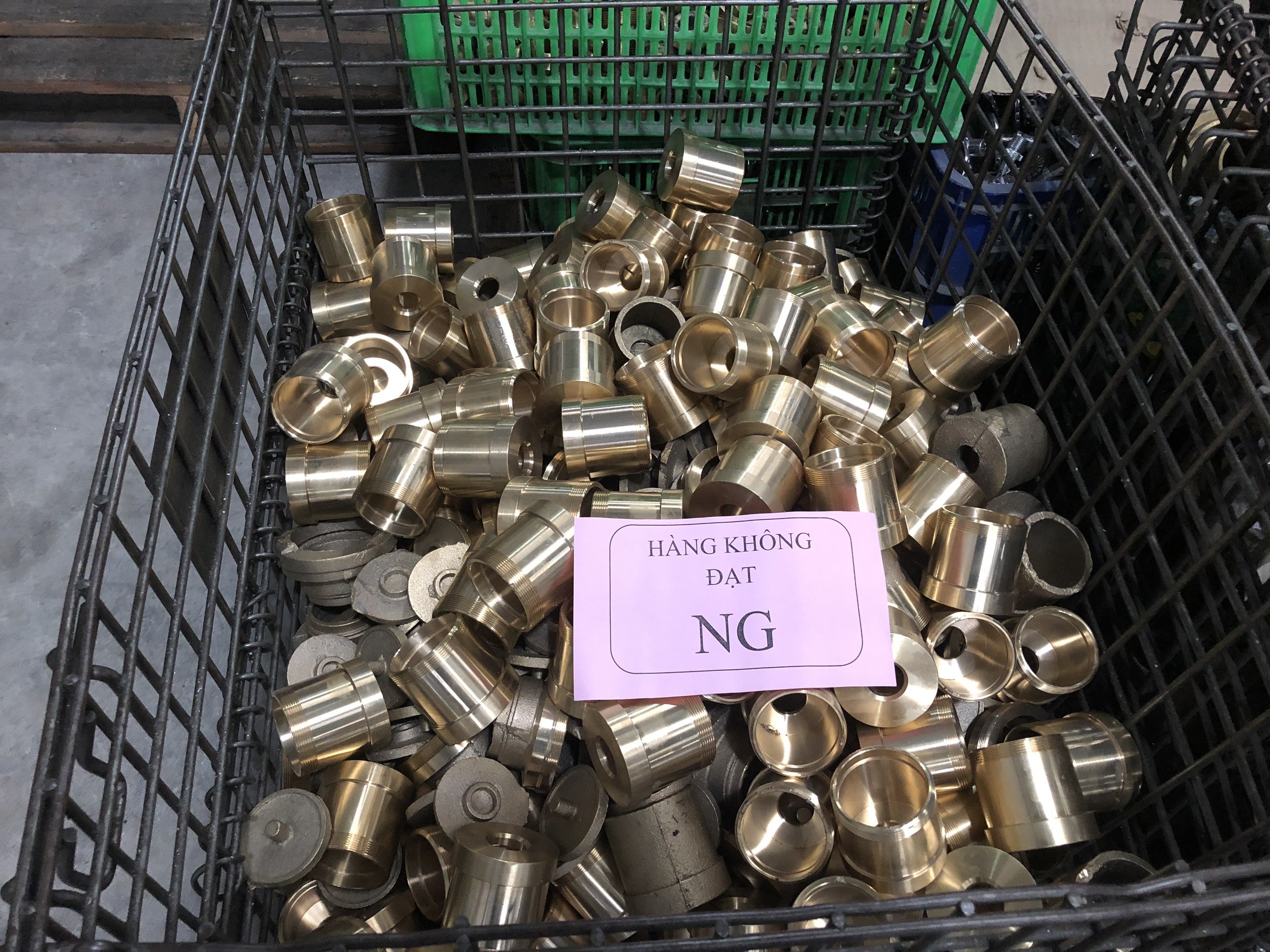

When we started managing stamping projects out of our Vietnam office, one problem kept surfacing — parts passed inspection but arrived at U.S. facilities corroded, mislabeled, or late. The root cause was rarely the stamping itself. It was almost always warehousing and finished goods management 1. Poor storage turns good parts into scrap. Delayed inventory handling kills delivery schedules. And weak packaging means your custom brackets and clips survive the press but not the ocean freight climate-controlled storage 2. That frustration pushed our team to build a rigorous evaluation framework for every warehouse we work with in Vietnam.
To evaluate warehousing and finished goods management when sourcing Vietnam stamping parts, verify the supplier’s climate-controlled storage, ERP-driven inventory control, export-grade packaging standards, and lot-level traceability systems — then confirm through on-site supplier audits and documented logistics procedures.
Below, I walk through each critical area you need to assess ISTA-certified transit testing data 3. These are the same checks our seven-person Vietnam team runs before we approve any stamping supplier’s warehouse for our U.S.-bound shipments.
How can I ensure the Vietnam warehouse environment prevents rust and damage to my custom stamping parts?
A lesson we learned early: a supplier in southern Vietnam had excellent metal stamping capabilities but stored finished brackets in an open-air shed. Within two weeks, surface oxidation appeared on carbon steel clips destined for an automotive client. That single incident cost months of trust-building.
To prevent rust and damage, require climate-controlled or dehumidified warehousing with humidity below 60%, anti-corrosion packaging such as VCI paper or desiccants, elevated racking systems, and documented environmental monitoring logs reviewed during your supplier audit Vietnam visit.

Why Humidity Is the Top Enemy
Vietnam's tropical climate 4 pushes average humidity above 80% for much of the year. Steel and iron-based stamping parts are especially vulnerable. Even stainless steel components — like the brushed mounting clips and angular brackets we regularly source — can develop surface staining if stored improperly. The warehouse must maintain controlled conditions. Look for industrial dehumidifiers, sealed building envelopes, and temperature monitoring.
What to Check On-Site
During a supplier audit Vietnam visit, walk the warehouse floor yourself. Here is what our team inspects:
- Floor condition: Finished goods must sit on pallets or racking, never directly on concrete. Concrete wicks moisture.
- Roof integrity: Leaks are common in older Vietnamese industrial zones. One drip on a pallet of precision sheet metal components ruins the batch.
- Segregation: Raw materials, work-in-progress, and finished goods inventory should occupy separate zones. Cross-contamination from cutting oils or metal fines causes surface defects.
- VCI protection: Volatile Corrosion Inhibitor paper 5 or poly bags should wrap every steel part. Ask to see the VCI brand and expiry date.
Environmental Standards Comparison
| Factor | Acceptable Standard | Red Flag |
|---|---|---|
| Relative humidity | Below 60% with dehumidifier | No humidity control; open-air storage |
| Temperature range | 20–30°C, stable | Fluctuations above 35°C regularly |
| Floor storage | Elevated pallets or racking | Parts stacked directly on concrete |
| Anti-corrosion wrap | VCI paper/bags with valid expiry | No protective wrapping or expired VCI |
| Environmental logs | Digital or written daily records | No records available |
The Cost of Getting It Wrong
Rust and damage during storage lead to rework, returns, and missed delivery windows. For a purchasing manager in the U.S. managing supply chain risk, a single corroded shipment can trigger line stoppages downstream. We have seen logistics challenges Vietnam suppliers face compound quickly when warehouse basics are neglected. The fix is straightforward: insist on documented standards and verify them in person.
What inventory control measures should I look for to guarantee my finished goods are ready for on-time delivery?
One of the most common pain points our U.S. clients raise is delivery delays. When we trace the root cause, it often starts not on the press floor but in the finished goods area — parts sitting unlabeled, inventory counts mismatched, or shipments consolidated incorrectly.
Look for ERP-driven inventory control systems with real-time stock visibility, automated reorder alerts, FIFO enforcement, dedicated staging areas for export orders, and regular cycle counts — these measures ensure your finished goods inventory is accurate and shipment-ready.

ERP Integration Is Non-Negotiable
For any supplier handling mid-to-high volume stamping orders, manual spreadsheet tracking is a risk you cannot afford. An integrated ERP system 6 gives you real-time visibility into what has been produced, what is in storage, and what is staged for shipment. During our evaluations, we verify that the stamping factory's ERP links production output directly to warehouse receipt. This eliminates the "lost inventory" problem where parts are produced but not logged into finished goods.
FIFO and Lot Management
First-In-First-Out (FIFO) 7 is essential for stamped metal parts that may have shelf-life-limited coatings or anti-corrosion treatments. Every lot should carry a date stamp. When we conduct a supplier audit, we check whether the warehouse physically organizes inventory to enforce FIFO — not just on paper, but in how racking and staging lanes are arranged.
Key Inventory Control Metrics to Evaluate
| Metric | Target Benchmark | Why It Matters |
|---|---|---|
| Inventory accuracy rate | ≥ 98% | Prevents short-shipments and delays |
| Cycle count frequency | Weekly or bi-weekly | Catches discrepancies early |
| Order picking error rate | < 1% | Reduces wrong-part shipments |
| Average days in storage | < 14 days for finished goods | Keeps parts fresh, reduces rust risk |
| ERP system uptime | ≥ 99.5% | Ensures real-time tracking reliability |
Bonded Warehouse Options for Lead Time Reduction
Vietnam's bonded warehouse system 8 is a strategic tool for non-resident firms. If your company does not have a local Vietnamese entity, you can hold inventory in a bonded warehouse under your own name. Duties and taxes are deferred until goods leave for domestic delivery. This approach enables bulk shipping to Vietnam with smaller, frequent distributions — reducing logistics costs by 30–50% and shortening lead times by 2–4 weeks compared to direct small shipments from abroad.
Our team helps clients evaluate whether a bonded or general warehouse makes more sense:
| Feature | Bonded Warehouse | General Warehouse |
|---|---|---|
| Duty/tax payment | Deferred until domestic delivery | Paid at import |
| Non-resident inventory ownership | Yes | No — requires local entity |
| Bulk-to-small distribution | Supported | Limited |
| Cost savings potential | 30–50% logistics cost reduction | Lower for immediate delivery |
| Customs clearance procedures | Streamlined for export re-shipment | Standard import process |
| Best for | U.S./EU firms without Vietnam entity | Local companies with urgent needs |
This bonded warehouse approach is growing rapidly. Vietnam is now the top destination for production relocation from China due to trade friction, and bonded infrastructure is expanding to match demand.
Single-Shipment Consolidation
We consolidate all stamped, die-cast, and injection-molded orders into single shipments under one Bill of Lading — whether FOB or CIF under Incoterms 2020 9. This reduces handling errors by 20–30% and simplifies customs clearance procedures on the U.S. side. When evaluating a supplier, confirm they can manage this consolidation without mixing orders or delaying the entire shipment for one late component.
How do I evaluate if the supplier's packaging and labeling will survive the long-haul logistics to my US facility?
A buyer we work with once received a container of angular sheet metal brackets — parts like the geometric, multi-bend components with precise circular holes and elongated slots you see in automotive hardware. Every part passed final inspection. But the packaging collapsed mid-transit. Brackets shifted, edges dug into adjacent parts, and 15% of the shipment arrived with cosmetic damage. That experience reshaped how we evaluate packaging.
Evaluate packaging by requesting ISTA-certified transit testing data, inspecting actual packed samples before first shipment, verifying moisture barriers and cushioning materials, and confirming that labeling includes barcodes, lot numbers, and handling instructions compliant with your receiving system.

Packaging Must Be Engineered, Not Improvised
Stamped metal parts have sharp edges, variable geometries, and surface finishes that scratch easily. Standard cardboard boxing is rarely enough for a 25–30 day ocean voyage from Vietnam to the U.S. West Coast. Our approach is to treat packaging as an engineering requirement, not an afterthought.
Here is the process we follow:
- Material selection: Inner packaging should use PE foam dividers, VCI poly bags, or molded pulp trays. Outer boxes must be double-wall corrugated at minimum.
- Stacking strength: Cartons must withstand container stacking pressure. We test this by asking the supplier to demonstrate a simulated stack test — five cartons high, sustained for 72 hours.
- Moisture protection: Desiccant packs inside sealed poly liners are mandatory. Vietnam's port areas are humid, and containers sitting at dockside can experience condensation ("container rain").
- Edge protection: For parts with sharp stamped edges — like the precision-cut mounting clips and angular brackets we source — edge guards or individual wrapping prevent part-on-part damage.
Labeling That Works for U.S. Receiving
Labeling failures cause delays at your warehouse. Every carton should carry:
- Scannable barcode (matching your PO or SKU system)
- Part number, quantity, lot/batch number
- Net and gross weight
- Country of origin
- Handling symbols (fragile, keep dry, stacking limit)
We verify label readability using the same barcode scanners our clients use at their U.S. receiving docks. A label that scans in Vietnam but not in Ohio is useless.
Packaging Evaluation Checklist
| Element | Requirement | Verification Method |
|---|---|---|
| Inner packaging | VCI bags, PE foam, or molded trays | Inspect sample packs before first shipment |
| Outer carton | Double-wall corrugated, edge crush ≥ 32 ECT | Request material spec sheet |
| Moisture barrier | Desiccant + sealed poly liner | Check quantity per carton vs. volume |
| Stacking strength | 5-high stack test, 72 hours | Witness or request photo documentation |
| Barcode label | Scannable at U.S. receiving | Test with your own scanner system |
| Handling marks | ISO 780 symbols applied | Visual inspection on sample cartons |
| ISTA transit test | Series 2A or 3A preferred | Request test report from accredited lab |
Ethical Sourcing and Sustainable Packaging
Many U.S. buyers now require suppliers to demonstrate ethical sourcing practices, including eco-friendly packaging. Recyclable corrugated materials, biodegradable cushioning, and reduced plastic usage are increasingly standard expectations. During our evaluations, we note whether the supplier uses sustainable alternatives and whether they can provide documentation for your corporate social responsibility reporting.
Can I verify that the supplier has a robust traceability system for my finished parts within their storage facility?
When a quality issue surfaces months after delivery, the first question every purchasing manager asks is: "Which lot did this come from?" Without a robust traceability system 10, that question has no answer. We have been through this scenario enough times to make traceability verification a top-three priority in every supplier audit Vietnam engagement.
Verify traceability by confirming the supplier assigns unique lot or serial numbers at production, links each lot to raw material certificates and inspection records, maintains digital storage location mapping, and can demonstrate a mock recall drill retrieving all affected parts within hours.

What Traceability Actually Means in Practice
Traceability is not just having a number on a box. It means every finished part in the warehouse can be traced backward to:
- The raw material heat lot and supplier certificate
- The stamping press, die, and operator who produced it
- The in-process and final inspection records
- The specific warehouse location, shelf, and pallet position
Our quality assurance protocols require that this chain is unbroken. If a client calls about a dimensional issue on a batch of stainless steel mounting clips, we can identify the exact coil of material, the die condition at time of run, and whether any process deviations were noted.
How to Test the System During an Audit
Do not just ask "Do you have traceability?" Instead, run a live test:
- Pick a random carton from the finished goods area.
- Ask the warehouse team to pull the production record, material certificate, and inspection report for that carton within 30 minutes.
- Verify the documents match — lot numbers, quantities, dates, and material grades should align.
- Ask them to show you the digital record in their ERP or WMS system.
If it takes longer than 30 minutes or the documents do not match, the system is not robust. We have walked away from suppliers who could not pass this simple test.
Digital vs. Manual Traceability
Some smaller stamping shops in Vietnam still rely on handwritten log books. This works for very low volumes, but it breaks down under any real production load. Digital systems — whether ERP modules, dedicated WMS platforms, or even barcode-based tracking — are far more reliable.
A key concern in any digital system is cybersecurity. Sensitive production data, intellectual property related to custom part designs, and inventory records must be protected. During our evaluations, we ask whether the supplier's systems have access controls, regular backups, and network security measures in place.
Traceability and Recall Readiness
For industries like automotive and medical devices, recall readiness is not optional. The supplier must demonstrate they can isolate and retrieve all affected parts from a specific lot — both in their own warehouse and in transit. Ask for their documented recall procedure. If they do not have one, that is a significant gap in their supply chain risk management.
Broader Supply Chain Considerations
Traceability extends beyond the warehouse walls. We verify that our suppliers' raw material sources are vetted — a tight chain of qualified suppliers focused on quality, price, and delivery. High-level chemical composition inspections on incoming metal ensure material purity before any stamping begins. And for secondary operations like plating, coating, or welding, traceability must carry through to those preferred sub-suppliers with verified secondary processing capabilities as well.
Warehouse optimization is not just about physical space. It is about information flow. When every part in storage has a digital identity linked to its full production history, you gain confidence that what ships to your U.S. facility is exactly what was specified, inspected, and approved.
Conclusion
Evaluating warehousing and finished goods management is as critical as evaluating Vietnamese supplier capabilities itself. Focus on environment control, ERP-driven inventory systems, export-grade packaging, and end-to-end traceability to protect your parts and your delivery schedule.
Frequently Asked Questions
How can I ensure the Vietnam warehouse environment prevents rust and damage to my custom stamping parts?
A lesson we learned early: a supplier in southern Vietnam had excellent metal stamping capabilities but stored finished brackets in an open-air shed. Within two weeks, surface oxidation appeared on carbon steel clips destined for an automotive client. That single incident cost months of trust-building.
What inventory control measures should I look for to guarantee my finished goods are ready for on-time delivery?
One of the most common pain points our U.S. clients raise is delivery delays. When we trace the root cause, it often starts not on the press floor but in the finished goods area — parts sitting unlabeled, inventory counts mismatched, or shipments consolidated incorrectly.
How do I evaluate if the supplier's packaging and labeling will survive the long-haul logistics to my US facility?
A buyer we work with once received a container of angular sheet metal brackets — parts like the geometric, multi-bend components with precise circular holes and elongated slots you see in automotive hardware. Every part passed final inspection. But the packaging collapsed mid-transit. Brackets shifted, edges dug into adjacent parts, and 15% of the shipment arrived with cosmetic damage. That experience reshaped how we evaluate packaging.
Footnotes
1. Replaced with a comprehensive article on finished goods warehouse definition and examples from an authoritative source. ↩︎
2. Details the benefits and definition of climate-controlled warehousing for sensitive goods. ↩︎
3. Explains ISTA testing standards for packaging to ensure product safety during transit. ↩︎
4. Replaced with a Wikipedia article providing a comprehensive overview of tropical climates, an authoritative source. ↩︎
5. Explains how VCI paper works to prevent rust and corrosion on metal parts. ↩︎
6. Replaced with an article discussing ERP for warehouse management and its benefits from a relevant industry blog. ↩︎
7. Explains the FIFO inventory method and its importance for stock rotation and freshness. ↩︎
8. Defines a bonded warehouse system and its advantages for international trade. ↩︎
9. Provides the official rules and guidelines for international trade terms (Incoterms 2020). ↩︎
10. Describes the importance and components of a robust traceability system in supply chain management. ↩︎