
I once received a frantic call from a US client whose previous supplier delivered 200 welded brackets with hairline cracks along every joint — the entire batch failed incoming inspection Material Test Reports 1. The project stalled for weeks, costing tens of thousands of dollars. That experience reinforced a lesson our team at DEWIN learned early: evaluating welding expertise before production starts is the only way to prevent costly failures in large-scale infrastructure sheet metal fabrication.
To evaluate welding expertise for large-scale infrastructure sheet metal fabrication, verify the fabricator’s welding certifications (AWS QC17, AWS D1.1, ASME Section IX), review their Welding Procedure Specifications, confirm non-destructive testing protocols, audit their equipment and skilled workforce, and validate their track record with similar complex projects.
This guide walks you through every step of that evaluation process. Each section below tackles a specific question that purchasing managers and engineers ask us regularly. Let’s break it down.
How do I verify that a supplier's welding certifications meet my specific infrastructure project standards?
A purchasing manager from the Midwest once sent us a spreadsheet listing seven different welding certifications he needed for a single bridge component project. He had been burned before — a supplier claimed compliance but could not produce a single valid certificate when audited. That interaction shaped how our team now approaches certification verification from day one.
Verify a supplier's welding certifications by requesting copies of AWS QC17 (facility-level), individual welder qualifications under AWS QC7, applicable code certifications like AWS D1.1 or ASME Section IX, and cross-checking their validity dates, scope of coverage, and accrediting body directly with the issuing organization.

Why Certifications Matter for Infrastructure Projects
Welding certifications are not decorative. They prove that a fabricator's processes, personnel, and quality systems have been independently tested. For infrastructure work — bridges, power plant components, heavy-duty mounting brackets — the consequences of a bad weld can be catastrophic. A cracked joint in a load-bearing bracket can compromise structural integrity for an entire installation.
The challenge is that different projects call for different international welding standards. A bracket destined for a petrochemical facility needs ASME Section IX 2 compliance. A structural steel connection for a building follows AWS D1.1 3. Sheet metal assemblies for HVAC ductwork in commercial buildings may fall under AWS D9.1. You need to match the certification to the application.
Key Certifications to Request
| Certification | Scope | Applies To |
|---|---|---|
| AWS QC17 4 | Facility-level quality system for welding fabricators | All welding fabrication shops |
| AWS QC7 | Individual welder performance qualification | Each welder performing critical joints |
| AWS D1.1 | Structural steel welding code | Bridges, buildings, heavy structures |
| AWS D9.1 | Sheet metal welding code | Lighter gauge sheet metal assemblies |
| ASME Section IX | Welding and brazing qualifications for pressure vessels | Power plants, refineries, piping |
| ISO 3834 | Quality requirements for fusion welding of metallic materials | International projects |
How to Cross-Check Validity
Don't just accept a PDF. I recommend these steps:
- Request the original certificate with the welder's name, ID number, and date of qualification.
- Check the expiration date. Most welder qualifications require renewal every six months to three years depending on the code.
- Confirm the scope. A welder qualified for flat-position MIG on mild steel is not automatically qualified for overhead TIG on stainless steel.
- Contact the certifying body. AWS and ASME maintain records. A quick call or email can confirm authenticity.
- Ask for the Welding Procedure Specification (WPS). This document details the exact process, filler metals, shielding gas, and parameters. It must be qualified by a Procedure Qualification Record 5 (PQR).
When our team conducts supplier audits in Vietnam or other Asian countries, we always ask to see the WPS binder on the shop floor — not in the front office. If the welders on the line cannot point to the WPS they are following, that is a red flag.
Industry-Specific Considerations
If your project involves government contracts, verify that the fabricator has a SAM registration and CAGE code. For defense-related work, ITAR compliance is non-negotiable. In food-grade or pharmaceutical applications, look for sanitary welding certifications and surface finish standards. Our experience exporting to US clients has taught us that missing even one certification can delay customs clearance and project timelines by weeks.
What quality control steps should I expect from a fabricator to ensure my large-scale welds are defect-free?
One trade-off we weigh constantly is the balance between inspection cost and defect risk. Skipping a $500 ultrasonic test can lead to a $50,000 field failure. Our clients in the US infrastructure sector understand this math, but many fabricators overseas still treat quality control as an afterthought rather than a built-in process.
Expect a multi-stage welding quality control process: pre-weld checks (material verification, joint fit-up, WPS review), in-process monitoring (parameter logging, visual inspection at each pass), and post-weld inspection using non-destructive testing methods like ultrasonic, radiographic, magnetic particle, and dye penetrant testing to catch both surface and internal welding defects.

Pre-Weld Quality Steps
Quality starts before the arc strikes. Here is what to look for:
- Material Test Reports (MTRs): Every piece of base metal should have a traceable MTR confirming its chemical composition and mechanical properties. This is critical for structural integrity — you cannot weld high-strength steel using a procedure designed for mild steel.
- Joint preparation: Proper bevel angles, root gaps, and cleanliness. Contaminants like oil, rust, or mill scale cause porosity and inclusions.
- WPS confirmation: The welder must follow the approved WPS for that specific joint. Our QC inspectors verify this at the start of every shift.
In-Process Monitoring
For multi-pass welds on thick sections, each pass matters. A Certified Welding Inspector (CWI) should be monitoring:
- Interpass temperature
- Travel speed and heat input
- Filler metal lot numbers
- Visual appearance of each bead
We use digital checklists on the shop floor. Every parameter gets logged in real time. If a welder deviates from the WPS, the system flags it immediately.
Post-Weld Inspection and NDT Methods
Non-destructive testing is the final gatekeeper. Here is a comparison of the most common methods:
| NDT Method | Detects | Best For | Limitations |
|---|---|---|---|
| Visual Inspection (VT) | Surface cracks, undercut, porosity | All welds — first line of defense | Cannot detect internal flaws |
| Ultrasonic Testing (UT) | Internal cracks, lack of fusion, inclusions | Thick sections, structural joints | Requires skilled operator |
| Radiographic Testing (RT) | Internal porosity, slag inclusions, cracks | Pipe welds, pressure vessels | Radiation safety concerns, higher cost |
| Magnetic Particle Testing (MT) | Surface and near-surface cracks | Ferromagnetic materials only | Not usable on stainless steel or aluminum |
| Dye Penetrant Testing (PT) | Surface-breaking defects | Non-ferromagnetic metals, smooth surfaces | Cannot find subsurface flaws |
For large-scale infrastructure, I recommend a combination of VT on every weld plus UT or RT on critical joints. The specific mix depends on the governing code and the consequence of failure. All pressure boundaries must meet design thickness and stress requirements per the applicable standard.
Documentation and Traceability
Every inspection result should be documented and linked to a specific weld joint, welder ID, and date. When we manage a project through our PPAP process, we create a weld map that shows every joint on the assembly, the WPS used, the welder who performed it, and the inspection results. This level of traceability is what separates a professional fabricator from a transactional vendor.
How can I assess if a fabrication team has the technical expertise to handle my complex sheet metal drawings?
During a recent project involving mirrored mounting brackets with angular bends, irregular cutouts, and multiple mounting holes, we discovered that three out of five candidate suppliers could not even interpret the GD&T callouts 8 on the drawing correctly. The brackets looked simple in a photograph, but the tolerance stack-up across seven bend operations made them surprisingly difficult to produce right the first time.
Assess a fabrication team's technical expertise by reviewing their experience with similar complex geometries, testing their ability to read engineering drawings with GD&T, evaluating their CNC programming capabilities, conducting practical skills tests under real project conditions, and checking whether they proactively identify design-for-manufacturability issues before production begins.

Reading Drawings Is the First Filter
A surprising number of fabrication shops struggle with complex sheet metal drawings. They can handle basic flat patterns, but when a drawing calls for multi-axis bends, weld symbols per AWS A2.4, or tight positional tolerances on hole patterns, mistakes multiply. Our engineers use a simple test: we send a moderately complex drawing and ask the supplier to provide a flat-pattern layout, a bend sequence, and a list of questions. The quality of their questions tells us more than their answers.
Evaluating CNC and Automation Capabilities
For large-scale infrastructure work, manual layout and hand bending are not viable. You need:
- CNC laser or fiber-laser cutting for clean, precise blanks
- CNC press brakes with multi-axis back gauges for accurate bends
- Robotic welding cells for repeatable, high-volume weld joints
- CMM or laser scanning for dimensional verification
The global metal fabrication market is valued at approximately USD 23.54 billion in 2025 and is projected to reach USD 32.46 billion by 2032. This growth is driven partly by automation adoption — robotic welding, fiber-laser cutting, and automated bending are addressing labor shortages while improving accuracy. Fabricators who invest in these technologies deliver better consistency on complex parts.
The Manual vs. Automated Welding Debate
There is a genuine trade-off here. Manual welding — especially TIG welding 9 — offers flexibility for custom joints, unusual positions, and prototype runs. A skilled welder can adapt in real time to fit-up variations. But for production volumes of 50 or more identical brackets, robotic welding ensures consistency and scalability that manual welding cannot match.
In our projects, we often use a hybrid approach: manual TIG for first-article samples and critical cosmetic welds, then robotic welding for production runs. This gives us the flexibility of manual work with the repeatability of automation.
Practical Skills Tests
Beyond certifications, practical skills tests reveal the truth. When we audit a potential supplier, we bring a sample part — sometimes one of the angular mounting brackets our clients need — and ask them to fabricate a small batch. We evaluate:
- Dimensional accuracy against the drawing
- Weld quality (visual and, if needed, destructive testing on a sample)
- Surface finish consistency
- How they handle the bend sequence for complex geometries
- Whether they flag potential issues proactively
A fabrication team with real technical expertise will ask smart questions about material grain direction, bend relief, and weld distortion. A team without it will just say "no problem" to everything — and that is the biggest problem of all.
Addressing the Skills Gap
The shortage of skilled welders, CNC programmers, and machinists is a real challenge across North America, Europe, and Asia Pacific. Metal workers need detail orientation, manual dexterity, physical stamina, and spatial-orientation skills. When we evaluate suppliers, we look at their training programs and workforce stability. High turnover is a warning sign. A shop that invests in welder qualification and ongoing training is far more likely to deliver consistent quality.
What should I look for during a factory audit to confirm a supplier's welding capacity for heavy-duty infrastructure?
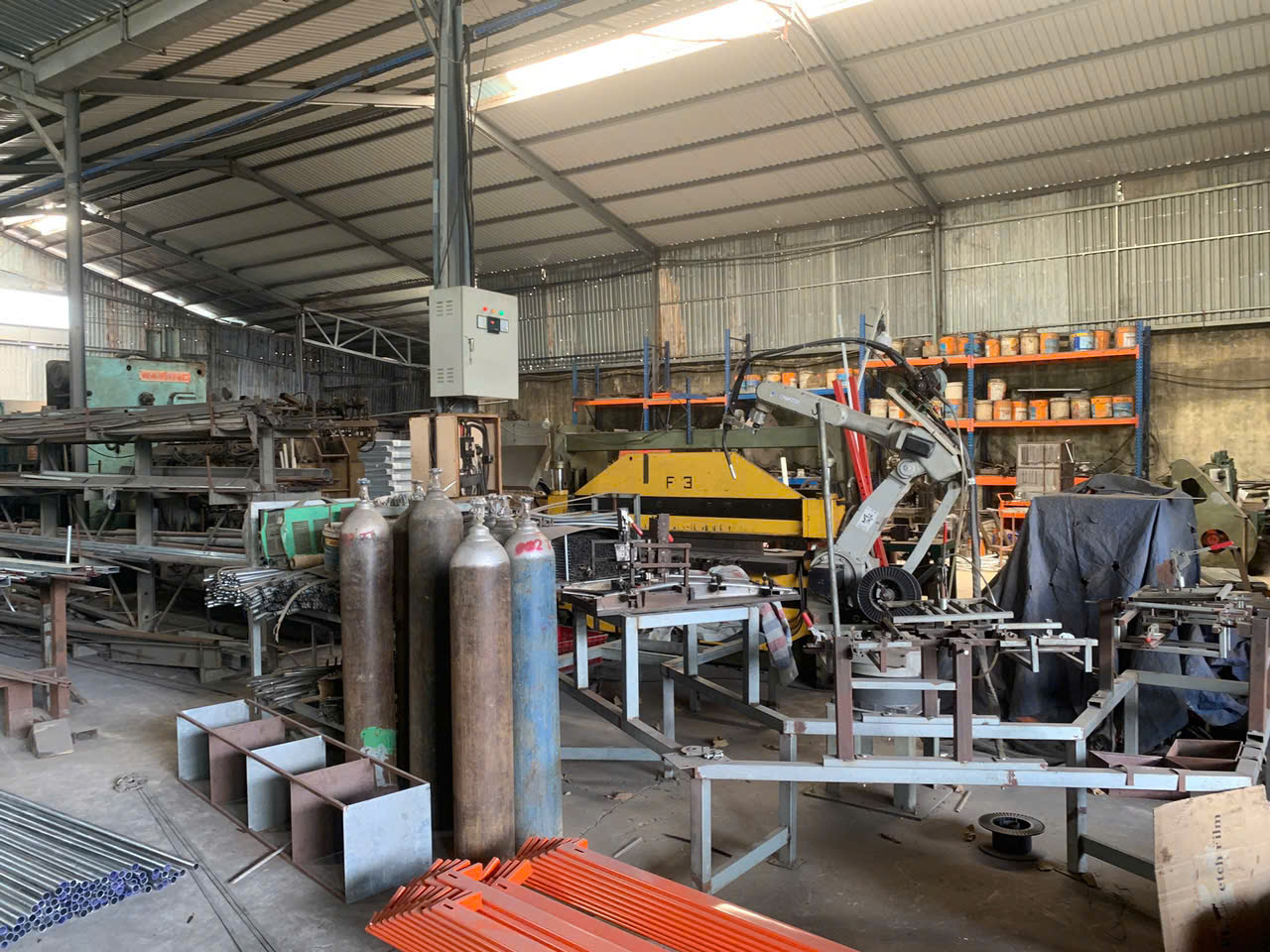
A lesson we learned the hard way during an early supplier audit in Southeast Asia: the showroom samples looked flawless, but the actual production floor told a different story. Welding cables were frayed, shielding gas regulators were not calibrated, and finished parts sat directly on the concrete floor without protection. The gap between marketing materials and shop-floor reality can be enormous.
During a factory audit, inspect welding equipment condition and calibration records, verify welder qualification certificates on-site, review WPS documentation at workstations, check material storage and traceability systems, assess NDT capabilities, evaluate production capacity against your volume requirements, and observe actual welding operations to judge technique and housekeeping standards.
The Factory Audit Checklist
Here is a structured checklist we use when our team visits a supplier's facility:
| Audit Area | What to Check | Red Flags |
|---|---|---|
| Equipment | CNC machines, welding power sources, press brakes, robotic cells | Outdated equipment, lack of calibration stickers |
| Certifications | AWS QC17, ISO 9001, industry-specific approvals | Expired certificates, no facility-level certification |
| Personnel | Welder qualification records, CWI on staff | No qualified welders on the current shift |
| Documentation | WPS at workstations, inspection records, MTRs | WPS locked in an office, no traceability |
| Material Handling | Proper storage, segregation by grade, moisture control for electrodes | Mixed materials, no labeling, electrodes exposed to humidity |
| NDT Capability | In-house UT/RT/MT/PT equipment or contracted third-party lab | No NDT capability at all |
| Housekeeping | Clean work areas, organized tool storage, safety compliance | Cluttered floor, missing PPE, tripping hazards |
| Capacity | Number of welding stations, shift patterns, backlog status | Single-shift operation with no surge capacity |
Evaluating Production Redundancy
For heavy-duty infrastructure projects, you cannot afford a single point of failure. Ask about backup capacity. Does the fabricator have multiple welding stations that can handle your material thickness? Can they shift work to a second facility if needed? Geographic flexibility and production redundancy are now competitive necessities, especially in the context of reshoring and supply chain diversification.
Our approach at DEWIN is to maintain relationships with audited suppliers across Vietnam and other Asian countries. If one facility hits a capacity constraint, we can redirect work without starting the qualification process from scratch. This kind of supply chain resilience matters enormously to US clients who have been burned by single-source dependencies.
Observing Live Welding Operations
Paper audits only go so far. Watching welders work reveals their true skill level. During a live observation, I pay attention to:
- Arc control: Is the welder maintaining a consistent arc length and travel speed?
- Technique: Are they using the correct weave pattern or stringer bead per the WPS?
- Cleanup: Do they grind and clean between passes on multi-pass welds?
- Safety: Are they wearing proper PPE and following hot-work procedures?
For TIG welding on stainless steel sheet metal — which is common in our infrastructure bracket work — I look for consistent bead width, proper gas coverage (no oxidation or sugaring on the back side), and correct filler metal selection. TIG is the cleanest and most precise method for stainless steels and non-ferrous metals, but it demands a high skill level.
Beyond the Welding Bay
A truly capable fabricator offers more than just welding. Look for integrated capabilities: in-house CNC machining for post-weld operations, surface treatment (powder coating, anodizing, plating), and engineering support for design optimization. The trend in the industry is toward full-service partners who can handle design-to-delivery execution. This is especially important for renewable energy components — wind turbine towers, solar mounting structures, and power-grid hardware — where sophisticated sheet metal fabrication and high-quality welding must work together seamlessly.
Finally, ask for customer references. A fabricator with experience in aerospace, food-grade, or industrial sectors understands the applicable standards and inspection requirements. Ask about similar projects they have completed, the challenges they faced, and how they resolved them. Real answers — not rehearsed sales pitches — will tell you everything you need to know.
Conclusion
Evaluating welding expertise for large-scale infrastructure sheet metal fabrication requires checking certifications, quality control processes, technical skills, and factory capabilities together — not in isolation. Get these right, and you protect your project from costly failures.
Frequently Asked Questions
How do I verify that a supplier's welding certifications meet my specific infrastructure project standards?
A purchasing manager from the Midwest once sent us a spreadsheet listing seven different welding certifications he needed for a single bridge component project. He had been burned before — a supplier claimed compliance but could not produce a single valid certificate when audited. That interaction shaped how our team now approaches certification verification from day one.
What quality control steps should I expect from a fabricator to ensure my large-scale welds are defect-free?
One trade-off we weigh constantly is the balance between inspection cost and defect risk. Skipping a $500 ultrasonic test can lead to a $50,000 field failure. Our clients in the US infrastructure sector understand this math, but many fabricators overseas still treat quality control as an afterthought rather than a built-in process.
How can I assess if a fabrication team has the technical expertise to handle my complex sheet metal drawings?
During a recent project involving mirrored mounting brackets with angular bends, irregular cutouts, and multiple mounting holes, we discovered that three out of five candidate suppliers could not even interpret the GD&T callouts 8 on the drawing correctly. The brackets looked simple in a photograph, but the tolerance stack-up across seven bend operations made them surprisingly difficult to produce right the first time.
Footnotes
1. Defines MTRs as documents providing essential information about material properties and quality. ↩︎
2. Provides an overview of ASME Section IX for welding and brazing qualifications. ↩︎
3. Official AWS page detailing the Structural Welding Code for Steel. ↩︎
4. Explains the AWS Certified Welding Fabricator program and its requirements. ↩︎
5. Explains PQR as a vital document verifying welding procedure suitability. ↩︎
6. Defines WPS as a formal document for welding procedures. ↩︎
7. Replaced HTTP 404 link with an authoritative Wikipedia page providing a comprehensive overview of non-destructive testing. ↩︎
8. Explains GD&T symbols as standardized annotations for design requirements. ↩︎
9. Provides a comprehensive explanation of the TIG welding process. ↩︎
10. Highlights advantages of robotic welding cells in manufacturing. ↩︎