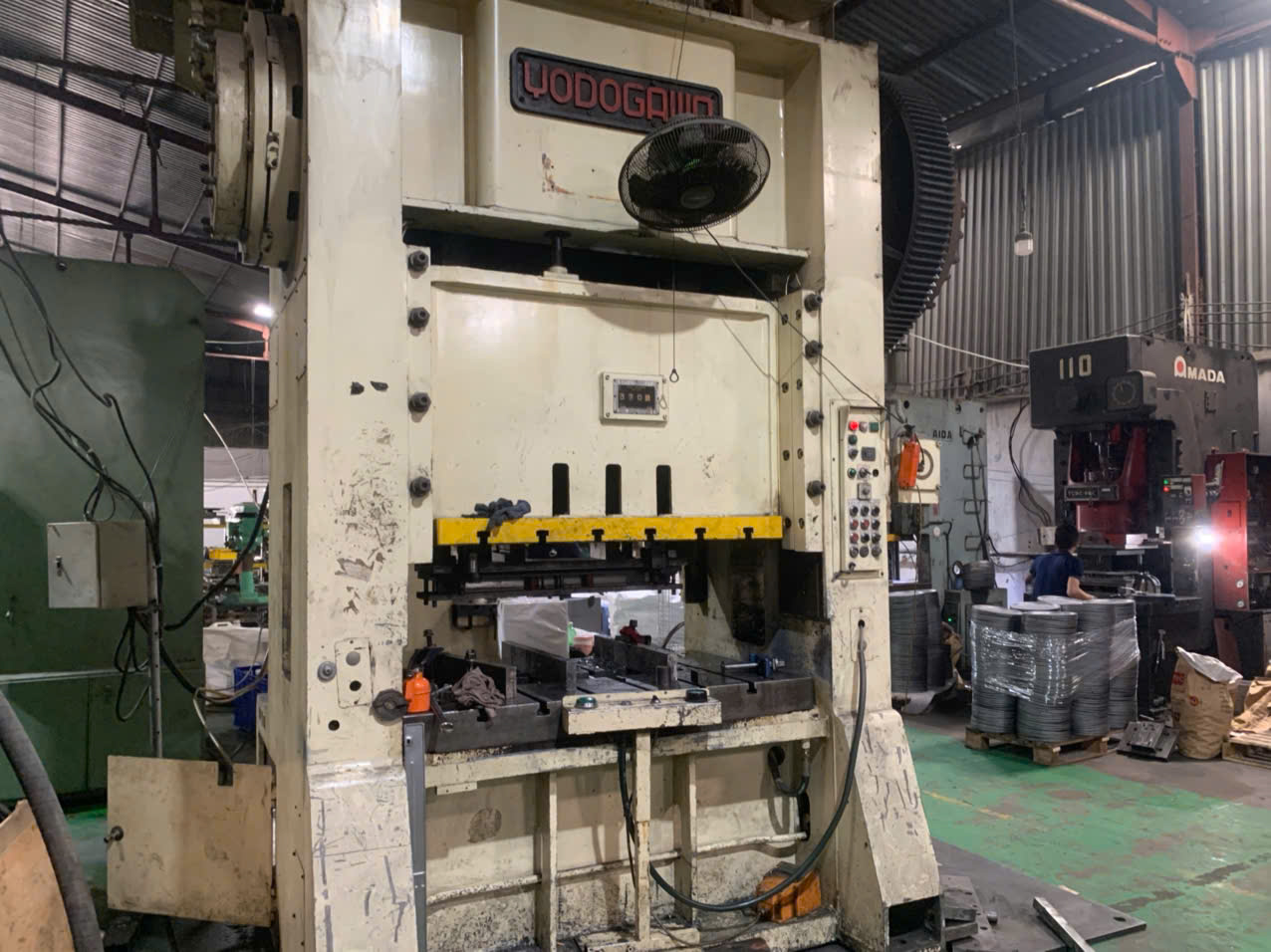

Tariffs on stamping parts from Vietnam can quietly wreck a landed-cost budget supply chain diversification 1. I have watched buyers lose entire margins because nobody checked the EVFTA paperwork before our Vietnam team shipped their brackets.
The EVFTA cuts tariff costs on stamping parts from Vietnam by phasing most EU import duties to 0% within seven years of August 2020, provided the parts meet Rules of Origin (typically 40% local value or a tariff heading change) and carry a valid EUR.1 certificate or REX self-certification.
That answer sounds simple. In practice, the savings depend on your HS code, your supplier’s material sourcing, and your documentation. Let me walk you through each piece, step by step.
What EVFTA Tariff Schedules Apply to My Stamping Parts from Vietnam?
A purchasing manager once emailed me a drawing for a powder-coated mounting bracket and asked one question: "What duty will I pay?" Our Vietnam office spent a full morning on HS Code classification 2 before we could answer honestly.
Most stamped steel parts fall under HS Chapters 73, 84, 85, or 87. Under the EVFTA tariff elimination schedule, the EU removed duties on most metal components immediately in August 2020 or phases them to 0% over three to seven years, ending by 2027.

The EVFTA is not one flat rule. It is a schedule with staging categories. Each 8-digit HS code sits in a category, and that category tells you how fast the duty drops. Getting the HS Code classification right is the first job. Everything else builds on it.
Which Chapters Cover Stamping Parts?
Stamped and fabricated metal parts scatter across several chapters. A bracket welded to a base plate may land in a different heading than the same bracket sold loose. Here is how it usually breaks down for the parts we handle:
| HS Chapter | Typical Stamping Parts | Common EVFTA Staging |
|---|---|---|
| Chapter 73 | Steel brackets, base plates, flange plates, structural hardware | Mostly immediate 0% or short phase-out |
| Chapter 84 | Stamped machinery components and housings | Immediate to 3-year phase-out |
| Chapter 85 | Stamped parts for electrical equipment | Mostly immediate 0% |
| Chapter 87 | Automotive stamped body and chassis parts (e.g., 8708.29, 8708.99) | Up to 7-year phase-out, ending by 2027 |
Why the Staging Category Matters
If your part sits in an "A" category, the duty went to zero on day one. If it sits in a "B7" category, the duty steps down every January 1 and hits zero after seven years. For automotive parts, that final step lands in 2027. Car parts faced Vietnamese import duties of up to 32% before the agreement, so the phase-out is significant in both directions of trade.
My advice is blunt. Never assume. Pull the exact 8-digit code, check it against Annex 2-A on the EU's Access2Markets portal 3, and confirm the current-year rate. We do this for every new stamping project our engineers quote, because a wrong chapter guess can swing your duty by several percentage points.
How Do I Qualify for Preferential Tariff Rates Under EVFTA Rules of Origin?
The hardest conversation I ever had with a Vietnamese stamping supplier was about steel coil sourced from China. Their price was excellent. Their Rules of Origin position was not, and we had to restructure the material flow before quoting.
To claim preferential tariff rates, your stamping parts must originate in Vietnam under EVFTA Rules of Origin. That usually means at least 40% Vietnamese value-added content or a change in tariff heading, plus compliance with the direct transport rule during shipment.

Rules of Origin are the gatekeeper. The tariff schedule tells you what you could save. Origin rules decide whether you actually get it. Fail them, and customs applies the full MFN rate 4, no matter how beautiful your certificate looks.
The Two Main Origin Tests
Most stamped metal parts qualify through one of two routes:
- Change in Tariff Heading (CTH). The stamping process must transform the input (steel coil or sheet) into a product under a different 4-digit heading. Deep drawing, forming, cutting, welding, and coating usually achieve this. Simple re-packing or minor bending does not.
- Value-Added Content (VAC). The Vietnamese value added, including local labor, processing, overhead, and locally sourced materials, generally must reach 40% of the ex-works price. Some product families require 50–60%, so check the product-specific rule for your heading.
Where Buyers Get Trapped
The classic trap is a supplier who imports Chinese steel, performs light stamping, and adds little local value. If neither the CTH nor the VAC test is satisfied, the part is not "originating" and you pay full duty. Bilateral cumulation 5 helps in one direction: EU-origin materials used in Vietnamese production count as local content. ASEAN cumulation is limited to specific sectors, so do not assume it covers your metal parts.
There is one more clause many buyers miss. The direct transport rule requires goods to ship from Vietnam to the EU without entering commerce in a third country. Transshipment through a hub is fine if the goods stay under customs control. And note the duty drawback restriction: your supplier generally cannot claim refunds of import duty on non-originating inputs and still issue preferential origin proof, which changes the true cost math.
Our Vietnam team audits material traceability during supplier audits for exactly this reason. Precision metal fabrication only saves you money if the origin file behind it survives a customs verification three years later.
What Documentation Do I Need to Claim EVFTA Tariff Benefits on My Imports?
Paperwork is where good tariff strategies die. Early in our Vietnam operation, we saw a shipment of bracket assemblies clear customs at the full rate because one origin document arrived a week after the vessel. We changed our export checklist the same month.
You need a Certificate of Origin Form EUR.1 issued by Vietnam's Ministry of Industry and Trade for shipments above €6,000, or an origin declaration on the invoice for smaller consignments. EU-side exporters use the REX system for self-certification.

The certificate is your customs duty exemption ticket. Without valid proof of origin at the time of import, the preferential rate is not applied. Getting a refund later is possible in some cases, but it is slow and painful. Get it right the first time.
The Document Stack Behind the Certificate
The EUR.1 form is only the visible layer. Behind it, the exporter must hold records proving origin. Here is what we assemble for every EVFTA shipment:
| Document | Purpose | Who Prepares It |
|---|---|---|
| Certificate of Origin Form EUR.1 | Formal proof of origin for shipments over €6,000 | Exporter, issued via Vietnam's authorities |
| Invoice origin declaration | Self-certified proof for shipments under €6,000 | Exporter |
| Commercial invoice and packing list | Value and consignment details | Exporter |
| Export customs declaration | Confirms goods left Vietnam | Exporter or forwarder |
| Raw material purchase records | Prove VAC or CTH compliance in an audit | Supplier, verified during audits |
| Bill of lading (direct routing) | Satisfies the direct transport rule | Forwarder |
Practical Filing Steps
Vietnamese exporters apply through the National Single Window portal, which speeds up issuance once the origin file is complete. On the EU import side, your broker declares the preference code on the customs entry and presents the EUR.1 or origin declaration. Keep every certificate and its supporting file for at least the retention period, because EU customs can request verification years after clearance.
For high-volume programs, the REX-style self-certification route removes the per-shipment cost and delay of physical certificates. We coordinate this with the freight plan too, because a certificate that misses the vessel creates the exact delay problem our clients hired us to eliminate. Our door-to-door logistics management exists partly so purchasing managers never have to chase a EUR.1 form across time zones at 11 p.m.
How Much Can I Actually Save by Sourcing Stamping Parts from Vietnam Under EVFTA?
Numbers convince faster than clauses. When our engineers co-develop a stamped bracket program, we always model the landed cost two ways: with the preference and without it. The gap is often the deciding factor for the client's CFO.
Savings equal your MFN duty rate multiplied by customs value. For stamped steel parts, EVFTA typically removes duties of roughly 2–4.5% on EU imports, while Vietnamese duties on car parts of up to 32% phase to zero by 2027, compounding lower Vietnamese production costs.

Percentages sound small until you multiply them across annual volume. Let me make this concrete with a realistic example based on the kind of powder-coated mounting brackets and base plates we ship regularly.
A Worked Example
Assume an EU buyer imports €500,000 per year of stamped steel brackets classified in Chapter 73, facing a 3% MFN duty:
| Cost Line | Without EVFTA | With EVFTA Preference |
|---|---|---|
| Annual customs value | €500,000 | €500,000 |
| Import duty (3% vs 0%) | €15,000 | €0 |
| Origin compliance and certification cost | €0 | ~€1,500–2,500 |
| Net annual saving | — | ~€12,500–13,500 |
For automotive stamped parts under Chapter 87, where pre-agreement duties ran far higher, the same math scales dramatically. And the tariff line is only part of the story.
Savings Beyond the Duty Line
Three other effects add up. First, Vietnam accepts EU type approvals for parts complying with UN Regulations 6, which trims testing and certification costs for automotive programs. Suppliers holding IATF 16949 certification 7 shorten qualification further. Second, supply chain diversification away from single-country exposure reduces tariff-risk premiums that many buyers now price into their sourcing decisions, especially U.S. clients balancing Asia strategies. Third, as the tariff elimination schedule steps down each January 1, you can negotiate forward pricing with suppliers who know your duty burden is shrinking.
One caution from experience. Compliance is not free. Origin record-keeping, supplier audits, and certificate handling carry real administrative cost. On small, low-duty shipments, the preference may barely pay for its own paperwork. On steady programs above mid five figures annually, it almost always does. Run the math before you commit, and build origin compliance into the supplier contract from day one rather than bolting it on after the first shipment stalls.
Conclusion
Tariffs punish the unprepared. The EVFTA rewards buyers who verify HS codes, secure Rules of Origin compliance, and file clean EUR.1 documentation. Do that, and stamping parts from Vietnam become a durable cost advantage.
Frequently Asked Questions
Which Chapters Cover Stamping Parts?
Stamped and fabricated metal parts scatter across several chapters. A bracket welded to a base plate may land in a different heading than the same bracket sold loose. Here is how it usually breaks down for the parts we handle:
What EVFTA Tariff Schedules Apply to My Stamping Parts from Vietnam?
A purchasing manager once emailed me a drawing for a powder-coated mounting bracket and asked one question: "What duty will I pay?" Our Vietnam office spent a full morning on HS Code classification 2 before we could answer honestly.
How Do I Qualify for Preferential Tariff Rates Under EVFTA Rules of Origin?
The hardest conversation I ever had with a Vietnamese stamping supplier was about steel coil sourced from China. Their price was excellent. Their Rules of Origin position was not, and we had to restructure the material flow before quoting.
Footnotes
1. Background on supply chain concepts relevant to reducing single-country sourcing risk exposure. ↩︎
2. Background on the global Harmonized System used to classify stamping parts for tariff purposes. ↩︎
3. Official EU portal for verifying EVFTA tariff schedules and rules of origin by HS code. ↩︎
4. Explains the Most Favoured Nation tariff concept that applies when origin requirements are not met. ↩︎
5. WTO reference on rules of origin and cumulation mechanisms used in preferential trade agreements. ↩︎
6. Authoritative Wikipedia entry explaining the UN framework for international vehicle standards. ↩︎
7. Authoritative Wikipedia entry for the global automotive quality management system standard. ↩︎