
When our Vietnam office started vetting stamping suppliers for U.S. clients, we quickly learned that filtering Vietnamese suppliers for stamping parts on B2B platforms is far harder than it looks — most profiles hide more than they reveal.
To filter Vietnamese suppliers for stamping parts on B2B platforms, buyers should prioritize Vietnam-specific directories, verify ISO 9001 certification, confirm at least three years of progressive die stamping experience, validate export readiness with FOB/CIF familiarity, and cross-check profiles against factory audit reports before placing any order.
This guide walks through the exact steps we use to separate capable stamping factories from unreliable listings Measurement System Analysis 1. Each section tackles a real filtering challenge with practical checkpoints you can apply today.
How can I verify a Vietnamese stamping supplier's real production capabilities before placing an order?
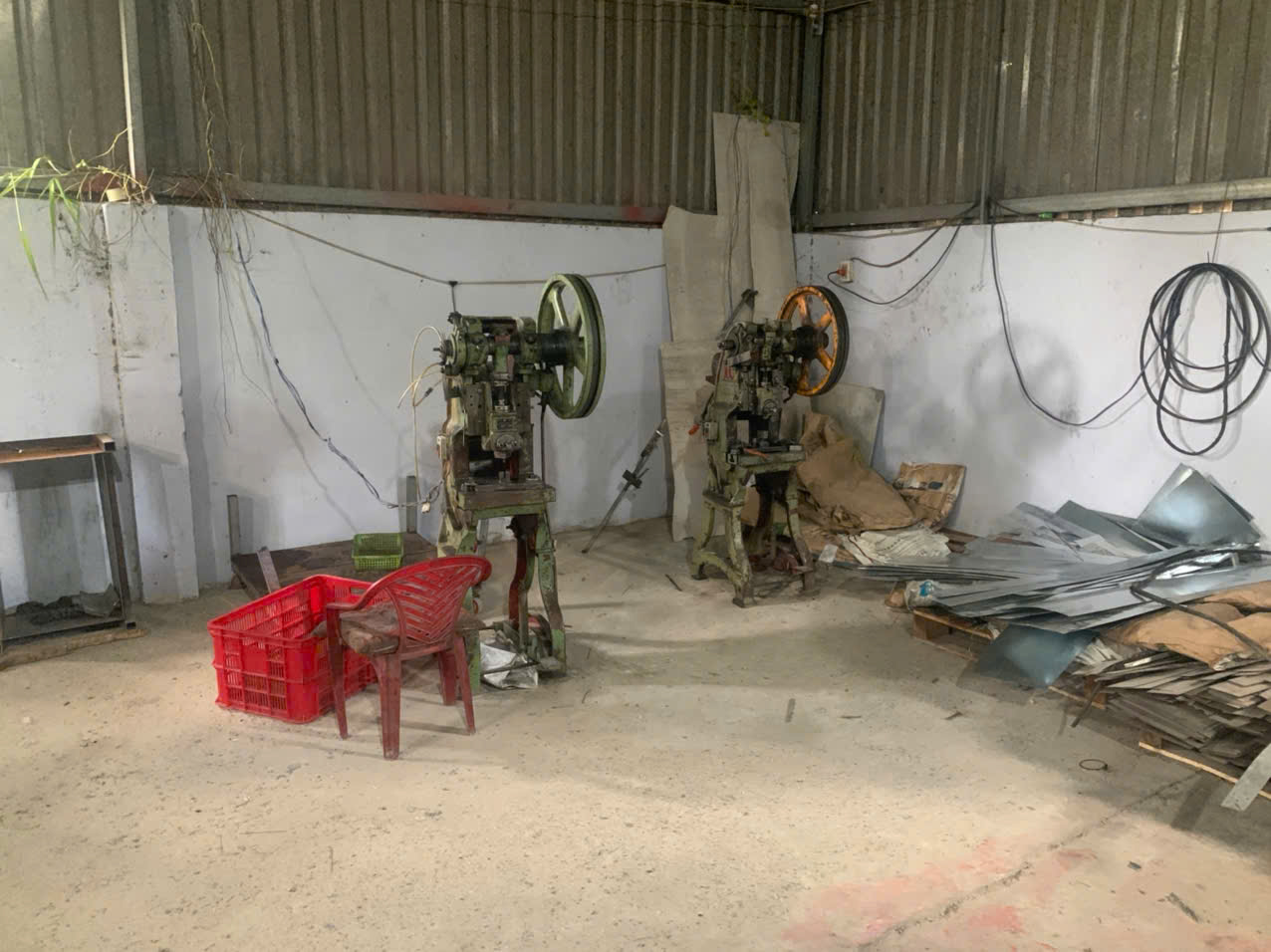
A lesson we learned early on: one of our U.S. clients sent a drawing to a supplier whose profile listed "stamping" as a capability, but the factory only owned laser cutters and manual bending machines — no stamping presses at all.
To verify a Vietnamese stamping supplier's real production capabilities, request a detailed machinery list with press tonnage, confirm progressive die or deep-draw experience, ask for recent sample photos with dimensional reports, and schedule a video factory tour or third-party factory audit report before committing to any order.

The gap between a B2B profile and a real factory floor can be enormous. Here is how we close that gap for every new supplier our Vietnam team evaluates.
Start with the Machinery List
Ask the supplier for a full equipment list. Do not accept vague descriptions like "stamping machines available." You need specific details: press type (mechanical or hydraulic), tonnage range, bed size, and number of units. A factory doing precision metal stamping for brackets and mounting hardware should own presses ranging from 25-ton to at least 200-ton capacity. If they only list one or two small presses, they may not handle the volume or complexity your project requires.
Request Evidence of Tooling Capability
A critical distinction exists between suppliers who design and build their own dies versus those who outsource tooling. In-house tool and die capability means faster turnaround, lower tooling costs, and better quality control over the stamping process. Ask to see photos of their toolroom, and ask who designed the last three progressive dies they ran. If they cannot answer clearly, that is a warning sign.
Production Capacity Assessment Checklist
| Verification Step | What to Request | Why It Matters |
|---|---|---|
| Machinery inventory | Detailed list with brand, model, tonnage | Confirms actual stamping capability |
| Tooling capability | Photos of toolroom, recent die samples | Verifies in-house die design and maintenance |
| Production volume | Monthly output in units or tons | Validates they can meet your minimum order quantity |
| Recent project samples | Photos with dimensional inspection data | Shows real-world output quality |
| Workforce size | Number of operators and engineers | Indicates capacity and technical depth |
| Video factory tour | Live or recorded walkthrough | Proves the facility exists and operates |
Go Beyond the Profile
Our team in Vietnam conducts on-site visits for high-value projects. But if travel is not an option, a video call where the supplier walks through the shop floor live is a strong alternative. We also ask for their most recent third-party factory audit report. A reputable supplier will have one. If they hesitate or say they have never been audited, that tells you something important about their professionalism and trustworthiness.
Lead time estimation is another area where real capability shows. Ask the supplier for a production timeline breakdown — tooling fabrication, sample approval, production run, and shipping. Suppliers who provide vague timelines often lack the planning systems to deliver on schedule.
What red flags should I watch for when reviewing supplier profiles on Alibaba or other B2B platforms?
Last year, one of our clients shortlisted five Vietnamese suppliers from Alibaba 2. After our team reviewed the profiles, we flagged three of them within an hour — and each one proved to be a trading company, not a real factory.
Key red flags include vague product descriptions without stamping-specific terminology, stock photos instead of real factory images, no ISO 9001 certification listed, missing export history, inconsistent product ranges spanning unrelated industries, and sales contacts who cannot answer basic technical questions about tooling or press capacity.

Spotting a weak supplier profile early saves weeks of wasted communication and protects your project timeline. Here is what we look for during the supplier verification process.
Profile Content Red Flags
The first thing I check is the product description. A real stamping factory describes its work using terms like "progressive die stamping 3," "deep-draw," "transfer die," or specific material grades (SPCC, SPHC, SUS304). If the profile uses only generic terms like "metal parts" or "custom hardware," that is a red flag.
Photos matter too. Real factories show their press lines, tooling, quality inspection stations, and finished parts with measurement tools visible. Stock photos of generic workshops or parts with watermarks from other companies are immediate disqualifiers.
The Trading Company Test
| Red Flag Indicator | What It Suggests | How to Confirm |
|---|---|---|
| Product range spans 10+ unrelated categories | Likely a trading company, not a factory | Ask for a business license showing manufacturing scope |
| No factory photos or only office photos | May not own production facilities | Request a live video tour |
| Very low minimum order quantity with no tooling cost | May be reselling from multiple sources | Ask who makes the tooling and where |
| Sales contact cannot explain die types or press specs | Lacks technical manufacturing knowledge | Ask specific questions about progressive die stamping |
| No certifications listed | May lack a formal quality management system | Request certificate copies with expiration dates |
| Response is extremely fast but answers are generic | Could be a middleman using templates | Ask follow-up technical questions to test depth |
Platform-Specific Filters to Use
On Alibaba, always filter for "Verified Supplier" or "Trade Assurance" status. These programs require third-party onsite inspections. On Vietnam-specific platforms like Vtown.vn, VietFactory, or VALO Vietnam, you can filter by company size, export country, and certifications. These Vietnam manufacturing hub directories often provide more detailed facility information than global marketplaces. For a deeper look at leveraging these platforms effectively, see our guide on how to screen stamping parts suppliers in Vietnam using online platforms and trade shows.
Communication Quality as a Filter
During the initial RFQ phase, pay close attention to how the supplier responds. Do they ask clarifying questions about your drawing? Do they flag potential DFM issues? A capable supplier will push back on design features that are difficult to stamp or suggest alternatives. A weak supplier will simply quote a price without any technical commentary. In our experience, the quality of the first three emails predicts the quality of the entire engagement.
We also evaluate English communication ability. While language barriers are understandable, a supplier handling international orders needs at least one team member who can communicate technical details clearly in English. Miscommunication on drawing tolerances or material specs leads directly to non-conforming parts.
Which certifications and quality control processes should I confirm with Vietnamese stamping suppliers?
We once helped a client recover from a painful situation: 12,000 stamped brackets arrived at their U.S. warehouse with hole positions drifting by 0.5mm across the batch. The Vietnamese supplier had no in-process inspection system, no control plan, and no ISO 9001 certification 4.
Confirm ISO 9001 certification at minimum, and IATF 16949 for automotive-grade stamping parts. Verify that the supplier uses First Article Inspection (FAI), in-process dimensional checks with calibrated instruments, incoming material test reports, and a documented control plan for every production run to ensure right-first-time quality.
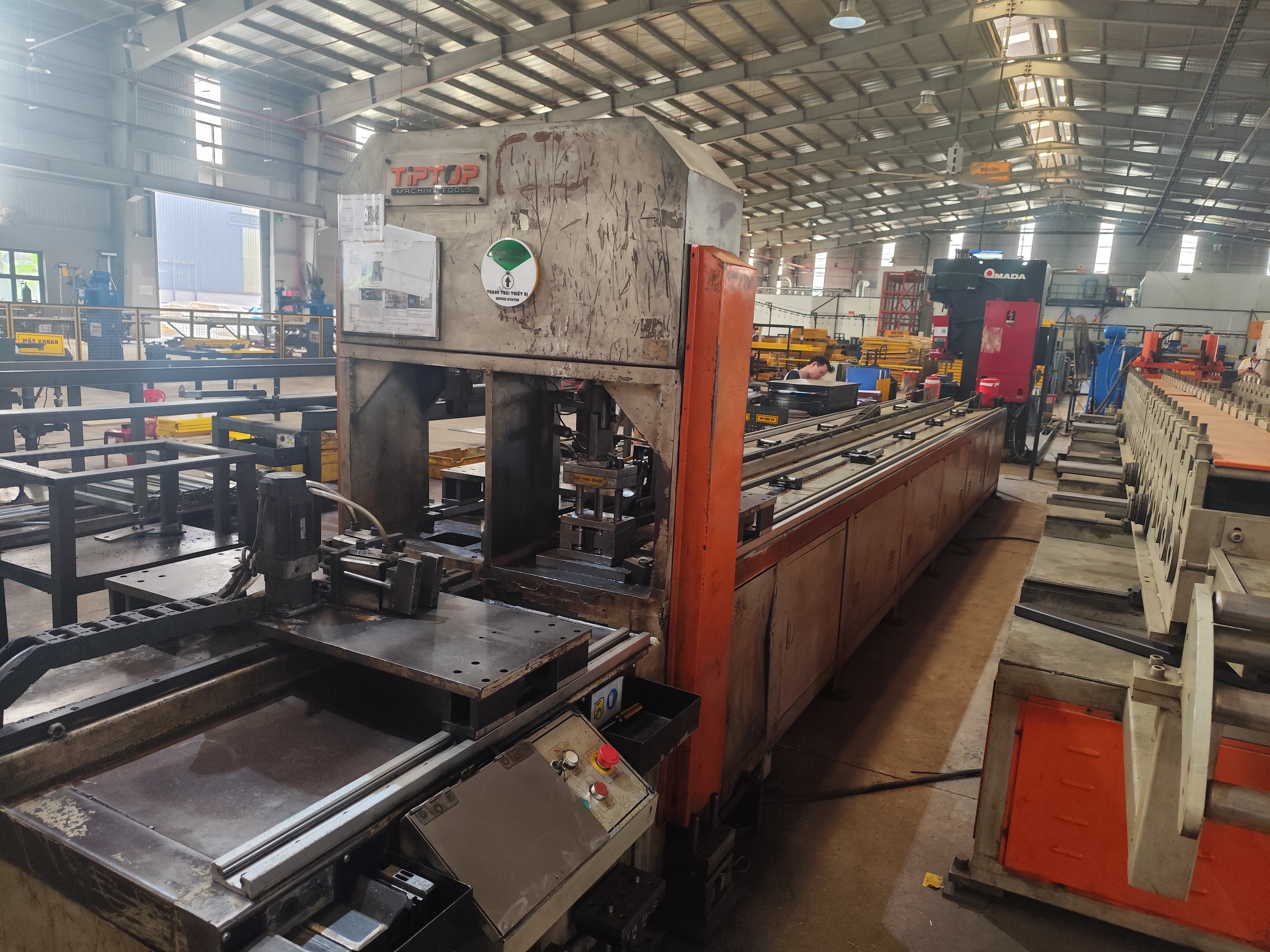
Quality control is where good sourcing separates from bad sourcing. Here is how we evaluate a Vietnamese stamping supplier's quality management system in practice.
Certification Hierarchy for Stamping
Not all certifications carry the same weight. Here is how we rank them for stamping projects:
| Certification | What It Covers | When It Is Required |
|---|---|---|
| ISO 9001 | General quality management system | All stamping projects — this is the baseline |
| IATF 16949 5 | Automotive quality management standards | Automotive stamping parts and assemblies |
| ISO 14001 6 | Environmental management system | Projects with ESG or sustainability requirements |
| RoHS 7 / REACH | Restricted substances compliance | Parts exported to EU or with plating/coating |
| UL / CE | Product safety and market access | Electrical enclosures or consumer-facing components |
ISO 9001 certification is the non-negotiable starting point. It confirms that the supplier has documented procedures for incoming inspection, process control, final inspection, and corrective actions. Without it, you are relying entirely on trust — and trust does not scale across an ocean.
For automotive stamping parts, IATF 16949 standards are essential. This certification requires PPAP (Production Part Approval Process), control plans, FMEA (Failure Mode and Effects Analysis 8), and MSA (Measurement System Analysis). Our team guides suppliers through PPAP submissions regularly, and we know firsthand that a factory without IATF 16949 experience will struggle with these requirements.
The QC Process Checklist
Beyond certifications, we look at the actual quality control processes on the shop floor:
- Incoming Material Inspection: Does the supplier test incoming steel coils with Material Test Reports (MTR)? Do they verify material thickness, hardness, and surface quality before loading the press?
- First Article Inspection (FAI): After die setup, does the factory produce and fully measure a first-off sample before running production? This is critical for progressive die stamping where a misaligned die can produce thousands of bad parts in minutes.
- In-Process Checks: Are operators performing dimensional checks at fixed intervals during the run? What instruments do they use — calipers, CMM, go/no-go gauges?
- Final Inspection: Is there a dedicated QC station with proper lighting, measurement tools, and rejection bins? Do they perform AQL-based sampling?
- Calibration Records: Are all measurement instruments calibrated on schedule with traceable records?
When we manage a project, we require our suppliers to submit an Initial Sample Inspection Report (ISIR) before mass production begins. This report includes dimensional data for every critical feature on the drawing, measured against tolerances. It is the single most effective tool for catching problems before they become shipments.
Raw Material Traceability
A growing concern for our U.S. clients is raw material supply chain transparency 9. We ask Vietnamese suppliers where they source their steel. Partnerships with established mills — including local producers like Formosa Ha Tinh — help mitigate risks related to material quality and global trade tariff 10 exposure. A supplier who cannot tell you where their steel comes from is a supplier you cannot fully trust.
How do I compare pricing and payment terms without sacrificing quality when filtering suppliers?
A trade-off we weigh on almost every project: three Vietnamese suppliers quoted the same bracket — prices ranged from $0.42 to $0.78 per piece. The cheapest quote had no tooling cost listed, no QC plan, and a two-sentence email response.
Compare pricing by breaking quotes into tooling cost, unit price, and shipping terms (FOB vs. CIF). Request detailed cost breakdowns from at least three suppliers. Evaluate payment terms alongside quality systems — a supplier offering 60-day open account terms with ISO 9001 certification and a documented QC process delivers better total value than the lowest bidder with no quality infrastructure.
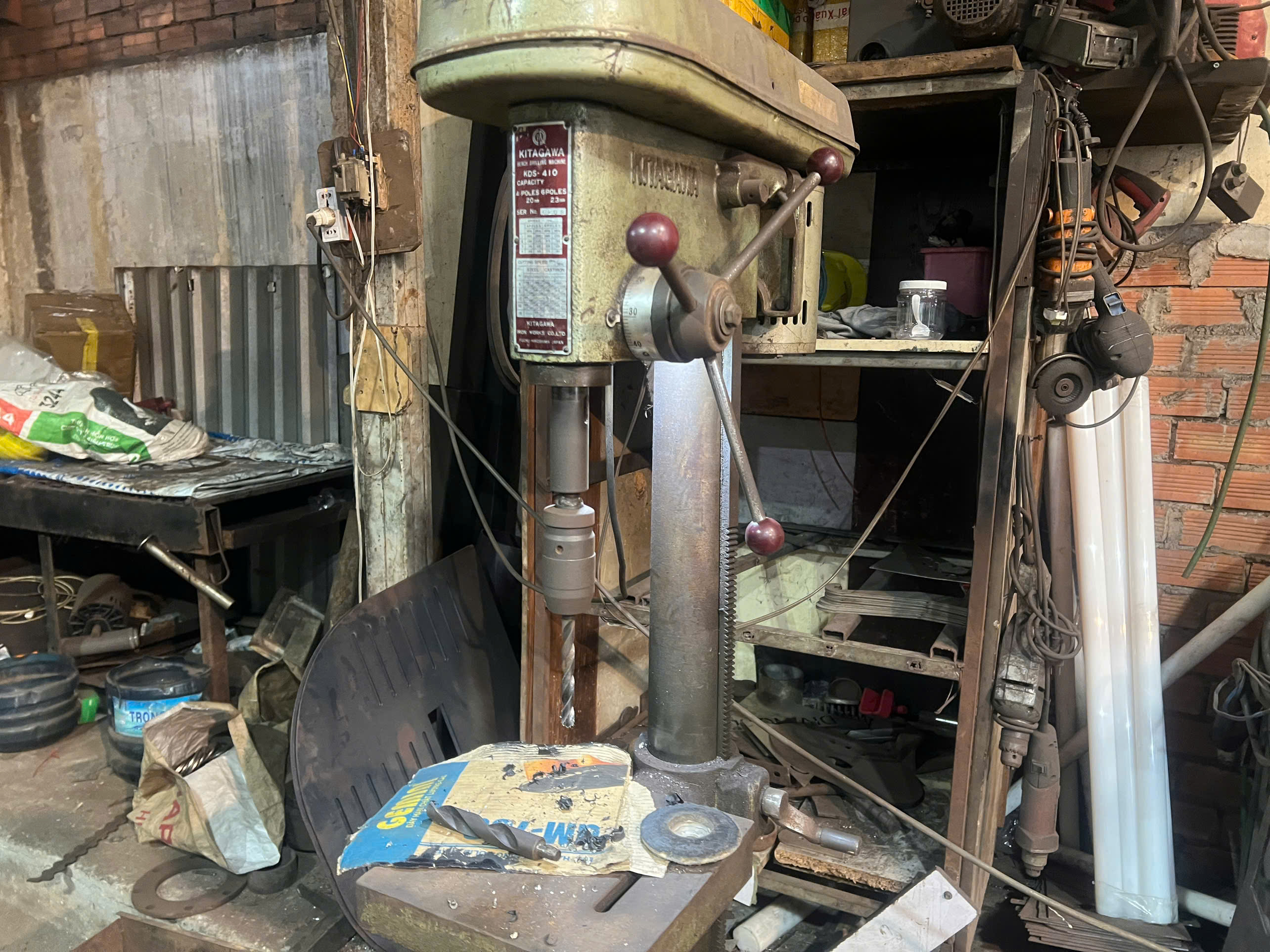
Price comparison for stamped parts is not straightforward. The lowest number on a quote sheet rarely tells the full story. Here is how we help clients evaluate total cost of ownership when filtering Vietnamese suppliers.
Breaking Down a Stamping Quote
Every stamping quote should include at least three cost components. If a supplier gives you a single per-piece price with no breakdown, ask for one. Here is what a proper quote structure looks like:
| Cost Component | What It Includes | Typical Range (Vietnam) |
|---|---|---|
| Tooling (die) cost | Design, steel, machining, heat treatment, tryout | $2,000–$25,000+ depending on complexity |
| Unit price | Material, press time, labor, overhead, profit | Varies by part size, material, and volume |
| Surface treatment | Plating, powder coating, painting | $0.02–$0.30 per piece |
| Packaging and shipping | Carton, pallet, FOB or CIF terms | Depends on destination and volume |
| Sample/prototype cost | First article samples before mass production | Often $200–$1,000 |
Tooling cost is a one-time investment, but it is often where quality differences hide. A cheap die made from low-grade steel will wear out faster, producing dimensional drift after a few thousand hits. A quality die made from D2 or SKD11 tool steel with proper heat treatment will run hundreds of thousands of cycles with consistent results.
Payment Terms as a Quality Signal
In our experience, payment terms reveal a lot about a supplier's stability and confidence. Factories that offer only 100% T/T in advance before shipping are often smaller operations with limited cash flow. Established suppliers with strong export histories are more likely to accept 30/70 terms (30% deposit, 70% before shipment) or even open account terms of 60–90 days for repeat customers.
Our business model includes offering open account payment terms to U.S. clients, which helps alleviate cash flow pressure on the buyer side. We can do this because we have vetted our supply base thoroughly and have confidence in delivery reliability. When a supplier resists any flexibility on payment, it can signal either financial instability or a lack of long-term business orientation.
The Hidden Cost of the Lowest Price
I have seen this pattern repeatedly: a buyer picks the cheapest supplier, receives parts with quality issues, spends weeks on corrective action, orders replacements, and ends up paying more than if they had chosen the mid-priced supplier with a solid quality management system. The hidden costs include:
- Rework and scrap at your assembly line
- Freight for replacement shipments
- Engineering time spent on corrective action reports
- Delayed delivery to your end customer
- Damaged reputation
When comparing suppliers, I recommend scoring them on a weighted matrix that includes price, quality systems, communication quality, lead time estimation accuracy, and payment flexibility. Price should carry no more than 30% of the total weight. Quality and delivery reliability should dominate the decision. This approach aligns closely with the methodology we outline for choosing a reliable Vietnamese stamping parts supplier for long-term supply.
The RFQ Comparison Process
Send your drawing and specifications to at least three suppliers simultaneously. Use the same RFQ package for each — same drawing revision, same material spec, same annual volume estimate, same target delivery date. This creates an apples-to-apples comparison. When responses come back, compare not just the numbers but the depth of the response. Did the supplier flag any DFM concerns? Did they suggest material alternatives? Did they ask about tolerance criticality? The supplier who asks the most thoughtful questions during the RFQ phase is usually the one who delivers the fewest surprises during production.
Conclusion
Filtering Vietnamese suppliers for stamping parts demands more than browsing B2B profiles. Verify production capabilities, watch for red flags, confirm certifications and QC processes, and compare total value — not just price. A disciplined filtering process protects your quality and delivery timeline.
Frequently Asked Questions
How can I verify a Vietnamese stamping supplier's real production capabilities before placing an order?
A lesson we learned early on: one of our U.S. clients sent a drawing to a supplier whose profile listed "stamping" as a capability, but the factory only owned laser cutters and manual bending machines — no stamping presses at all.
What red flags should I watch for when reviewing supplier profiles on Alibaba or other B2B platforms?
Last year, one of our clients shortlisted five Vietnamese suppliers from Alibaba 2 . After our team reviewed the profiles, we flagged three of them within an hour — and each one proved to be a trading company, not a real factory.
Which certifications and quality control processes should I confirm with Vietnamese stamping suppliers?
We once helped a client recover from a painful situation: 12,000 stamped brackets arrived at their U.S. warehouse with hole positions drifting by 0.5mm across the batch. The Vietnamese supplier had no in-process inspection system, no control plan, and no ISO 9001 certification 4 .
Footnotes
1. Background explanation of MSA methodology mentioned alongside PPAP and FMEA requirements. ↩︎
2. Primary B2B platform referenced throughout the article for supplier sourcing and verification. ↩︎
3. Wikipedia background on the specific stamping process technique mentioned repeatedly. ↩︎
4. Official ISO source explaining the quality management standard referenced throughout the article. ↩︎
5. Background reference for the automotive quality management standard discussed in certification hierarchy. ↩︎
6. Official ISO page detailing the environmental management system standard listed in the table. ↩︎
7. Official European Commission page for the RoHS Directive, replacing the broken EPA link. ↩︎
8. Explains the FMEA methodology referenced as part of IATF 16949 requirements. ↩︎
9. U.S. government trade resource relevant to raw material sourcing and export considerations. ↩︎
10. WTO resource explaining tariff exposure relevant to raw material supply chain concerns. ↩︎