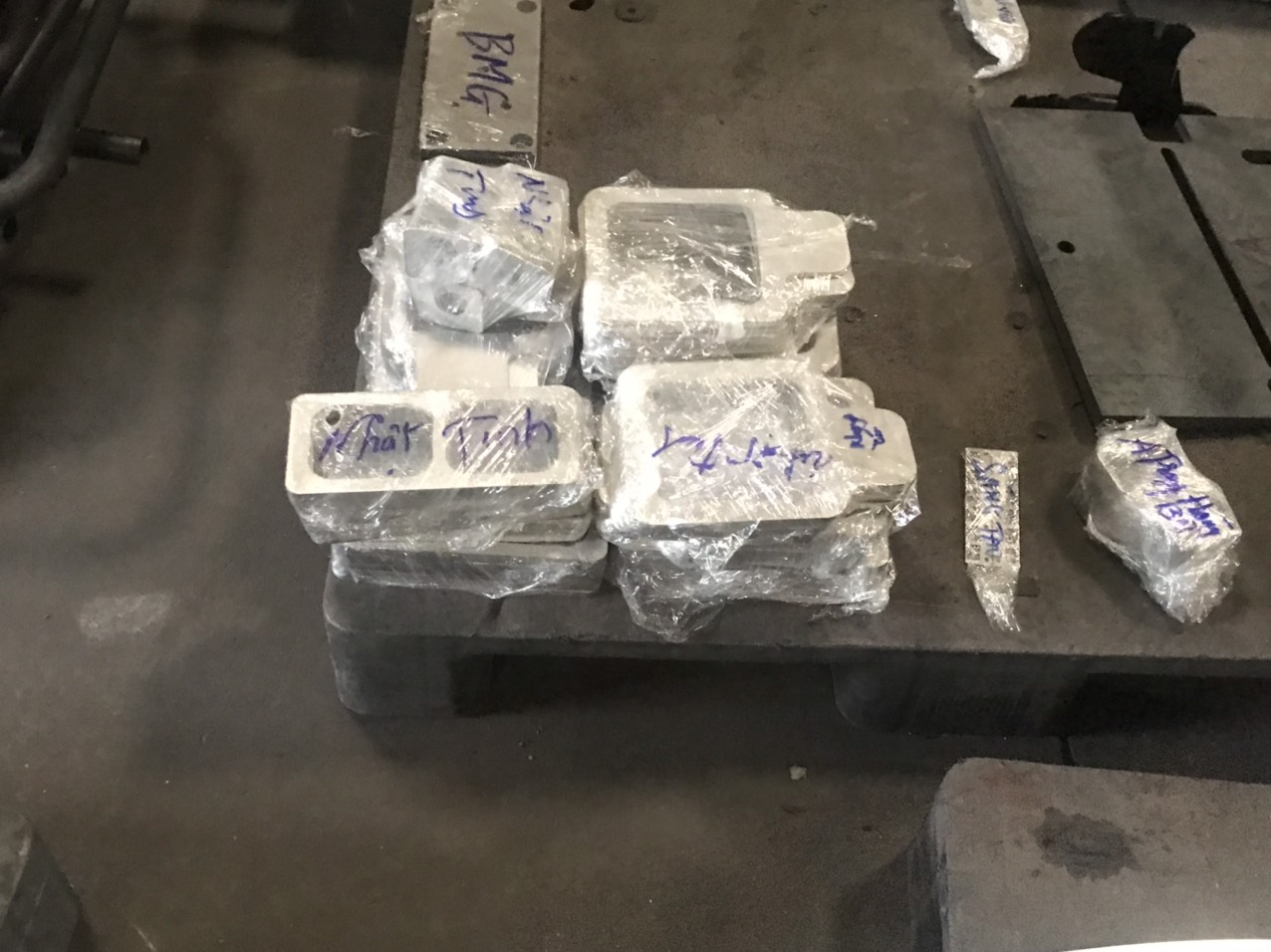

Finding reliable stamping parts suppliers at Vietnam trade shows sounds easy until you try it IATF 16949 1. Our Vietnam sourcing team has watched buyers waste entire shows collecting brochures that lead nowhere.
To find and evaluate stamping parts suppliers at Vietnam trade shows, shortlist 3–5 exhibitors before attending Metalex Vietnam or VIMAF, vet each booth with technical questions on press tonnage and tooling, verify certifications on-site, then confirm capability through a factory audit and production-intent samples.
That is the short answer. The details matter more. Below, I break down each step, from choosing the right show to spotting red flags before you commit a purchase order.
Which Vietnam Trade Shows Should I Attend to Find Reliable Stamping Parts Suppliers?
Every year, our team in Vietnam walks the major metalworking shows to refresh our supplier network metal stamping 2. Not all shows deliver the same value for stamping projects, and picking wrong costs you a week.
Attend Metalex Vietnam in Ho Chi Minh City for the deepest concentration of stamping parts suppliers, VIMAF for broader manufacturing coverage, and Vietnam Manufacturing Expo in Hanoi for northern-cluster suppliers. Metalex is the strongest choice for dedicated metal stamping sourcing trips.

Here is a quick comparison of the three shows we attend most often:
| Trade Show | Location | Focus | Best For |
|---|---|---|---|
| Metalex Vietnam | Ho Chi Minh City | Metalworking and manufacturing technology | Dedicated stamping and precision metal sourcing |
| VIMAF | Ho Chi Minh City area | Broad manufacturing and assembly | Mixed sourcing needs, stamping plus other processes |
| Vietnam Manufacturing Expo (VME) | Hanoi | Manufacturing technology, supporting industries | Suppliers in northern clusters like Bac Ninh |
Match the Show to Your Supplier Geography
Vietnam's stamping industry sits in regional clusters IATF 16949 3. Binh Duong and Dong Nai in the south serve Ho Chi Minh City's port logistics well. Bac Ninh in the north hosts many electronics-linked stamping factories, often supplying Korean and Japanese assembly plants. If your parts feed electronics programs, a northern show like VME can surface suppliers you will never see in the south.
Prepare Before You Fly
Do not walk in cold. Pull the exhibitor list two to four weeks before the show. Filter for companies that list stamping, progressive die 4s, or press work as core processes. Shortlist three to five candidates that fit your part geometry, volume, and finish requirements. Then email them to schedule booth meetings. In our experience, a scheduled 30-minute meeting produces more useful information than ten random booth visits. Bring physical samples of your parts, your drawings with tolerances marked, and a one-page company profile. Suppliers take you more seriously when you show up prepared, and serious suppliers reveal themselves by how they respond.
What Questions Should I Ask Stamping Suppliers During Trade Show Meetings to Assess Their Capabilities?
A buyer once asked me why two suppliers quoted the same bracket at prices 40% apart. The answer came down to tooling strategy — something neither booth had explained until we asked the right questions.
Ask about press tonnage range, progressive versus single-stage tooling, in-house die making and maintenance, material sourcing origin, in-house finishing capability, monthly capacity, export experience with your target market, and tooling ownership terms. Their answers reveal true capability faster than any brochure.

When we vet stamping suppliers for our US clients, we work through a structured question set. Booth conversations are short, so every question must earn its place.
The Core Technical Questions
| Question | What a Strong Answer Sounds Like | Warning Sign |
|---|---|---|
| What is your press tonnage range? | Specific range matched to your part, e.g., 45T–400T | Vague answers or "we can do anything" |
| Do you build dies in-house? | Yes, with a toolroom and die maintenance schedule | All tooling outsourced with no maintenance plan |
| Progressive or single-stage tooling? | Recommendation based on your volume and geometry | No opinion, just asks for target price |
| Where do you source coil material? | Named mills, domestic or imported, with cert traceability | Cannot name material sources |
| Is finishing in-house? | Plating, powder coat, or galvanizing in-house or with audited partners | Everything outsourced, no control described |
| Who are your export customers? | Industries and regions, ideally your market | Only domestic customers, no export paperwork experience |
Why Die-Making Capability Matters Most
Presses are easy to buy. Toolrooms are not. The best stamping suppliers can build, debug, and maintain dies over years of production. When a die wears, a supplier with in-house tool maintenance fixes burrs and dimensional drift in days. A supplier that outsourced the die waits weeks, and your delivery slips. For the bracket-type parts we handle — multiple bends, punched holes, mixed finishes like zinc galvanizing 5 and champagne-tone coatings — die condition drives hole position accuracy and burr quality on every run. Ask to see photos of their toolroom. Ask how often they perform preventive die maintenance. Also ask who owns the tooling after your program ends. Get that answer in writing later, because tooling ownership is a common dispute point with stamping factories in Vietnam.
How Can I Verify a Vietnamese Stamping Supplier's Quality Control Process Before Placing an Order?
During one audit near Binh Duong, our engineers found a factory whose booth had promised full CMM inspection. The "CMM room" turned out to be a single caliper station. That gap is exactly why verification matters.
Verify quality control by requesting ISO 9001 or IATF 16949 documentation on-site, conducting a factory audit of inspection equipment and toolroom discipline, requiring production-intent samples made with real tooling, and running a pilot batch with defined CTQ inspection checkpoints before scaling.

The booth is a screening step. Real verification happens afterward, in a defined sequence. Here is the process we run for our clients before any purchase order is released.
The Four-Step Verification Path
- Document check. Request physical or scanned copies of ISO 9001 6, and IATF 16949 if the parts are automotive. Cross-check the company's registration on Vietnam's National Business Registration Portal to confirm the booth representative is the actual legal manufacturer, not a trading intermediary.
- Factory audit. Walk the floor. Check press condition, die storage, coil material certificates, and the inspection lab. Look for calibrated gauges, documented inspection plans, and first-article inspection records. Websites and booths can mislead; the production floor cannot.
- Production-intent samples. Reject handmade or machined prototypes. Require samples made with the intended stamping process, tooling approach, and finishing line. Measure dimensional accuracy, hole positions, burr height, and coating quality against your drawing. For our multi-bend bracket programs, we also check bend angle consistency across the sample lot, not just one golden part.
- Pilot batch with CTQ checkpoints. Before full production, run a small batch. Define your critical-to-quality features 7, set inspection checkpoints, and review the data. This is where "right first time" gets proven or disproven.
Ownership Structure and Communication
Foreign-owned factories in Vietnam — Japanese, Korean, Taiwanese, and some European — often communicate more smoothly with Western buyers. Vietnamese-owned factories may respond more slowly in English but can deliver excellent quality at better cost. Judge capability and consistency, not nationality. Having local staff on the ground, as our Vietnam office does, closes the language gap and keeps audits honest.
What Red Flags Should I Watch for When Evaluating Stamping Parts Suppliers at Trade Shows?
The hardest lesson I learned in this business came from a supplier who said yes to everything. Every spec, every deadline, every price. Nothing they later shipped matched what they promised at the booth.
Watch for suppliers who agree to everything without questions, cannot show certification documents, refuse or delay factory visits, offer only handmade samples, give vague answers on tooling ownership and material sourcing, and cannot name any export customers in your industry or region.

Red flags at a trade show rarely look dramatic. They look like small evasions. You have to know what each one means downstream.
Red Flags and What They Predict
| Red Flag at the Booth | What It Usually Means Later |
|---|---|
| Agrees to every spec instantly, asks no questions | Drawing requirements get missed; non-conforming parts arrive |
| Cannot produce ISO certificates when asked | Certification is expired, borrowed, or belongs to another entity |
| Reluctant to schedule a factory visit | Booth claims do not match the actual production floor |
| Offers only handmade or "workshop" samples | No confidence in real tooling; production quality is unknown |
| Vague on tooling ownership terms | Future disputes over your dies if you ever move the program |
| Cannot name coil suppliers or material origin | Unstable material quality, lead times, and tariff exposure |
| No export references in your industry | Cross-border logistics and documentation will become your problem |
The Pattern Behind the Flags
Notice the common thread: every red flag is a transparency failure. Good suppliers ask hard questions back. They challenge your tolerances where stamping physics makes them expensive. They invite you to the factory before you even ask. In our audits across Vietnam, willingness to open the door has correlated with quality performance more consistently than any single certificate. One more subtle flag: check whether the person at the booth actually works for the factory. Trading companies sometimes staff booths under a manufacturer's name. Ask for the factory address, then verify it against the business registration. If the addresses do not match, dig deeper before you share drawings.
Conclusion
Trade shows open doors, but preparation, technical vetting, and production-intent validation close deals. Shortlist first, question hard, audit always, and pilot before you scale.
Frequently Asked Questions
Which Vietnam Trade Shows Should I Attend to Find Reliable Stamping Parts Suppliers?
Every year, our team in Vietnam walks the major metalworking shows to refresh our supplier network metal stamping 2 . Not all shows deliver the same value for stamping projects, and picking wrong costs you a week.
What Questions Should I Ask Stamping Suppliers During Trade Show Meetings to Assess Their Capabilities?
A buyer once asked me why two suppliers quoted the same bracket at prices 40% apart. The answer came down to tooling strategy — something neither booth had explained until we asked the right questions.
How Can I Verify a Vietnamese Stamping Supplier's Quality Control Process Before Placing an Order?
During one audit near Binh Duong, our engineers found a factory whose booth had promised full CMM inspection. The "CMM room" turned out to be a single caliper station. That gap is exactly why verification matters.
Footnotes
1. Background on the automotive quality standard referenced for certification checks. ↩︎
2. Wikipedia overview of the stamping process central to the article’s topic. ↩︎
3. IATF 16949 is an automotive quality standard buyers should verify via authoritative certification body. ↩︎
4. Explains progressive tooling technique discussed as a key supplier evaluation question. ↩︎
5. Background on the galvanizing finishing process mentioned for bracket parts. ↩︎
6. Official ISO reference explaining the quality management standard suppliers must document. ↩︎
7. Defines the CTQ concept referenced for pilot batch inspection checkpoints. ↩︎