
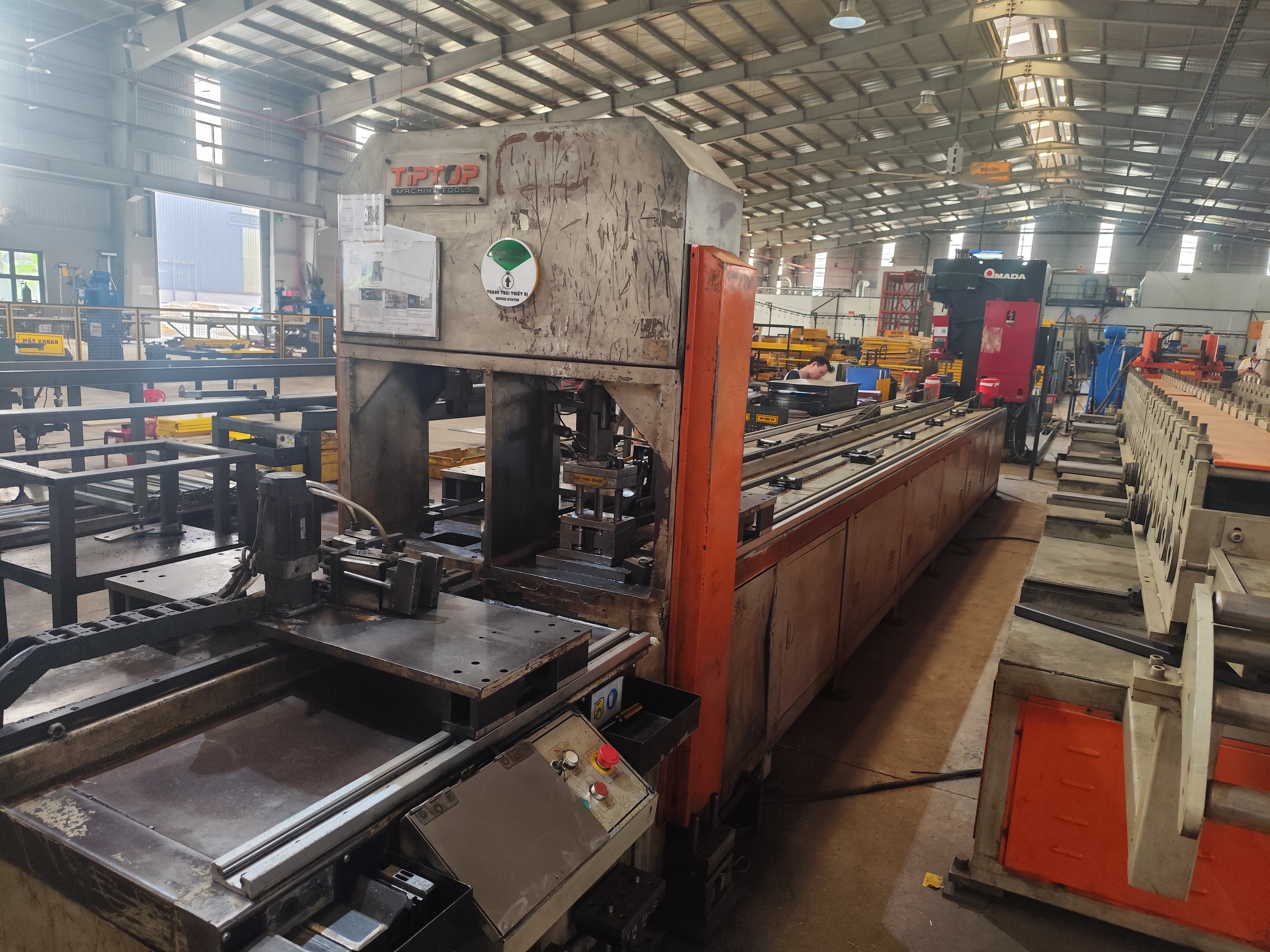
Finding Vietnamese stamping parts suppliers is easy; finding capable ones is not ISO 9001 certification 1. Our Vietnam sourcing team has audited factories that looked perfect online yet failed basic tooling checks on-site.
To find quality Vietnamese stamping parts suppliers, attend trade shows like METALEX Vietnam to meet factories face-to-face, then use B2B platforms like Alibaba to expand your shortlist. Verify each candidate through ISO certifications, press tonnage lists, sample inspections, and on-site or third-party factory audits before ordering.
Both channels work. But each one has blind spots. Below, I will walk you through how we screen suppliers at fairs, verify them online, spot red flags, and confirm real delivery capability.
What Should I Look for in Vietnamese Stamping Suppliers at Trade Shows?
Last year, our team spent three days at a Hanoi manufacturing fair qualifying stamping exhibitors for a U.S. bracket project. The booths told us far more than any website ever did.
At trade shows, evaluate Vietnamese stamping suppliers on five points: whether they are a real factory or trader, their press tonnage range, in-house tooling and die design capability, quality certifications like ISO 9001, and their export experience with markets such as the U.S., Japan, or Europe.
Trade shows put active manufacturers in front of you. Passive online listings cannot do that. Events like METALEX Vietnam, Vietnam Manufacturing Expo, Vietnam Sheet Metal, and FBC ASEAN Hanoi attract exhibitors who invest real money to win export business. That alone is a useful filter. But it is not enough.
Treat the Fair as a Qualification Tool, Not a Lead Collector
Most buyers walk aisles and collect business cards. We do the opposite. We arrive with a part drawing and a short list of technical questions. Then we watch how the booth staff respond. A genuine factory engineer will ask about material grade, thickness, tolerance, and annual volume before quoting anything. A trading company will usually promise everything and ask nothing.
Here is the quick triage framework we use at every booth:
| What to Check | Strong Signal | Weak Signal |
|---|---|---|
| Company type | Factory photos, press list, engineer present | Only sales staff, vague answers |
| Press capacity | Specific tonnage range (e.g., 20–600T) | "We can do any size" |
| Tooling | In-house die design and maintenance | Fully outsourced tooling |
| Quality system | ISO 9001 certificate 2, FAI reports on hand | No documentation available |
| Export maturity | Knows FOB/CIF, ships to Japan/EU/US | Unfamiliar with Incoterms |
Look at the Sample Parts on the Table
Physical samples reveal a lot. Check the burr condition on cut edges. Look at the consistency of bend radii. Ask which press and which die produced the part. If the staff cannot answer, the part may not even be theirs. We once caught an exhibitor displaying parts stamped by a neighboring factory. That single question saved our client months of pain.
Also note the sector experience. A supplier making automotive chassis brackets under progressive dies works to tighter discipline than one stamping simple hardware clips. Match their history to your part complexity.
How Can I Verify Supplier Quality on B2B Platforms Like Alibaba?
A purchasing manager in Texas once sent me three Alibaba listings and asked which was a real stamping factory. Two were traders. The listings looked nearly identical.
Verify suppliers on B2B platforms by checking verified badges, years in business, and transaction history; requesting ISO 9001 or IATF 16949 certificates; cross-checking the address against business registration records; asking for press lists and FAI reports; and confirming claims through video calls or third-party audits.

B2B platforms give you breadth that fairs cannot. In one afternoon, you can build a list of twenty candidates across Bac Ninh, Hanoi, and Dong Nai. But platform data is marketing data. It needs verification. Our own company lists on Alibaba International Station 3, so I know exactly what sellers control on their profiles and what they cannot fake.
Start With the Platform Signals
Some platform signals are worth trusting more than others. Here is how we rank them:
| Platform Signal | Reliability | Why |
|---|---|---|
| Verified supplier badge with on-site check | High | A third party physically visited the facility |
| Years on platform | Medium-High | Hard to fake, shows continuity |
| Transaction volume | Medium | Reflects activity, not part quality |
| Response rate | Medium | Shows communication discipline |
| Product photos and videos | Low-Medium | Often stock or borrowed content |
| Self-declared certifications | Low until verified | Always request the actual certificate |
Move the Verification Off the Platform
The real screening happens after first contact. We ask every candidate for the same evidence pack: a scanned ISO 9001 certificate with the certification body’s name, a press machine list with tonnage, photos of their tool shop, and a recent first article inspection 4 report for a similar part. Genuine factories send this within a day or two. Traders stall or send generic brochures.
Then request a live video walkthrough of the shop floor. Ask them to walk from the press line to the QC room in one unbroken take. This ten-minute call filters out more bad suppliers than a week of emails. Finally, cross-verify the registered address using Vietnamese business registration records or directories from VIETRADE 5. If the registered address does not match the factory shown on video, stop there.
What Red Flags Should I Watch for When Sourcing Stamping Parts from Vietnam?
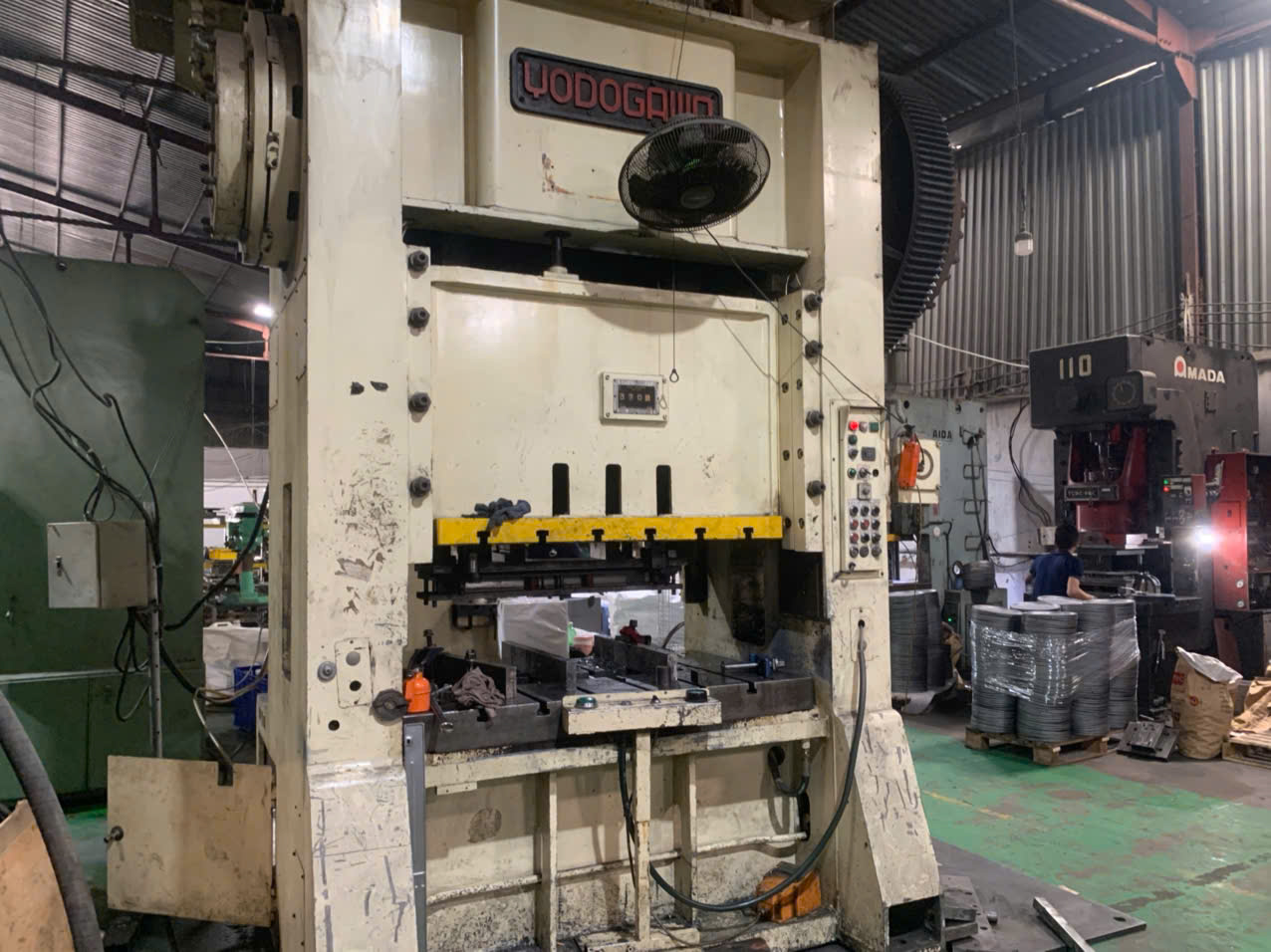
Early in our Vietnam operations, we shortlisted a supplier who quoted 20% below everyone else. During the audit, we found their largest press was half the tonnage our deep-drawn part 6 required. The quote was fiction.
Key red flags include quotes far below market average, refusal to share press lists or certificates, mismatched registered and factory addresses, no in-house tooling capability, vague answers on material sourcing, unclear tooling ownership terms, and no documented inspection process such as FAI or in-process checks.

Red flags rarely appear one at a time. They cluster. When we review a candidate, we score them across commercial, technical, and quality dimensions. One weak spot is a discussion point. Three weak spots is a rejection.
Commercial Red Flags
Watch pricing behavior first. A quote 15–20% below the pack usually means the supplier misread the drawing, plans to substitute material, or intends to renegotiate after tooling is paid. Also probe payment and tooling terms early. If a supplier refuses to state in writing that you own the dies you paid for, walk away. Tooling ownership disputes are one of the most common ways buyers get locked into bad suppliers.
Technical Red Flags
Capacity mismatch is the silent killer. A factory whose presses top out at 110 tons cannot reliably run a part that needs 200 tons of deep drawing force. Ask for the full press list with tonnage and bed size. Then check that the tonnage your part requires sits comfortably in the middle of their range, not at the edge.
Material sourcing matters too. Ask whether the steel coil is domestic or imported. This affects lead time stability, cost fluctuation, and even EVFTA tariff eligibility 7 for European shipments. A supplier who cannot name their coil source is either a trader or careless.
Quality and Communication Red Flags
Language gaps cause real defects. Many strong Vietnamese stamping factories are Taiwanese or Chinese invested, and their engineering depth is good, but you must confirm the sales team can handle technical English before drawings change hands. Our clients' most common complaint about past suppliers is drawing requirements being overlooked, not machining incompetence. A supplier who does not ask a single question about your critical dimensions has not really read your drawing.
Warning signs to reject immediately:
- No ISO 9001 or equivalent quality system documentation.
- Cannot produce a sample FAI report from any past project.
- Registered office address is a residential unit far from the claimed plant.
- Claims every capability, from 20T stamping to 600T forging, with a ten-person team.
- Pressures you to pay full tooling cost before answering DFM questions.
How Do I Confirm a Vietnamese Supplier Can Meet My Quality and Delivery Requirements?
Confirming capability is where most sourcing projects succeed or fail. We learned to never award a stamping order on quotes alone after a client came to us with a container of out-of-tolerance brackets from a supplier they had never audited.
Confirm capability through a structured process: send a complete RFQ with drawings and volumes, review the supplier's DFM feedback, require first article inspection with dimensional reports, audit the factory on-site or via a third party, and only award production after approved samples and agreed lead times, MOQ, and tooling terms.

Verification is a sequence, not a single event. We run the same seven steps for every stamping project we manage from our Vietnam office, whether the part is a simple zinc-plated clip 8 or a multi-bend chassis bracket with progressive tooling.
The Seven-Step Verification Sequence
| Step | Action | What It Proves |
|---|---|---|
| 1 | Send a complete RFQ: 2D drawing, 3D CAD, material spec, tolerances, volumes, finish, packaging, Incoterms | Whether they can read and respond to real requirements |
| 2 | Review DFM feedback and strip layout | Engineering depth and tooling competence |
| 3 | Compare quotes on tooling cost, piece price, and lead time separately | Cost transparency and hidden margins |
| 4 | Audit the factory: presses, tool shop, calibration records, scrap handling | Actual capacity versus stated claims |
| 5 | Order samples with a full FAI report against every drawing dimension | Whether they get it right the first time |
| 6 | Agree tooling ownership, MOQ, payment terms, and corrective action process in writing | Commercial protection |
| 7 | Run a small trial order before full volume | Delivery discipline under real conditions |
Judge the RFQ Response, Not Just the Price
The quality of a supplier's questions predicts the quality of their parts. A capable factory will come back with points like: this flange radius conflicts with the material thickness, or this hole is too close to the bend line. Silence followed by a fast, cheap quote is the worst possible response. In our co-development projects, the suppliers who challenge our drawings early are almost always the ones who ship conforming parts on time.
Confirm Delivery Capability Separately From Quality
Quality and delivery are different disciplines. Ask about current capacity utilization. Ask how they schedule die maintenance and what happens when a die cracks mid-run. Ask whether they hold safety stock of your coil material. A factory running at 95% utilization will miss your dates no matter how good their QC room looks. For U.S.-bound programs, we also lock the inspection gate before shipment: final inspection against the approved sample, with photos and dimensional data, before any container leaves Haiphong or Ho Chi Minh City.
Conclusion
Anyone can find Vietnamese stamping parts suppliers online in an hour. But unverified suppliers cost you delays, rework, and returned containers. The fix is discipline: use trade shows to meet real factories, use B2B platforms to widen the funnel, and run every candidate through certificates, audits, FAI samples, and trial orders. That is exactly how our team in Vietnam qualifies stamping partners for our U.S. and European clients, and it works. If you want a second set of eyes on a shortlist, I am happy to compare notes.
Frequently Asked Questions
What Should I Look for in Vietnamese Stamping Suppliers at Trade Shows?
Last year, our team spent three days at a Hanoi manufacturing fair qualifying stamping exhibitors for a U.S. bracket project. The booths told us far more than any website ever did.
How Can I Verify Supplier Quality on B2B Platforms Like Alibaba?
A purchasing manager in Texas once sent me three Alibaba listings and asked which was a real stamping factory. Two were traders. The listings looked nearly identical.
What Red Flags Should I Watch for When Sourcing Stamping Parts from Vietnam?
Early in our Vietnam operations, we shortlisted a supplier who quoted 20% below everyone else. During the audit, we found their largest press was half the tonnage our deep-drawn part 6 required. The quote was fiction.
Footnotes
1. ISO source clarifies the quality standard referenced