Finding reliable stamping parts suppliers kept me up at night when I first started managing sourcing projects for our clients in the US and Europe.
To find the right stamping parts suppliers, new buyers should first define precise material specifications and tolerances, then vet candidates using a structured supplier audit checklist covering ISO 9001 certification, in-house tooling capability, production capacity, and quality management systems — always validating with sample orders before committing.
This guide walks through every step I have learned over years of helping procurement teams 1 source precision metal stamping components from Asia. Each section below tackles a specific challenge you will face and gives you practical tools to solve it.
What Should I Look for When Vetting a New Stamping Parts Supplier?
A buyer we work with in the Midwest once told me he wasted six months on a supplier that looked great on paper but could not hold tolerances on a simple bracket.
When vetting a new stamping parts supplier, look for verified ISO 9001 certification, in-house progressive die stamping capability, adequate press tonnage for your part size, transparent communication, and a documented quality management system — then confirm everything through samples and a factory audit.

That story stuck with me because it mirrors what many first-time buyers experience. The supplier had a nice website and quick responses, but their actual shop floor told a different story. Here is how I recommend you approach the vetting process so you do not repeat that mistake.
Start with Your Own Technical Blueprint
Before you contact a single supplier, get your requirements locked down. Write out your dimensions, tolerances, material specifications 2 (carbon steel, stainless steel, aluminum, copper alloys), and the intended application. Our team in Vietnam spends significant time helping US clients clarify their drawings before we even approach a factory. Vague specs lead to vague quotes, and vague quotes lead to surprises.
Define your production volume clearly. A supplier set up for high-volume progressive die stamping 3 may not be interested in a 200-piece prototype run. Conversely, a small job shop may struggle with orders north of 50,000 pieces per month.
The 10-Point Evaluation Framework
I keep a scoring sheet when we evaluate new factories. Here is a simplified version you can adapt:
| Evaluation Factor | What to Check | Red Flag |
|---|---|---|
| Manufacturing Capability | Press types, tonnage range, max bed size | Only one press type, no specs shared |
| Die / Tooling Expertise | In-house design, build, and maintenance | All tooling outsourced to third parties |
| Quality Certifications | ISO 9001, IATF 16949, ISO 14001 | No third-party certifications at all |
| Production Capacity | Monthly output in tons or pieces | Cannot provide concrete numbers |
| Engineering Support | DFM feedback, tolerance analysis | No engineering team available |
| Secondary Operations 4 | Plating, heat treating, welding, assembly | Must subcontract every finishing step |
| Lead Time Track Record | Average on-time delivery percentage | No data or unwillingness to share |
| Financial Stability | Years in business, major clients | Very new company, evasive about finances |
| Communication Quality | Response time, English fluency, detail | Slow replies, generic answers |
| Tooling Maintenance | Dedicated die maintenance program | No preventive maintenance schedule |
Each factor gets a score from 1 to 5. I typically set a minimum threshold of 35 out of 50 before moving a supplier to the sample stage.
Why In-House Tooling Matters So Much
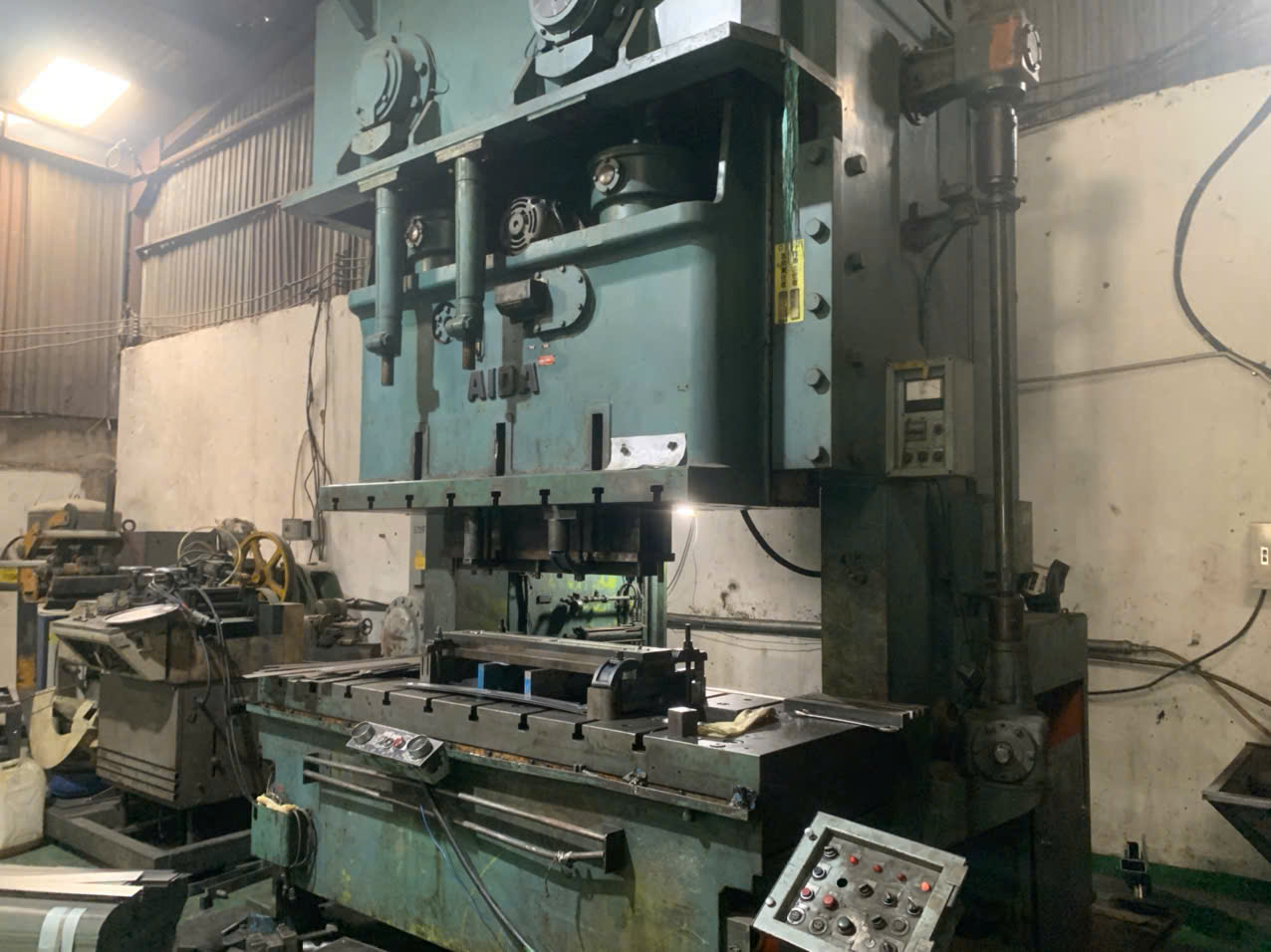
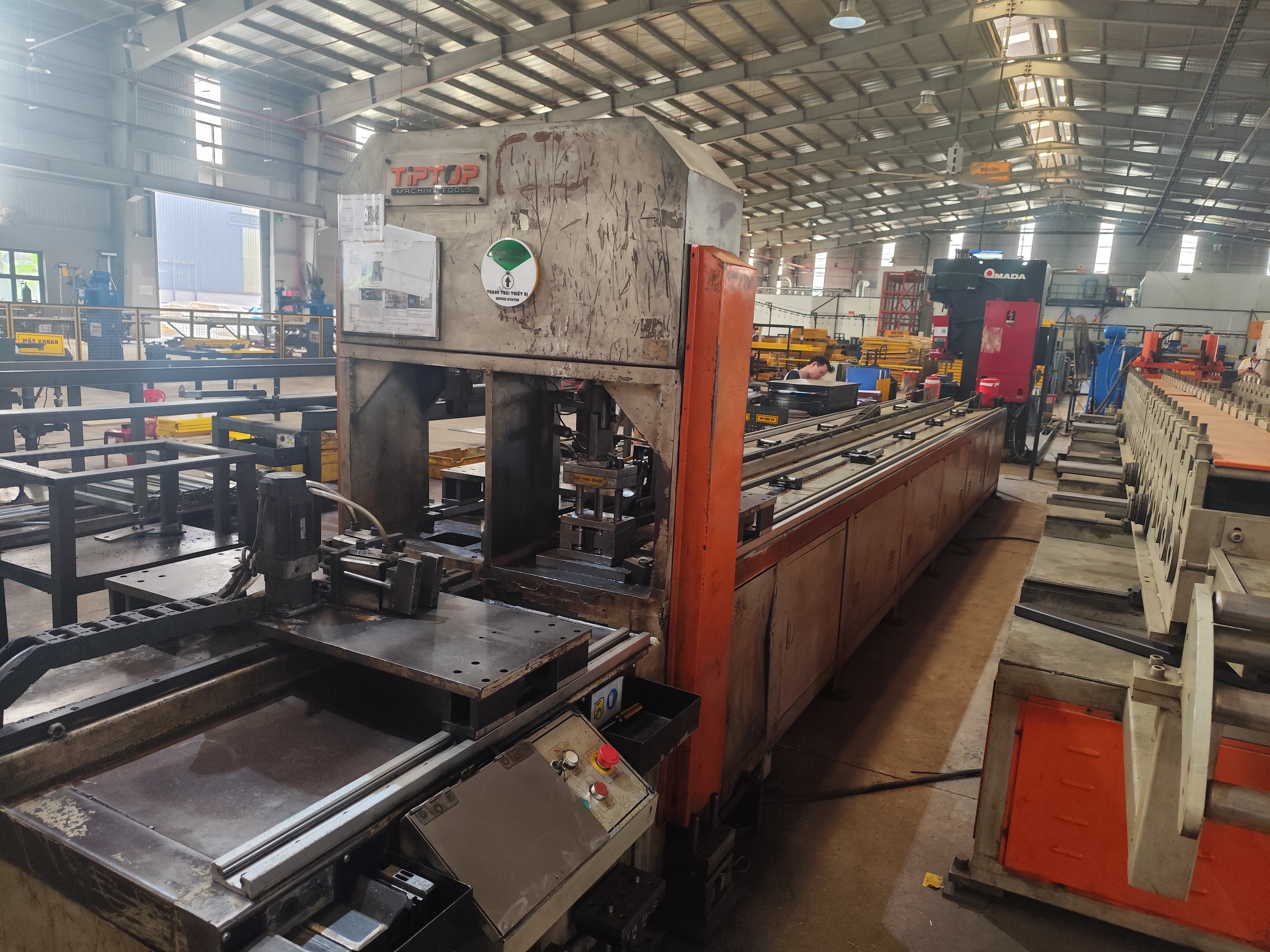
When a supplier designs and builds their own progressive dies, they control the entire process. If a die breaks or needs adjustment, they fix it on-site within hours. When tooling is outsourced, a simple die repair can delay your shipment by weeks. Our experience sourcing stamping parts from factories across Vietnam and China has consistently shown that in-house tooling capability is the single strongest predictor of on-time delivery and consistent part quality. It also gives the supplier deeper knowledge of your part, which matters when you need design revisions down the road.
How Can I Verify a Stamping Supplier's Quality Control Before Placing My First Order?
One lesson our QC team in China learned the hard way is that inspection reports from a supplier's own lab can look perfect while actual parts fail at the customer's assembly line.
Verify a stamping supplier's quality control by requesting sample parts with full dimensional reports, reviewing their quality management system documentation, asking for EN 10204 3.1 material certificates, and ideally conducting an on-site or virtual audit before placing your first production order.

Quality control is where many new buyer relationships break down. The cost of getting this wrong is not just scrap parts — it is lost time, missed deliveries to your own customers, and damaged trust. Here is how to verify quality before you commit real money.
Request Samples — No Exceptions
Never skip the sample stage. Even if the supplier has impressive credentials, ask for physical samples of a comparable part. When our clients send us a Request for Quote, we always build a sample evaluation phase into the project timeline. Evaluate the samples against your drawing. Check dimensional accuracy, surface finish, burr condition, and material hardness. If the supplier resists providing samples or charges unreasonable fees, that is a warning sign.
Audit the Quality System, Not Just the Certificate
An ISO 9001 certificate hanging on the wall means a quality management system was documented at some point. What you need to know is whether it is alive on the shop floor today. During factory audits we conduct for our US clients, I look for specific things:
| Audit Focus Area | What Good Looks Like | What Bad Looks Like |
|---|---|---|
| Incoming Material Inspection | Raw material tested on arrival with certificates filed | Materials go straight to production, no records |
| In-Process Inspection | Operators check parts at defined intervals with gauges | No inspection until final stage |
| Final Inspection | Dedicated QC team with CMM or optical measurement tools | Visual check only, no instruments |
| Traceability | Lot numbers link finished parts back to raw material batches | No traceability system in place |
| Calibration Records | All measurement tools calibrated on schedule | Expired or missing calibration stickers |
| Non-Conformance Handling | Documented corrective action process with root cause analysis | Defective parts reworked quietly with no record |
Consider Third-Party Verification
If you cannot visit the factory yourself, hire a third-party inspection company 6 to conduct a pre-production audit. Our Singapore office coordinates this regularly for clients who cannot travel. A good third-party inspector will verify equipment condition, review QC records, and even test raw material composition in an independent lab. This adds cost up front but prevents far more expensive problems later.
Trial Orders as a Proof Point
Start small. Place a trial order — even just 500 units — and evaluate the full experience: communication speed, packaging quality, dimensional accuracy, and delivery timing. This is the single most reliable way to predict what a long-term relationship will look like. Many of our clients use PPAP (Production Part Approval Process) documentation during this stage to formally approve the supplier's process before scaling up.
Which Questions Should I Ask a Stamping Parts Supplier to Avoid Delivery Delays?
Delivery delays are the number-one complaint I hear from US purchasing managers who source custom parts from Asia — and most of those delays were preventable with the right questions asked up front.
To avoid delivery delays, ask your stamping parts supplier about current production capacity and utilization, raw material lead times, in-house versus outsourced tooling, their process for handling die breakdowns, and their track record of on-time delivery with verifiable references from existing customers.

The root cause of most delivery problems is not that suppliers are dishonest. It is that buyers did not ask the right questions during the quoting stage. By the time you discover the issue, your tooling is already built and switching suppliers is painful. Here are the specific questions that matter and why each one protects you.
The Critical Questions Checklist
I have organized these into categories based on years of managing stamping sourcing projects:
Capacity and Scheduling Questions:
- What is your current monthly production capacity in tons or pieces?
- What percentage of that capacity is currently committed to other customers?
- How many shifts do you run, and can you add shifts if my order volume increases?
Tooling and Design Questions:
- Do you design and build progressive dies in-house, or do you outsource?
- What is the typical lead time for new tooling?
- What happens if a die breaks mid-production — how long does repair take?
- Do you have a preventive maintenance schedule for tooling?
Material and Supply Chain Questions:
- Where do you source your raw materials?
- What is the current lead time for the specific material my part requires?
- Do you keep safety stock of common materials?
Communication and Escalation Questions:
- Who is my primary point of contact, and what are their working hours?
- How will you notify me if a delay is anticipated?
- Can you provide prototyping services for new designs before full production?
Why These Questions Prevent Delays
Each question targets a specific failure point. For example, if a supplier's capacity utilization is already at 90%, your order will likely be deprioritized when their bigger clients need rush jobs. If they outsource all tooling, a die breakdown becomes a multi-week wait instead of a two-day fix.
Our Vietnam office once helped a client recover from a three-week delay caused entirely by a material shortage the supplier never communicated. The raw steel needed for the bracket was on backorder, but the factory kept telling us "production is on schedule." After that experience, we now require weekly production status updates with photos for every active order.
Negotiate Clear Delivery Terms
| Delivery Term | What to Negotiate | Why It Matters |
|---|---|---|
| Lead Time Commitment | Fixed calendar days from PO to shipment | Prevents open-ended timelines |
| Delay Penalty | Small discount or priority treatment for late orders | Creates accountability |
| Communication Protocol | Weekly updates with production photos | Early warning of problems |
| Buffer Stock | Supplier maintains one order's worth of raw material | Prevents material shortage delays |
| Expedite Option | Pre-agreed cost for rush orders | Gives you a lever when deadlines shift |
These terms should be in writing before your first production order. A good supplier will agree to reasonable accountability measures because they are confident in their systems.
Why Should I Consider Sourcing Stamping Parts from Vietnam Instead of China?
Three years ago, when we expanded our office in Vietnam from two people to seven, it was because our US clients were actively asking for alternatives to China — and the demand has only grown since then.
Consider sourcing stamping parts from Vietnam because it offers competitive labor costs, growing precision metal stamping capability, favorable trade agreements with lower tariff exposure for US imports, an expanding base of ISO-certified factories, and reduced geopolitical supply chain risk compared to sourcing exclusively from China.

The China-plus-one strategy is no longer a trend — it is a standard practice among serious procurement organizations. But Vietnam is not a drop-in replacement for China. It has real strengths and real limitations. Here is an honest assessment based on what our teams see on the ground every day.
Where Vietnam Excels
Vietnam's stamping industry has matured significantly. Factories that ten years ago could only handle basic brackets now operate servo presses 7, run progressive die stamping lines, and hold tolerances that meet automotive-grade requirements. The government has invested heavily in industrial zones with reliable power and logistics infrastructure.
Labor costs remain 30–40% lower than coastal China for comparable skill levels 8. More importantly for US buyers, Vietnam benefits from trade agreements 9 that reduce or eliminate tariffs on many manufactured goods entering the US market. With evolving carbon border tax discussions in both the US and EU, Vietnam's younger industrial base and willingness to adopt greener manufacturing practices — including low-carbon material options — positions it well for future regulatory shifts.
Where China Still Leads
I want to be balanced here. China's stamping industry is massive, deeply experienced, and incredibly efficient at scale. For complex, high-volume precision metal stamping with tight tolerances and demanding secondary operations, China still has more factories that can deliver at the highest tier. The supply chain depth — meaning the availability of specialty raw materials, coatings, heat treatment shops, and testing labs — is unmatched.
Side-by-Side Comparison
| Factor | Vietnam | China |
|---|---|---|
| Labor Cost | Lower (30–40% less than coastal China) | Higher but offset by productivity |
| Tariff Exposure (US) | Generally lower under current trade policy | Higher and subject to escalation |
| Precision Stamping Maturity | Growing rapidly, strong for medium complexity | Deep expertise across all complexity levels |
| Supply Chain Depth | Developing, some materials still imported | Extensive domestic supply chain |
| Geopolitical Risk | Lower for US-aligned trade | Higher and increasing |
| Tooling and Design Costs | Competitive, often lower for new tooling | Competitive at scale, extensive tooling ecosystem |
| ISO 9001 Certified Factories | Increasing steadily | Very common across the industry |
| English Communication | Good and improving, especially with younger workforce | Variable, strong in export-focused factories |
| Prototyping Services | Available but fewer specialized shops | Widely available, fast turnaround |
The Practical Path Forward
What I recommend to new buyers is not an either-or decision. Build relationships with suppliers in both countries. Use Vietnam for parts where tariff savings and supply chain diversification matter most. Use China for high-complexity, high-volume runs where its deeper ecosystem provides clear advantages.
Our team helps clients navigate this exact decision every week. We run supplier audits 10 in both countries, manage prototyping services across borders, and handle everything from the initial Request for Quote through final inspection and door-to-door logistics. The key is having a local team that understands both markets and can compare options objectively.
One practical tip: when evaluating Vietnamese factories, ask specifically about their material sourcing. Some factories import steel from China, which can add lead time. Factories that source from local mills or Korean and Japanese suppliers often have more predictable timelines.
Conclusion
Finding the right stamping parts suppliers takes structured effort — define your specs, vet rigorously using audits and samples, ask the hard delivery questions, and diversify your sourcing geography wisely. Learning to balance price, quality, and delivery time across suppliers will set you apart as a buyer, and making sure your suppliers can meet your custom requirements is the foundation of every successful sourcing relationship.
Frequently Asked Questions
What Should I Look for When Vetting a New Stamping Parts Supplier?
A buyer we work with in the Midwest once told me he wasted six months on a supplier that looked great on paper but could not hold tolerances on a simple bracket.
How Can I Verify a Stamping Supplier's Quality Control Before Placing My First Order?
One lesson our QC team in China learned the hard way is that inspection reports from a supplier's own lab can look perfect while actual parts fail at the customer's assembly line.
Which Questions Should I Ask a Stamping Parts Supplier to Avoid Delivery Delays?
Delivery delays are the number-one complaint I hear from US purchasing managers who source custom parts from Asia — and most of those delays were preventable with the right questions asked up front.
Footnotes
1. Wikipedia entry explaining the strategic process of sourcing and procurement for organizational needs. ↩︎
2. ASTM International provides the global technical standards for material specifications used in manufacturing. ↩︎
3. Technical overview of the progressive die stamping process used for high-volume metal component production. ↩︎
4. The National Association for Surface Finishing provides standards for critical secondary operations like plating. ↩︎
5. Official ISO page for the 9001 standard governing international quality management systems. ↩︎
6. ISO standard 17020 specifies requirements for the operation of bodies performing manufacturing inspections. ↩︎
7. Technical explanation of servo press technology and its advantages in modern metal forming operations. ↩︎
8. International Labour Organization resources on global workforce skills, knowledge, and employability standards. ↩︎
9. Official Office of the United States Trade Representative page detailing active international trade agreements. ↩︎
10. American Society for Quality provides professional resources and standards for conducting effective supplier audits. ↩︎