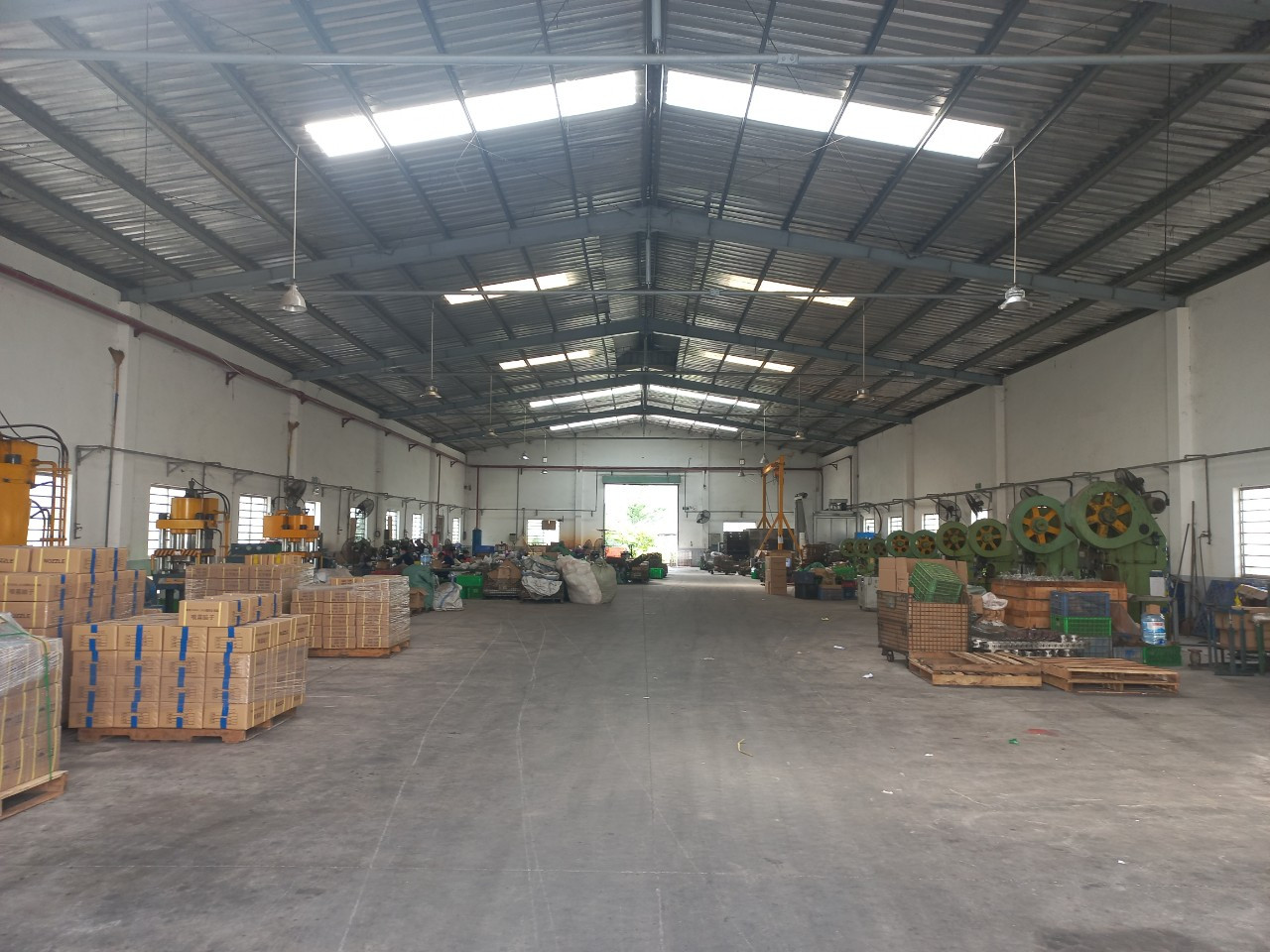

Finding a stamping parts supplier who truly understands European contract manufacturers is hard. I have watched buyers lose entire quarters to suppliers who quoted low and delivered chaos. Our sourcing team fixes exactly that problem.
To find a stamping parts supplier experienced with European contract manufacturers, verify EU export history, demand ISO 9001 or IATF 16949 certification, request REACH and RoHS documentation, review PPAP Level 3 samples, audit the factory on-site, and test communication speed before signing any contract.
That is the short answer. The longer answer is a vetting process. Below, I will walk you through each step, using lessons from real projects our team has managed across Asia.
How do I verify a stamping supplier's experience with European contract manufacturers?
A few years back, our Vietnam office audited a stamping plant that claimed "deep EU experience." Their proof was one shipment to a trading company in Rotterdam. That taught me to dig deeper, every single time.
Verify European experience by requesting export records to EU countries, customer references from European contract manufacturers, PPAP or ISIR documentation in EU-standard formats, evidence of REACH and RoHS compliance, and sample parts produced to European tolerance standards like ISO 2768.

Claims are cheap. Evidence is not. When our engineers vet a stamping parts supplier for a European program, we ask for proof in four specific areas. You should do the same.
Ask for Documented Export History
Request commercial invoices or bills of lading 1 showing shipments to Germany, France, Poland, or other EU manufacturing hubs. A supplier who has cleared EU customs repeatedly will understand REACH declarations, CE-related documentation, and the paperwork European contract manufacturers expect at goods receipt. A supplier who has never shipped to Europe will learn on your dime.
Check Their Documentation Language
European contract manufacturers run on documents. Ask to see a sample PPAP package 2, a control plan, and a process flow diagram from a past project. If the supplier can only produce a basic inspection sheet, they have not worked at the level a Tier 2 automotive supplier operates at. In our experience, the quality of a supplier's paperwork predicts the quality of their parts.
Test Their Standards Knowledge
Send a drawing that references ISO 2768 general tolerances 3 or a DIN material grade. Then ask questions. A supplier with genuine European exposure will discuss material equivalents, edge condition requirements, and burr direction without hesitation.
Here is the verification checklist we use internally:
| Evidence Type | What to Request | Red Flag If Missing |
|---|---|---|
| Export records | EU bills of lading, customs docs | Only domestic or non-EU sales |
| Quality docs | Sample PPAP, control plans, Cp/Cpk data | Only basic inspection reports |
| References | Contactable EU or EU-serving clients | Refusal to share any reference |
| Sample parts | Parts made to ISO/DIN drawings | Excuses about "different standards" |
| Tooling records | Progressive die tooling maintenance logs | No tool life tracking system |
What quality certifications should I look for when sourcing stamping parts for European standards?
Certificates decorate a lot of factory walls. During our supplier audits in Vietnam and across Asia, we have learned to treat every certificate as a starting question, not a final answer.
Look for ISO 9001 as a baseline, IATF 16949 certification for automotive stamping, ISO 14001 for environmental compliance, plus documented RoHS and REACH compliance. For medical programs, require ISO 13485. Always verify certificates through the issuing registrar, and request recent audit reports.

Certifications matter because European contract manufacturers will not onboard you without them. But not all certifications carry equal weight, and not all "certified" suppliers behave the same way. Let me break this down.
The Certification Hierarchy
ISO 9001 is the floor. It proves a supplier has documented quality management systems. It does not prove those systems work well. IATF 16949 certification sits higher. It requires statistical process control 4, traceability, and structured problem-solving. If your parts feed automotive lines, a Tier 2 automotive supplier holding IATF 16949 saves you months of qualification pain.
| Certification | What It Covers | When It Is Mandatory |
|---|---|---|
| ISO 9001 | Baseline quality management systems | Every European program, no exceptions |
| IATF 16949 | Automotive-grade process control | Automotive and many industrial CMs |
| ISO 14001 | Environmental management | ESG-driven European buyers |
| ISO 13485 | Medical device quality | Medical contract manufacturing |
| RoHS / REACH | Hazardous substances, EU chemicals | All parts entering the EU market |
Compliance Beyond the Certificate
RoHS and REACH compliance deserves special attention. These are not certifications a registrar issues once. They are ongoing obligations tied to materials, platings, and lubricants. Ask the supplier how they track substance declarations from their steel mills and plating houses. When we qualify a plating subcontractor for custom metal components, we require material composition reports for every coating chemistry, because one non-compliant passivation bath can block an entire shipment at EU customs.
Also ask about newer requirements. European buyers increasingly request carbon intensity data under CBAM and conflict minerals declarations 5 for tin and tungsten. A supplier who already answers these questions is ahead of the curve.
Finally, verify everything. Certificates can be expired, suspended, or simply fake. Check the registrar's database. It takes ten minutes and has saved our clients from bad partners more than once.
How can I assess a supplier's communication and project management capabilities before signing a contract?
One of our U.S. clients once told me his worst supplier problem was not price or even quality. It was silence. Questions sat unanswered for a week while his assembly schedule burned.
Assess communication by sending a technical RFQ and measuring response speed, depth, and question quality. Strong suppliers reply within 48 hours, ask clarifying questions about drawings, provide DFM feedback, assign a dedicated project contact, and share structured timelines with clear milestones.

Communication failures cause more non-conforming parts than bad presses do. In our project files, almost every rework case traces back to a drawing note someone skipped or a question someone never asked. So before you sign anything, run these practical tests.
The RFQ Stress Test
Send a real drawing with at least one deliberate ambiguity. Maybe an unspecified burr direction, or a tolerance that conflicts with the material thickness. Then watch what happens. A weak supplier quotes fast and ignores the problem. A strong supplier comes back with questions and Design for Manufacturing 6 (DFM) suggestions. When our engineering team reviews client drawings for sheet metal fabrication projects, we routinely flag bend radii that will crack the chosen alloy. Your supplier should do the same, unprompted.
The Project Management Probe
Ask three direct questions:
- Who will be my single point of contact, and what is their engineering background?
- How do you report progress during tooling builds, and how often?
- What happens when you discover a problem mid-production?
The third question matters most. Suppliers who hide problems until shipment day will destroy your schedule. Suppliers who escalate early, with proposed solutions, protect it. On our own programs, we send clients tooling trial reports with dimensional data before any production release, because "right first time" only happens when information flows before parts do.
Time Zones and Systems
Working with Asian suppliers means time zone gaps with Europe and the U.S. Ask how they bridge it. Do they have English-speaking engineers available in your working hours? Can they exchange data in formats compatible with European EDI standards if the contract manufacturer requires it? A supplier with a real project management system, not just a sales inbox, will have concrete answers.
What red flags should I watch for when vetting stamping parts suppliers in Asia?
Walking a factory floor tells you things a quotation never will. On one audit, I noticed the "quality lab" had a coordinate measuring machine still wrapped in plastic. The certificate on the wall said otherwise.
Watch for quotes far below market average, refusal to allow site audits, vague answers about material sourcing, missing Cp/Cpk process data, no in-house tooling capability, poor on-time delivery history, unverifiable certificates, and reluctance to accept penalty clauses or defined defect resolution protocols.

Asia offers genuine advantages for precision metal stamping 7: competitive costs, deep supply bases, and increasingly modern equipment. Our teams in Vietnam and China see excellent factories every month. But we also see the traps. Here are the warning signs I take most seriously.
Commercial Red Flags
A quote more than 15–20% below the market average is not a bargain. It usually signals cheaper material substitution, skipped inspection steps, or a plan to recover margin through change orders. Similarly, be careful with suppliers who resist standard contract terms. If a supplier refuses penalty clauses for late delivery or will not define defect resolution protocols in writing, they are telling you how they plan to behave.
Technical Red Flags
| Red Flag | Why It Matters | What to Do |
|---|---|---|
| No in-house progressive die tooling | Outsourced tooling slows every fix and iteration | Prioritize suppliers with die design in-house |
| No Cp/Cpk data on request | No statistical process control means unstable output | Require capability studies at tooling trial |
| Vague material traceability | Risks REACH violations and substitution fraud | Demand mill certificates per lot |
| Unused or absent metrology equipment | Inspection claims are theater | Verify equipment during the site audit |
| "Yes" to every requirement instantly | No real engineering review happened | Test with a difficult drawing |
Operational Red Flags
Ask for six months of on-time delivery data. A supplier who cannot produce it either does not track it or does not want you to see it. Also probe their capacity honestly. Some factories accept orders beyond their press capacity, then quietly subcontract your custom metal components to unaudited workshops. That is how compliant quotes become non-compliant shipments.
One more point on strategy. Supply chain localization pressure in Europe is real, but a well-vetted Asian supplier with strong logistics management still wins on high-volume runs. The key word is "well-vetted." When we place a client's program, the site audit is non-negotiable, and we repeat audits annually. Distance is manageable. Blindness is not.
Conclusion
Bad stamping suppliers cost you lines, launches, and reputation. Vet for EU-proven documentation, verified certifications, tested communication, and audited factories. Do that, and your European program stays on schedule.
Frequently Asked Questions
How do I verify a stamping supplier's experience with European contract manufacturers?
A few years back, our Vietnam office audited a stamping plant that claimed "deep EU experience." Their proof was one shipment to a trading company in Rotterdam. That taught me to dig deeper, every single time.
What quality certifications should I look for when sourcing stamping parts for European standards?
Certificates decorate a lot of factory walls. During our supplier audits in Vietnam and across Asia, we have learned to treat every certificate as a starting question, not a final answer.
How can I assess a supplier's communication and project management capabilities before signing a contract?
One of our U.S. clients once told me his worst supplier problem was not price or even quality. It was silence. Questions sat unanswered for a week while his assembly schedule burned.
Footnotes
1. Standard definition of the legal document between a shipper and carrier detailing the type and destination of goods. ↩︎
2. Detailed explanation of the industry-standard process for ensuring production parts meet engineering design requirements. ↩︎
3. Official ISO standard page for general tolerances for linear and angular dimensions in technical product documentation. ↩︎
4. Authoritative .gov resource from the NIST Engineering Statistics Handbook defining the SPC methodology. ↩︎
5. Official EU trade policy page explaining the regulation of minerals sourced from