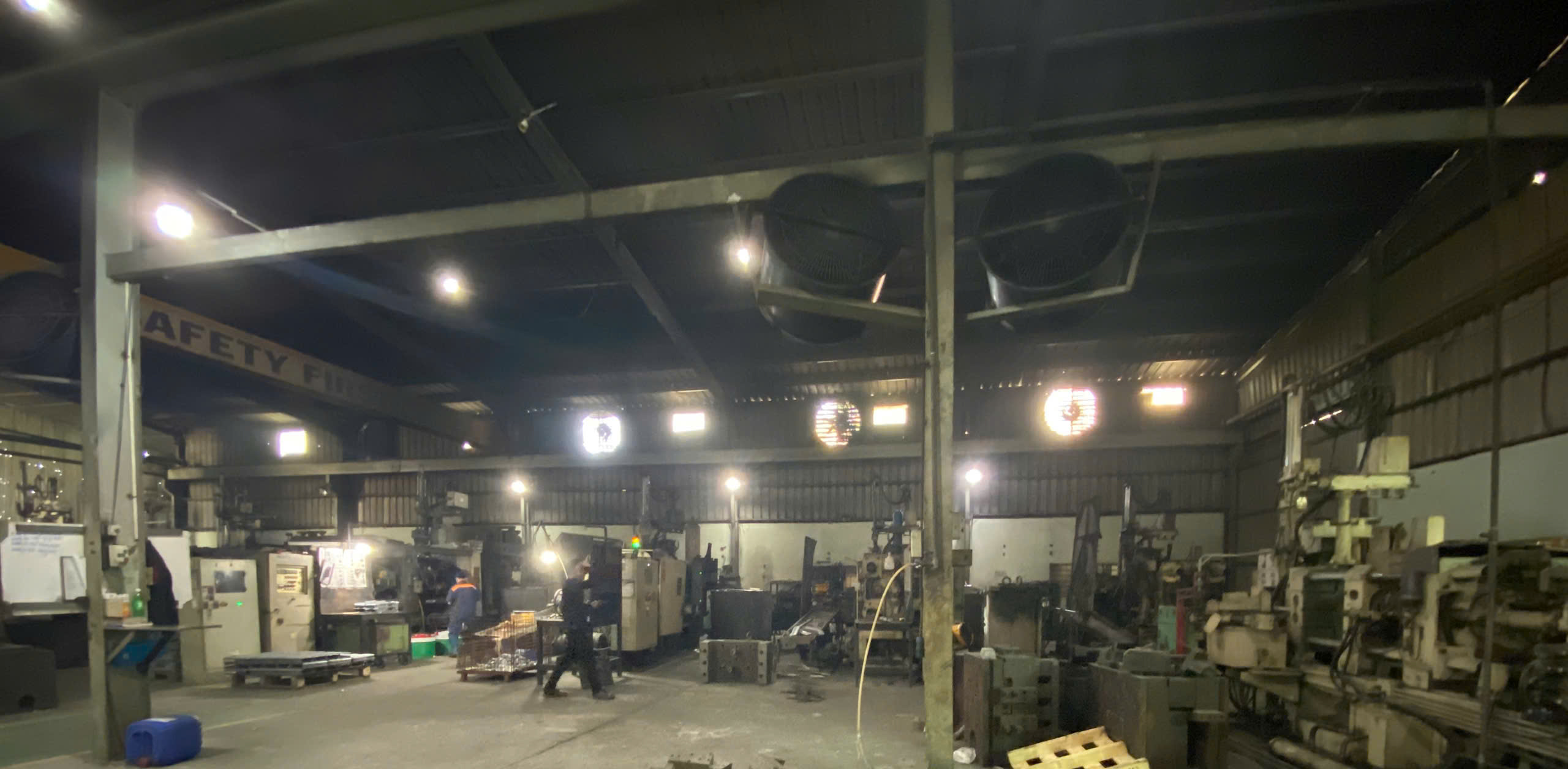

Finding an OEM stamping parts supplier can feel overwhelming when every quote looks the same but the results never are.
To find a suitable OEM stamping parts supplier as a beginner, prioritize total value over unit cost by verifying in-house progressive die tooling, ISO 9001 or IATF 16949 certifications, documented quality control standards like SPC and CPK, and always run a trial order before committing to full production.
I have spent years helping U.S. buyers source custom stamped parts from factories across Asia. The lessons below come from real projects—real delays, real quality escapes, and real wins. This guide walks you through the exact steps to vet, compare, and negotiate with stamping suppliers so your first order does not become a costly lesson.
How Do I Verify an OEM Stamping Supplier's Quality Control Process Before Placing My First Order?
A few years ago, one of our clients received 20,000 stamped brackets where the hole positions drifted by 0.3 mm mid-run. The supplier had no SPC charts, no in-process checks—just a final visual inspection that missed everything.
To verify a stamping supplier's quality control process, request SPC charts, First Article Inspection (FAI) reports, and a CPK value of at least 1.33 on critical dimensions. Confirm they own CMM equipment and hold ISO 9001 certification before placing any order.

Why Quality Documentation Matters More Than Promises
Words are cheap. Documentation is not. When we audit a stamping factory on behalf of a client, the first thing we ask for is evidence—not brochures. A supplier who genuinely runs quality control standards 1 will have SPC charts posted at each press station, calibration stickers on every gauge, and a filing system for FAI reports tied to specific part numbers.
Here is what each quality metric tells you:
| Quality Metric | What It Measures | Minimum Acceptable Value |
|---|---|---|
| CPK (Process Capability Index) | How consistently a process stays within tolerance | ≥ 1.33 (1.67 preferred for critical dims) |
| SPC (Statistical Process Control) | Dimensional trends over a production run | Charts must show stability, no drift |
| FAI (First Article Inspection) | Full dimensional layout vs. drawing before mass production | 100% compliance on all characteristics |
| PPAP (Production Part Approval Process) | Complete documentation package for automotive | Level 3 minimum; Level 5 preferred |
| PPM (Parts Per Million defect rate) | Historical defect performance | Below 50 PPM for precision metal stamping |
The Equipment You Should Look For
A supplier's measurement infrastructure reveals their commitment to quality. At minimum, they need a Coordinate Measuring Machine (CMM) 2 for three-dimensional checks. Optical measurement systems and AI-driven vision inspection are increasingly common among top-tier suppliers, catching micro-fractures and surface imperfections that manual inspection misses.
During a factory audit 3, walk the shop floor. Look for visual management boards near the presses. Check if operators have work instructions at their stations. Ask to see calibration records for gauges. If these basics are missing, the supplier is likely relying on luck rather than process.
Material Certification and Traceability
Material certification is another area beginners overlook. Every coil of steel or aluminum entering the press should have a mill test certificate 4. The supplier must link that certificate to the specific production lot. This traceability chain protects you if a field failure occurs. Ask for sample material test certificates during the quoting stage. If the supplier hesitates, treat it as a red flag.
Our team in Vietnam and China routinely reviews these records before any shipment leaves the factory. Without lot control, you have no way to trace a defective part back to its root cause.
What Questions Should I Ask Suppliers to Avoid Delivery Delays and Communication Gaps?
The most frustrating email I ever forwarded to a client read: "Sorry, tooling not ready. Delay 4 weeks." No warning. No explanation. That single sentence cost the client a missed product launch.
Ask suppliers about their in-house tooling capabilities, current production capacity utilization, raw material lead times, and dedicated project contact. Confirm whether they use progressive die tooling built internally or outsource it, since external tooling is the top cause of delivery delays.

The Questions That Reveal Hidden Risks
Not all questions are equal. Generic questions get generic answers. Specific questions force the supplier to reveal their actual capabilities—or their gaps. Below is a list I recommend every first-time buyer use during the Request for Quotation (RFQ) stage.
Tooling questions:
- Do you design and build dies in-house or outsource them?
- What is your typical tooling lead time for a progressive die with 8–12 stations?
- Who owns the tooling after payment?
Capacity questions:
- What is your current press utilization rate?
- What press tonnage range do you operate (25 to 800+ tons)?
- Can you scale from prototyping services (50 pcs) to mass production (50,000+ pcs)?
Communication questions:
- Will I have a single project manager as my point of contact?
- What is your standard response time for technical questions?
- Do you provide weekly production status reports?
In-House vs. External Tooling: Why It Matters
This is a critical distinction beginners miss. When a supplier builds progressive die tooling 5 in-house, they control the timeline. They can troubleshoot die issues on the same shop floor where production runs. When tooling is outsourced, every revision adds days or weeks. The supplier loses direct control over die quality and maintenance scheduling.
| Factor | In-House Tooling | External Tooling |
|---|---|---|
| Lead time control | High — direct scheduling | Low — dependent on third party |
| Die maintenance speed | Same-day turnaround possible | Days to weeks for transport and repair |
| Design iteration | Rapid — toolmakers and press operators collaborate | Slow — requires back-and-forth with outside shop |
| Cost transparency | Clear — single source pricing | Opaque — markups from subcontractor |
| Risk level for buyer | Lower | Higher |
How to Spot Communication Red Flags Early
During the quoting process, pay attention to response times. If a supplier takes five days to answer a simple question about minimum order quantity (MOQ), imagine what happens when you have an urgent quality issue during production. Our experience exporting to the U.S. market has taught us that the quoting phase is a mirror of the production phase. Slow quotes mean slow problem-solving later.
Also, request a Design for Manufacturing (DFM) 6 review upfront. A supplier who proactively suggests design changes to improve formability or reduce waste is signaling real engineering competence. A supplier who just says "yes, we can do it" without reviewing your CAD files is likely not reading the drawing carefully.
How Can I Compare Stamping Suppliers in China, Vietnam, and India to Find the Best Fit for My Project?
A trade-off we weigh on nearly every project is where to source. A client recently asked us to move a stamped bracket program out of China. The answer was not as simple as picking the next cheapest country.
Compare stamping suppliers in China, Vietnam, and India by evaluating production capacity, certification levels, labor costs, tariff exposure, and sheet metal fabrication expertise. China offers the deepest supply chain; Vietnam provides tariff advantages for U.S. importers; India excels in cost but may require more quality oversight.

Regional Comparison at a Glance
Before diving into details, here is a quick comparison table. This is the kind of overview I wish someone had given me when I started sourcing custom parts across Asia.
| Factor | China | Vietnam | India |
|---|---|---|---|
| Supply chain depth | Very deep — wide material and sub-supplier availability | Growing — still developing for specialty alloys | Moderate — strong in certain steel grades |
| Typical certifications | ISO 9001, IATF 16949 common | ISO 9001 common; IATF 16949 emerging | ISO 9001 common; IATF 16949 less common |
| Labor cost | Medium (rising) | Low to medium | Low |
| Press equipment quality | High — servo presses widely available | Medium — improving rapidly | Medium — varies significantly by region |
| Tariff situation for U.S. buyers | High tariffs on many categories | Favorable — no Section 301 tariffs | Generally favorable |
| Communication (English) | Variable — often requires liaison | Improving — younger workforce speaks English | Generally good English skills |
| Logistics to U.S. (ocean freight) | 18–25 days West Coast | 22–30 days West Coast | 30–40 days West Coast |
| Prototyping services speed | Fast — 7–14 days typical | Moderate — 14–21 days | Moderate to slow — 14–28 days |
China: The Established Powerhouse
China remains the default for precision metal stamping. The ecosystem is mature. You can find suppliers with servo press capabilities, in-house tool rooms, CMM labs, and IATF 16949 certification 7 within a single industrial district. Raw material availability is excellent. If your project requires cold-rolled steel, stainless, or aluminum 5000/6000 series, Chinese mills supply it locally with short lead times.
The downside? Tariffs have reshaped the equation for U.S. importers. Section 301 duties 8 can add 7.5% to 25% on top of the landed cost. Communication gaps persist with smaller factories that lack English-speaking project managers.
Vietnam: The Rising Alternative
Our team of seven in Vietnam sees the growth firsthand. Vietnamese stamping factories are investing heavily in new press lines and quality systems. For U.S. buyers, the tariff advantage is significant—no Section 301 tariffs apply. Labor costs remain competitive. However, the supply chain for specialty materials is still maturing. Some alloys need to be imported from China, Japan, or South Korea, which adds lead time.
We have found that pairing a Vietnamese factory with strong project management oversight delivers excellent results, especially for mid-volume programs.
India: The Cost Leader
India offers the lowest labor costs among the three. English communication is generally smoother. But production capacity and equipment quality vary widely. A factory audit is non-negotiable here. Some Indian stamping shops operate world-class press lines; others rely on outdated equipment with minimal quality infrastructure. Material certification practices also vary. Logistics to the U.S. take longer—often 30 to 40 days by ocean freight to the West Coast.
How to Decide
The right choice depends on your project specifics. If you need tight tolerances, complex progressive die work, and fast turnaround, China is still hard to beat. If tariff savings matter and your volumes justify the setup effort, Vietnam is a strong contender. If cost is the primary driver and you can invest in quality oversight, India deserves consideration.
What Payment Terms and Contract Details Should I Negotiate as a First-Time Buyer?
One lesson I learned early: the contract you sign matters as much as the supplier you choose. A client once lost access to their own tooling because the contract never specified who owned the dies. The supplier held the molds hostage during a pricing dispute.
As a first-time buyer, negotiate clear tooling ownership clauses, request 30–60 day payment terms on production orders, define quality acceptance criteria tied to FAI reports, and include penalty clauses for late delivery. Always start with a trial order of 100–500 pieces before signing a long-term agreement.

Tooling Ownership: The Most Common Legal Trap
Tooling ownership must be stated explicitly in the contract. If you pay for the die, you own the die. The contract should include a clause allowing you to retrieve the tooling at any time and transfer it to another supplier if needed. Without this language, the supplier may claim the tooling as their asset, especially in jurisdictions where local customs differ from U.S. commercial law.
I recommend consulting a legal expert familiar with cross-border manufacturing agreements. This is not the place to cut corners.
Payment Terms That Protect Both Sides
For tooling, the standard structure is 50% upfront and 50% upon approval of the first article samples. For production orders, experienced buyers negotiate net 30 to net 60 terms. Some suppliers, including our own operation, offer open account (credit) terms 9 to established clients to ease cash flow pressure. But as a first-time buyer, expect to start with a more conservative structure and build toward better terms as trust develops.
Here is a typical payment timeline:
| Phase | Payment Structure | When Payment Is Due |
|---|---|---|
| Tooling deposit | 50% of total tooling cost | Upon contract signing |
| Tooling balance | 50% of total tooling cost | Upon FAI sample approval |
| First production order | 30% deposit, 70% before shipment | T/T wire transfer |
| Ongoing production (after trust is built) | Net 30 or Net 60 open account | Invoice date + 30 or 60 days |
Key Contract Clauses Every Beginner Needs
Beyond payment, your contract should cover these essentials:
- Quality acceptance criteria: Define pass/fail based on dimensional inspection reports, CPK data, and visual standards.
- Delivery penalties: Include a clause that specifies a percentage reduction per week of delay (commonly 1–2% per week, capped at 10%).
- Material specifications: State exact material grades, thickness tolerances, and reference any required material certification.
- Confidentiality: Protect your drawings and designs with a non-disclosure agreement (NDA).
- Dispute resolution: Specify jurisdiction and method (arbitration is faster than litigation for international disputes).
The Trial Order: Your Best Insurance
Never commit to full production without a trial order. For small-batch programs, 100 to 500 pieces is enough to validate the process. For high-volume programs, aim for 500 to 1,000 pieces. Use the trial to verify dimensions against the drawing, assess surface finish quality, and confirm packaging meets your requirements. An FAI report from this trial run becomes the quality baseline for all future orders.
Our process control team reviews every trial order shipment against the original specifications before we authorize mass production. This step has saved clients from costly line shutdowns more times than I can count.
Conclusion
Finding the right OEM stamping parts supplier takes preparation, verification, and patience—but the effort protects your production line, your budget, and your reputation for years to come.
Frequently Asked Questions
How Do I Verify an OEM Stamping Supplier's Quality Control Process Before Placing My First Order?
A few years ago, one of our clients received 20,000 stamped brackets where the hole positions drifted by 0.3 mm mid-run. The supplier had no SPC charts, no in-process checks—just a final visual inspection that missed everything.
What Questions Should I Ask Suppliers to Avoid Delivery Delays and Communication Gaps?
The most frustrating email I ever forwarded to a client read: "Sorry, tooling not ready. Delay 4 weeks." No warning. No explanation. That single sentence cost the client a missed product launch.
How Can I Compare Stamping Suppliers in China, Vietnam, and India to Find the Best Fit for My Project?
A trade-off we weigh on nearly every project is where to source. A client recently asked us to move a stamped bracket program out of China. The answer was not as simple as picking the next cheapest country.
Footnotes
1. ISO’s official page on quality management standards relevant to supplier evaluation. ↩︎
2. Background on CMM technology used for dimensional verification in stamping quality control. ↩︎
3. Corrected official ISO page for the 19011 auditing management systems standard. ↩︎
4. Explains material certification documentation referenced for traceability of stamped metal parts. ↩︎
5. Defines progressive die stamping process central to tooling ownership discussion. ↩︎
6. NIST manufacturing resource supports DFM review concept for improving part formability. ↩︎
7. Authoritative industry body providing official automotive quality management standard details. ↩︎
8. Official U.S. trade authority source explaining Section 301 tariffs impacting import costs. ↩︎
9. World Bank trade resource contextualizes open account payment terms in international trade. ↩︎