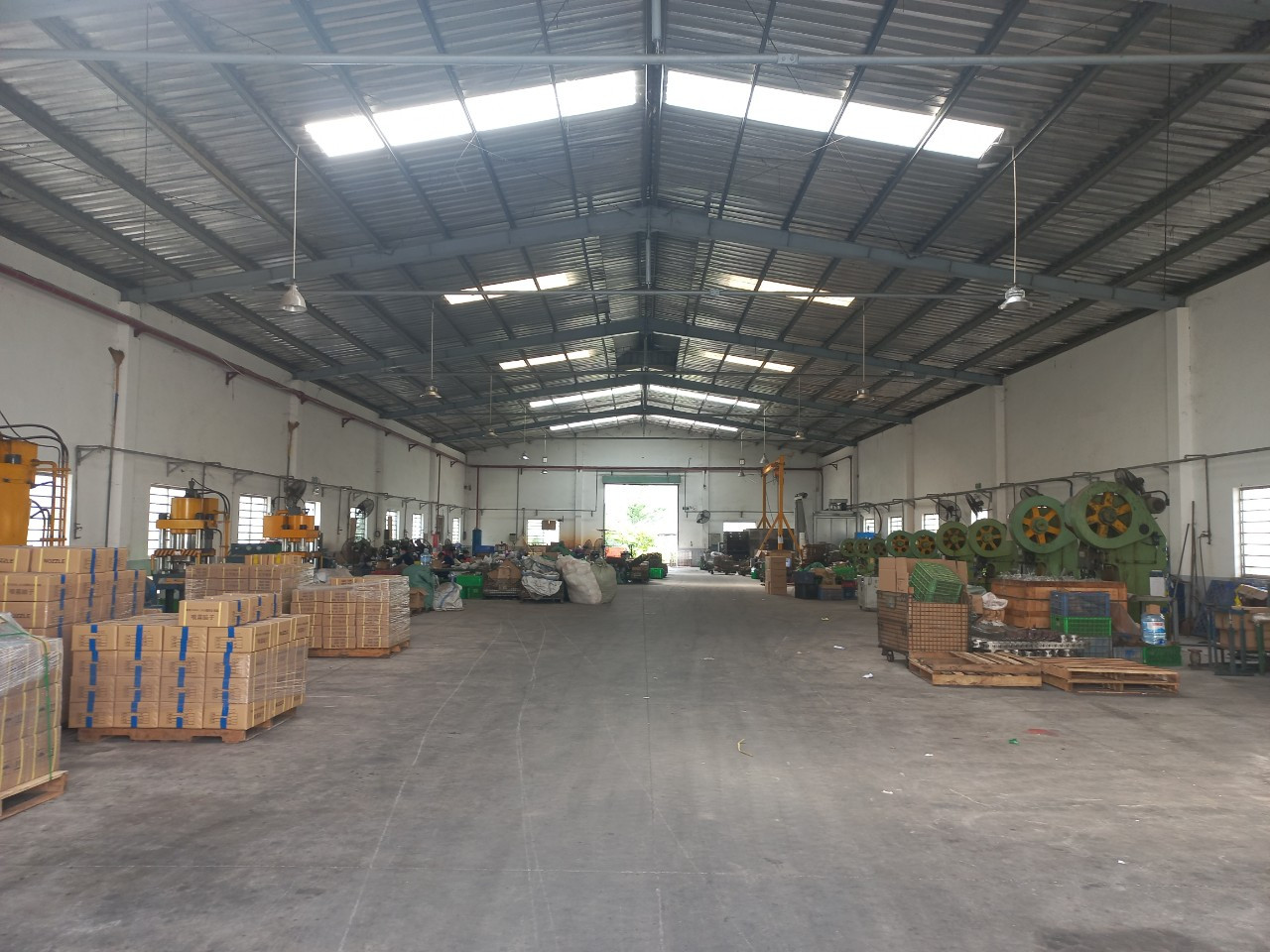

Finding Vietnamese suppliers for small-quantity, multi-variety stamping parts nearly broke one of our early projects ISO 9001 certification 1. Big factories rejected us. Small shops missed tolerances. Deadlines slipped, and our client’s assembly line sat waiting.
To find Vietnamese suppliers for small-quantity, multi-variety stamping parts, target agile low-volume shops in hubs like Bac Ninh and Dong Nai, verify quick die-change capability and ISO 9001 systems, run pilot batches, or use a sourcing partner that pre-vets a network of qualified stamping factories.
That answer sounds simple. The execution is not. Below, I will walk you through each step, based on what our Vietnam team does every week for U.S. buyers.
How can I verify a Vietnamese stamping supplier's capability for low-volume, high-mix orders?
A few years back, our Vietnam office audited a stamping shop that looked perfect on paper AQL standards 2. Then we asked to watch a die changeover. It took them four hours. We walked away.
Verify low-volume, high-mix capability by checking for quick die-change systems, an in-house tool-and-die team, 3+ years of progressive die experience, ISO 9001 certification, documented first article inspection, and ERP-based order tracking. Always confirm claims with an on-site audit and a timed changeover demonstration.

Most Vietnamese stamping factories are built for volume CPTPP 3. They run progressive die 4s around the clock for automotive and appliance programs. That model breaks when you need 500 pieces each of twelve different brackets. So verification is not about finding a "good" factory. It is about finding the right type of factory.
What to check on site
Our audit team in Vietnam focuses on four things. First, tooling capability. The shop must design, build, debug, and maintain dies in-house. If they outsource tooling, every design change on your multi-variety parts adds weeks. Second, changeover speed. Ask them to demonstrate a die swap. Shops with modular or quick-change tooling systems can switch part designs in under an hour. That is what makes small batches economical. Third, quality systems. Look for real first article inspection reports, calibrated measuring equipment, and in-process checks, not just a framed ISO certificate. Fourth, order management. A shop juggling many SKUs without an ERP or MES system will eventually ship you the wrong revision.
Capability checklist
| Verification Item | What Good Looks Like | Red Flag |
|---|---|---|
| Die changeover | Under 60 minutes, documented procedure | Multi-hour swaps, no records |
| Tool-and-die team | In-house design and repair | Fully outsourced tooling |
| QC system | FAI, in-process inspection, calibrated gauges | Final visual check only |
| Certification | ISO 9001 minimum, IATF 16949 5 a plus | Expired or absent certificates |
| Order tracking | ERP/MES with revision control | Paper notes and memory |
| Export experience | Familiar with FOB/CIF, English documents | Domestic sales only |
We also weigh geography. Clusters in Bac Ninh, Hai Phong, Dong Nai, and Ho Chi Minh City offer better material sourcing, plating subcontractors, and logistics than isolated provinces.
What quality control steps should I expect when sourcing multi-variety stamping parts from Vietnam?
One buyer once told me his biggest fear was not bad parts. It was bad parts discovered after they crossed the Pacific. That fear shapes every QC plan we write.
Expect a full QC sequence: DFM review before tooling, first article inspection with dimensional reports, production-intent samples for approval, a pilot batch to prove repeatability, in-process checks during runs, and a final pre-shipment inspection to AQL standards before container loading.

Multi-variety orders multiply quality risk. Every part number carries its own tooling, its own tolerances, and its own failure modes. A bracket with a slotted hole, a zinc-plated clip, and a bronze-finished flange each need separate inspection plans. So the QC process must be structured, not improvised.
The QC sequence, step by step
- DFM and stampability review. Before any steel is cut, the supplier reviews your drawings for strip layout, bend radii, and draw ratios. Skipping this step causes most tooling failures. Our engineers push back on drawings all the time, and buyers thank us later.
- First article inspection (FAI). The first parts off each new die get a full dimensional report against the drawing. Every hole diameter, every bend angle, every flange height.
- Production-intent samples. These parts must come off the actual production tooling with the actual finish. Prototype parts made by laser cutting and bending prove nothing about stamping repeatability.
- Pilot batch. A small paid run, typically a few hundred pieces per SKU, validates process stability before you commit to the full order. In our experience, skipping the pilot batch is the number one reason small orders from Vietnam fail.
- In-process inspection. Operators check critical dimensions at set intervals during the run, especially after any die adjustment.
- Final inspection. A pre-shipment check against an agreed AQL level covers dimensions, plating thickness, surface defects, and packaging. We conduct this on-site with our local Vietnam team before anything is loaded.
For plated or coated parts like galvanized brackets, also confirm whether finishing is in-house or subcontracted. Outsourced plating adds a handoff where parts get scratched, mixed, or delayed. We inspect after finishing, never before.
How do I manage tooling and setup costs for small-quantity stamping runs in Vietnam?
Here is the trade-off I weigh on every quote: a progressive die gives the lowest piece price, but its upfront cost can crush the economics of a 1,000-piece order.
Manage tooling costs by matching die type to volume: use simple single-stage or compound dies for very low runs, four-slide tooling for clips and small brackets, and progressive dies only above break-even volume. Vietnamese tooling typically costs 40–60% less than U.S. equivalents, improving small-batch feasibility.

Tooling is the reason most stamping suppliers enforce high MOQs. A die is a fixed investment. Spread over 100,000 parts, it disappears into the piece price. Spread over 1,000 parts, it dominates the cost. So the game is choosing the cheapest tooling that still meets your tolerance and volume needs.
Match the tooling to the volume
| Tooling Approach | Best For | Relative Tooling Cost | Typical Volume Fit |
|---|---|---|---|
| Single-stage / compound die | Simple flat parts, low complexity | Low | Hundreds to low thousands |
| Four-slide tooling | Clips, small brackets, wire forms | Low to medium | Low to medium volume |
| Modular / quick-change die sets | Multi-variety families sharing a die base | Medium | Mixed small batches |
| Progressive die | Complex multi-step parts | High | Higher volumes, repeat orders |
Vietnam's cost advantage helps here. Tooling built in Vietnam generally runs 40–60% below U.S. prices, and the workforce in the main stamping hubs was trained under Japanese precision manufacturers. That means a progressive die that would be unjustifiable at U.S. prices sometimes pencils out in Vietnam even for modest volumes.
Practical tactics we use
We often group similar parts into a tooling family so several SKUs share one die base with interchangeable inserts. For the stamped brackets and clips we handle, that alone can cut total tooling spend meaningfully. We also negotiate tooling amortization into the piece price when a client expects repeat orders, which spreads cash outlay across shipments. On timelines, plan realistically: a first program typically takes 10–16 weeks from die design through ocean freight, while reorders ship in roughly 3–6 weeks from PO to a U.S. port. Finally, put tooling ownership in writing. You paid for the die; the contract should say it is yours.
Why should I work with a sourcing partner instead of contacting Vietnamese stamping factories directly?
Last year a U.S. purchasing manager came to us after six months of emailing factories directly. He had two quotes, one ghosted supplier, and zero parts. Our Vietnam team had him sampled in weeks.
A sourcing partner pre-vets factories, matches each part to the right shop, manages DFM, tooling, pilot batches, and inspections locally, and consolidates multi-variety orders under one contract, one QC standard, and one shipment—removing the language, payment, and coordination risks of direct factory contact.

Going direct can work if you have one part, high volume, and staff on the ground. Small-quantity, multi-variety projects are the opposite case. Your twelve part numbers may need three different shops: one for deep-drawn pieces, one for four-slide clips, one for progressive-die brackets with plating. Managing three Vietnamese factories from a U.S. desk, across time zones and language gaps, is a full-time job.
Direct vs. sourcing partner
| Factor | Contacting Factories Directly | Working With a Sourcing Partner |
|---|---|---|
| Supplier vetting | Your own research, remote | Pre-audited network, on-site checks |
| Multi-variety fit | One factory forced to do everything | Each part matched to the best shop |
| Communication | Language barriers, slow email loops | Local team, same-day answers |
| QC oversight | Rely on factory self-reporting | Independent FAI, in-process, and final inspection |
| Payment terms | Wire transfer upfront, high risk | Consolidated invoicing, credit terms possible |
| Logistics | Multiple small shipments | Consolidated door-to-door delivery |
| Accountability | Split across suppliers | One contract, one responsible party |
There is a fair counterargument: intermediaries add margin. That is true. But for high-mix small batches, the margin usually costs less than one failed pilot batch, one air-freight rescue, or one quarter of an engineer's time spent chasing factories at midnight. In our own operation, having seven people permanently based in Vietnam means audits, pilot-batch supervision, and pre-shipment inspections happen in person, not over video calls. We also handle export documentation, which matters because leveraging EVFTA 6 or CPTPP paperwork correctly can reduce duties into the EU, and Vietnamese origin bypasses the 25% Section 301 tariffs 7 applied to Chinese-made stampings entering the U.S. For a conservative purchasing manager who wants right-first-time parts and on-time delivery, single-point accountability is the whole value proposition.
Conclusion
Small-batch, multi-variety stamping from Vietnam is absolutely workable. Vet for changeover speed, insist on pilot batches, match tooling to volume, and let a local partner carry the coordination risk.
Frequently Asked Questions
How can I verify a Vietnamese stamping supplier's capability for low-volume, high-mix orders?
A few years back, our Vietnam office audited a stamping shop that looked perfect on paper AQL standards 2 . Then we asked to watch a die changeover. It took them four hours. We walked away.
What quality control steps should I expect when sourcing multi-variety stamping parts from Vietnam?
One buyer once told me his biggest fear was not bad parts. It was bad parts discovered after they crossed the Pacific. That fear shapes every QC plan we write.
How do I manage tooling and setup costs for small-quantity stamping runs in Vietnam?
Here is the trade-off I weigh on every quote: a progressive die gives the lowest piece price, but its upfront cost can crush the economics of a 1,000-piece order.
Footnotes
1. ISO reference for the quality management standard mentioned as a verification requirement. ↩︎
2. Defines the acceptable quality limit inspection standard used for pre-shipment checks. ↩︎
<span id="footnote-3