Last quarter, a long-time client called us in a panic — their federally funded infrastructure project was stalled because the sheet metal brackets they sourced lacked proper Buy America documentation 1.
To get US Buy America Act certificates of origin for sheet metal fabrication, manufacturers must self-certify compliance on company letterhead. No government agency issues the certificate. The letter must be product-specific and project-specific, stating manufacturing location, domestic content percentage, and compliance with the applicable Buy American Act or Build America Buy America Act threshold.
This guide breaks down exactly what you need, step by step. Whether you source parts domestically or from countries like Vietnam, the process has clear rules. Let me walk you through them.
How do I get a Buy America Act Certificate of Origin for my sheet metal parts?
One lesson we learned early when helping US clients with supply chain compliance is that "certificate of origin" is a misleading term in this context — there is no government-issued stamp of approval.
To get a Buy America Act certificate for sheet metal parts, you create a manufacturer self-certification letter on company letterhead. It must name the specific project, list every product supplied, state the manufacturing location by city and state, confirm the domestic content percentage, and be signed by an authorized representative.
Which Law Applies to Your Project?
Before drafting anything, you need to know which regulatory framework governs your contract. This single decision changes everything — the threshold, the documentation, and the risk.
| Feature | Buy American Act (BAA) | Build America Buy America Act 2 (BABA) |
|---|---|---|
| Enacted | 1933 | 2021 (Infrastructure Investment and Jobs Act 3) |
| Applies to | Direct federal government purchases over $10,000 | All federally funded infrastructure projects (grants, loans) |
| Governed by | Federal Acquisition Regulation 4 (FAR) | OMB guidance, agency-specific rules |
| Domestic content threshold (manufactured products) | 65% (rising to 75% by 2029) | 55% of component cost |
| Iron/steel requirement | 95% if predominantly iron/steel | 100% from melt to coating (melted and poured standard 5) |
| Who certifies? | Manufacturer self-certification | Manufacturer self-certification |
The distinction matters. I have seen purchasing managers assume all federal projects fall under one umbrella. They do not. A direct Department of Defense purchase follows the BAA under the Federal Acquisition Regulation. A state highway project funded by a federal grant follows BABA. Get this wrong, and your entire certification is invalid.
Step-by-Step Process
Here is the process we walk our US clients through when they need compliant sheet metal parts for infrastructure project funding:
- Identify the regulatory framework. Read the contract. Look for FAR clauses (BAA) or BABA references.
- Map your supply chain. Document where every material and component originates. For iron and steel, trace from the initial melt.
- Perform a component cost analysis. Calculate the percentage of domestic content by cost. Use actual invoices, not estimates.
- Confirm manufacturing location. The final product must be manufactured in the United States. Assembly alone may not qualify.
- Draft the self-certification letter. Include project name, product description, manufacturing city and state, compliance statement, and authorized signature.
- Retain records. Keep all supporting documents for at least three years. Audits happen.
What Goes Into the Letter?
The letter is your legal declaration. It is not a form you download from a government website. It is a document you create. Here is what it must contain:
- Company letterhead with full contact details
- Project name, location, and contract or project number
- Specific products supplied (e.g., "custom sheet metal mounting brackets, Part No. DW-4821")
- Statement of compliance with the applicable law (BAA or BABA)
- Manufacturing location (city, state)
- Domestic content percentage 6
- Signature of an officer or authorized representative
- Date
Our team in Vietnam and Singapore coordinates this documentation when we help US buyers source compliant parts. We ensure every supplier in the chain provides origin data before we even begin production.
Can I source sheet metal from Vietnam and still meet my BAA compliance requirements?
A US buyer we work with recently asked this exact question. They wanted to take advantage of lower fabrication costs in Vietnam but still needed Buy America compliance for a federally funded transit project.
You can source sheet metal from Vietnam and meet BAA compliance only if the final product is manufactured in the United States and the domestic content threshold is met. Under BABA, 55% of component cost must be US-origin. Under BAA, 65% is required. Vietnamese-origin components count as foreign content in the cost calculation.
Understanding the "Manufactured in the US" Requirement
This is where many buyers get confused. The law does not ban all foreign components. It sets a cost threshold. You can use some foreign-sourced parts — including sheet metal from Vietnam — as long as:
- The final manufactured product is produced in the US
- The cost of US-made components exceeds the required threshold
So if your sheet metal brackets are fabricated in a US facility using a mix of domestic steel and Vietnamese sub-components, you may still comply. But you need to run the numbers carefully.
How Component Cost Analysis Works
Let me explain this with a simplified example. Say you are producing a custom mounting bracket for an infrastructure project funded by a federal grant (BABA applies).
| Component | Origin | Cost |
|---|---|---|
| Steel sheet (base material) | US mill, melted and poured in US | $1,200 |
| Fasteners | Vietnam | $150 |
| Powder coating | US facility | $200 |
| Welding consumables | US supplier | $50 |
| Custom gasket insert | Vietnam | $100 |
| Total component cost | $1,700 | |
| US component cost | $1,450 | |
| US content percentage | 85.3% |
In this case, you exceed the 55% BABA threshold. The Vietnamese components are a small fraction. You can certify compliance.
But flip the scenario — if you source the base steel from Vietnam, that $1,200 shifts to the foreign column. Suddenly your US content drops to 14.7%. You fail.
The Iron and Steel Trap
Here is a critical nuance. If your sheet metal product is classified as predominantly iron or steel — not just a "manufactured product" — the rules tighten dramatically. Under BABA, all iron and steel must meet the melted and poured standard: every process from melting through coating must occur in the US. Under BAA, the threshold jumps to 95%.
Sheet metal fabrications like brackets, enclosures, and housings are typically classified as manufactured products, not fabricated structural steel. But the line can blur. When we help clients navigate this, we always recommend confirming the classification with the contracting officer before committing to a supply chain strategy.
What About Tariffs?
Post-2024 tariff changes have made component cost analysis 7 a moving target. When tariffs increase the landed cost of foreign components, the domestic content percentage shifts. A calculation that passed last year may fail today. We always advise our clients to revalidate their numbers after any tariff adjustment. For a deeper look at how US tariffs and duties apply when sourcing sheet metal fabrication from Vietnam, understanding the full duty landscape is essential to accurate cost modeling.
What documentation should I request from my supplier to prove the origin of my custom parts?
When we onboard a new supplier for a US client's project, the first thing our quality team does is build a compliance documentation package — before a single part ships.
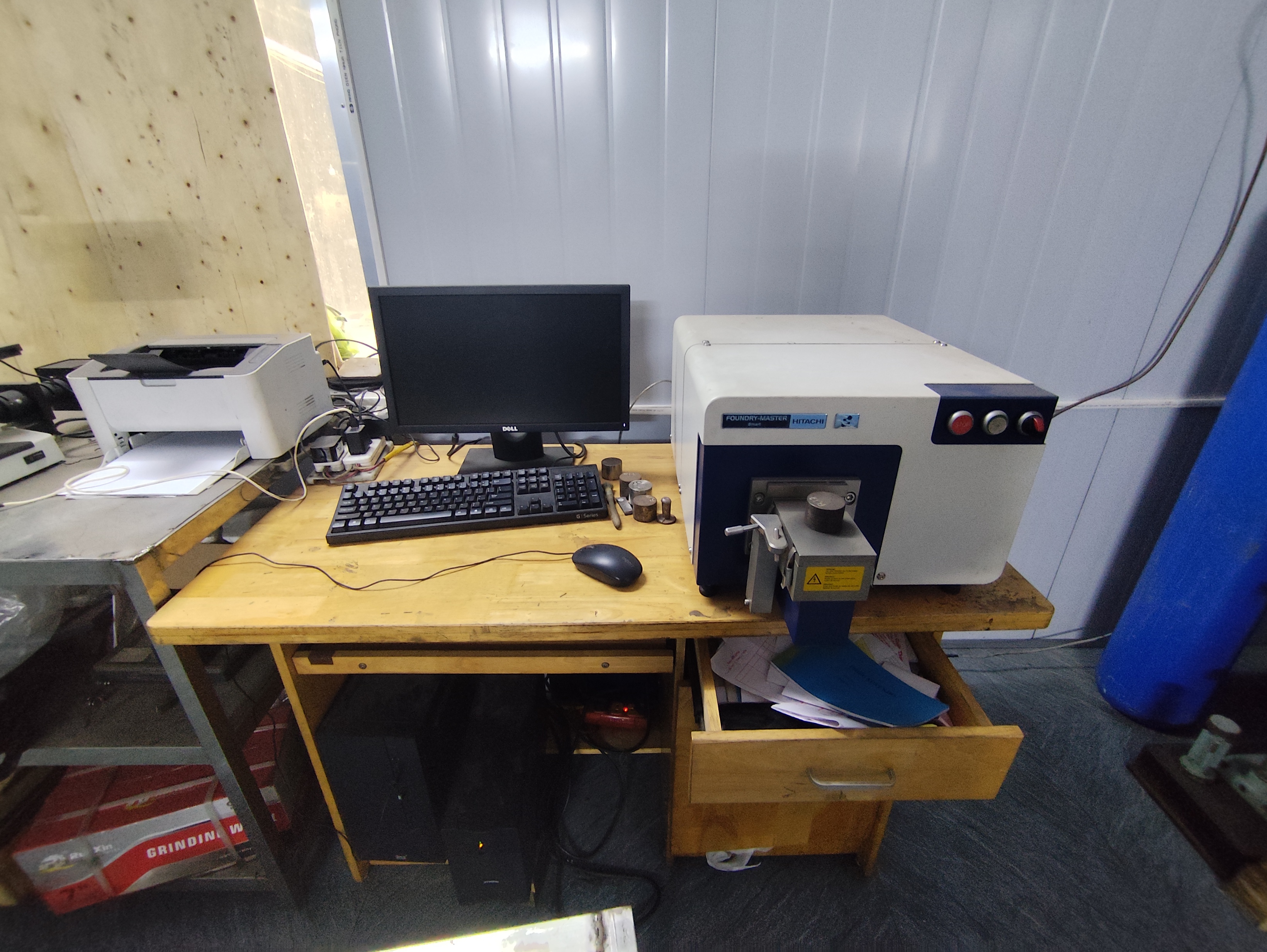
Request country-of-origin certificates for every component, mill test reports for steel and metals, manufacturing location details (city, state, country), a breakdown of component costs by origin, and the supplier's signed self-certification letter. For iron and steel, demand documentation proving the melted and poured standard was met at every processing stage.
The Complete Documentation Checklist
Incomplete paperwork is the number one reason Buy America certifications fail audit. I have seen projects delayed by months because a single sub-tier supplier could not produce a mill certificate. Here is what you should collect:
| Document | Purpose | Required For |
|---|---|---|
| Country of origin certificate (per component) | Proves where each material/component was produced | All components |
| Mill test report (MTR) | Confirms steel origin, melt location, chemical composition | Iron/steel components |
| Manufacturing location statement | Names facility city, state, country | Final product and key sub-assemblies |
| Component cost breakdown by origin | Enables domestic content percentage calculation | All manufactured products |
| Supplier self-certification letter | Legal declaration of compliance | Every tier of the supply chain |
| Process flow documentation | Shows manufacturing steps and locations | Iron/steel (melt-to-coating traceability) |
| Purchase orders and invoices | Supports cost-based calculations | Audit defense |
Why Sub-Tier Visibility Matters
Your direct supplier may be fully compliant. But what about their suppliers? If a US fabricator buys steel coil from a domestic service center, but that service center imported the coil from overseas, the chain breaks.
Our approach — born from years of managing multi-country supply chains between Vietnam, Singapore, and the US — is to push documentation requirements down to the sub-tier level. We require every supplier in our network to provide origin data before we issue a purchase order. This is not optional. It is built into our contracts.
Digital Tools Are Changing the Game
Spreadsheet-based tracking worked five years ago. It does not work now. With domestic content requirements tightening and tariff volatility reshaping costs, many procurement teams are adopting digital compliance platforms. These tools let you survey your supply chain, collect certificates electronically, and flag gaps in real time.
We have seen clients move from manual tracking to automated systems and cut their compliance preparation time by half. The initial setup takes effort. But the payoff — especially for repeat infrastructure project funding work — is significant.
Common Documentation Gaps
Here are the gaps we encounter most often:
- Missing melt certificates for steel. Suppliers assume the service center's word is enough. It is not.
- Outdated cost data. Component prices change. Your cost analysis must reflect current, actual costs.
- No project-specific letter. A supplier provides a generic compliance statement. It does not name the project. It is worthless.
- Incomplete sub-tier data. The prime contractor has documents from Tier 1 but nothing from Tier 2 or Tier 3.
Each of these can trigger a compliance failure. And the consequences are real — project disqualification, financial penalties, and reputational damage that can follow your company for years.
How do I verify that my offshore manufacturer's BAA certificate is legally sufficient for my project?
A purchasing manager at one of our US client firms once told me he received a "Buy America certificate" from an overseas supplier that was a single sentence on a plain sheet of paper. No letterhead. No project reference. No signature. He asked us to evaluate it. It took about three seconds.
To verify an offshore manufacturer's BAA certificate, confirm it is on company letterhead, names the specific project and products, states the manufacturing location by city and state, declares the domestic content percentage with supporting cost data, identifies the applicable law (BAA or BABA), and is signed by an authorized representative. Then cross-check the claims against independent supply chain documentation.
Red Flags to Watch For
Not every certificate you receive will be accurate. Some are vague. Some are outright false. Here is how to spot problems:
Vague language. A compliant letter should be specific. If it says "this product meets all applicable domestic content requirements" without naming the law, the threshold, or the percentage — push back.
No project reference. The letter must name your project. A certificate that says "for any and all projects" is not project-specific and will not pass scrutiny.
Missing manufacturing details. The letter should state the city and state where the product was manufactured. If it only says "Made in USA" with no further detail, that is insufficient.
No supporting data. The certificate alone is not enough. Ask for the underlying component cost analysis. If the supplier cannot produce it, the certificate may be based on guesswork.
Cross-Checking the Claims
Here is a practical verification process we use when evaluating supplier certifications for our clients:
- Request the component cost breakdown. Compare it to your own cost estimates. Large discrepancies are a warning sign.
- Ask for sub-tier origin documents. Mill test reports 8, country-of-origin certificates 9 from material suppliers, and purchase orders.
- Verify the manufacturing facility. If the letter claims manufacturing in Ohio, confirm the supplier actually has a facility in Ohio. A quick online search or a supplier audit can confirm this.
- Check the signatory. The person signing should be an officer or authorized compliance representative. A warehouse clerk's signature raises questions.
- Consult your contracting officer. If you are unsure whether a certificate meets the specific requirements of your contract, ask the agency administering the funds.
When to Seek Legal or Specialist Help
The regulatory landscape is complex and evolving. The differences between BAA, BABA, and other domestic content rules (like IRA provisions) are nuanced. Buy America waivers exist but are rare and require formal justification — the product must be unavailable domestically, or the cost increase must be unreasonable.
I have seen cases where a project required compliance with both BAA and BABA simultaneously because different funding sources applied to different phases. In situations like this, engaging legal counsel or a specialized compliance consultant is not a luxury — it is a necessity. Additionally, buyers sourcing steel from Vietnam should understand how to handle US anti-dumping duties on steel sheet metal fabrication from Vietnam, as these duties directly affect component cost calculations and compliance outcomes.
Our role at DEWIN is to bridge the gap. We help US procurement teams source custom parts from Vietnam and other Asian countries while building the documentation trail that makes compliance possible. We do not replace legal advice. But we make sure the supply chain data is clean, complete, and audit-ready before it ever reaches the contracting officer's desk.
Conclusion
Getting a Buy America Act certificate of origin for sheet metal fabrication requires knowing which law applies, calculating domestic content accurately, and creating a detailed self-certification letter — not waiting for a government stamp.
Frequently Asked Questions
Which Law Applies to Your Project?
Before drafting anything, you need to know which regulatory framework governs your contract. This single decision changes everything — the threshold, the documentation, and the risk.
What Goes Into the Letter?
The letter is your legal declaration. It is not a form you download from a government website. It is a document you create. Here is what it must contain:
What About Tariffs?
Post-2024 tariff changes have made component cost analysis 7 a moving target. When tariffs increase the landed cost of foreign components, the domestic content percentage shifts. A calculation that passed last year may fail today. We always advise our clients to revalidate their numbers after any tariff adjustment. For a deeper look at how US tariffs and duties apply when sourcing sheet metal fabrication from Vietnam , understanding the full duty landscape is essential to accurate cost modeling.
Footnotes
1. Provides an overview of the Buy American Act and its requirements. ↩︎
2. Official guidance on the Build America, Buy America Act from the White House. ↩︎
3. Official legislative text of the Infrastructure Investment and Jobs Act from GovInfo, an authoritative government source. ↩︎
4. This is the official and currently working website for the Federal Acquisition Regulation. ↩︎
5. Official Federal Acquisition Regulation (FAR) section detailing Buy American Act requirements for iron and steel construction materials, including the ‘all manufacturing processes from initial melting’ standard. ↩︎
6. Details domestic content requirements under the Buy American Act. ↩︎
7. Discusses cost of components for Buy American Act compliance calculations. ↩︎
8. Information on the content and purpose of mill test reports for steel. ↩︎
9. Provides an overview of country of origin rules and certificates. ↩︎